
Chantilly-Tiffany Cost & Ownership Dossier
Chantilly-Tiffany cost centers on rarity and coat care rather than chronic illness, since this quiet, chocolate-coated breed is uncommon enough that finding a kitten takes more effort than budgeting for it. Between the breeder fee, vaccines, and setup gear, most owners spend near $2,214 in year one. Ongoing costs then settle to about $904 a year, roughly $75 a month.
Executive cost summary
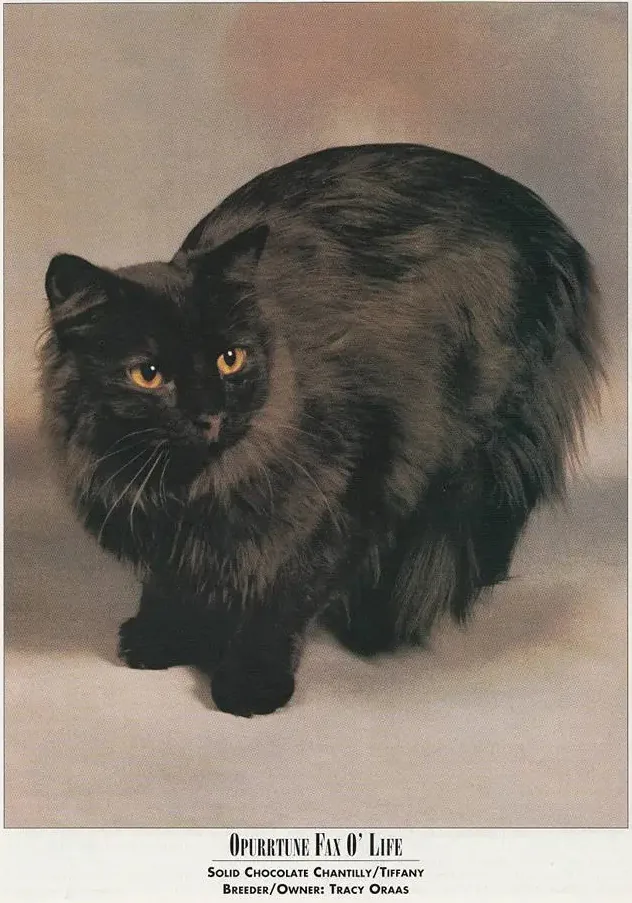
Chantilly-Tiffany
Chantilly-Tiffany cost centers on rarity and coat care rather than chronic illness, since this quiet, chocolate-coated breed is uncommon enough that finding a kitten takes more effort than budgeting for it. Between the breeder fee, vaccines, and setup gear, most owners spend near $2,214 in year one. Ongoing costs then settle to about $904 a year, roughly $75 a month.
Acquisition, surgical desexing, initial vet series, and starter hardware.
Normalized baseline at ~$75/month routine cash burn.
Projected over a 14-year Chantilly-Tiffany lifespan.
$2,000 Liquid Reserve Mandate
Critical bufferNo defining hereditary syndrome has been documented in the breed, and its main risks are the routine dental and coat care every cat needs, keeping the tier below breed-average.
Source: MetLife True Cost of Pet Emergencies 2025 (15% of owners hit $3,000+; uninsured surgery $3,000–8,000)
Biometric & phenotypic actuarial spec
Annual Cash Burn Matrix ($904/yr)
Continuous operational expenditure distributed across 5 core maintenance categories, indexed to metabolic demand and regional clinical rates.
Food
Vet Care
Grooming
Pet Insurance
Supplies & Toys
Upfront Entry CapEx
Purchase / Adoption Fee ($800), Initial Vet Visit & Vaccinations ($300), Starter Supplies ($260), Litter & Behavior Basics ($40), First Year Food ($193), First Year Vet Care ($247), First Year Grooming ($60), First Year Insurance ($314).
Comprehensive Lifecycle Ledger
Audited financial breakdown distinguishing immediate first-year fixed capitalization from ongoing annualized operating liabilities over the full 12–16 yrs feline lifespan.
| Expenditure Category | Year 01 Outlay | Annual Steady-State | Lifetime Total | Actuarial Sizing Methodology |
|---|---|---|---|---|
| Purchase / Adoption Fee | $800 | — | $800 | Varies by breeder vs rescue |
| Initial Vet Visit & Vaccinations | $300 | — | $300 | Spay/neuter, microchip, health check |
| Starter Supplies | $260 | — | $260 | Litter box, scratching post, carrier, bowls |
| Litter & Behavior Basics | $40 | — | $40 | Litter box training, scratching post basics |
| First Year Food | $193 | — | $193 | — |
| First Year Vet Care | $247 | — | $247 | — |
| First Year Grooming | $60 | — | $60 | — |
| First Year Insurance | $314 | — | $314 | — |
| Food | — | $193 | $2,702 | — |
| Vet Care | — | $247 | $3,458 | — |
| Grooming | — | $60 | $840 | — |
| Pet Insurance | — | $314 | $4,396 | — |
| Supplies & Toys | — | $90 | $1,260 | — |
| Gross Actuarial Expenditure | $2,214 | $904 / yr | $13,966 | Unadjusted baseline |
Actuarial Health Risk Profile (Tier 2)
No defining hereditary syndrome has been documented in the breed, and its main risks are the routine dental and coat care every cat needs, keeping the tier below breed-average.
Periodontal Disease
No unusual predisposition beyond typical feline dental risk, but consistent care matters since the breed has few other health issues to distract from it.
Coat Matting from Minimal Undercoat
The single-layer silky coat resists matting better than a double-coated longhair but can still tangle around the tail and britches without regular brushing.
Limited Gene Pool Risk
As an uncommon breed with a small founding population, a narrow gene pool raises the long-term odds of a recessive inherited condition appearing over generations.
What Truly Drives the Chantilly-Tiffany’s Financial Profile
About the Chantilly-Tiffany and its cost
Chantilly-Tiffany cost reflects a breed that nearly vanished after its initial popularity during 1969 and remains uncommon today, which keeps breeder numbers low and purchase prices firm despite the cat's otherwise unassuming needs. Its silky, semi-long coat has minimal undercoat, so it resists the heavy matting seen in double-coated longhairs, keeping grooming spend modest. A medium, moderate-energy body means food costs sit in line with other medium cats. Because the breed is reserved with strangers but deeply attached to its household, most owners find boarding a bigger stressor for this cat than for a more social breed.
What drives Chantilly-Tiffany costs
Unlike many purebreds on this list, the Chantilly-Tiffany carries no single well-documented hereditary condition, which keeps $247 spending closer to what a healthy mixed-breed cat would need. The main preventable cost is periodontal disease, a risk shared by nearly all cats but worth taking seriously here since there's no other chronic condition competing for attention. The coat's minimal undercoat lowers grooming needs relative to a Persian or Himalayan, though tangles can still form around the tail without weekly brushing. The breed's small overall population is a longer-term genetic diversity consideration rather than a near-term cost driver.
Chantilly-Tiffany first-year budget
The first year starts with $800 paid to one of the breed's few active breeders, plus $300 for vaccines, deworming, and spay or neuter. Starter supplies including grooming tools for the semi-long coat add $260, and $40 is minimal. One-time setup lands near $1,400. Add the first year of $193, $247 visits, light $60, and $314 for a recurring $814, bringing the full year to $2,214.
Chantilly-Tiffany yearly cost after year one
Ongoing costs run through $193 for a medium, moderate-energy cat, an annual wellness exam under $247, weekly-brushing $60 supplies, $314, and $90 for litter and low-key enrichment suited to a quieter breed. Together these total roughly $904 a year, or $75 a month, a modest figure given the breed's clean health profile. Routine wellness exams, parasite prevention, and litter or supply restocking make up the bulk of this steady-state figure, and owners who keep $314 active convert one unpredictable expense into a fixed monthly line instead.
Emergency fund for a Chantilly-Tiffany
With no defining hereditary condition, an $2,000 reserve for this breed is best sized around general accident, illness, or dental-emergency risk rather than a specific chronic disease. Combined with typical aging costs, this lower baseline risk supports a moderate $13,966 for total ownership, on the lower end relative to breeds carrying a known predisposition. Cats are skilled at masking pain, so sudden lethargy, appetite loss, or vomiting deserves an urgent vet visit rather than a wait-and-see approach, since catching a problem early is almost always cheaper than treating it once it has progressed.
Cutting Chantilly-Tiffany costs
Because this breed lacks a costly signature health condition, the most meaningful saving is simply staying consistent with preventive dental and coat care so small issues never become large ones. Choosing a familiar sitter over a boarding kennel avoids stress-related illness in a breed that is naturally reserved with strangers. Bulk-buying a quality mid-tier diet and keeping grooming to a simple weekly routine both help hold $904 down without any real trade-off in the cat's wellbeing, keeping $13,966 near the lower end for a purebred cat.
5 Prudent Ways to Cut Chantilly-Tiffany Costs
Start a dental routine in kittenhood
With no major hereditary illness to plan around, consistent tooth brushing is the highest-value preventive habit for this breed, avoiding a costly extraction-heavy cleaning years down the line.
Brush weekly, focused on the tail and britches
The coat's minimal undercoat means a single focused weekly session is usually enough to prevent tangles, far less than a true double-coated longhair requires.
Verify the breeder's lineage records
Given the breed's small population, ask how closely related the kitten's parents are. Wider genetic diversity in the pairing lowers the long-term odds of a recessive condition emerging.
Choose a sitter over a boarding facility
This breed's reserved nature around strangers means a familiar home sitter typically causes less stress, and less stress-related illness, than an unfamiliar boarding kennel during travel.
Enroll in insurance while young
Even without a known breed-specific risk, locking in $314 early protects against any unexpected condition being priced as pre-existing later.
Peer Class Financial Comparisons
How the Chantilly-Tiffany compares to morphological peers on annualized ownership cost.
Chantilly-Tiffany
Frequently Asked Financial Questions
How much does a Chantilly-Tiffany cat cost?
Why are Chantilly-Tiffany cats so expensive?
How much does it cost to own a Chantilly-Tiffany?
What is the average price of a Chantilly-Tiffany kitten?
Are Chantilly-Tiffany cats expensive to maintain?
How much does Chantilly-Tiffany pet insurance cost?
Do Chantilly-Tiffany cats need a lot of grooming?
How much does it cost to feed a Chantilly-Tiffany?
Data sources
- Chantilly-Tiffany — Wikipedia (en.wikipedia.org)
- Grooming Your Cat — ASPCA (aspca.org)
- Pet Care Resources — American Veterinary Medical Association (avma.org)
Calculate Your Chantilly-Tiffany Cost Adjusted by Metro ZIP Code
Veterinary surgical tariffs and clinical room rates vary widely between metropolitan regions and rural counties. Recalculate this dossier with your exact state, city, and lifestyle parameters.