
Chesapeake Bay Retriever Cost & Ownership Dossier
Chesapeake Bay Retriever cost starts with a purebred purchase or adoption fee, then adds ongoing food, grooming, and vet care for a large, active dog. Most owners land near $5,258 in the first year once vaccines, supplies, and training are included. After that, budget $2,813 a year, or about $234 a month, to keep a Chessie healthy.
Executive cost summary
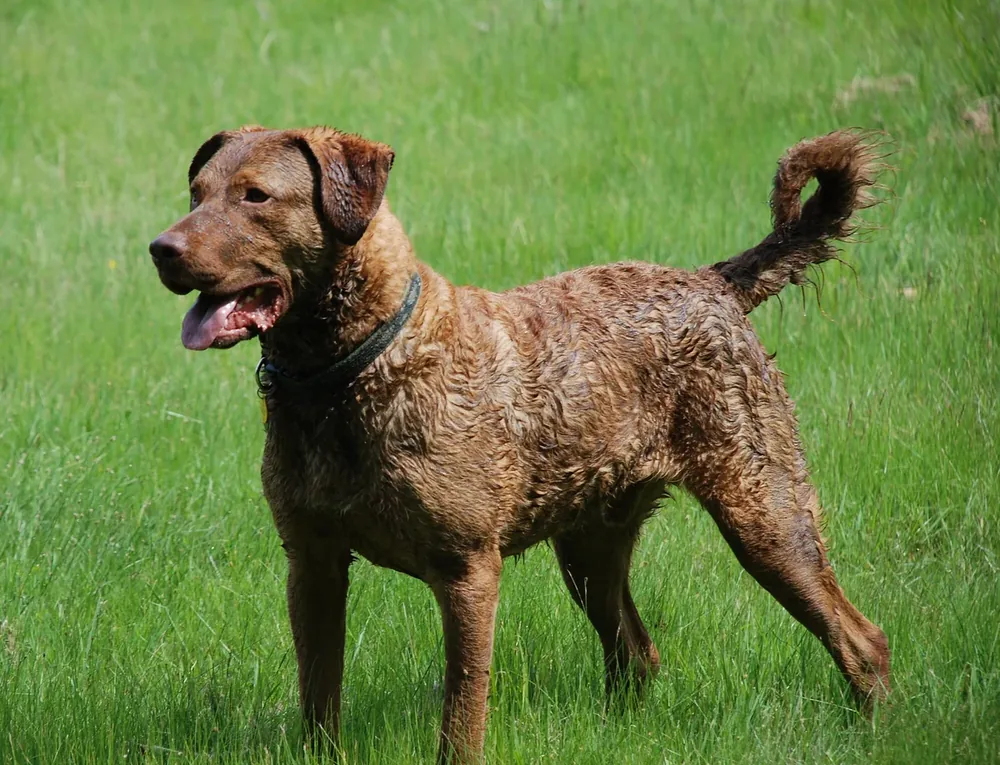
Chesapeake Bay Retriever
Chesapeake Bay Retriever cost starts with a purebred purchase or adoption fee, then adds ongoing food, grooming, and vet care for a large, active dog. Most owners land near $5,258 in the first year once vaccines, supplies, and training are included. After that, budget $2,813 a year, or about $234 a month, to keep a Chessie healthy.
Acquisition, surgical desexing, initial vet series, and starter hardware.
Normalized baseline at ~$234/month routine cash burn.
Projected over a 12-year Chesapeake Bay Retriever lifespan.
$4,000 Liquid Reserve Mandate
Critical bufferOrthopedic, ocular, and bloat risk in a large, deep-chested working breed drives recurring diagnostic and emergency costs above average.
Source: MetLife True Cost of Pet Emergencies 2025 (15% of owners hit $3,000+; uninsured surgery $3,000–8,000)
Biometric & phenotypic actuarial spec
Annual Cash Burn Matrix ($2,813/yr)
Continuous operational expenditure distributed across 5 core maintenance categories, indexed to metabolic demand and regional clinical rates.
Food
Vet Care
Grooming
Pet Insurance
Supplies & Toys
Upfront Entry CapEx
Purchase / Adoption Fee ($1,100), Initial Vet Visit & Vaccinations ($700), Starter Supplies ($546), Training Classes ($260), First Year Food ($732), First Year Vet Care ($770), First Year Grooming ($195), First Year Insurance ($955).
Comprehensive Lifecycle Ledger
Audited financial breakdown distinguishing immediate first-year fixed capitalization from ongoing annualized operating liabilities over the full 10–13 yrs canine lifespan.
| Expenditure Category | Year 01 Outlay | Annual Steady-State | Lifetime Total | Actuarial Sizing Methodology |
|---|---|---|---|---|
| Purchase / Adoption Fee | $1,100 | — | $1,100 | Varies by breeder vs rescue |
| Initial Vet Visit & Vaccinations | $700 | — | $700 | Spay/neuter, microchip, health check |
| Starter Supplies | $546 | — | $546 | Bed, crate, collar, bowls, toys |
| Training Classes | $260 | — | $260 | Basic obedience recommended |
| First Year Food | $732 | — | $732 | — |
| First Year Vet Care | $770 | — | $770 | — |
| First Year Grooming | $195 | — | $195 | — |
| First Year Insurance | $955 | — | $955 | — |
| Food | — | $732 | $8,784 | — |
| Vet Care | — | $770 | $9,240 | — |
| Grooming | — | $195 | $2,340 | — |
| Pet Insurance | — | $955 | $11,460 | — |
| Supplies & Toys | — | $161 | $1,932 | — |
| Gross Actuarial Expenditure | $5,258 | $2,813 / yr | $36,201 | Unadjusted baseline |
Actuarial Health Risk Profile (Tier 4)
Orthopedic, ocular, and bloat risk in a large, deep-chested working breed drives recurring diagnostic and emergency costs above average.
Hip Dysplasia
A malformed hip joint common in large, active retrievers that can require lifelong management or surgery.
Progressive retinal atrophy
An inherited eye disease causing gradual vision loss that has no cure but is manageable with adaptation.
Exercise-induced collapse
A neuromuscular condition seen in retriever breeds that triggers weakness or collapse after intense exertion.
Gastric dilatation-volvulus (bloat)
A life-threatening stomach twist that strikes deep-chested large breeds and requires emergency surgery.
Hypothyroidism
An underactive thyroid that causes weight gain and skin problems and needs daily medication to manage.
What Truly Drives the Chesapeake Bay Retriever’s Financial Profile
About the Chesapeake Bay Retriever and its cost
The Chesapeake Bay Retriever is a large, water-loving working dog bred to retrieve waterfowl in cold conditions, and that heritage shows up in its oily double coat and muscular build. Chesapeake Bay Retriever cost reflects a less common breed than its Labrador or Golden cousins, so purchase prices from a working-line breeder often run higher, while adoption through a breed rescue is comparatively affordable. Ongoing costs track its size: a 55-80 pound dog eats more, needs larger-dose parasite prevention, and costs more to board or medicate than a mid-size breed. Grooming stays modest since the coat sheds dirt and water on its own, but shedding season adds brushing time.
What drives Chesapeake Bay Retriever costs
Size and activity level are the biggest ongoing cost drivers: a Chessie needs substantial daily exercise and a calorie-dense diet to support its muscular frame, both of which add up over a lifetime. Health-wise, hip dysplasia and progressive retinal atrophy are the two conditions most likely to generate specialist visits, imaging, or surgery, while its deep chest carries bloat risk that can mean an emergency vet bill with little warning. Because the breed is less common, insurance premiums and some veterinary specialists may be pricier or harder to find in certain regions, which pushes the emergency fund higher than for a more typical large breed.
Chesapeake Bay Retriever first-year budget
The first year combines one-time and recurring costs: $1,100 to buy or adopt the dog, $700 for initial vaccines and exam, $546 for a crate, bed, and bowls sized for a large breed, and $260 for basic obedience classes. That one-time total, $2,606, is joined by first-year recurring costs of $732 for food, $770 for routine vet visits, $195 for coat care, and $955 if enrolled, summing to $2,652. Altogether, most new Chessie owners should plan for $5,258 in the first twelve months.
Chesapeake Bay Retriever yearly cost after year one
Once the one-time setup costs are behind you, annual ownership settles into a steadier pattern of $732 for food, $770 for checkups and preventive care, $195 for at-home coat maintenance, $955 for coverage, and $161 for replacement toys and gear. Combined, these recurring lines total $2,813 a year, which breaks down to about $234 a month for a household budgeting steady expenses. Food and vet care remain the two largest shares given the breed's size and health predispositions.
Emergency fund for a Chesapeake Bay Retriever
Given this breed's elevated risk for hip dysplasia, eye disease, and bloat, an emergency reserve of $4,000 is a reasonable starting target for unplanned vet care. Bloat surgery in particular can arrive with no warning and is fatal without prompt treatment, making a dedicated fund more important than for lower-risk breeds. Over a Chessie's lifetime, factoring occasional emergencies into the $36,201 projection keeps the household from being caught off guard.
Cutting Chesapeake Bay Retriever costs
The clearest lever for lowering lifetime cost is prevention: keeping the dog lean reduces joint stress, and slow feeding habits lower bloat risk, both of which can head off expensive interventions. Choosing a breeder or rescue that already screens for hip and eye disease also reduces the odds of costly surgery later, shrinking the gap between the $2,813 baseline and a worst-case year. Spreading routine costs evenly, rather than skipping checkups to save short-term, tends to keep the $234 figure predictable and avoids larger bills tied to a missed early diagnosis.
5 Prudent Ways to Cut Chesapeake Bay Retriever Costs
Buy large-breed food in bulk
A 55-80 pound dog goes through food quickly, so buying in bulk or subscribing for auto-delivery usually beats small bags at retail price. Look for a large-breed formula that supports joint health without overfeeding calories.
Screen hips and eyes early
Ask any breeder for OFA hip and eye clearances on the parents, or get baseline screening done on a rescue Chessie soon after adoption. Catching orthopedic or retinal issues early keeps management costs lower than treating an advanced case.
Skip the professional groomer
The Chesapeake's water-repellent double coat needs regular brushing but rarely needs professional grooming beyond an occasional bath and nail trim. Doing this at home saves a recurring line item most large-breed owners pay for.
Enroll in insurance before symptoms appear
Because hip dysplasia and eye disease are common in the breed, insurance bought while the dog is young and healthy avoids pre-existing condition exclusions. Compare breed-specific quotes since premiums vary by insurer for less common breeds.
Build a bloat emergency plan
Know the nearest 24-hour emergency vet and keep funds accessible, since gastric dilatation-volvulus can strike suddenly and requires immediate surgery to survive. A slow feeder bowl and split feeding times also reduce risk at no extra cost.
Peer Class Financial Comparisons
How the Chesapeake Bay Retriever compares to morphological peers on annualized ownership cost.
Chesapeake Bay Retriever
Frequently Asked Financial Questions
How much does a Chesapeake Bay Retriever puppy cost from a breeder?
How much does it cost to adopt a Chesapeake Bay Retriever?
What is the average cost of a purebred Chesapeake Bay Retriever?
How much do Chesapeake Bay Retrievers cost per year to own?
Are Chesapeake Bay Retrievers expensive to maintain?
Do Chesapeake Bay Retrievers need pet insurance?
What is the biggest hidden cost of owning a Chesapeake Bay Retriever?
How does Chesapeake Bay Retriever cost compare to a Labrador Retriever?
Data sources
- Chesapeake Bay Retriever Breed Standard — American Kennel Club (akc.org)
- Chesapeake Bay Retriever — Wikipedia (en.wikipedia.org)
- Pet Health Insurance Basics — North American Pet Health Insurance Association (naphia.org)
- Caring for Your Dog's Overall Health — ASPCA (aspca.org)
Calculate Your Chesapeake Bay Retriever Cost Adjusted by Metro ZIP Code
Veterinary surgical tariffs and clinical room rates vary widely between metropolitan regions and rural counties. Recalculate this dossier with your exact state, city, and lifestyle parameters.