
Balinese Cost & Ownership Dossier
Balinese cat cost is driven less by the silky coat than by its Siamese heritage's health profile, with $2,070 covering the kitten, initial vetting, and gear. Ongoing spend runs near $83, reflecting periodic cardiac and respiratory monitoring. Across a typical lifespan, budget $15,044.
Executive cost summary
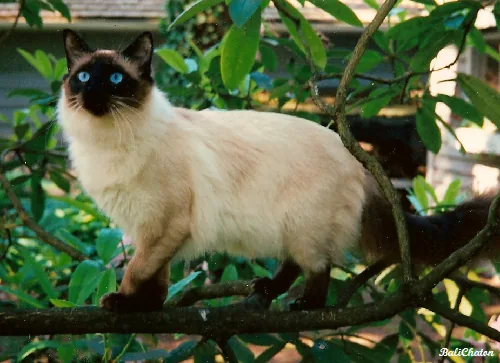
Balinese
Balinese cat cost is driven less by the silky coat than by its Siamese heritage's health profile, with $2,070 covering the kitten, initial vetting, and gear. Ongoing spend runs near $83, reflecting periodic cardiac and respiratory monitoring. Across a typical lifespan, budget $15,044.
Acquisition, surgical desexing, initial vet series, and starter hardware.
Normalized baseline at ~$83/month routine cash burn.
Projected over a 14-year Balinese lifespan.
$1,500 Liquid Reserve Mandate
Critical bufferSharing its Siamese ancestry's cluster of inherited cardiac, respiratory, and organ conditions gives this breed a genuinely elevated and recurring vet cost profile despite its otherwise athletic, long-lived build.
Source: MetLife True Cost of Pet Emergencies 2025 (15% of owners hit $3,000+; uninsured surgery $3,000–8,000)
Biometric & phenotypic actuarial spec
Annual Cash Burn Matrix ($998/yr)
Continuous operational expenditure distributed across 5 core maintenance categories, indexed to metabolic demand and regional clinical rates.
Food
Vet Care
Grooming
Pet Insurance
Supplies & Toys
Upfront Entry CapEx
Purchase / Adoption Fee ($600), Initial Vet Visit & Vaccinations ($276), Starter Supplies ($239), Litter & Behavior Basics ($40), First Year Food ($194), First Year Vet Care ($263), First Year Grooming ($96), First Year Insurance ($362).
Comprehensive Lifecycle Ledger
Audited financial breakdown distinguishing immediate first-year fixed capitalization from ongoing annualized operating liabilities over the full 12–16 yrs feline lifespan.
| Expenditure Category | Year 01 Outlay | Annual Steady-State | Lifetime Total | Actuarial Sizing Methodology |
|---|---|---|---|---|
| Purchase / Adoption Fee | $600 | — | $600 | Varies by breeder vs rescue |
| Initial Vet Visit & Vaccinations | $276 | — | $276 | Spay/neuter, microchip, health check |
| Starter Supplies | $239 | — | $239 | Litter box, scratching post, carrier, bowls |
| Litter & Behavior Basics | $40 | — | $40 | Litter box training, scratching post basics |
| First Year Food | $194 | — | $194 | — |
| First Year Vet Care | $263 | — | $263 | — |
| First Year Grooming | $96 | — | $96 | — |
| First Year Insurance | $362 | — | $362 | — |
| Food | — | $194 | $2,716 | — |
| Vet Care | — | $263 | $3,682 | — |
| Grooming | — | $96 | $1,344 | — |
| Pet Insurance | — | $362 | $5,068 | — |
| Supplies & Toys | — | $83 | $1,162 | — |
| Gross Actuarial Expenditure | $2,070 | $998 / yr | $15,044 | Unadjusted baseline |
Actuarial Health Risk Profile (Tier 4)
Sharing its Siamese ancestry's cluster of inherited cardiac, respiratory, and organ conditions gives this breed a genuinely elevated and recurring vet cost profile despite its otherwise athletic, long-lived build.
Progressive Retinal Atrophy
An inherited retinal breakdown shared with its Siamese ancestry that leads to gradual vision loss, requiring monitoring but no ongoing medical treatment.
Dilated Cardiomyopathy
A weakening of the heart muscle documented in Siamese-derived breeds that can require lifelong cardiac medication once diagnosed.
Amyloidosis
Abnormal protein deposits, most often in the liver, build up gradually in Siamese-type breeds and can progress to organ failure if undetected.
Feline Asthma
Siamese-type breeds, including the Balinese, show an elevated rate of airway inflammation that needs inhaled or oral medication to control flare-ups.
What Truly Drives the Balinese’s Financial Profile
About the Balinese and its cost
Balinese cat cost starts with a breed that is essentially a long-haired Siamese, sharing the same lithe, angular body and famously vocal, people-focused personality but carrying a semi-long, silky coat with no thick undercoat. That coat texture keeps matting risk lower than a true longhair like a Persian, though regular brushing is still needed to prevent tangles, especially behind the ears and under the legs. Despite the coat difference, the Balinese is genetically Siamese in every way that matters for health, which means it inherits the same well-documented cluster of cardiac, respiratory, and organ conditions that make this one of the higher-maintenance breeds on a vet-cost basis.
What drives Balinese costs
Vet spend on a Balinese is shaped by a cluster of Siamese-lineage conditions rather than any single dominant one. Dilated cardiomyopathy can require lifelong medication once diagnosed, and periodic cardiac screening is the recommended way to catch it early. Progressive retinal atrophy causes gradual vision loss with no treatment cost itself but justifies regular eye exams. Amyloidosis builds silently in the liver and can progress to organ failure if missed, adding another monitoring line. The breed also shows an elevated rate of feline asthma, which needs inhaled or oral medication to control flare-ups. Together these conditions mean a Balinese owner budgets for specialist-level monitoring more often than most breeds this size.
Balinese cat first-year budget
$600 secures the kitten from a breeder who screens for cardiac and eye conditions, and $276 covers the vaccine series, spay or neuter, microchip, and a baseline heart and eye exam. $239 furnishes a litter box, scratching post, and grooming comb suited to the semi-long coat, while $40 covers a puzzle-feeder and clicker kit for this vocal, intelligent breed. Recurring lines start moderate: $194 for a lean, active diet, $263 for early wellness visits, $96 for occasional brushing, and $362 if enrolled now. One-time costs total $1,155, recurring costs $915, for a first-year total of $2,070.
Balinese yearly cost after year one
Steady-state ownership runs near $998 a year, or about $83 monthly. $194 stays modest for this lean, active cat. $362 is worth keeping given the breed's inherited disease cluster. $263 carries more weight than a typical shorthair because of periodic cardiac ultrasounds, eye exams, and monitoring for liver amyloidosis and asthma. $96 stays light for the non-matting coat. $83 replaces the puzzle feeders and toys this intelligent, vocal breed needs to stay engaged.
Emergency fund for a Balinese
Keep $1,500 on hand for this breed's realistic crisis scenarios. A sudden asthma flare-up can require emergency oxygen and steroid treatment. Undiagnosed dilated cardiomyopathy can progress to heart failure, needing hospitalization. Advancing amyloidosis sometimes causes acute liver failure with little warning. Because this breed carries several distinct inherited risks rather than one, a bad year is more likely than for a healthier breed, making this reserve, alongside insurance, an important protection for the $15,044 you have budgeted.
Cutting Balinese costs
The best lever is buying from a breeder who has already screened for cardiac and retinal conditions, since avoiding disease beats managing it. Scheduling cardiac, eye, and respiratory checks on a fixed calendar, rather than reactively, catches problems while treatment is still affordable. Because the coat needs only moderate brushing, grooming costs stay naturally low, so redirect any savings there toward insurance premiums or the emergency fund instead, which does more to protect the $15,044 total given this breed's health profile.
5 Prudent Ways to Cut Balinese Costs
Schedule periodic cardiac and eye screening
Given the breed's documented predisposition to dilated cardiomyopathy and progressive retinal atrophy, a cardiac ultrasound and eye exam every couple of years catches problems while they are still manageable, avoiding a costlier emergency later.
Watch for respiratory signs early
Coughing, wheezing, or open-mouth breathing can signal feline asthma developing. Starting inhaled medication early keeps the condition controlled with a lower dose than waiting until a severe flare-up requires emergency treatment.
Brush a few times a week, not daily
The Balinese coat lacks a heavy undercoat, so it mats less than a true longhair's. A few weekly sessions with a metal comb are enough, saving the cost of frequent professional grooming.
Ask breeders for cardiac and eye clearances
Reputable Balinese breeders can show screening results tied to Siamese-lineage heart and retinal conditions. Paying more for a screened kitten reduces the odds of managing an expensive inherited condition later.
Insure while young and unscreened
Enroll before any cardiac, eye, or respiratory finding is documented, since insurers exclude conditions noted after the fact. Given how many inherited conditions this breed carries, early enrollment captures the most possible coverage.
Peer Class Financial Comparisons
How the Balinese compares to morphological peers on annualized ownership cost.
Balinese
Frequently Asked Financial Questions
How much does a Balinese cat cost per month?
Is a Balinese cat expensive to own?
Are Balinese cats hypoallergenic and worth the price?
What are the yearly costs of owning a Balinese cat?
Do Balinese cats need pet insurance?
How much is a Balinese kitten?
What health problems are Balinese cats prone to?
How much does a Balinese cost over its lifetime?
Data sources
- Balinese cat — Wikipedia (en.wikipedia.org)
- Feline Asthma — Wikipedia (en.wikipedia.org)
- Cutting Pet Care Costs — ASPCA (aspca.org)
Calculate Your Balinese Cost Adjusted by Metro ZIP Code
Veterinary surgical tariffs and clinical room rates vary widely between metropolitan regions and rural counties. Recalculate this dossier with your exact state, city, and lifestyle parameters.