
Briard Cost & Ownership Dossier
Briard cost is shaped above all by its coat, since this large French herding breed needs frequent professional grooming on top of the $700 and $546 typical of any large-breed first year. Annual upkeep runs near $3,439 once grooming, food, and insurance settle into a rhythm. Across a typical lifespan, owners should plan for $40,274.
Executive cost summary
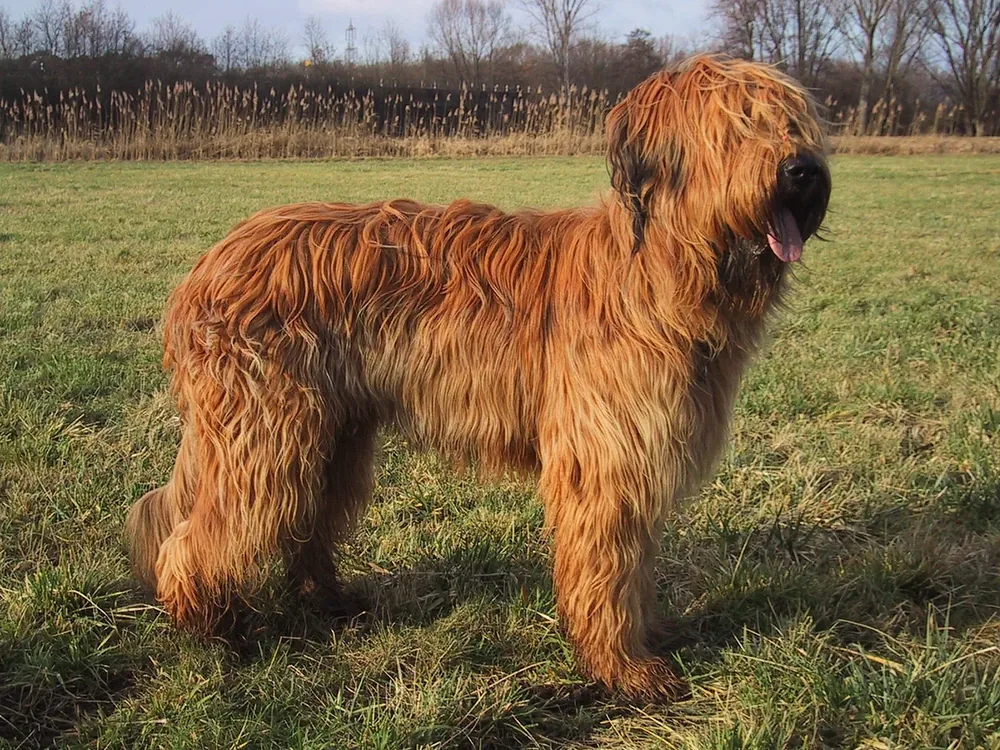
Briard
Briard cost is shaped above all by its coat, since this large French herding breed needs frequent professional grooming on top of the $700 and $546 typical of any large-breed first year. Annual upkeep runs near $3,439 once grooming, food, and insurance settle into a rhythm. Across a typical lifespan, owners should plan for $40,274.
Acquisition, surgical desexing, initial vet series, and starter hardware.
Normalized baseline at ~$287/month routine cash burn.
Projected over a 11-year Briard lifespan.
$4,000 Liquid Reserve Mandate
Critical bufferA deep chest carrying real bloat risk, hip dysplasia common in large working breeds, and a breed-specific hereditary eye condition combine into elevated recurring and emergency vet costs.
Source: MetLife True Cost of Pet Emergencies 2025 (15% of owners hit $3,000+; uninsured surgery $3,000–8,000)
Biometric & phenotypic actuarial spec
Annual Cash Burn Matrix ($3,439/yr)
Continuous operational expenditure distributed across 5 core maintenance categories, indexed to metabolic demand and regional clinical rates.
Food
Vet Care
Grooming
Pet Insurance
Supplies & Toys
Upfront Entry CapEx
Purchase / Adoption Fee ($1,100), Initial Vet Visit & Vaccinations ($700), Starter Supplies ($546), Training Classes ($260), First Year Food ($812), First Year Vet Care ($770), First Year Grooming ($741), First Year Insurance ($955).
Comprehensive Lifecycle Ledger
Audited financial breakdown distinguishing immediate first-year fixed capitalization from ongoing annualized operating liabilities over the full 10–12 yrs canine lifespan.
| Expenditure Category | Year 01 Outlay | Annual Steady-State | Lifetime Total | Actuarial Sizing Methodology |
|---|---|---|---|---|
| Purchase / Adoption Fee | $1,100 | — | $1,100 | Varies by breeder vs rescue |
| Initial Vet Visit & Vaccinations | $700 | — | $700 | Spay/neuter, microchip, health check |
| Starter Supplies | $546 | — | $546 | Bed, crate, collar, bowls, toys |
| Training Classes | $260 | — | $260 | Basic obedience recommended |
| First Year Food | $812 | — | $812 | — |
| First Year Vet Care | $770 | — | $770 | — |
| First Year Grooming | $741 | — | $741 | — |
| First Year Insurance | $955 | — | $955 | — |
| Food | — | $812 | $8,932 | — |
| Vet Care | — | $770 | $8,470 | — |
| Grooming | — | $741 | $8,151 | — |
| Pet Insurance | — | $955 | $10,505 | — |
| Supplies & Toys | — | $161 | $1,771 | — |
| Gross Actuarial Expenditure | $5,884 | $3,439 / yr | $40,274 | Unadjusted baseline |
Actuarial Health Risk Profile (Tier 4)
A deep chest carrying real bloat risk, hip dysplasia common in large working breeds, and a breed-specific hereditary eye condition combine into elevated recurring and emergency vet costs.
Hip Dysplasia
A common joint malformation in large working breeds that can cause lameness and arthritis without screening and weight management.
Gastric dilatation-volvulus (bloat)
A life-threatening stomach twist to which deep-chested large breeds like the Briard have a real elevated risk, requiring immediate surgery.
Congenital Stationary Night Blindness
A hereditary retinal condition documented specifically in Briards that impairs vision in low light and can progress over time.
Hypothyroidism
An underactive thyroid that shows up as weight gain and low energy, manageable with lifelong daily medication once diagnosed.
What Truly Drives the Briard’s Financial Profile
About the Briard and its cost
Briard cost is shaped above all by its coat: this large French herding breed carries a long, wavy double coat that mats quickly without frequent brushing, pushing grooming expenses well above what a short-coated herder would need. Bred for centuries to guard and herd flocks across the French countryside, the Briard is loyal, protective, and fiercely bonded to its family, traits that also make it a poor candidate for casual boarding and often push owners toward pricier in-home pet sitters. Its size means food and supply costs track other large breeds, while its independent streak makes early, consistent training worth the investment. Reputable breeders are limited, so purchase prices stay firm and waiting lists are common.
What drives Briard costs
Briard costs are driven by a combination of coat maintenance, size, and a few breed-specific health concerns. The long double coat requires professional grooming every few weeks if not maintained rigorously at home, and that recurring bill adds up faster than for almost any other cost line. As a large, deep-chested dog, the Briard carries a real bloat risk that many owners insure against, alongside a general predisposition to hip dysplasia common in big working breeds. The breed is also linked to a hereditary night-blindness condition and to hypothyroidism, both of which call for baseline screening and, if diagnosed, ongoing management. Together these factors keep both routine and emergency vet spending above average for a dog of this size.
Briard first-year budget
A Briard's first year opens with $1,100 from a reputable herding-breed breeder, followed by $700 for the initial exam, core vaccines, and parasite prevention. $546 covers a large crate, bed, and grooming tools suited to the long double coat, and $260 is worth prioritizing given the breed's independent, protective nature. These one-time costs add up to $2,606. Recurring spending starts immediately with large-breed $812, $770 visits, the first rounds of coat $741, and an $955 premium sized for hip and bloat risk, together forming $3,278. The combined $5,884 reflects both a firm purchase price and a coat that gets expensive fast.
Briard yearly cost after year one
After the first year, a Briard's biggest recurring line is usually $741, since the long double coat mats without regular professional maintenance in addition to home brushing. Large-breed $812 and routine $770 visits add to the total, and an $955 premium reflects the breed's hip dysplasia, bloat, and hereditary eye risk. $161 covers replacement leads, durable toys, and coat-care tools that wear out with regular use. Combined, these lines reach $3,439 a year, spreading to $287. Owners who commit to diligent home grooming can shift some of that spending away from professional $741 bills, though the underlying coat maintenance cost never fully disappears.
Emergency fund for a Briard
An $4,000 for a Briard should weigh several possibilities at once: the breed's deep chest carries a genuine bloat risk that demands immediate emergency surgery, hip dysplasia can eventually require costly orthopaedic treatment, and the hereditary night-blindness condition tied to the breed sometimes needs specialist ophthalmic evaluation. Hypothyroidism, if it develops, adds a lifetime of medication rather than a single expense but still deserves early budgeting. Because several of these risks can appear independently of one another, owners without insurance should treat this reserve as essential rather than optional. Across a typical lifespan, the realistic chance of encountering at least one of these conditions pushes the Briard's $40,274 above that of a less structurally demanding herding breed.
Cutting Briard costs
Cutting Briard costs starts with the coat, since a consistent at-home brushing routine between professional grooming visits stretches out how often a groomer bill comes due. Insuring early, before any hip, eye, or thyroid symptoms appear, keeps the monthly premium reasonable and protects against the bloat risk that comes with the breed's deep chest, which matters far more for $40,274 than any single grooming shortcut. Choosing a large-breed food formulated for joint support can also delay orthopaedic problems that would otherwise raise long-term spending. Even modest discipline around these choices keeps $3,439 and the resulting $287 closer to the lower end of what Briard ownership typically costs.
5 Prudent Ways to Cut Briard Costs
Brush the coat several times a week
A disciplined home brushing routine slows matting and stretches the interval between professional grooming visits. This is the single biggest lever over recurring $741 costs for this breed.
Insure before any diagnosis
Because bloat, hip dysplasia, and the breed's hereditary eye condition can all appear independently, enroll in $955 while your Briard is young and healthy. A policy bought after symptoms show up will typically exclude that condition.
Feed smaller, timed meals
Given the deep chest and bloat risk, splitting $812 into two or three smaller meals rather than one large one, and avoiding vigorous exercise right after eating, is a low-cost habit that reduces emergency risk.
Screen hips and eyes early
OFA hip screening and a baseline eye exam in early adulthood catch problems before they become expensive. Early detection generally keeps $770 spending to monitoring rather than late-stage treatment.
Learn basic coat maintenance yourself
Learning to trim and de-mat the coat at home, even partially, meaningfully reduces how often you pay a professional groomer. Ask your groomer to teach you the basics during a paid visit.
Peer Class Financial Comparisons
How the Briard compares to morphological peers on annualized ownership cost.
Briard
Frequently Asked Financial Questions
How much does a Briard cost?
Is a Briard expensive to own?
What are the first-year costs of owning a Briard?
How much does it cost to adopt a Briard?
Are show-quality Briards more expensive than pet-quality ones?
How much does Briard grooming cost?
Do Briards need pet insurance?
Data sources
- Briard Dog Breed Information — American Kennel Club (akc.org)
- Briard — Wikipedia (en.wikipedia.org)
- Gastric Dilatation-Volvulus — American College of Veterinary Surgeons (acvs.org)
Calculate Your Briard Cost Adjusted by Metro ZIP Code
Veterinary surgical tariffs and clinical room rates vary widely between metropolitan regions and rural counties. Recalculate this dossier with your exact state, city, and lifestyle parameters.