
Bull Terrier Cost & Ownership Dossier
Bull Terrier cost centers on the breed's muscular build and a short list of genuinely breed-specific health risks rather than the joint problems that plague larger dogs. A BAER hearing test and periodic kidney screening are the two line items that separate this breed's vet spend from an average medium dog. $4,552 covers acquisition and initial screening, while $29,819 reflects a solidly built, moderately healthy dog over a full decade-plus lifespan.
Executive cost summary
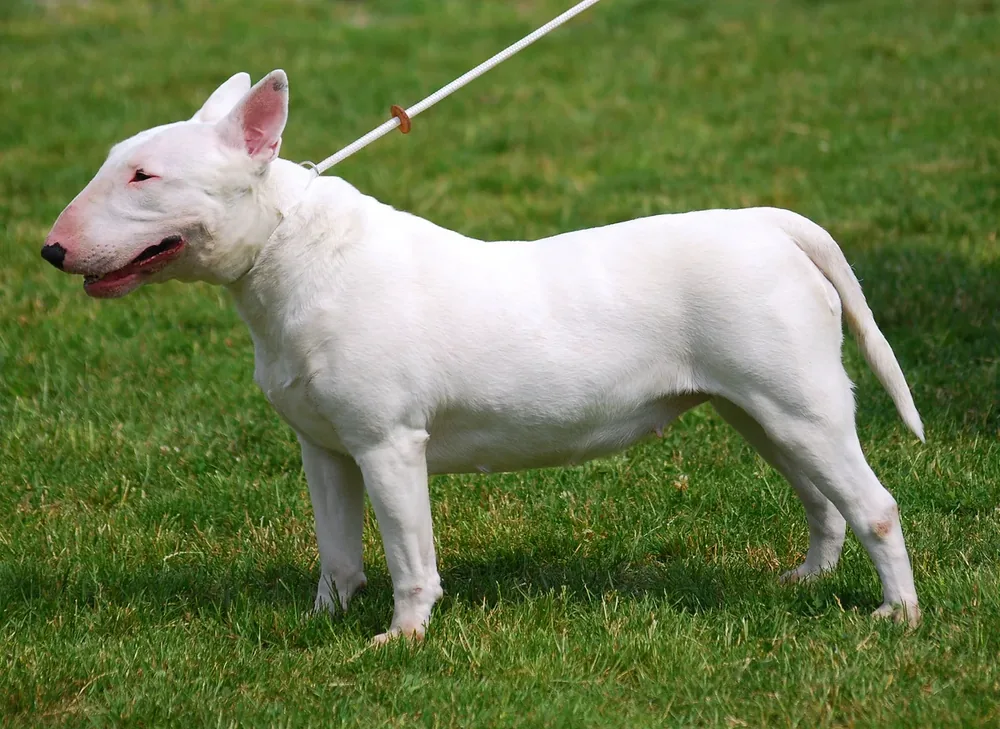
Bull Terrier
Bull Terrier cost centers on the breed's muscular build and a short list of genuinely breed-specific health risks rather than the joint problems that plague larger dogs. A BAER hearing test and periodic kidney screening are the two line items that separate this breed's vet spend from an average medium dog. $4,552 covers acquisition and initial screening, while $29,819 reflects a solidly built, moderately healthy dog over a full decade-plus lifespan.
Acquisition, surgical desexing, initial vet series, and starter hardware.
Normalized baseline at ~$191/month routine cash burn.
Projected over a 12-year Bull Terrier lifespan.
$3,000 Liquid Reserve Mandate
Critical bufferBreed-specific deafness and kidney predisposition create real but manageable screening costs, keeping the breed near the average rather than at the high end of the risk scale.
Source: MetLife True Cost of Pet Emergencies 2025 (15% of owners hit $3,000+; uninsured surgery $3,000–8,000)
Biometric & phenotypic actuarial spec
Annual Cash Burn Matrix ($2,297/yr)
Continuous operational expenditure distributed across 5 core maintenance categories, indexed to metabolic demand and regional clinical rates.
Food
Vet Care
Grooming
Pet Insurance
Supplies & Toys
Upfront Entry CapEx
Purchase / Adoption Fee ($1,000), Initial Vet Visit & Vaccinations ($660), Starter Supplies ($475), Training Classes ($260), First Year Food ($670), First Year Vet Care ($660), First Year Grooming ($78), First Year Insurance ($749).
Comprehensive Lifecycle Ledger
Audited financial breakdown distinguishing immediate first-year fixed capitalization from ongoing annualized operating liabilities over the full 10–14 yrs canine lifespan.
| Expenditure Category | Year 01 Outlay | Annual Steady-State | Lifetime Total | Actuarial Sizing Methodology |
|---|---|---|---|---|
| Purchase / Adoption Fee | $1,000 | — | $1,000 | Varies by breeder vs rescue |
| Initial Vet Visit & Vaccinations | $660 | — | $660 | Spay/neuter, microchip, health check |
| Starter Supplies | $475 | — | $475 | Bed, crate, collar, bowls, toys |
| Training Classes | $260 | — | $260 | Basic obedience recommended |
| First Year Food | $670 | — | $670 | — |
| First Year Vet Care | $660 | — | $660 | — |
| First Year Grooming | $78 | — | $78 | — |
| First Year Insurance | $749 | — | $749 | — |
| Food | — | $670 | $8,040 | — |
| Vet Care | — | $660 | $7,920 | — |
| Grooming | — | $78 | $936 | — |
| Pet Insurance | — | $749 | $8,988 | — |
| Supplies & Toys | — | $140 | $1,680 | — |
| Gross Actuarial Expenditure | $4,552 | $2,297 / yr | $29,819 | Unadjusted baseline |
Actuarial Health Risk Profile (Tier 3)
Breed-specific deafness and kidney predisposition create real but manageable screening costs, keeping the breed near the average rather than at the high end of the risk scale.
Hereditary deafness
White-coated Bull Terriers in particular have an elevated rate of congenital deafness, screened with a BAER hearing test as puppies.
Lethal Acrodermatitis
A rare inherited zinc-metabolism disorder in the breed causing skin lesions and immune problems, typically fatal without intensive management.
Kidney Disease
The breed has a known predisposition to hereditary nephropathy, making periodic kidney function screening a worthwhile preventive step.
Skin allergies
A thin, short coat leaves the skin exposed to environmental allergens, leading to recurring itching and occasional secondary infections.
What Truly Drives the Bull Terrier’s Financial Profile
About the Bull Terrier and its cost
The Bull Terrier is instantly recognizable by its egg-shaped head and stocky, muscular frame, a breed built originally for bull-baiting and later refined into a companion terrier with a famously comical, headstrong personality. Because reputable breeders screen for hereditary deafness and kidney issues before selling puppies, $1,000 for a properly tested dog tends to run higher than for an untested one, though buying untested is a real gamble on lifetime vet costs. The breed's short coat keeps $78 low, one of the genuine savings areas in Bull Terrier cost. Overall the breed sits close to the middle of the pack: not cheap, but not driven by the kind of chronic structural problems that define many larger or flatter-faced breeds.
What drives Bull Terrier costs
The single most breed-specific cost driver is hereditary deafness, disproportionately common in white-coated individuals, which is why a BAER hearing test on puppies is considered essential rather than optional. Kidney disease predisposition means periodic bloodwork or urinalysis is a sensible recurring line inside $660 rather than a rare emergency. The breed's high energy and strong drive also mean $260 is a meaningful early investment, since an under-exercised, under-trained Bull Terrier can develop destructive habits that carry their own indirect costs. Skin allergies round out the list, occasionally pushing $660 spend up in dogs with sensitive skin.
Bull Terrier first-year budget
The first year opens with $1,000 for a puppy ideally accompanied by BAER hearing test documentation, followed by $660 for the vaccination series and a baseline wellness and kidney-function check. $475 should account for a strong, energetic dog that can outgrow or destroy underbuilt gear quickly. $260 is worth prioritizing given the breed's stubborn streak, since early structure prevents costly behavioral problems later. Combined with several months of $670, $660, $78, and $749, $2,395 and $2,157 together produce $4,552, the peak spending year for most owners.
Bull Terrier yearly cost after year one
Ongoing costs settle into a fairly typical medium-breed pattern: $670 runs a bit higher than average given the dog's muscular build and appetite, $660 stays moderate with periodic kidney screening folded in, and $78 remains low thanks to the short coat. $749 is worth carrying given the breed's hereditary risk profile, and $140 should account for a dog that plays hard and destroys toys quickly. $2,297 captures the full-year figure, with $191 giving a practical month-to-month number.
Emergency fund for a Bull Terrier
An $3,000 for this breed should realistically account for advanced kidney disease management if hereditary nephropathy progresses, along with general injury risk from a high-energy, powerfully built dog. Skin infections that go untreated can also escalate into costlier veterinary visits. These risks are lower-probability than in brachycephalic or giant breeds, but they are real enough that skipping a reserve leaves an owner exposed. Sizing the fund against $29,819 rather than a single year gives a more honest sense of what a difficult stretch could cost.
Cutting Bull Terrier costs
Requiring documented health screening before purchase is the single highest-leverage savings decision, since it avoids the largest potential vet bills tied to deafness or kidney disease. Consistent exercise and training reduce the indirect costs of a bored, destructive dog, while a diet chosen with skin sensitivity in mind can head off recurring allergy treatment. Enrolling in insurance early keeps $749 affordable relative to the breed's known risks. Together these habits keep $2,297 closer to the breed's lower range and bend $29,819 downward over the years.
5 Prudent Ways to Cut Bull Terrier Costs
Require a BAER test before buying
Ask any breeder for documented BAER hearing test results on the puppy and its parents. This single step avoids the far larger cost and heartbreak of discovering deafness after purchase.
Screen kidney function periodically
A simple annual urinalysis can catch hereditary nephropathy early, when management is far cheaper than treating advanced kidney disease. Discuss a screening schedule with your vet starting in early adulthood.
Invest in structured exercise and training
This breed's energy and stubbornness need an outlet, and early obedience work prevents costly destructive behavior at home. A tired, well-trained Bull Terrier is a much cheaper Bull Terrier over time.
Manage skin allergies with diet first
Many mild skin issues in this breed respond to a consistent, allergen-conscious diet before escalating to medicated treatment. Addressing food sensitivities early can meaningfully reduce recurring $660 visits.
Insure before any hereditary diagnosis
Enrolling in pet insurance while the dog is young and undiagnosed secures better $749 terms for kidney or dermatological claims later. Waiting until symptoms appear often means exclusions.
Peer Class Financial Comparisons
How the Bull Terrier compares to morphological peers on annualized ownership cost.
Bull Terrier
Frequently Asked Financial Questions
How much does a Bull Terrier cost to own?
Is a Bull Terrier expensive to own?
How much does a Bull Terrier puppy cost from a breeder?
What are the first-year costs of owning a Bull Terrier?
How much does it cost to adopt a Bull Terrier?
Is a Bull Terrier prone to deafness?
How much are Bull Terrier vet bills?
What is the lifetime cost of owning a Bull Terrier?
Data sources
- Herding Group: Kelpie — American Kennel Club (akc.org)
- Bull Terrier — Wikipedia (en.wikipedia.org)
- Pet Health Insurance — NAPHIA (naphia.org)
Calculate Your Bull Terrier Cost Adjusted by Metro ZIP Code
Veterinary surgical tariffs and clinical room rates vary widely between metropolitan regions and rural counties. Recalculate this dossier with your exact state, city, and lifestyle parameters.