
Egyptian Mau Cost & Ownership Dossier
Egyptian mau cost reflects one of the fastest and most naturally spotted cats, with moderate purchase and care costs tied to a couple of specific health risks. First-year spending typically runs near $2,261, easing to about $951 a year, or roughly $79 a month. Over a full lifespan, total ownership approaches $13,673.
Executive cost summary
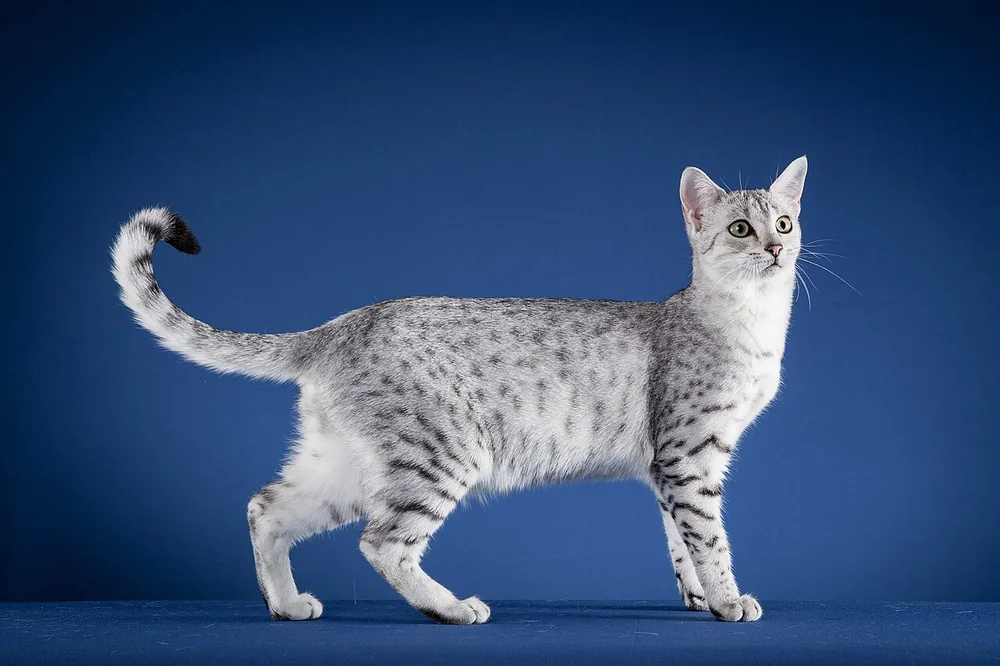
Egyptian Mau
Egyptian mau cost reflects one of the fastest and most naturally spotted cats, with moderate purchase and care costs tied to a couple of specific health risks. First-year spending typically runs near $2,261, easing to about $951 a year, or roughly $79 a month. Over a full lifespan, total ownership approaches $13,673.
Acquisition, surgical desexing, initial vet series, and starter hardware.
Normalized baseline at ~$79/month routine cash burn.
Projected over a 13-year Egyptian Mau lifespan.
$2,000 Liquid Reserve Mandate
Critical bufferA hereditary anemia-causing enzyme deficiency and generalized feline heart-disease risk create moderate, monitorable costs balanced by an otherwise athletic, well-built cat.
Source: MetLife True Cost of Pet Emergencies 2025 (15% of owners hit $3,000+; uninsured surgery $3,000–8,000)
Biometric & phenotypic actuarial spec
Annual Cash Burn Matrix ($951/yr)
Continuous operational expenditure distributed across 5 core maintenance categories, indexed to metabolic demand and regional clinical rates.
Food
Vet Care
Grooming
Pet Insurance
Supplies & Toys
Upfront Entry CapEx
Purchase / Adoption Fee ($800), Initial Vet Visit & Vaccinations ($300), Starter Supplies ($260), Litter & Behavior Basics ($40), First Year Food ($236), First Year Vet Care ($260), First Year Grooming ($24), First Year Insurance ($341).
Comprehensive Lifecycle Ledger
Audited financial breakdown distinguishing immediate first-year fixed capitalization from ongoing annualized operating liabilities over the full 12–15 yrs feline lifespan.
| Expenditure Category | Year 01 Outlay | Annual Steady-State | Lifetime Total | Actuarial Sizing Methodology |
|---|---|---|---|---|
| Purchase / Adoption Fee | $800 | — | $800 | Varies by breeder vs rescue |
| Initial Vet Visit & Vaccinations | $300 | — | $300 | Spay/neuter, microchip, health check |
| Starter Supplies | $260 | — | $260 | Litter box, scratching post, carrier, bowls |
| Litter & Behavior Basics | $40 | — | $40 | Litter box training, scratching post basics |
| First Year Food | $236 | — | $236 | — |
| First Year Vet Care | $260 | — | $260 | — |
| First Year Grooming | $24 | — | $24 | — |
| First Year Insurance | $341 | — | $341 | — |
| Food | — | $236 | $3,068 | — |
| Vet Care | — | $260 | $3,380 | — |
| Grooming | — | $24 | $312 | — |
| Pet Insurance | — | $341 | $4,433 | — |
| Supplies & Toys | — | $90 | $1,170 | — |
| Gross Actuarial Expenditure | $2,261 | $951 / yr | $13,673 | Unadjusted baseline |
Actuarial Health Risk Profile (Tier 3)
A hereditary anemia-causing enzyme deficiency and generalized feline heart-disease risk create moderate, monitorable costs balanced by an otherwise athletic, well-built cat.
Pyruvate Kinase Deficiency
A hereditary enzyme defect that causes red blood cells to break down early, leading to intermittent anemia that needs bloodwork monitoring and sometimes treatment.
Hypertrophic Cardiomyopathy
A thickening of the heart muscle that is the leading cause of heart disease in cats generally and needs periodic cardiac ultrasound to catch early.
Patellar Luxation
This breed's speed and jumping ability come with knee strain risk, and a slipping kneecap occasionally needs surgical correction.
What Truly Drives the Egyptian Mau’s Financial Profile
About the Egyptian Mau and its cost
Egyptian mau cost starts with a genuinely rare breed, one of the few cats with a naturally occurring spotted coat rather than a bred-in pattern. Athletic and fast, this cat needs an active household and plenty of vertical space to climb and sprint. Breeders who test for the enzyme deficiency and screen for heart health keep $800 moderate to high for the limited kittens available. Plan $300 for the first exam and vaccine series and $260 for scratching posts, climbing furniture, and interactive toys this energetic cat needs. First-year spending totals near $2,261.
What drives Egyptian Mau costs
The defining cost risk in this breed is pyruvate kinase deficiency, a hereditary enzyme defect that causes red blood cells to break down early and produces episodes of anemia needing bloodwork and monitoring. Like many purebred and mixed cats alike, the Mau also carries background risk for hypertrophic cardiomyopathy, the most common heart disease in cats, which calls for periodic cardiac screening as the cat ages. Its speed and jumping habits add a modest orthopedic risk around the knees. None of these conditions are as costly as a syndrome affecting every organ system, which keeps this breed's $260 and $341 at a moderate, breed-average level.
Egyptian Mau first-year budget
One-time costs include $800 for a kitten from a health-tested breeder, $300 for the first exam, vaccines, and spay or neuter, and $260 for climbing furniture, scratching posts, and interactive toys; $40 rarely applies to a cat. These sum to $1,400. Recurring first-year costs add $236 for an active cat's appetite, $260 for follow-up visits, $24 for minimal coat care, and $341, totaling $861. Combined, plan for $2,261.
Egyptian Mau yearly cost after year one
Steady-state spending settles near $951 a year, about $79 a month. Food at $236 reflects a high-energy cat that burns through calories faster than a sedentary breed. Insurance at $341 covers the enzyme deficiency and general cardiac risk. Routine veterinary care at $260 should include periodic bloodwork and a cardiac check as the cat ages. Grooming at $24 stays minimal for this short-coated breed, and $90 covers replacement climbing gear and toys for an active cat.
Emergency fund for an Egyptian Mau
Reserve $2,000 for this breed's two main risks: an acute anemic episode from pyruvate kinase deficiency needing bloodwork and possibly transfusion support, and advanced hypertrophic cardiomyopathy needing cardiology referral and medication. Both can develop with limited warning, which is why periodic screening matters as much as the fund itself. A well-stocked reserve, or an insurance plan with a manageable deductible, protects the $13,673 lifetime estimate from either risk turning into a financial crisis.
Cutting Egyptian Mau costs
Choosing a kitten from parents tested clear of pyruvate kinase deficiency removes the breed's single most defining health risk and protects the $13,673 lifetime total more than any other decision. Scheduling periodic cardiac screening catches hypertrophic cardiomyopathy early, when management is cheaper and more effective than after a crisis. Giving this athletic cat enough physical and mental stimulation reduces stress-related vet visits. Insuring early smooths any of these risks into a predictable $79 rather than a surprise bill.
5 Prudent Ways to Cut Egyptian Mau Costs
Ask for pyruvate kinase deficiency testing
A DNA test can confirm whether a kitten's parents are clear of the gene causing this hereditary anemia. Buying from tested, clear lines removes the single biggest health risk in the breed.
Screen the heart periodically
Ask your vet about a baseline cardiac exam and periodic re-checks as your Mau ages, since hypertrophic cardiomyopathy often shows no symptoms until advanced. Early detection keeps management costs lower than treating a crisis.
Give this athlete room to run
A Mau's need for speed and climbing means vertical cat trees and interactive play sessions reduce stress-related behavior problems, which otherwise show up as costly vet visits for anxiety-driven issues. Physical outlets are cheaper than behavioral treatment.
Insure while young
Enroll a Mau kitten in insurance before any anemia episode or cardiac finding, since both would otherwise be excluded as pre-existing conditions. Early enrollment locks in coverage for the breed's two main risks.
Keep this cat lean
A trim, athletic Mau puts less strain on its knees during high-speed play and tolerates any future cardiac medication or anesthesia better. Measured meals matched to its high activity level prevent both weight gain and undernourishment.
Peer Class Financial Comparisons
How the Egyptian Mau compares to morphological peers on annualized ownership cost.
Egyptian Mau
Frequently Asked Financial Questions
How much does an Egyptian Mau kitten cost?
Why are Egyptian Maus so expensive?
How much does it cost to own an Egyptian Mau per month?
Are Egyptian Maus rare?
What health problems are Egyptian Maus prone to?
Is Egyptian Mau pet insurance expensive?
Do Egyptian Maus need a lot of exercise?
Data sources
- Pyruvate Kinase Deficiency — Merck Veterinary Manual (merckvetmanual.com)
- Hypertrophic Cardiomyopathy in Cats — VCA Animal Hospitals (vcahospitals.com)
- Egyptian Mau — Wikipedia (en.wikipedia.org)
Calculate Your Egyptian Mau Cost Adjusted by Metro ZIP Code
Veterinary surgical tariffs and clinical room rates vary widely between metropolitan regions and rural counties. Recalculate this dossier with your exact state, city, and lifestyle parameters.