
Ocicat Cost & Ownership Dossier
Ocicat cost sits in the middle of the purebred range, priced for a striking, spotted, athletic cat that carries no wild blood despite its leopard-like look. $800 reflects demand for the breed's appearance and temperament, while $260 includes periodic screening for a documented kidney disorder. Expect $2,292 in year one and $982 every year after.
Executive cost summary
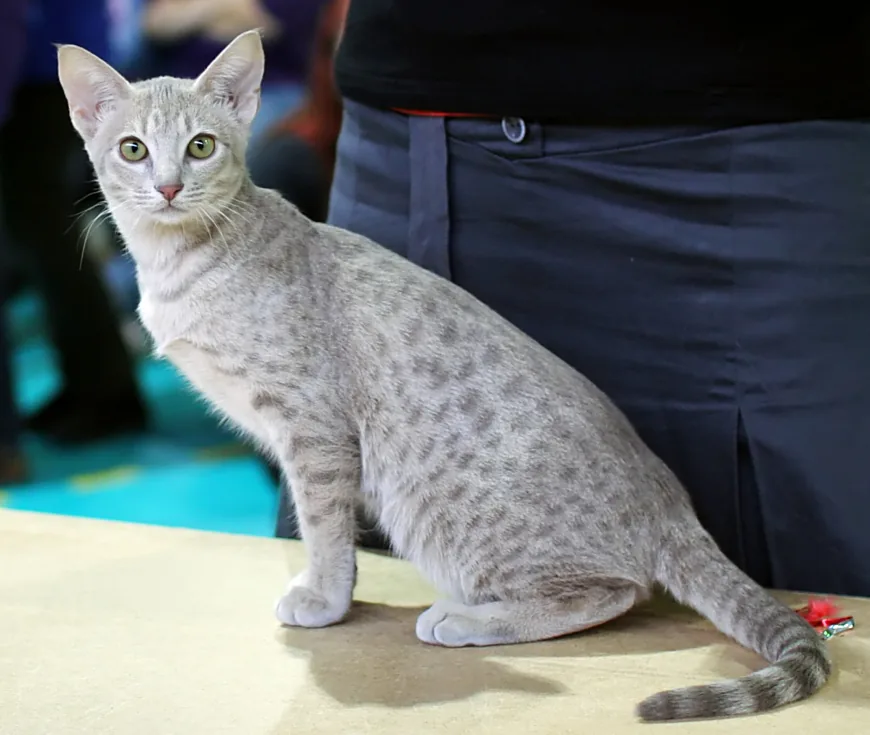
Ocicat
Ocicat cost sits in the middle of the purebred range, priced for a striking, spotted, athletic cat that carries no wild blood despite its leopard-like look. $800 reflects demand for the breed's appearance and temperament, while $260 includes periodic screening for a documented kidney disorder. Expect $2,292 in year one and $982 every year after.
Acquisition, surgical desexing, initial vet series, and starter hardware.
Normalized baseline at ~$82/month routine cash burn.
Projected over a 14-year Ocicat lifespan.
$2,000 Liquid Reserve Mandate
Critical bufferA documented hereditary kidney disorder and an inherited eye condition give the Ocicat a moderate, testable risk profile above a typical mixed-breed cat.
Source: MetLife True Cost of Pet Emergencies 2025 (15% of owners hit $3,000+; uninsured surgery $3,000–8,000)
Biometric & phenotypic actuarial spec
Annual Cash Burn Matrix ($982/yr)
Continuous operational expenditure distributed across 5 core maintenance categories, indexed to metabolic demand and regional clinical rates.
Food
Vet Care
Grooming
Pet Insurance
Supplies & Toys
Upfront Entry CapEx
Purchase / Adoption Fee ($800), Initial Vet Visit & Vaccinations ($300), Starter Supplies ($260), Litter & Behavior Basics ($40), First Year Food ($267), First Year Vet Care ($260), First Year Grooming ($24), First Year Insurance ($341).
Comprehensive Lifecycle Ledger
Audited financial breakdown distinguishing immediate first-year fixed capitalization from ongoing annualized operating liabilities over the full 12–15 yrs feline lifespan.
| Expenditure Category | Year 01 Outlay | Annual Steady-State | Lifetime Total | Actuarial Sizing Methodology |
|---|---|---|---|---|
| Purchase / Adoption Fee | $800 | — | $800 | Varies by breeder vs rescue |
| Initial Vet Visit & Vaccinations | $300 | — | $300 | Spay/neuter, microchip, health check |
| Starter Supplies | $260 | — | $260 | Litter box, scratching post, carrier, bowls |
| Litter & Behavior Basics | $40 | — | $40 | Litter box training, scratching post basics |
| First Year Food | $267 | — | $267 | — |
| First Year Vet Care | $260 | — | $260 | — |
| First Year Grooming | $24 | — | $24 | — |
| First Year Insurance | $341 | — | $341 | — |
| Food | — | $267 | $3,738 | — |
| Vet Care | — | $260 | $3,640 | — |
| Grooming | — | $24 | $336 | — |
| Pet Insurance | — | $341 | $4,774 | — |
| Supplies & Toys | — | $90 | $1,260 | — |
| Gross Actuarial Expenditure | $2,292 | $982 / yr | $15,058 | Unadjusted baseline |
Actuarial Health Risk Profile (Tier 3)
A documented hereditary kidney disorder and an inherited eye condition give the Ocicat a moderate, testable risk profile above a typical mixed-breed cat.
Renal Amyloidosis
A hereditary kidney disorder documented in the breed causes abnormal protein deposits in kidney tissue, which can progress to kidney failure and requires monitoring through routine bloodwork.
Progressive Retinal Atrophy
An inherited, gradual degeneration of the retina that can lead to blindness over time; DNA testing lets breeders identify carriers before affected kittens are produced.
Periodontal Disease
Like many purebred shorthairs, the Ocicat benefits from proactive dental care, since neglected tartar buildup eventually leads to costlier extractions under anesthesia.
What Truly Drives the Ocicat’s Financial Profile
About the Ocicat and its cost
Ocicat cost reflects a breed created deliberately in 1964 by crossing Siamese, Abyssinian, and American Shorthair lines to produce a spotted coat pattern without any wild cat ancestry. The result is an athletic, dog-like companion known for learning tricks, walking on a leash, and playing fetch, which keeps enrichment spending modest but favors active toys over passive ones. Because the breed's striking appearance draws steady demand and breeders invest in health testing for a couple of documented hereditary conditions, kitten prices sit comfortably above an average domestic shorthair.
What drives Ocicat costs
Renal amyloidosis, a hereditary kidney disorder documented in the breed, is the main reason for periodic bloodwork through the cat's life, since early detection changes management options. Progressive retinal atrophy, an inherited and gradual vision loss, is now largely screened out through DNA testing of breeding cats, which adds a modest premium to well-tested kittens. Otherwise, the Ocicat's short coat and moderate size keep food and grooming costs close to an average shorthair, so cost pressure concentrates in kidney monitoring rather than daily care.
Ocicat first-year budget
Year one includes $800 for a kitten tested for renal amyloidosis and progressive retinal atrophy, $300 for vaccines and a baseline wellness exam, and $260 for a litter box, active-play toys, and a carrier. $40 covers leash and trick-training basics that suit this dog-like breed well. $1,400 in one-time costs plus $892 in food and vet care bring the $2,292 total to a level above an average shorthair but below the rarer hybrid breeds.
Ocicat yearly cost after year one
Ongoing costs track close to a standard shorthair with one addition: $267 for an active-cat appetite, $260 for annual exams plus periodic kidney-function bloodwork, and $24 for simple short-coat upkeep. $341 is worth carrying given the breed's kidney risk, and $90 supports this high-energy cat's need for active play. The total comes to $982 a year, or $82 a month.
Emergency fund for an Ocicat
An Ocicat's emergency risk centers on the kidneys: a sudden change in thirst, appetite, or energy warrants prompt bloodwork given the breed's amyloidosis risk. A moderate $2,000 reserve, in line with the breed's $15,058 lifetime cost, covers most plausible scenarios for this generally sturdy, active cat. Cats are skilled at masking pain, so sudden lethargy, appetite loss, or vomiting deserves an urgent vet visit rather than a wait-and-see approach, since catching a problem early is almost always cheaper than treating it once it has progressed.
Cutting Ocicat costs
The clearest saving is choosing a breeder who documents both amyloidosis and PRA testing, since that reduces the odds of a major kidney or vision problem later. Channeling the Ocicat's high energy into inexpensive puzzle toys and leash walks avoids destructive behavior that can lead to injury or vet visits. Over a $15,058 lifespan, routine kidney monitoring keeps $82 spending predictable rather than reactive.
5 Prudent Ways to Cut Ocicat Costs
Ask for amyloidosis and PRA test results
A breeder who screens both parents for these two documented hereditary conditions reduces the odds of a costly diagnosis and is worth the higher purchase price.
Schedule annual kidney-function bloodwork
Routine bloodwork starting in early adulthood catches renal changes long before symptoms appear, when management is far cheaper.
Channel the Ocicat's energy into cheap enrichment
Puzzle feeders, fetch toys, and leash walks satisfy this athletic breed's exercise needs without expensive equipment, reducing behavior-driven vet visits.
Start dental care early
Daily or near-daily tooth brushing from kittenhood delays the need for a professional dental cleaning, one of the larger periodic costs for this breed.
Buy from an established Ocicat breeder
Going direct to a specialist breeder rather than a general cattery gets you documented health testing without a reseller markup.
Peer Class Financial Comparisons
How the Ocicat compares to morphological peers on annualized ownership cost.
Ocicat
Frequently Asked Financial Questions
How much does an Ocicat cost?
Why are Ocicats so expensive?
Is an Ocicat expensive to own?
What are the yearly costs of owning an Ocicat?
Do Ocicats need pet insurance?
Do Ocicats have health problems?
How much exercise does an Ocicat need?
Data sources
- Ocicat — Wikipedia (en.wikipedia.org)
- Amyloidosis — Wikipedia (en.wikipedia.org)
- Caring for Hairless Cat Breeds — VCA Animal Hospitals (vcahospitals.com)
Calculate Your Ocicat Cost Adjusted by Metro ZIP Code
Veterinary surgical tariffs and clinical room rates vary widely between metropolitan regions and rural counties. Recalculate this dossier with your exact state, city, and lifestyle parameters.