
German Pinscher Cost & Ownership Dossier
German Pinscher cost sits close to breed-average for a medium working dog, since this athletic, short-coated breed carries only a moderate health-risk profile rather than one defining expensive condition. Budget for $4,329 in the first year and $2,074 in typical years after that. Over a full lifespan, total spend can reach $29,217.
Executive cost summary
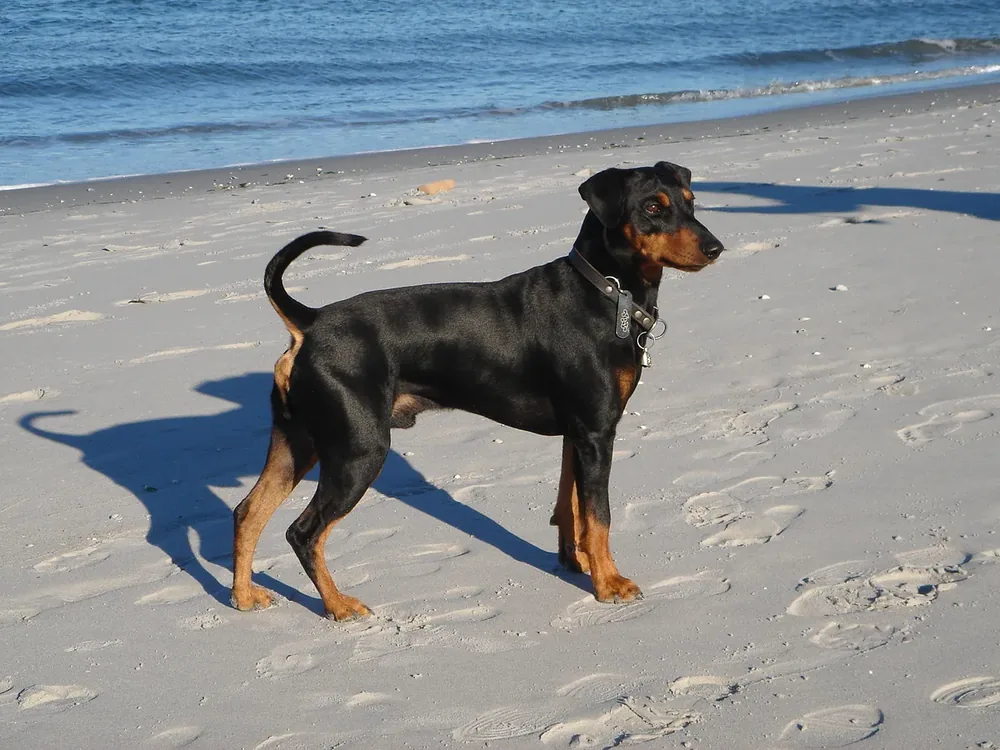
German Pinscher
German Pinscher cost sits close to breed-average for a medium working dog, since this athletic, short-coated breed carries only a moderate health-risk profile rather than one defining expensive condition. Budget for $4,329 in the first year and $2,074 in typical years after that. Over a full lifespan, total spend can reach $29,217.
Acquisition, surgical desexing, initial vet series, and starter hardware.
Normalized baseline at ~$173/month routine cash burn.
Projected over a 13-year German Pinscher lifespan.
$3,000 Liquid Reserve Mandate
Critical bufferA moderate rate of hip and clotting disorders creates occasional above-average vet bills, but the breed lacks the recurring, defining syndrome that pushes larger working breeds into a higher tier.
Source: MetLife True Cost of Pet Emergencies 2025 (15% of owners hit $3,000+; uninsured surgery $3,000–8,000)
Biometric & phenotypic actuarial spec
Annual Cash Burn Matrix ($2,074/yr)
Continuous operational expenditure distributed across 5 core maintenance categories, indexed to metabolic demand and regional clinical rates.
Food
Vet Care
Grooming
Pet Insurance
Supplies & Toys
Upfront Entry CapEx
Purchase / Adoption Fee ($1,000), Initial Vet Visit & Vaccinations ($660), Starter Supplies ($475), Training Classes ($260), First Year Food ($447), First Year Vet Care ($660), First Year Grooming ($78), First Year Insurance ($749).
Comprehensive Lifecycle Ledger
Audited financial breakdown distinguishing immediate first-year fixed capitalization from ongoing annualized operating liabilities over the full 12–14 yrs canine lifespan.
| Expenditure Category | Year 01 Outlay | Annual Steady-State | Lifetime Total | Actuarial Sizing Methodology |
|---|---|---|---|---|
| Purchase / Adoption Fee | $1,000 | — | $1,000 | Varies by breeder vs rescue |
| Initial Vet Visit & Vaccinations | $660 | — | $660 | Spay/neuter, microchip, health check |
| Starter Supplies | $475 | — | $475 | Bed, crate, collar, bowls, toys |
| Training Classes | $260 | — | $260 | Basic obedience recommended |
| First Year Food | $447 | — | $447 | — |
| First Year Vet Care | $660 | — | $660 | — |
| First Year Grooming | $78 | — | $78 | — |
| First Year Insurance | $749 | — | $749 | — |
| Food | — | $447 | $5,811 | — |
| Vet Care | — | $660 | $8,580 | — |
| Grooming | — | $78 | $1,014 | — |
| Pet Insurance | — | $749 | $9,737 | — |
| Supplies & Toys | — | $140 | $1,820 | — |
| Gross Actuarial Expenditure | $4,329 | $2,074 / yr | $29,217 | Unadjusted baseline |
Actuarial Health Risk Profile (Tier 3)
A moderate rate of hip and clotting disorders creates occasional above-average vet bills, but the breed lacks the recurring, defining syndrome that pushes larger working breeds into a higher tier.
Hip Dysplasia
A joint malformation that shows up at moderate rates in the breed and can mean ongoing joint supplements or, in severe cases, surgery.
von Willebrand's disease
An inherited clotting disorder documented in the breed that raises the cost and risk of any surgery or trauma care.
Cardiac disease
Heart conditions including valve and rhythm disorders are seen occasionally and can call for periodic cardiology screening as the dog ages.
Hypothyroidism
An underactive thyroid that is manageable but requires periodic bloodwork and lifelong daily medication once diagnosed.
What Truly Drives the German Pinscher’s Financial Profile
About the German Pinscher and its cost
The German Pinscher is a compact, muscular working dog, the ancestor of the Doberman Pinscher and Miniature Pinscher, bred originally for ratting and farm guard duty. German Pinscher cost reflects a medium build and a short, low-maintenance coat, which keeps grooming and food bills modest compared with larger or heavier-coated breeds. What pushes the ledger up is veterinary care rather than upkeep: this breed's moderate predisposition to hip dysplasia and a clotting disorder means owners should plan for periodic screening, not just annual checkups. A well-bred, health-tested German Pinscher tends to run fewer surprise vet bills than one from an unscreened litter, which is worth factoring into the higher upfront price of a reputable breeder.
What drives German Pinscher costs
Two factors set the pace for this breed's cost: its athletic, high-energy build and its moderate joint and clotting risk. Hip dysplasia screening and joint support become more relevant as the dog ages into its senior years, especially for dogs that stay highly active into adulthood. Von Willebrand's disease, while not universal in the breed, means any planned surgery, including routine spay or neuter, often includes a clotting panel beforehand, a small but recurring line item. Food and basic supplies scale modestly with its medium frame and stay predictable year to year. Compared with its larger relative the Doberman Pinscher, the German Pinscher carries a lighter overall health-cost burden, but it is not risk-free.
German Pinscher first-year budget
The first year combines one-time and recurring costs. One-time setup, covering $1,000, $660, $475, and $260, adds up to $2,395. On top of that, first-year recurring costs for $447, $660, $78, and $749 total $1,934. Together, the full first year runs $4,329. Puppy vaccination series and early obedience training are the two lines that most often run over budget if skipped, since this breed's high energy and intelligence make catching up on structure later more expensive than starting it early.
German Pinscher yearly cost after year one
Once past the first year, steady-state annual cost covers $447, $660, $78, $749, and $140, totaling $2,074 a year, or roughly $173 a month. This baseline assumes no major illness or injury; a year that includes hip imaging, a clotting workup, or dental surgery will run above it. Grooming stays inexpensive thanks to the short coat, keeping this breed's ongoing cost closer to the lower end of the medium working-dog range.
Emergency fund for a German Pinscher
Given this breed's moderate predisposition to hip dysplasia and von Willebrand's disease, an emergency reserve of $3,000 is a reasonable floor. A clotting disorder can turn a routine injury or surgery into a more complicated, costlier case than in an unaffected dog, and joint problems can escalate quickly if left unaddressed. Building this reserve alongside insurance, rather than instead of it, protects against the gap most policies leave between coverage and actual bills, and helps put the full $29,217 lifetime estimate in context.
Cutting German Pinscher costs
The biggest lever for this breed is prevention on the joint and clotting side: routine screening catches hip problems while they are still manageable with supplements or physical therapy rather than surgery. Choosing a breeder who health-tests for hips and clotting raises the purchase price but tends to lower the $29,217 total by avoiding worst-case outcomes. Keeping the dog lean and well-exercised reduces joint strain, and locking in insurance early keeps $173 predictable rather than letting one bad year push $2,074 far above plan.
5 Prudent Ways to Cut German Pinscher Costs
Ask about hip and clotting screening in the parents
A puppy from parents with documented hip evaluations and clear clotting history carries lower lifetime orthopedic and surgical risk. Paying more for a health-tested litter now can avoid costlier joint or bleeding issues later.
Keep the dog lean through its active years
Extra weight accelerates joint wear in a breed already prone to hip dysplasia. Consistent daily exercise paired with a lean body condition reduces the odds of needing orthopedic care.
Enroll in insurance before any diagnosis
Because hip and clotting issues are breed-known risks, insurers treat them as pre-existing once symptoms appear. Enrolling a puppy young locks in broader coverage and lower premiums.
Bundle bloodwork into wellness visits
Thyroid panels and clotting checks cost less folded into an annual exam than ordered as a separate visit. Ask your vet to combine breed-relevant screening into the standard checkup.
Invest in training early
This is a smart, high-energy breed that can develop costly destructive habits without early structure. Investing in obedience training up front reduces the odds of paying for damaged property or behavioral consults later.
Peer Class Financial Comparisons
How the German Pinscher compares to morphological peers on annualized ownership cost.
German Pinscher
Frequently Asked Financial Questions
How much does a German Pinscher puppy cost from a breeder?
Why do German Pinscher prices vary so much?
How much does it cost to adopt a German Pinscher?
What is the monthly cost of owning a German Pinscher?
Are German Pinschers expensive to own?
What are the yearly costs of owning a German Pinscher?
How much does German Pinscher insurance cost?
How much are German Pinscher vet bills?
Data sources
- German Pinscher Breed Standard — AKC (akc.org)
- Section 3: Average Pet Insurance Premiums — NAPHIA (naphia.org)
- German Pinscher — Wikipedia (en.wikipedia.org)
Calculate Your German Pinscher Cost Adjusted by Metro ZIP Code
Veterinary surgical tariffs and clinical room rates vary widely between metropolitan regions and rural counties. Recalculate this dossier with your exact state, city, and lifestyle parameters.