
How Much Does a Doberman Pinscher Cost Per Year?
Doberman Pinscher cost runs higher than most large breeds because this athletic, deep-chested dog is genuinely predisposed to expensive heart and spine conditions. Budget for $6,135 in the first year and $3,040 in typical years after that. Over a working lifespan, total spend can reach $36,535.
Executive cost summary
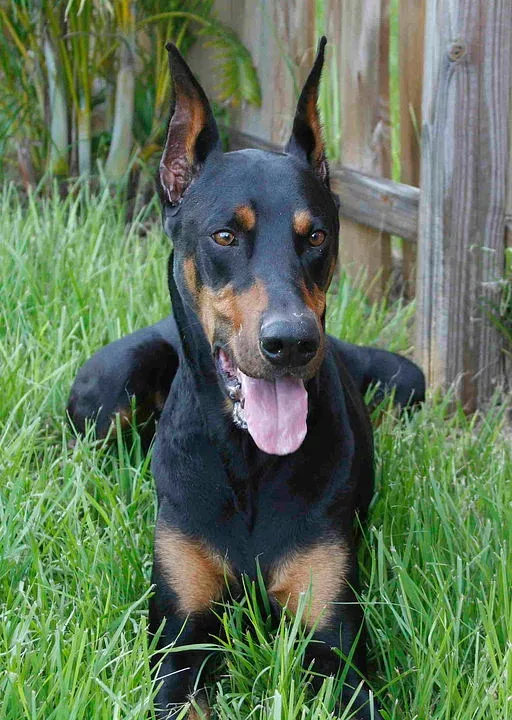
Doberman Pinscher
Doberman Pinscher cost runs higher than most large breeds because this athletic, deep-chested dog is genuinely predisposed to expensive heart and spine conditions. Budget for $6,135 in the first year and $3,040 in typical years after that. Over a working lifespan, total spend can reach $36,535.
Acquisition, surgical desexing, initial vet series, and starter hardware.
Normalized baseline at ~$253/month routine cash burn.
Projected over a 11-year Doberman Pinscher lifespan.
$4,000 Liquid Reserve Mandate
Critical bufferThe breed's high rate of dilated cardiomyopathy, layered with a clotting disorder and spinal and joint risks, drives recurring diagnostic and specialist costs that most large breeds don't carry.
Source: MetLife True Cost of Pet Emergencies 2025 (15% of owners hit $3,000+; uninsured surgery $3,000–8,000)
Biometric & phenotypic actuarial spec
What a Doberman Pinscher costs, year by year
Cumulative spend across a 11-year life in today's dollars, with the same curve at 3% and 8% yearly inflation. Year 1 carries the acquisition and setup bill.
- Food & nutrition
- Vet & insurance
- Grooming & coat
- Setup & sundries
- - - - at 3% inflation: $42,031
- · · · at 8%: $53,697
Where the big bills land
Bars are routine one-off vet events (vaccine boosters, dental cleanings, bloodwork, spay/neuter). Diamonds are sourced condition treatments for this breed.
No sourced condition costs for this breed yet; only routine events are plotted.
86th percentile
84th percentile
Ranked against 265 other dog breeds in this directory.
View as a table
| Year | Spend | Cumulative | Routine vet events |
|---|---|---|---|
| 1 | $6,135 | $6,135 | $751 |
| 2 | $3,040 | $9,175 | $77 |
| 3 | $3,040 | $12,215 | $543 |
| 4 | $3,040 | $15,255 | $164 |
| 5 | $3,040 | $18,295 | $620 |
| 6 | $3,040 | $21,335 | $164 |
| 7 | $3,040 | $24,375 | $543 |
| 8 | $3,040 | $27,415 | $405 |
| 9 | $3,040 | $30,455 | $707 |
| 10 | $3,040 | $33,495 | $328 |
| 11 | $3,040 | $36,535 | $784 |
Annual Cash Burn Matrix ($3,040/yr)
Continuous operational expenditure distributed across 5 core maintenance categories, indexed to metabolic demand and regional clinical rates.
Food
Source: Derived: veterinary MER formula + mid-tier dry kibble price (2026-01)
Vet Care
Source: Modeled estimate, not a sourced figure. Category basis: ASPCA / AAHA routine wellness composite (annual exam, vaccines, parasite control) x size 1.06 x risk 1.22 (2026-01)
Grooming
Source: Modeled estimate, not a sourced figure. Category basis: Rover / PetSmart service menu, short-coat baseline (grooming rating 2) x coat 0.4 (2026-01)
Pet Insurance
Source: Derived: NAPHIA State of the Industry 2025 (2024 data), accident & illness dog average x size 1.08 x risk 1.38 (2026-01)
Supplies & Toys
Source: Derived: Synchrony Pet Lifetime of Care 2025 (toy replacement $50–150/yr) plus routine consumables x size 1.15 (2026-01)
Upfront Entry CapEx
Purchase / Adoption Fee ($1,750), Initial Vet Visit & Vaccinations ($700), Starter Supplies ($546), Training Classes ($260), First Year Food ($831), First Year Vet Care ($854), First Year Grooming ($78), First Year Insurance ($1,116).
Comprehensive Lifecycle Ledger
Audited financial breakdown distinguishing immediate first-year fixed capitalization from ongoing annualized operating liabilities over the full 10–13 yrs canine lifespan.
| Expenditure Category | Year 01 Outlay | Annual Steady-State | Lifetime Total | Actuarial Sizing Methodology |
|---|---|---|---|---|
| Purchase / Adoption Fee | $1,750 | — | $1,750 | Varies by breeder vs rescue |
| Initial Vet Visit & Vaccinations | $700 | — | $700 | Spay/neuter, microchip, health check |
| Starter Supplies | $546 | — | $546 | Bed, crate, collar, bowls, toys |
| Training Classes | $260 | — | $260 | Basic obedience recommended |
| First Year Food | $831 | — | $831 | — |
| First Year Vet Care | $854 | — | $854 | — |
| First Year Grooming | $78 | — | $78 | — |
| First Year Insurance | $1,116 | — | $1,116 | — |
| Food | — | $831 | $9,141 | — |
| Vet Care | — | $854 | $9,394 | — |
| Grooming | — | $78 | $858 | — |
| Pet Insurance | — | $1,116 | $12,276 | — |
| Supplies & Toys | — | $161 | $1,771 | — |
| Gross Actuarial Expenditure | $6,135 | $3,040 / yr | $36,535 | Unadjusted baseline |
Actuarial Health Risk Profile (Tier 5)
The breed's high rate of dilated cardiomyopathy, layered with a clotting disorder and spinal and joint risks, drives recurring diagnostic and specialist costs that most large breeds don't carry.
Dilated Cardiomyopathy
A heart-muscle disease that is unusually common in this breed and often requires lifelong cardiology monitoring and medication once diagnosed.
von Willebrand's disease
An inherited clotting disorder that raises the stakes and cost of any surgery, dental work, or trauma care.
Wobbler syndrome (cervical vertebral instability)
A neck-spine condition seen at above-average rates in large, deep-chested dogs that can call for imaging and, in severe cases, spinal surgery.
Hip Dysplasia
A joint malformation common in large working breeds that can mean ongoing joint supplements or orthopedic surgery over the dog's life.
- Typical treatment cost (one-time)
- $7,000–$9,000
medium confidence · Iowa State University Lloyd Veterinary Medical Center, Total Hip Replacement, 2026-09
Hypothyroidism
An underactive thyroid that shows up fairly often in the breed and is manageable but needs periodic bloodwork and daily medication.
Typically appears at age 4–10
medium confidence
Costs are typical for the condition in general, not specific to the Doberman Pinscher. See the Doberman Pinscher cost timeline
What Truly Drives the Doberman Pinscher’s Financial Profile
About the Doberman Pinscher and its cost
The Doberman Pinscher is a sleek, powerful working dog bred originally for personal protection, and today it's prized as a loyal, intelligent family guardian. Doberman Pinscher cost reflects both its size and its breed-specific health profile: a large, muscular dog eats and doses medication on a large-breed scale, and its short coat keeps grooming cheap even as veterinary attention stays a bigger line item than for a similarly sized but hardier breed. New owners often underestimate how much of the lifetime bill is driven by cardiac screening rather than food or grooming. A well-bred, health-tested Doberman Pinscher costs more upfront but tends to cost less in surprise vet visits down the line.
What drives Doberman Pinscher costs
Two forces set this breed apart on cost: its large frame and its cardiac predisposition. Dilated cardiomyopathy screening, often annual echocardiograms once the dog reaches middle age, is the single biggest driver of lifetime veterinary spend and is not optional if an owner wants early warning. Add von Willebrand's disease, which turns any routine surgery into a higher-risk, higher-cost procedure requiring clotting tests beforehand, plus the orthopedic and spinal risks that come with a large, athletic build. Food and basic supplies scale with size but are predictable; it's the specialist and diagnostic side of the ledger that pushes this breed into a higher cost tier than its coat and grooming needs would suggest.
Heart screening comes first
The Doberman's defining cost is its heart. Dilated cardiomyopathy is unusually common in the breed, and the practical step is regular cardiology screening, an echocardiogram and a Holter monitor, rather than waiting for symptoms. Von Willebrand's disease is the second reason to ask for tests: a DNA result tells your vet whether surgery or dental work carries a bleeding risk. Wobbler syndrome, a neck-spine condition, and hip dysplasia at $7,000 to $9,000 per hip add large-dog orthopedic exposure. A purchase price of $1,750 buys a puppy whose parents should come with cardiac and clotting results; skipping that is where the expensive surprises start.
Doberman Pinscher first-year budget
The first year combines one-time and recurring costs. One-time setup, covering $1,100, $700, $546, and $260, adds up to $3,256. On top of that, first-year recurring costs for $831, $854, $78, and $1,116 total $2,879. Together, the full first year runs $6,135. Puppy vaccination series and early socialization training are the two lines that most often run over budget if skipped or delayed, since catching up later costs more than doing them on schedule.
Doberman Pinscher yearly cost after year one
Once past the first year, steady-state annual cost covers $831, $854, $78, $1,116, and $161, totaling $3,040 a year, or roughly $253 a month. This baseline assumes no major illness or injury; a year that includes cardiac imaging, dental surgery, or an emergency visit will run above it. Grooming stays cheap thanks to the short coat, but that saving is offset by the veterinary side of the ledger, which carries more weight in this breed than in most large dogs.
Emergency fund for a Doberman Pinscher
Given this breed's known predisposition to dilated cardiomyopathy and von Willebrand's disease, an emergency reserve of $4,000 is a reasonable floor, not a ceiling. Cardiac emergencies and clotting complications during surgery can escalate quickly, and a bleeding disorder makes even routine trauma care costlier than in an unaffected dog. Building this reserve alongside insurance, rather than instead of it, protects against the gap most policies leave between coverage and actual bills, and helps put the full $36,535 lifetime estimate in context.
Cutting Doberman Pinscher costs
The biggest lever for this breed is prevention on the cardiac side: consistent screening catches dilated cardiomyopathy while it's still cheap to manage with medication rather than emergency stabilization. Choosing a breeder who health-tests for heart and clotting issues raises the purchase price but tends to lower the $36,535 total by avoiding the worst-case scenarios. Keeping the dog fit reduces joint and cardiac strain alike, and locking in insurance early keeps $253 predictable rather than letting one bad year push $3,040 far above plan. None of this eliminates the breed's inherent risk, but it shifts spend toward the predictable and away from the catastrophic.
5 Prudent Ways to Cut Doberman Pinscher Costs
Ask for cardiac-tested parents
A puppy from parents with recent clear echocardiograms carries meaningfully lower lifetime cardiac risk. Paying more for a health-tested litter now can avoid years of cardiology visits later.
Start cardiac screening early and stick to a schedule
Routine baseline screening in early adulthood, rather than waiting for symptoms, catches dilated cardiomyopathy while it's still manageable and cheaper to treat. Skipping screening only delays the bill, it doesn't prevent it.
Buy insurance before any diagnosis
Because cardiomyopathy and clotting issues are breed-known risks, insurers price them as pre-existing once symptoms appear. Enrolling a puppy young locks in coverage before anything shows up on record.
Keep the dog lean and well-exercised
Extra weight stresses joints and the heart alike in this breed. Consistent daily exercise and a lean body condition reduce the odds of both orthopedic strain and cardiac complications.
Bundle routine bloodwork with wellness visits
Thyroid panels and clotting checks are cheaper folded into an annual exam than ordered as standalone visits. Ask your vet to combine breed-relevant screening into the standard wellness workup.
Peer Class Financial Comparisons
How the Doberman Pinscher compares to morphological peers on annualized ownership cost.
Doberman Pinscher
Frequently Asked Financial Questions
How much does a doberman pinscher cost per month?
What is the Doberman price range?
How much is a Doberman?
Is a doberman pinscher expensive to own?
What are the yearly costs of owning a doberman pinscher?
How much are doberman pinscher vet bills?
Do doberman pinschers need pet insurance?
How much does a doberman pinscher puppy cost?
What is the lifetime cost of owning a doberman pinscher?
How much does doberman pinscher insurance cost?
Are European Doberman Pinschers more expensive than American lines?
Does a blue Doberman cost more than a standard color?
How often should a Doberman have heart screening?
What is von Willebrand's disease in Dobermans?
Related reading
Data sources
- Doberman Pinscher Breed Standard — AKC (akc.org)
- Section 3: Average Pet Insurance Premiums — NAPHIA (naphia.org)
- Doberman Pinscher — Wikipedia (en.wikipedia.org)
Calculate Your Doberman Pinscher Cost Adjusted by Metro ZIP Code
Veterinary surgical tariffs and clinical room rates vary widely between metropolitan regions and rural counties. Recalculate this dossier with your exact state, city, and lifestyle parameters.