
Himalayan Cost & Ownership Dossier
Himalayan cat cost is dominated by two things: daily grooming demands and a flat-faced, Persian-derived anatomy prone to chronic issues. First-year spending typically runs $2,509, and steady ownership settles near $1,199 a year, about $100 a month. Because kidney and eye conditions can escalate with age, lifetime cost approaches $15,698.
Executive cost summary
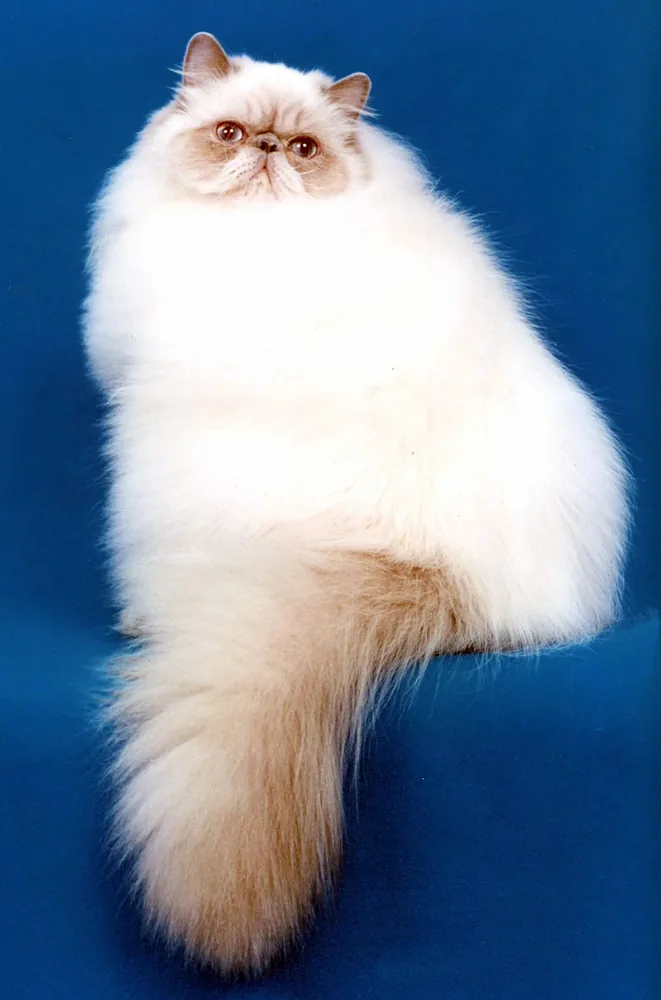
Himalayan
Himalayan cat cost is dominated by two things: daily grooming demands and a flat-faced, Persian-derived anatomy prone to chronic issues. First-year spending typically runs $2,509, and steady ownership settles near $1,199 a year, about $100 a month. Because kidney and eye conditions can escalate with age, lifetime cost approaches $15,698.
Acquisition, surgical desexing, initial vet series, and starter hardware.
Normalized baseline at ~$100/month routine cash burn.
Projected over a 12-year Himalayan lifespan.
$2,000 Liquid Reserve Mandate
Critical bufferPersian-derived brachycephalic anatomy combined with a real polycystic kidney disease risk creates recurring eye, breathing, and kidney-monitoring costs beyond an average longhair.
Source: MetLife True Cost of Pet Emergencies 2025 (15% of owners hit $3,000+; uninsured surgery $3,000–8,000)
Biometric & phenotypic actuarial spec
Annual Cash Burn Matrix ($1,199/yr)
Continuous operational expenditure distributed across 5 core maintenance categories, indexed to metabolic demand and regional clinical rates.
Food
Vet Care
Grooming
Pet Insurance
Supplies & Toys
Upfront Entry CapEx
Purchase / Adoption Fee ($800), Initial Vet Visit & Vaccinations ($300), Starter Supplies ($260), Litter & Behavior Basics ($40), First Year Food ($193), First Year Vet Care ($286), First Year Grooming ($228), First Year Insurance ($402).
Comprehensive Lifecycle Ledger
Audited financial breakdown distinguishing immediate first-year fixed capitalization from ongoing annualized operating liabilities over the full 9–15 yrs feline lifespan.
| Expenditure Category | Year 01 Outlay | Annual Steady-State | Lifetime Total | Actuarial Sizing Methodology |
|---|---|---|---|---|
| Purchase / Adoption Fee | $800 | — | $800 | Varies by breeder vs rescue |
| Initial Vet Visit & Vaccinations | $300 | — | $300 | Spay/neuter, microchip, health check |
| Starter Supplies | $260 | — | $260 | Litter box, scratching post, carrier, bowls |
| Litter & Behavior Basics | $40 | — | $40 | Litter box training, scratching post basics |
| First Year Food | $193 | — | $193 | — |
| First Year Vet Care | $286 | — | $286 | — |
| First Year Grooming | $228 | — | $228 | — |
| First Year Insurance | $402 | — | $402 | — |
| Food | — | $193 | $2,316 | — |
| Vet Care | — | $286 | $3,432 | — |
| Grooming | — | $228 | $2,736 | — |
| Pet Insurance | — | $402 | $4,824 | — |
| Supplies & Toys | — | $90 | $1,080 | — |
| Gross Actuarial Expenditure | $2,509 | $1,199 / yr | $15,698 | Unadjusted baseline |
Actuarial Health Risk Profile (Tier 4)
Persian-derived brachycephalic anatomy combined with a real polycystic kidney disease risk creates recurring eye, breathing, and kidney-monitoring costs beyond an average longhair.
Brachycephalic airway and eye issues
The flat Persian-derived face causes tear duct overflow, breathing noise, and heat intolerance, all needing ongoing management.
Polycystic Kidney Disease
An inherited condition common in Persian-lineage breeds where fluid-filled cysts gradually reduce kidney function, needing lifelong monitoring.
Matting and skin fold dermatitis
The dense long coat mats without daily brushing, and facial skin folds trap moisture, leading to recurring skin infections.
What Truly Drives the Himalayan’s Financial Profile
About the Himalayan and its cost
Himalayan cat cost begins with the breed's striking origin as a cross between Persians and Siamese, producing the Persian body and coat with Siamese color points. Breeders who health-screen for kidney disease charge accordingly, so $800 runs above a mixed-breed longhair. The docile, quiet temperament makes this an easy companion for calm households, but the dense coat is the trade-off: daily brushing is mandatory, so $260 should include a quality steel comb and slicker brush from day one. $300 covers the opening exam, including a baseline kidney ultrasound many breeders recommend. First-year spending lands near $2,509.
What drives Himalayan costs
The flat face inherited from Persian ancestry causes chronic tear overflow and mild breathing noise, both of which need ongoing cleaning and occasional veterinary attention, feeding into the $286 line every year. More significant is polycystic kidney disease, a genetic condition common in Persian-lineage cats that can be screened for via ultrasound but still requires monitoring bloodwork as the cat ages. The coat itself is a cost driver too: skipped brushing leads to painful mats that require a professional $228 shave-down, and the facial skin folds can develop dermatitis if not kept clean and dry. $402 bought early is essential given the kidney risk.
Himalayan first-year budget
One-time costs include $800 for a health-screened kitten, $300 for the opening exam, vaccines, and often a baseline kidney ultrasound, $260 for grooming tools and a litter setup suited to a long coat, and $40 for litter and handling basics. These sum to $1,400. Recurring costs add $193, $286 for kitten follow-ups, $228 if any professional coat care is used, and $402 enrolled early, for $1,109. Total first-year spending reaches $2,509.
Himalayan yearly cost after year one
Mature ownership settles at $1,199, about $100 a month. $193 supports a quality diet, and $286 covers an annual exam plus a kidney bloodwork panel given the breed's PKD risk. $402 is a critical line here because kidney disease and eye conditions can become expensive without warning. $228 varies most: owners who brush daily at home spend little, while those who rely on professional grooming pay considerably more, and $90 covers coat tools and litter replacement.
Emergency fund for a Himalayan
Reserve $2,000 against this breed's two defining risks: progression of polycystic kidney disease into reduced kidney function requiring specialist management, and acute breathing or eye emergencies tied to the flat face. Either can escalate quickly and represent a meaningful share of the $15,698 lifetime total in a single bad year, so a dedicated fund matters more here than for a typical shorthair.
Cutting Himalayan costs
The single biggest saving is disciplined daily brushing, which avoids the professional shave-downs and skin infections that otherwise inflate $228 and $286 lines. Choosing a kitten from PKD-screened parents lowers the odds of the costliest possible outcome for this breed. Insuring before any kidney or eye diagnosis converts an unpredictable specialist bill into steady contributions toward $100, protecting the $15,698 total over the cat's life.
5 Prudent Ways to Cut Himalayan Costs
Brush daily to avoid the shave-down bill
Ten minutes of daily brushing prevents the severe matting that otherwise requires a costly anesthetized shave at the vet or groomer. This single habit is the biggest controllable expense in Himalayan ownership.
Ask for a PKD ultrasound screen before buying
Reputable breeders test parent cats for polycystic kidney disease via ultrasound. Choosing a kitten from PKD-negative lines meaningfully lowers the odds of an expensive chronic kidney diagnosis later.
Clean facial folds and eyes daily
A damp cloth wipe of the tear-stained face and skin folds each day prevents the moist-skin infections that otherwise need a vet visit and topical medication. This costs nothing but a few minutes.
Insure before any kidney bloodwork is on file
Polycystic kidney disease becomes uninsurable as pre-existing once diagnosed. Enroll a young Himalayan in accident-and-illness coverage before the first annual bloodwork panel.
Schedule kidney bloodwork into routine wellness visits
Adding a kidney panel to the annual exam rather than waiting for symptoms catches PKD progression early, when management is cheaper and slower-progressing than a late-stage diagnosis.
Peer Class Financial Comparisons
How the Himalayan compares to morphological peers on annualized ownership cost.
Himalayan
Frequently Asked Financial Questions
How much does a Himalayan cat cost?
Are Himalayan cats expensive to maintain?
What is the average price of a Himalayan kitten?
How much does it cost to own a Himalayan cat per month?
Do Himalayan cats have health problems that cost money?
Is Himalayan cat insurance expensive?
How much grooming does a Himalayan cat need?
Data sources
- Himalayan cat — Wikipedia (en.wikipedia.org)
- Polycystic Kidney Disease — Cornell Feline Health Center (vet.cornell.edu)
- Brachycephalic Airway Syndrome — ACVS (acvs.org)
Calculate Your Himalayan Cost Adjusted by Metro ZIP Code
Veterinary surgical tariffs and clinical room rates vary widely between metropolitan regions and rural counties. Recalculate this dossier with your exact state, city, and lifestyle parameters.