
Exotic Shorthair Cost & Ownership Dossier
Exotic shorthair cost centers on a flat-faced, plush-coated cat whose calm temperament comes with real, recurring veterinary needs tied to its conformation. First-year spending typically runs about $2,377, easing to roughly $1,067 a year, or near $89 a month. Over a shorter-than-average lifespan, total ownership approaches $14,114.
Executive cost summary
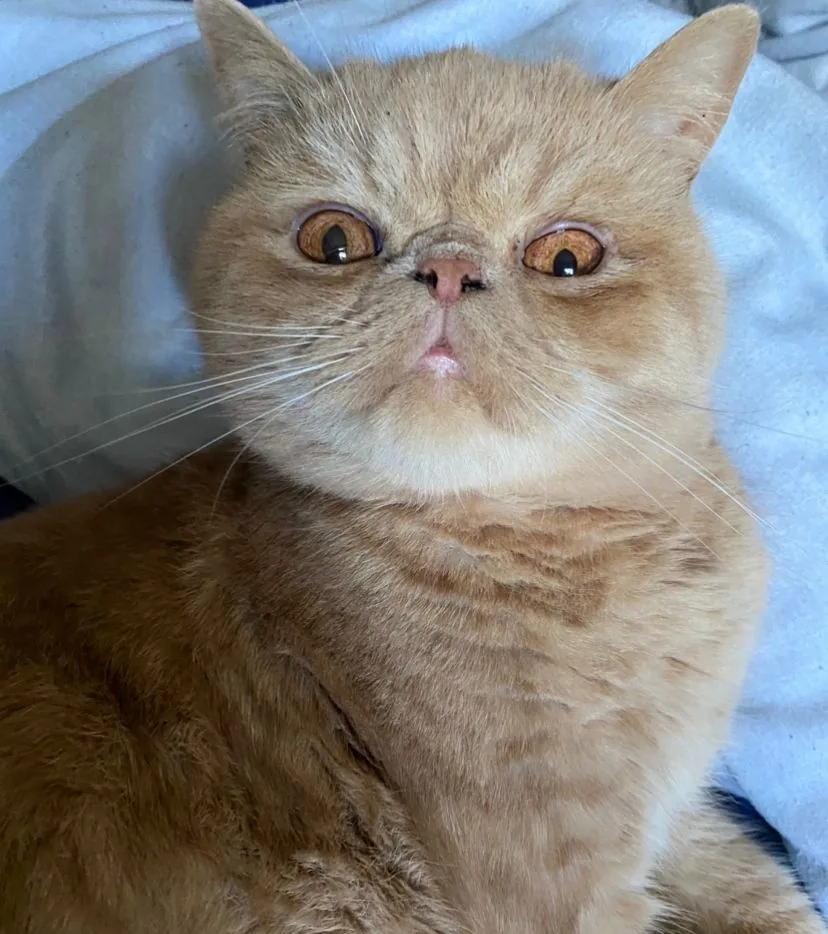
Exotic Shorthair
Exotic shorthair cost centers on a flat-faced, plush-coated cat whose calm temperament comes with real, recurring veterinary needs tied to its conformation. First-year spending typically runs about $2,377, easing to roughly $1,067 a year, or near $89 a month. Over a shorter-than-average lifespan, total ownership approaches $14,114.
Acquisition, surgical desexing, initial vet series, and starter hardware.
Normalized baseline at ~$89/month routine cash burn.
Projected over a 12-year Exotic Shorthair lifespan.
$2,000 Liquid Reserve Mandate
Critical bufferThe extreme flat-faced conformation drives airway and eye complications while hereditary polycystic kidney disease and elevated cardiac risk add ongoing diagnostic and treatment costs.
Source: MetLife True Cost of Pet Emergencies 2025 (15% of owners hit $3,000+; uninsured surgery $3,000–8,000)
Biometric & phenotypic actuarial spec
Annual Cash Burn Matrix ($1,067/yr)
Continuous operational expenditure distributed across 5 core maintenance categories, indexed to metabolic demand and regional clinical rates.
Food
Vet Care
Grooming
Pet Insurance
Supplies & Toys
Upfront Entry CapEx
Purchase / Adoption Fee ($800), Initial Vet Visit & Vaccinations ($300), Starter Supplies ($260), Litter & Behavior Basics ($40), First Year Food ($193), First Year Vet Care ($286), First Year Grooming ($96), First Year Insurance ($402).
Comprehensive Lifecycle Ledger
Audited financial breakdown distinguishing immediate first-year fixed capitalization from ongoing annualized operating liabilities over the full 9–15 yrs feline lifespan.
| Expenditure Category | Year 01 Outlay | Annual Steady-State | Lifetime Total | Actuarial Sizing Methodology |
|---|---|---|---|---|
| Purchase / Adoption Fee | $800 | — | $800 | Varies by breeder vs rescue |
| Initial Vet Visit & Vaccinations | $300 | — | $300 | Spay/neuter, microchip, health check |
| Starter Supplies | $260 | — | $260 | Litter box, scratching post, carrier, bowls |
| Litter & Behavior Basics | $40 | — | $40 | Litter box training, scratching post basics |
| First Year Food | $193 | — | $193 | — |
| First Year Vet Care | $286 | — | $286 | — |
| First Year Grooming | $96 | — | $96 | — |
| First Year Insurance | $402 | — | $402 | — |
| Food | — | $193 | $2,316 | — |
| Vet Care | — | $286 | $3,432 | — |
| Grooming | — | $96 | $1,152 | — |
| Pet Insurance | — | $402 | $4,824 | — |
| Supplies & Toys | — | $90 | $1,080 | — |
| Gross Actuarial Expenditure | $2,377 | $1,067 / yr | $14,114 | Unadjusted baseline |
Actuarial Health Risk Profile (Tier 4)
The extreme flat-faced conformation drives airway and eye complications while hereditary polycystic kidney disease and elevated cardiac risk add ongoing diagnostic and treatment costs.
Brachycephalic airway syndrome
The extremely flat face narrows airways and tear ducts, causing noisy breathing, heat intolerance, and chronic eye discharge that some cats need surgery to relieve.
Polycystic Kidney Disease
A hereditary condition causing fluid-filled cysts that gradually impair kidney function, best caught with genetic testing or an ultrasound before it becomes symptomatic kidney failure.
Dental malocclusion
The shortened jaw crowds teeth and can misalign the bite, leading to more frequent dental disease and sometimes extractions.
Hypertrophic Cardiomyopathy
Elevated risk of heart muscle thickening compared to the general cat population, requiring periodic cardiac screening.
What Truly Drives the Exotic Shorthair’s Financial Profile
About the Exotic Shorthair and its cost
Exotic shorthair cost starts with a cat essentially built as a shorthaired Persian: the same round face and plush coat, minus the daily brushing marathon. That flat face is also the source of the breed's biggest expenses, so breeders who genetically test for polycystic kidney disease and screen breathing keep $800 on the higher end. Add $300 for the first exam, vaccines, and a baseline kidney screen, plus $260 for shallow food and water dishes that are easier on a flat face. First-year spending totals near $2,377.
What drives Exotic Shorthair costs
The flattened face that defines this breed narrows the airway and tear ducts, causing noisy breathing, heat intolerance, and chronic eye discharge that can require surgical correction in severe cases. Separately, the breed carries a well-documented hereditary risk of polycystic kidney disease, which gradually reduces kidney function and is best caught early with genetic testing or imaging. A crowded jaw adds dental crowding risk, and background cardiac risk rounds out the profile. These overlapping conformation and genetic risks are why $286 and $402 run meaningfully higher for this breed than for a standard-faced shorthaired cat, even though $96 stays moderate.
Exotic Shorthair first-year budget
One-time costs include $800 for a kitten from a health-tested breeder, $300 for the first exam, vaccines, and a baseline kidney screen, and $260 for shallow dishes and grooming tools; $40 rarely applies to a cat. These sum to $1,400. Recurring first-year costs add $193, $286 for follow-up visits and monitoring, $96 for facial and coat care, and $402, totaling $977. Combined, plan for $2,377, reflecting this breed's above-average health monitoring needs.
Exotic Shorthair yearly cost after year one
Ongoing spending settles near $1,067 a year, about $89 a month. Food at $193 suits a low-energy, moderate-appetite cat. Insurance at $402 runs noticeably above average given the breed's kidney, airway, and cardiac risks. Routine veterinary care at $286 should include annual kidney and heart screening alongside dental checks. Grooming at $96 covers coat brushing and daily facial cleaning, and $90 covers replacement dishes and enrichment toys suited to a calmer cat.
Emergency fund for an Exotic Shorthair
Keep $2,000 available for this breed's most serious risks: advanced polycystic kidney disease needing specialist management, and a severe airway obstruction that may require surgical widening. Both can escalate quickly once symptomatic, and a heat-related breathing crisis can also arise with little warning. Because these risks stem directly from the breed's conformation and genetics, they are managed rather than avoided. A well-funded reserve, or insurance with a deductible you can cover immediately, protects the $14,114 lifetime estimate from any one of these becoming a financial emergency.
Cutting Exotic Shorthair costs
Buying from a breeder who has genetically tested for polycystic kidney disease is the single most effective protection for the $14,114 lifetime total, since kidney disease management is one of the costliest possible outcomes. Keeping the home cool and avoiding overexertion reduces the odds of an airway emergency. Daily facial cleaning is a small habit that prevents costlier eye and skin infections. Insuring early converts any of these risks into a predictable $89 rather than a crisis bill.
5 Prudent Ways to Cut Exotic Shorthair Costs
Test for polycystic kidney disease
A DNA test or kidney ultrasound before eight months old can confirm whether a kitten carries the cyst-forming gene. Buying from tested, clear parents removes the breed's single most serious long-term health risk.
Keep the home cool
Because the narrowed airway makes heat regulation harder, keep the environment cool and avoid strenuous play in warm weather. Overheating is a preventable emergency that costs far more to treat than to avoid.
Clean facial folds and eyes daily
The flat face traps tear staining and debris around the eyes and nose, so a daily wipe with a vet-approved solution prevents the skin infections and eye irritation that otherwise need veterinary treatment.
Screen the heart and kidneys yearly
Ask your vet for annual cardiac and kidney monitoring rather than waiting for symptoms, since both major risks in this breed progress silently until advanced. Early detection is consistently cheaper than crisis management.
Insure before any breathing or kidney finding
Enroll an Exotic Shorthair kitten in insurance as early as possible, since airway surgery and kidney disease management can both be excluded once diagnosed. Early coverage is the strongest protection against this breed's largest bills.
Peer Class Financial Comparisons
How the Exotic Shorthair compares to morphological peers on annualized ownership cost.
Exotic Shorthair
Frequently Asked Financial Questions
How much does an Exotic Shorthair kitten cost?
Why are Exotic Shorthairs so expensive?
How much does it cost to own an Exotic Shorthair per month?
Are Exotic Shorthairs prone to health problems?
How much do Exotic Shorthair vet bills typically cost?
Does an Exotic Shorthair need much grooming?
What is polycystic kidney disease in cats?
Is an Exotic Shorthair a good apartment cat?
Data sources
- Brachycephalic Airway Syndrome — VCA Animal Hospitals (vcahospitals.com)
- Polycystic Kidney Disease — Cornell Feline Health Center (vet.cornell.edu)
- Exotic Shorthair — Wikipedia (en.wikipedia.org)
Calculate Your Exotic Shorthair Cost Adjusted by Metro ZIP Code
Veterinary surgical tariffs and clinical room rates vary widely between metropolitan regions and rural counties. Recalculate this dossier with your exact state, city, and lifestyle parameters.