
Norwegian Forest Cat Cost & Ownership Dossier
Norwegian Forest cat cost climbs above an average domestic breed because of its large size, dense weatherproof double coat, and a known predisposition to heart disease. $1,000 reflects a health-tested breeding program, and $303 stays elevated for cardiac monitoring across the cat's life. Expect $2,833 in year one and $1,279 every year after.
Executive cost summary
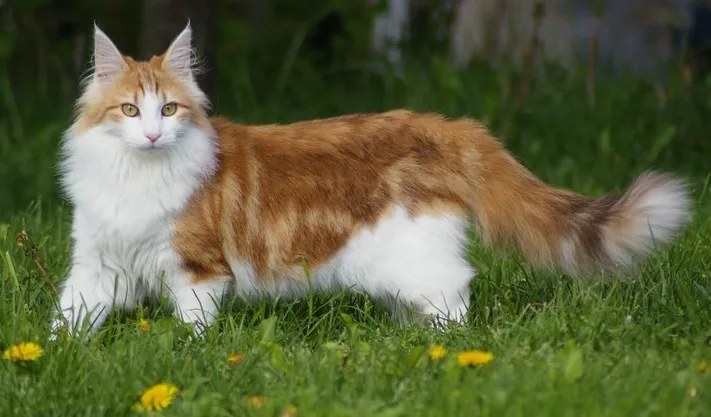
Norwegian Forest Cat
Norwegian Forest cat cost climbs above an average domestic breed because of its large size, dense weatherproof double coat, and a known predisposition to heart disease. $1,000 reflects a health-tested breeding program, and $303 stays elevated for cardiac monitoring across the cat's life. Expect $2,833 in year one and $1,279 every year after.
Acquisition, surgical desexing, initial vet series, and starter hardware.
Normalized baseline at ~$107/month routine cash burn.
Projected over a 15-year Norwegian Forest Cat lifespan.
$2,500 Liquid Reserve Mandate
Critical bufferA breed-linked cardiac condition plus a rare metabolic disorder create two independent, potentially significant sources of veterinary cost.
Source: MetLife True Cost of Pet Emergencies 2025 (15% of owners hit $3,000+; uninsured surgery $3,000–8,000)
Biometric & phenotypic actuarial spec
Annual Cash Burn Matrix ($1,279/yr)
Continuous operational expenditure distributed across 5 core maintenance categories, indexed to metabolic demand and regional clinical rates.
Food
Vet Care
Grooming
Pet Insurance
Supplies & Toys
Upfront Entry CapEx
Purchase / Adoption Fee ($1,000), Initial Vet Visit & Vaccinations ($318), Starter Supplies ($299), Litter & Behavior Basics ($40), First Year Food ($282), First Year Vet Care ($303), First Year Grooming ($156), First Year Insurance ($435).
Comprehensive Lifecycle Ledger
Audited financial breakdown distinguishing immediate first-year fixed capitalization from ongoing annualized operating liabilities over the full 14–16 yrs feline lifespan.
| Expenditure Category | Year 01 Outlay | Annual Steady-State | Lifetime Total | Actuarial Sizing Methodology |
|---|---|---|---|---|
| Purchase / Adoption Fee | $1,000 | — | $1,000 | Varies by breeder vs rescue |
| Initial Vet Visit & Vaccinations | $318 | — | $318 | Spay/neuter, microchip, health check |
| Starter Supplies | $299 | — | $299 | Litter box, scratching post, carrier, bowls |
| Litter & Behavior Basics | $40 | — | $40 | Litter box training, scratching post basics |
| First Year Food | $282 | — | $282 | — |
| First Year Vet Care | $303 | — | $303 | — |
| First Year Grooming | $156 | — | $156 | — |
| First Year Insurance | $435 | — | $435 | — |
| Food | — | $282 | $4,230 | — |
| Vet Care | — | $303 | $4,545 | — |
| Grooming | — | $156 | $2,340 | — |
| Pet Insurance | — | $435 | $6,525 | — |
| Supplies & Toys | — | $103 | $1,545 | — |
| Gross Actuarial Expenditure | $2,833 | $1,279 / yr | $20,739 | Unadjusted baseline |
Actuarial Health Risk Profile (Tier 4)
A breed-linked cardiac condition plus a rare metabolic disorder create two independent, potentially significant sources of veterinary cost.
Hypertrophic Cardiomyopathy
As in several other large natural breeds, thickened heart muscle appears often enough in the Norwegian Forest Cat that periodic cardiac screening is a standard part of responsible ownership.
Glycogen storage disease type IV
A rare but breed-linked metabolic disorder that affects how the body stores energy; DNA testing has largely allowed breeders to avoid producing affected kittens, but testing itself is a real, upfront cost.
Hip Dysplasia
The breed's large, muscular frame and slow-to-mature skeleton put it at somewhat higher risk of hip joint malformation than an average-size domestic cat.
What Truly Drives the Norwegian Forest Cat’s Financial Profile
About the Norwegian Forest Cat and its cost
Norwegian Forest cat cost reflects a breed built to survive harsh Scandinavian winters, with a long, water-shedding double coat and a large, powerfully built body that takes several years to fully mature. Recognized as one of the oldest natural breeds in Europe, the Wegie is prized for its independent yet affectionate nature and strong climbing instincts. Its size and coat alone push food, litter, and grooming costs above a standard shorthair, and because responsible breeders now screen for a specific metabolic disease found in the breed's early population, well-bred kittens carry a health-testing premium worth paying for.
What drives Norwegian Forest Cat costs
Hypertrophic cardiomyopathy is the most consequential ongoing cost driver, prompting many owners to schedule periodic cardiac ultrasounds throughout the cat's life. Glycogen storage disease type IV, while rare today thanks to genetic testing of breeding stock, was significant enough in the breed's history that DNA-tested parentage adds to kitten price. On top of these, the sheer size and dense double coat push food and grooming costs above an average cat, making this a breed where cost concentrates in both prevention and volume.
Norwegian Forest Cat first-year budget
Year one includes $1,000 for a health-tested kitten, $318 for vaccines and an early cardiac-aware wellness exam, and $299 for a large litter box, tall cat tree, and carrier sized for an eventual large adult. $40 covers scratch-post and carrier habituation. $1,657 in one-time costs and $1,176 in food, vet, and grooming bring the $2,833 total well above an average domestic shorthair's first year.
Norwegian Forest Cat yearly cost after year one
Ongoing costs stay elevated through both size and health monitoring: $282 reflects a large-breed appetite, $303 includes annual exams plus periodic cardiac screening, and $156 covers regular brushing tools for the double coat. $435 is worth carrying given the cardiac risk, and $103 supports this athletic, climbing-driven breed. The total comes to $1,279 a year, or $107 a month. Routine wellness exams, parasite prevention, and litter or supply restocking make up the bulk of this steady-state figure, and owners who keep $435 active convert one unpredictable expense into a fixed monthly line instead.
Emergency fund for a Norwegian Forest Cat
Hypertrophic cardiomyopathy should anchor this breed's $2,500, since a cardiac event can arrive suddenly and require urgent, costly diagnostics. Hip-related mobility issues in an aging Wegie add a secondary, slower cost. Given the breed's $20,739 lifetime cost profile, a reserve weighted toward cardiac care serves this breed better than a generic cushion. Cats are skilled at masking pain, so sudden lethargy, appetite loss, or vomiting deserves an urgent vet visit rather than a wait-and-see approach, since catching a problem early is almost always cheaper than treating it once it has progressed.
Cutting Norwegian Forest Cat costs
The most effective saving comes from choosing a breeder who documents both cardiac and glycogen storage disease testing, since that reduces the odds of a major unplanned bill. Staying ahead of seasonal coat blow with regular brushing avoids professional grooming fees, and buying food in bulk lowers the cost of feeding a large-breed appetite. Across a $20,739 lifespan, consistent cardiac monitoring keeps $107 spending as predictable as this breed allows.
5 Prudent Ways to Cut Norwegian Forest Cat Costs
Confirm DNA testing for glycogen storage disease
Ask the breeder for documentation that both parents are clear or tested carriers correctly paired. This single check prevents one of the breed's most serious inherited conditions.
Schedule a baseline cardiac screening
An echocardiogram in early adulthood catches hypertrophic cardiomyopathy while it's still manageable, avoiding a costlier emergency workup later.
Brush two to three times weekly during coat blow
The dense double coat sheds heavily seasonally; staying ahead of it with a slicker brush prevents mats that would otherwise need a professional groomer.
Provide tall climbing structures
This breed's strong climbing drive is satisfied cheaply with a sturdy cat tree, which also reduces the wear-and-tear cost of a bored cat climbing furniture.
Buy food in bulk for a large-breed appetite
A Wegie eats more than an average cat because of its size; larger bags of quality food cost less per pound than frequent small purchases.
Peer Class Financial Comparisons
How the Norwegian Forest Cat compares to morphological peers on annualized ownership cost.
Norwegian Forest Cat
Frequently Asked Financial Questions
How much does a Norwegian Forest cat cost?
Why are Norwegian Forest cats so expensive?
Is a Norwegian Forest cat expensive to own?
What are the yearly costs of owning a Norwegian Forest cat?
Do Norwegian Forest cats need pet insurance?
Do Norwegian Forest cats have health problems?
How much grooming does a Norwegian Forest cat need?
Data sources
- Norwegian Forest cat — Wikipedia (en.wikipedia.org)
- Congenital and Hereditary Skin Disorders in Cats — Merck Veterinary Manual (merckvetmanual.com)
- Feline Health Topics — Cornell Feline Health Center (vet.cornell.edu)
Calculate Your Norwegian Forest Cat Cost Adjusted by Metro ZIP Code
Veterinary surgical tariffs and clinical room rates vary widely between metropolitan regions and rural counties. Recalculate this dossier with your exact state, city, and lifestyle parameters.