
How Much Does a Nova Scotia Duck Tolling Retriever Cost Per Year?
The nova scotia duck tolling retriever cost works out to about $4,691 in the first year and $2,436 a year afterward. Most of the ongoing spend is food, vet care and insurance for an active medium-sized dog. Budget a reserve for autoimmune and joint problems.
Executive cost summary
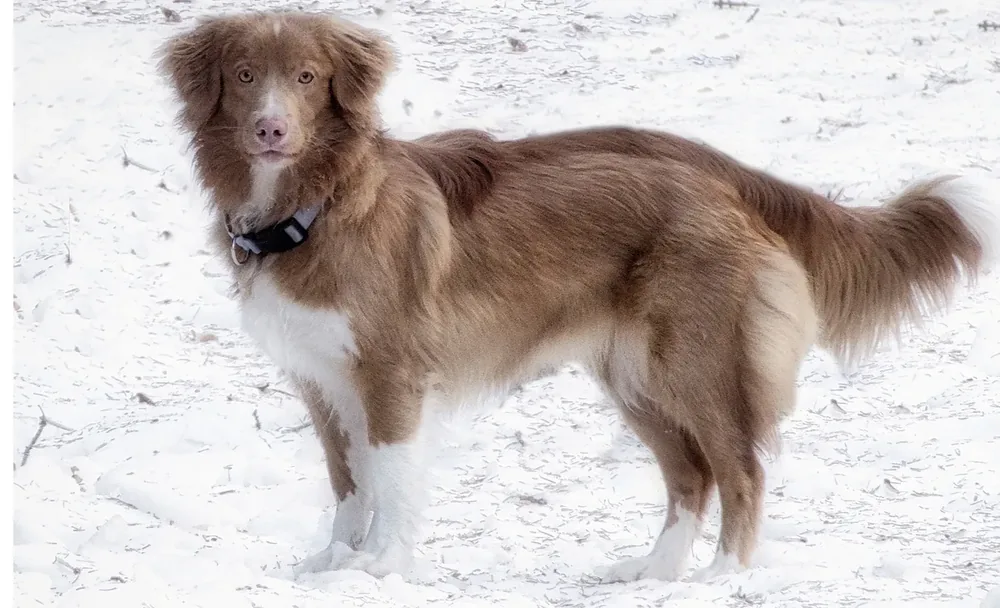
Nova Scotia Duck Tolling Retriever
The nova scotia duck tolling retriever cost works out to about $4,691 in the first year and $2,436 a year afterward. Most of the ongoing spend is food, vet care and insurance for an active medium-sized dog. Budget a reserve for autoimmune and joint problems.
Acquisition, surgical desexing, initial vet series, and starter hardware.
Normalized baseline at ~$203/month routine cash burn.
Projected over a 13-year Nova Scotia Duck Tolling Retriever lifespan.
$3,000 Liquid Reserve Mandate
Critical bufferTollers carry a defining autoimmune risk in Addison's disease, but it is treatable at moderate recurring cost and the rest of the breed's profile is average for a medium sporting dog.
Source: MetLife True Cost of Pet Emergencies 2025 (15% of owners hit $3,000+; uninsured surgery $3,000–8,000)
Biometric & phenotypic actuarial spec
Annual Cash Burn Matrix ($2,436/yr)
Continuous operational expenditure distributed across 5 core maintenance categories, indexed to metabolic demand and regional clinical rates.
Food
Source: Derived: veterinary MER formula + mid-tier dry kibble price (2026-01)
Vet Care
Source: Derived: REPLACE — ASPCA / AAHA routine wellness composite (annual exam, vaccines, parasite control) x size 1 x risk 1 (2026-01)
Grooming
Source: Derived: REPLACE — Rover / PetSmart service menu, short-coat baseline (grooming rating 2) x coat 1.6 (2026-01)
Pet Insurance
Source: Derived: NAPHIA State of the Industry 2025 (2024 data), accident & illness dog average x size 1 x risk 1 (2026-01)
Supplies & Toys
Source: Derived: Synchrony Pet Lifetime of Care 2025 (toy replacement $50–150/yr) plus routine consumables x size 1 (2026-01)
Upfront Entry CapEx
Purchase / Adoption Fee ($1,000), Initial Vet Visit & Vaccinations ($660), Starter Supplies ($475), Training Classes ($260), First Year Food ($575), First Year Vet Care ($660), First Year Grooming ($312), First Year Insurance ($749).
Comprehensive Lifecycle Ledger
Audited financial breakdown distinguishing immediate first-year fixed capitalization from ongoing annualized operating liabilities over the full 12–14 yrs canine lifespan.
| Expenditure Category | Year 01 Outlay | Annual Steady-State | Lifetime Total | Actuarial Sizing Methodology |
|---|---|---|---|---|
| Purchase / Adoption Fee | $1,000 | — | $1,000 | Varies by breeder vs rescue |
| Initial Vet Visit & Vaccinations | $660 | — | $660 | Spay/neuter, microchip, health check |
| Starter Supplies | $475 | — | $475 | Bed, crate, collar, bowls, toys |
| Training Classes | $260 | — | $260 | Basic obedience recommended |
| First Year Food | $575 | — | $575 | — |
| First Year Vet Care | $660 | — | $660 | — |
| First Year Grooming | $312 | — | $312 | — |
| First Year Insurance | $749 | — | $749 | — |
| Food | — | $575 | $7,475 | — |
| Vet Care | — | $660 | $8,580 | — |
| Grooming | — | $312 | $4,056 | — |
| Pet Insurance | — | $749 | $9,737 | — |
| Supplies & Toys | — | $140 | $1,820 | — |
| Gross Actuarial Expenditure | $4,691 | $2,436 / yr | $33,923 | Unadjusted baseline |
Actuarial Health Risk Profile (Tier 3)
Tollers carry a defining autoimmune risk in Addison's disease, but it is treatable at moderate recurring cost and the rest of the breed's profile is average for a medium sporting dog.
Addison's Disease
The adrenal glands stop making enough hormone, so the dog needs lifelong replacement injections or pills plus regular blood checks.
- Typical treatment cost (per year)
- $1,090–$2,890
Typically appears around age 2.6
low confidence · VetCostGuide, Dog Addison's Disease Treatment Cost, 2026-06
Hip Dysplasia
A loose, poorly fitting hip joint that leads to arthritis and lameness, sometimes needing surgery in an active dog.
- Typical treatment cost (one-time)
- $5,600–$6,000
medium confidence · MetLife Pet Insurance, How Much Does Dog Hip Dysplasia Surgery Cost?, 2024-10
Progressive Retinal Atrophy
An inherited retinal disease that starts with night blindness and can end in total vision loss, managed with home adjustments rather than treatment.
Costs are typical for the condition in general, not specific to the Nova Scotia Duck Tolling Retriever. See the Nova Scotia Duck Tolling Retriever cost timeline
What Truly Drives the Nova Scotia Duck Tolling Retriever’s Financial Profile
About the Nova Scotia Duck Tolling Retriever and its cost
The Toller is the smallest retriever, a fox-red, feathered dog bred to lure ducks toward the shore. Buying a puppy from a health-tested breeder costs $1,000, and the first year adds $660 for vet and vaccines. After that the steady bill is $2,436 a year, or $203 a month. Food is the biggest line at $575, because a dog this active burns plenty of calories. Grooming stays modest at $312, mostly brushing at home with heavier shedding twice a year.
What drives Toller costs
Size keeps food and medication doses moderate, so most of the variation comes from health. Addison's disease is the breed's defining risk, and Tollers tend to develop it earlier than other dogs. It means monthly injections or daily pills and regular blood tests for life. Hip dysplasia can lead to expensive orthopedic surgery, and progressive retinal atrophy costs little to treat but changes how you manage the dog at home. An energetic Toller also injures itself through hard play, so the yearly vet line of $660 can jump in a bad year.
Nova Scotia Duck Tolling Retriever first-year budget
The first year is the most expensive. One-time costs total $2,395, made up of $1,000 for the puppy, $660 for the first exam and vaccines, $475 for crate, bed and gear, and $260 for puppy classes. Recurring costs add $2,296 for $575 of food, $660 in routine care, $312 for grooming and $749 for insurance. Altogether, plan on $4,691 for the first twelve months. Training is worth funding because a bright, driven Toller left bored becomes destructive.
Nova Scotia Duck Tolling Retriever yearly cost after year one
After the first year the budget settles at $2,436, or $203 each month. Food is $575, routine vet care is $660, insurance is $749, grooming is $312, and toys and supplies come to $140. Toys deserve attention with this breed, since an energetic retriever wears through balls and chews quickly. These are steady-state numbers for a healthy adult and do not include treatment for a chronic condition.
Emergency fund for a Nova Scotia Duck Tolling Retriever
A reserve of $3,000 is sensible for this breed. The two conditions that justify it are Addison's disease and hip dysplasia. An Addisonian crisis needs intensive hospital care, and hip surgery is a large one-time bill. Insurance can absorb part of either, but deductibles and exclusions apply. Over a full lifespan the breed's total cost reaches about $33,923, so a reserve built early keeps a single bad year from becoming a financial crisis.
Cutting Nova Scotia Duck Tolling Retriever costs
Because the yearly budget of $2,436 is mostly food, vet and insurance, savings come from prevention rather than shopping around. Keeping the dog lean protects the joints, and steady exercise keeps the coat and weight in order. Compare insurance quotes before renewing, and pick a deductible you can actually afford to pay. Spread across $203 a month, small routine choices add up. Over the dog's life, avoiding one preventable emergency saves more than any coupon.
5 Prudent Ways to Cut Nova Scotia Duck Tolling Retriever Costs
Buy from a health-tested breeder
Ask for parent hip scores, eye exams and genetic test results before you commit. Paying more up front for tested parents can spare you a costly orthopedic or autoimmune problem later.
Insure early
Enroll while the dog is young and healthy, before any Addison's signs appear. A condition that starts before coverage begins is usually excluded, and it is the one most likely to cost you.
Learn to give injections at home
If your dog develops Addison's disease, ask your vet whether you can give the maintenance injection yourself. That removes a clinic visit fee every month, though blood monitoring still needs a vet.
Keep your Toller lean
Extra weight stresses the hips and shortens the useful life of joints. Measure meals and use part of the daily ration for training treats.
Brush at home
The medium double coat needs weekly brushing, more often during the seasonal shed. A good brush and a home routine cover most of what a groomer would charge for.
Peer Class Financial Comparisons
How the Nova Scotia Duck Tolling Retriever compares to morphological peers on annualized ownership cost.
Nova Scotia Duck Tolling Retriever
Frequently Asked Financial Questions
How much does a nova scotia duck tolling retriever cost per month?
Is a nova scotia duck tolling retriever expensive to own?
What are the yearly costs of owning a nova scotia duck tolling retriever?
How much are nova scotia duck tolling retriever vet bills?
Do nova scotia duck tolling retrievers need pet insurance?
How long do Tollers live?
Are Tollers prone to health problems?
Data sources
- Nova Scotia Duck Tolling Retriever Health — American Kennel Club (akc.org)
- Addison's Disease in Dogs — VCA Animal Hospitals (vcahospitals.com)
- Nova Scotia Duck Tolling Retriever — Wikipedia (en.wikipedia.org)
Calculate Your Nova Scotia Duck Tolling Retriever Cost Adjusted by Metro ZIP Code
Veterinary surgical tariffs and clinical room rates vary widely between metropolitan regions and rural counties. Recalculate this dossier with your exact state, city, and lifestyle parameters.