
How Much Does a Pug Cost Per Year?
Pug cost starts with $4,277 in year one for the puppy, vaccines, and starter gear, then settles near $184 a month. Flat-faced airway trouble, eye ulcers, and skin-fold infections keep the vet and insurance lines well above other small dogs. Budget $30,701 across a lifespan of a dozen years or more.
Executive cost summary
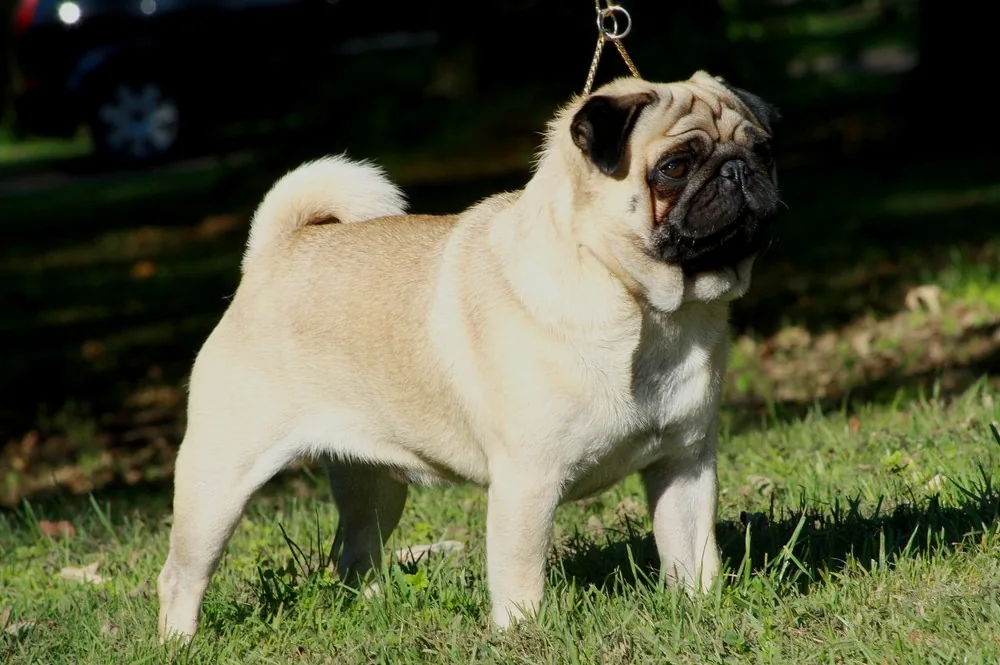
Pug
Pug cost starts with $4,277 in year one for the puppy, vaccines, and starter gear, then settles near $184 a month. Flat-faced airway trouble, eye ulcers, and skin-fold infections keep the vet and insurance lines well above other small dogs. Budget $30,701 across a lifespan of a dozen years or more.
Acquisition, surgical desexing, initial vet series, and starter hardware.
Normalized baseline at ~$184/month routine cash burn.
Projected over a 13-year Pug lifespan.
$2,000 Liquid Reserve Mandate
Critical bufferBrachycephalic airway obstruction is the defining expensive syndrome, and it is compounded by chronic eye-ulcer care, skin-fold infections, and knee problems that all recur across the dog's life.
Source: MetLife True Cost of Pet Emergencies 2025 (15% of owners hit $3,000+; uninsured surgery $3,000–8,000)
Biometric & phenotypic actuarial spec
What a Pug costs, year by year
Cumulative spend across a 13-year life in today's dollars, with the same curve at 3% and 8% yearly inflation. Year 1 carries the acquisition and setup bill.
- Food & nutrition
- Vet & insurance
- Grooming & coat
- Setup & sundries
- - - - at 3% inflation: $36,465
- · · · at 8%: $49,408
Where the big bills land
Bars are routine one-off vet events (vaccine boosters, dental cleanings, bloodwork, spay/neuter). Diamonds are sourced condition treatments for this breed.
No sourced condition costs for this breed yet; only routine events are plotted.
35th percentile
35th percentile
Ranked against 265 other dog breeds in this directory.
View as a table
| Year | Spend | Cumulative | Routine vet events |
|---|---|---|---|
| 1 | $4,277 | $4,277 | $714 |
| 2 | $2,202 | $6,479 | $77 |
| 3 | $2,202 | $8,681 | $543 |
| 4 | $2,202 | $10,883 | $164 |
| 5 | $2,202 | $13,085 | $620 |
| 6 | $2,202 | $15,287 | $164 |
| 7 | $2,202 | $17,489 | $543 |
| 8 | $2,202 | $19,691 | $241 |
| 9 | $2,202 | $21,893 | $543 |
| 10 | $2,202 | $24,095 | $492 |
| 11 | $2,202 | $26,297 | $784 |
| 12 | $2,202 | $28,499 | $328 |
| 13 | $2,202 | $30,701 | $707 |
Annual Cash Burn Matrix ($2,202/yr)
Continuous operational expenditure distributed across 5 core maintenance categories, indexed to metabolic demand and regional clinical rates.
Food
Source: Derived: veterinary MER formula + mid-tier dry kibble price (2026-01)
Vet Care
Source: Modeled estimate, not a sourced figure. Category basis: ASPCA / AAHA routine wellness composite (annual exam, vaccines, parasite control) x size 0.92 x risk 1.22 (2026-01)
Grooming
Source: Modeled estimate, not a sourced figure. Category basis: Rover / PetSmart service menu, short-coat baseline (grooming rating 2) x coat 1 (2026-01)
Pet Insurance
Source: Derived: NAPHIA State of the Industry 2025 (2024 data), accident & illness dog average x size 0.9 x risk 1.38 (2026-01)
Supplies & Toys
Source: Derived: Synchrony Pet Lifetime of Care 2025 (toy replacement $50–150/yr) plus routine consumables x size 0.92 (2026-01)
Upfront Entry CapEx
Purchase / Adoption Fee ($900), Initial Vet Visit & Vaccinations ($607), Starter Supplies ($437), Training Classes ($260), First Year Food ($207), First Year Vet Care ($741), First Year Grooming ($195), First Year Insurance ($930).
Comprehensive Lifecycle Ledger
Audited financial breakdown distinguishing immediate first-year fixed capitalization from ongoing annualized operating liabilities over the full 12–15 yrs canine lifespan.
| Expenditure Category | Year 01 Outlay | Annual Steady-State | Lifetime Total | Actuarial Sizing Methodology |
|---|---|---|---|---|
| Purchase / Adoption Fee | $900 | — | $900 | Varies by breeder vs rescue |
| Initial Vet Visit & Vaccinations | $607 | — | $607 | Spay/neuter, microchip, health check |
| Starter Supplies | $437 | — | $437 | Bed, crate, collar, bowls, toys |
| Training Classes | $260 | — | $260 | Basic obedience recommended |
| First Year Food | $207 | — | $207 | — |
| First Year Vet Care | $741 | — | $741 | — |
| First Year Grooming | $195 | — | $195 | — |
| First Year Insurance | $930 | — | $930 | — |
| Food | — | $207 | $2,691 | — |
| Vet Care | — | $741 | $9,633 | — |
| Grooming | — | $195 | $2,535 | — |
| Pet Insurance | — | $930 | $12,090 | — |
| Supplies & Toys | — | $129 | $1,677 | — |
| Gross Actuarial Expenditure | $4,277 | $2,202 / yr | $30,701 | Unadjusted baseline |
Actuarial Health Risk Profile (Tier 5)
Brachycephalic airway obstruction is the defining expensive syndrome, and it is compounded by chronic eye-ulcer care, skin-fold infections, and knee problems that all recur across the dog's life.
Brachycephalic Obstructive Airway Syndrome
A flat face crowds the nostrils, soft palate, and windpipe, causing noisy breathing, heat stroke risk, and often corrective airway surgery.
Corneal Ulcers and Pug Eye Disease
Prominent eyes and shallow sockets leave the cornea exposed to scratches, ulcers, and pigment scarring that need repeated treatment or surgery.
Patellar Luxation
The kneecap slips out of its groove and causes a skipping gait; higher grades are repaired surgically.
- Typical treatment cost (one-time)
- $1,000–$5,000
medium confidence · MetLife Pet Insurance, Luxating Patella in Dogs, 2026-09
Skin Fold Dermatitis
Moisture and bacteria trapped in facial wrinkles cause recurring infections that call for medicated wipes, shampoos, and sometimes antibiotics.
Costs are typical for the condition in general, not specific to the Pug. See the Pug cost timeline
What Truly Drives the Pug’s Financial Profile
About the Pug and its cost
Pug cost is driven less by the dog's compact frame than by its flat face, which brings airway, eye, and skin trouble that a longer-nosed small dog never faces. Originally a Chinese lap dog, the Pug is calm, clownish, and devoted to its people, and it needs little exercise or coat work. That easy lifestyle keeps food, grooming, and supplies modest. The pressure sits in the vet and insurance lines, where a breed built this way runs higher year after year, and a thoughtful owner budgets for both the routine months and the occasional expensive one.
What drives Pug costs
Three things set the bill. First is airway anatomy: narrow nostrils and an elongated soft palate make breathing hard work, so heat, excitement, and anesthesia all carry extra risk and surgery is common. Second are the bulging eyes, which scratch easily and turn into ulcers that need drops, rechecks, and sometimes surgery. Third are wrinkles that harbor infection, plus loose knees and a short spine that can produce sudden lameness. A stocky build that gains weight easily makes every one of these worse, which is why body condition matters as much as any single treatment.
Wrinkles, eyes and breathing
The Pug's face determines its bills. Brachycephalic airway syndrome narrows the nostrils and soft palate, causing noisy breathing and heat stroke risk, so summer means indoor air conditioning and short walks. Prominent eyes and shallow sockets leave the cornea exposed, and corneal ulcers are urgent vet visits. The facial wrinkles trap moisture, so skin fold dermatitis needs daily wiping and sometimes medicated treatment. Patellar luxation adds $1,000 to $5,000. Pugs are also quick to gain weight, which worsens every one of these problems.
Pug first-year budget
The first year is front-loaded. $900 secures the puppy, then $607 covers the vaccine series, spay or neuter, microchip, and early exams, often with a look at nostrils and eyes. $437 buys a crate, bed, harness, cooling mat, and feeding gear, and $260 pays for a puppy class that channels this stubborn, food-motivated dog. Recurring lines in year one stay modest: $207 for measured small-breed meals, $741 for prevention and rechecks, $195 for baths and nails, and $930 if you enroll early. One-time items total $2,204, recurring items $2,073, and the year lands at $4,277.
Pug yearly cost after year one
Once setup is done, a Pug settles near $2,202 a year, or about $184 a month. $207 stays small but needs discipline, because extra weight drives other costs. $930 is the largest fixed line and the one most worth keeping. $741 covers the annual exam, dental scaling, eye checks, skin-fold flare-ups, and bloodwork as the dog ages. $195 reflects baths, nail trims, and wrinkle-care products. $129 for replacement bedding, chews, and harnesses rounds out the year. A surgery or ulcer year sits on top of this baseline.
Emergency fund for a Pug
Keep $2,000 set aside for this breed. The realistic triggers are airway crises and heat stroke needing oxygen and overnight care, corneal ulcers that turn into surgery, and sudden back pain or lameness that calls for imaging and possibly a repair. Anesthesia in flat-faced dogs is higher risk and often means extra monitoring, which adds to the bill. Funding this account early keeps one bad year from distorting the $30,701 you planned for, and lets you choose a higher insurance deductible to trim monthly premiums.
Cutting Pug costs
The biggest lever is choosing well at purchase: a puppy from health-tested parents with a longer muzzle and open nostrils lowers the odds of the surgeries that dominate a bad year. After that, weight control protects the airway, knees, and spine at no extra cost. Daily skin-fold cleaning and cool-weather walks prevent infections and heat emergencies that otherwise arrive as unplanned bills. Together these habits keep $184 predictable and can trim a meaningful share from $2,202 and the $30,701 over the dog's life without cutting care quality.
6 Prudent Ways to Cut Pug Costs
Choose a longer-muzzled puppy
Ask breeders about nostril opening, muzzle length, and how the parents breathe at rest and after exercise. A slightly less extreme face lowers the odds of airway surgery, which is the single largest swing factor for this breed. Meeting the parents tells you more than a pedigree does.
Keep the dog lean
Extra weight tightens an already narrow airway and loads the knees and spine. Measure meals, cut treats from the daily ration, and weigh the dog at every vet visit. A lean Pug breathes easier and tends to need fewer procedures.
Clean the wrinkles daily
A quick wipe and thorough dry of each facial fold prevents the yeast and bacterial infections that otherwise need medicated products and vet visits. It takes a minute and costs almost nothing. Check the tail pocket too if your dog has one.
Insure before problems appear
Enroll while the dog is young and clear of diagnoses, so airway, eye, and joint conditions are not excluded as pre-existing. Check the policy wording on brachycephalic and hereditary conditions before you buy. Pair it with a reserve fund to keep the deductible from stinging.
Use a harness and stay out of the heat
A harness spares the windpipe that a collar presses on, and walking at cool hours avoids heat stroke, which is a costly overnight emergency. Air conditioning in summer is cheaper than an oxygen cage. Carry water and never leave the dog in a parked car.
Budget for a puppy-specific food transition
Pug puppies do best on a small-breed puppy formula for their first year, which costs a bit more per bag than adult food. Plan for that step-up rather than being surprised by it.
Peer Class Financial Comparisons
How the Pug compares to morphological peers on annualized ownership cost.
Pug
Frequently Asked Financial Questions
How much does a pug cost per month?
Is a pug expensive to own?
What are the yearly costs of owning a pug?
How much are pug vet bills?
Do pugs need pet insurance?
How much does a pug puppy price come to?
Do pugs need professional grooming?
How much does a pug cost over its lifetime?
How much should a Pug weigh?
How much does Pug puppy food cost?
How do I clean Pug facial wrinkles?
Why are Pugs so sensitive to heat?
Related reading
Data sources
- Pug Dog Breed Information — American Kennel Club (akc.org)
- Pug — Wikipedia (en.wikipedia.org)
- Brachycephalic Airway Syndrome in Dogs — VCA Animal Hospitals (vcahospitals.com)
Calculate Your Pug Cost Adjusted by Metro ZIP Code
Veterinary surgical tariffs and clinical room rates vary widely between metropolitan regions and rural counties. Recalculate this dossier with your exact state, city, and lifestyle parameters.