

Key takeaways
- Surgery to remove a swallowed object costs $1,600 to over $12,000, and $300-$1,200 even without surgery, per Embrace Pet Insurance's September 2025 cost guide.
- Cost rises with distance traveled: Trupanion reported averages of $370 for an object in the mouth, $1,640 for the small intestine, and $4,210 when complications such as infection set in.
- Waiting raises both the danger and the bill, per Trupanion's chief veterinary officer, so call a vet the same day your dog swallows a sock or other object.
Surgery to remove a swallowed object costs $1,600 to over $12,000, and even a case that avoids surgery runs $300 to $1,200, per Embrace Pet Insurance's foreign body cost guide updated in September 2025. If your dog swallowed a sock, the bill depends on where the sock is when the vet finds it. This guide shows the cost at each stage, a real claim, and the steps to take before the number climbs.
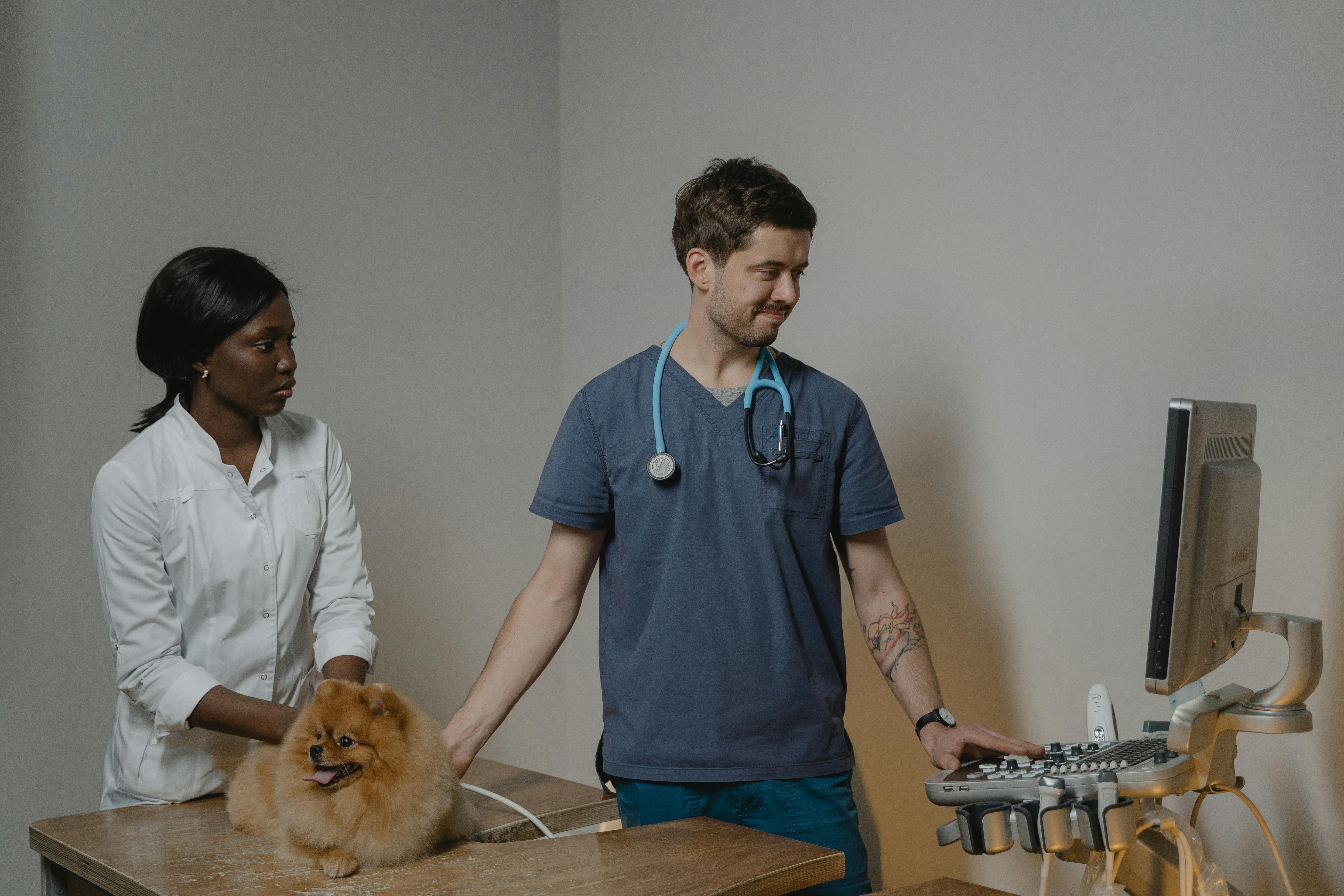 Photo: Tima Miroshnichenko / Pexels
Dog foreign body surgery cost by where the object is
Cost follows the object. Trupanion, a U.S. pet insurer, calculated average claim costs by location and shared them with Veterinary Practice News in a May 2015 report. Those figures are old, so treat them as a pattern, not as today's prices. The pattern is the useful part.
| Where the object is | Average cost | Range | What happens |
|---|---|---|---|
| Mouth | $370 | $100-$900 | Removal, usually without surgery |
| Small intestine | $1,640 | not stated | Invasive surgery is often needed |
| Any location with complications | $4,210 | $2,000-$10,000 | Infection, tissue damage, longer stay |
Source: Trupanion figures reported by Veterinary Practice News, May 19, 2015.
Embrace's newer guide gives the modern outer range for the cost of surgery to remove a swallowed object: $1,600 to over $12,000, and it says the same bill can run at least $1,000 more in a high-cost city such as New York or Los Angeles. A dog that swallowed a sock and has no symptoms yet is on the left of the table. A dog that vomits for a day, as in the case below, is on the right.
$1,600 to $12,000+
The range for surgery to remove a swallowed object, per Embrace Pet Insurance. Check your own cushion with the emergency fund calculator.
Why waiting makes the bill larger
The cost curve is steep because a swallowed object keeps moving. Trupanion's chief veterinary officer, Kerri Marshall, DVM, put it plainly in the 2015 report: some objects can pass uneventfully with supervision, but "the longer pet owners wait, the more dangerous and costly foreign body ingestion can become." As the object travels along the digestive tract, complications and cost both grow.
The riskiest cases involve linear objects such as string or ribbon, which can tangle in more than one organ. The same article describes a coonhound named Sierra that ate a piece of rug. She vomited, seemed lazier than usual, and needed a lengthy surgery with a long segment of dead bowel removed, three plasma transfusions, and a feeding tube. The final bill was $7,817, and Trupanion covered $6,676.
That case is not typical, and a sock does not behave like string. It does show why a vet visit on day one costs less than an emergency on day three. If your dog swallowed a sock, treat the first day as the cheapest day.
What to do if your dog swallowed a sock
If you suspect a dog ate a sock, surgery may follow, so act fast. Call your regular vet or an emergency clinic as soon as you notice. Tell them what the dog swallowed, roughly when, and your dog's weight. The vet decides whether to watch, image, or treat, and that decision is not one to make from internet advice.
Steps that help, in order:
- Call a vet the same day. Describe the object, the time, and any symptoms.
- Bring a matching item. A second sock, or the package the item came in, lets the vet judge size and material.
- Do not give home remedies unless a vet tells you to. The risk depends on the object, and the wrong step can make removal harder.
- Ask for a written estimate. Request both the watch-and-image plan and the surgery plan, as the cost gap between them is the whole decision.
- Watch for symptoms. Vomiting, no appetite, a swollen belly, or low energy are reasons to move to an emergency clinic. In Sierra's case, the vomiting returned the morning after she seemed fine.
This is the same logic as other emergencies, and our emergency vet cost guide lists typical prices across scenarios. If your dog also ate something toxic, such as chocolate, use the dog chocolate toxicity calculator, which handles a different kind of risk.
What the bill is made of
A foreign body bill is an emergency bill, and it has several parts. Embrace says costs run $300 to $1,200 even when no surgery is needed, which covers the exam and diagnostics. Surgery adds a lot more.
- Exam and imaging. X-rays are the usual start, and our dog x-ray cost guide breaks out what imaging costs.
- Bloodwork and fluids. A vomiting dog often needs IV fluids and labs.
- Anesthesia and surgery. Surgeons open the stomach or intestine to remove the object, and may remove damaged bowel.
- Hospital stay. Monitoring after surgery is a major cost.
- Medications and recheck. Pain control, antibiotics, and a follow-up visit.
Cost depends on region too. Embrace's own example claim came from Cleveland, and the company says the same case would have cost at least $1,000 more in New York or Los Angeles. If you live in a high-cost metro, plan at the top of the range.
A real claim: a blanket in Cleveland
Embrace published one claim in its cost guide. Stella, a Labrador Retriever from Cleveland, Ohio, needed emergency surgery and a hospital stay to remove a blanket she chewed up in her crate. The total was $3,829.80. Embrace paid $2,640.22 because her owner had chosen a $300 annual deductible and 80% reimbursement.
The owner's share, about $1,190, equals the bill minus the reimbursement. Without coverage, that family would have paid the full $3,829.80. The claim lands in the middle of Embrace's $1,600 to $12,000 range, which is a fair picture of a plain, uncomplicated surgery.
Insurance, accidents, and the waiting period
Swallowing an object is typically an accident, so most policies treat it as a covered event if it happens after coverage begins. Trupanion reported in 2015 that removing ingested objects was the second most common claim from dog owners and the third most common from cat owners, and it paid out more than $1.8 million in such cases in 2014. Embrace lists foreign body ingestions among the common surgical diagnoses it covers.
Details decide the outcome:
- Waiting periods. Accident waiting periods are often short, but a dog that swallows an object in the first days of a new policy may not qualify. The waiting periods and pre-existing conditions guide explains the clocks.
- Accident-only plans. These plans exist to cover this kind of event. Our accident-only pet insurance guide compares cost and coverage.
- Pre-existing issues. A prior stomach or bowel problem can make an insurer deny related claims.
Insurance remains uncommon. A NAPHIA summary in Insurance Business reports that 5.99% of U.S. dogs and 2.29% of cats carry a policy. Most owners therefore pay a swallowed-object bill themselves. In Spot Pet Insurance's 2026 Pet Parent Perspective, 21% of owners said $500 is the point where a vet bill becomes impossible to pay. A foreign body surgery is several times that.
The break-even math
Premiums and savings both have a price. A Forbes Advisor figure quoted in a local-news consumer report puts a plan with $5,000 of annual coverage and a $250 deductible at about $46 a month for dogs, or $552 a year. A $3,829.80 bill equals roughly 6.9 years of those premiums. Not every dog swallows a sock, so the premium buys protection against more than one kind of accident.
If you self-insure, the table shows what to set aside. Pick a target that matches the middle of Embrace's range and the top of it.
| Months to save | Monthly deposit for $3,000 | Monthly deposit for $5,000 |
|---|---|---|
| 12 | $250 | $417 |
| 24 | $125 | $208 |
| 36 | $83 | $139 |
The pet insurance break-even calculator shows how many years of premiums equal your expected bill, and pet insurance vs. an emergency fund walks through the trade-off in detail. For puppies, read the new puppy checklist for what to buy and what to puppy-proof.
Questions to ask before you approve surgery
An estimate turns panic into choices. Ask the clinic for it in writing and go through these questions while the dog is stable.
- Is surgery needed today, or can we image and recheck? Trupanion says some objects pass with supervision, so ask what would change the plan.
- What does the estimate assume? A plain surgery and a case with damaged bowel can differ by thousands, so ask for the best case and the worst case.
- How many nights of monitoring are included? Hospital time is a major line on the invoice.
- What deposit do you need, and which payment options do you accept? Settle this before the operation.
- What should I watch for after discharge? Knowing the warning signs helps you avoid a second emergency visit.
A quick budgeting recap
Put the numbers side by side before you decide anything. A swallowed sock that is caught early may cost a few hundred dollars. The same sock three days later, with vomiting and a blocked bowel, can cost thousands. Embrace's range of $1,600 to over $12,000 for surgery is wide because the outcome depends on how far the object moved and whether tissue was damaged.
That spread is the case for a cushion rather than a guess. If your emergency fund covers the middle of the range, a swallowed object is a stressful night and not a financial crisis. If it does not, decide now which payment route you would use, so the choice is made calmly.
Cats and other pets
Cats swallow objects too. Trupanion's data ranked object removal as the third most common cat claim. Linear objects such as string and ribbon were the costliest cases in the Trupanion report. If your cat has swallowed string, treat it as an emergency and call a vet immediately.
The same cost logic applies to cats: early is cheaper. The how much does a cat cost guide lists routine annual costs, and the cheapest cats to insure guide compares premiums.
How to pay when the estimate is high
If the estimate is more than your cash, you still have routes. Decide before you commit to the plan, because options narrow after surgery.
- Ask the clinic about an in-house payment plan. The vets that take payment plans guide lists who offers them.
- Compare a vet credit line. The guide to vet credit cards like CareCredit and Scratchpay explains deferred interest.
- Ask whether a lower-cost plan is safe for your dog's case, such as a watch-and-image approach for a small object.
- Check whether a veterinary school or nonprofit offers reduced-fee help.
Prevent the next one
Prevention is mostly housekeeping. Keep socks and underwear in a hamper with a lid, pick up string and hair ties, and give a chewer toys that are sized for the dog. For puppies, our new puppy checklist and puppy supplies list show what to buy, and a crate or gate costs far less than one surgery.
Then put a number on the risk. Enter your dog's profile in the PetBudget calculator to see the annual and lifetime figure, and use the emergency fund calculator to size a cushion that covers a $1,600 to $5,000 surprise. You can check how the calculator builds its figures on the methodology page. A swallowed-object bill depends on the object and the clinic, so ask your own vet for a written estimate before you decide.
Frequently asked questions
How much does it cost to remove something a dog swallowed?
Embrace Pet Insurance says $1,600 to over $12,000 for surgery, and $300 to $1,200 when no surgery is needed. Trupanion's averages by location were $370 in the mouth, $1,640 in the small intestine, and $4,210 with complications.
Is a swallowed sock an emergency for a dog?
It can be. Some objects pass with supervision, but Trupanion's chief veterinary officer says the longer owners wait, the more dangerous and costly the problem becomes. Call your vet the day it happens, and go to an emergency clinic if the dog vomits or seems unwell.
Does pet insurance cover foreign body surgery?
Usually, yes, because swallowing an object is typically treated as an accident. Embrace lists foreign body ingestions among common surgical diagnoses, and Trupanion says removal of ingested objects is the second most common dog claim. Confirm your waiting period and exclusions.
Can a dog pass a sock on its own?
Sometimes. Trupanion says some objects pass uneventfully with supervision, but only a vet can judge whether it is safe to wait. Vomiting, a swollen belly, or low energy after eating a sock is a reason to go in.
See your own pet's real numbers.
Run the calculator with your breed, metro area, and care choices for a first-year, annual, and lifetime cost estimate — not a national average.
Comments
Comments are moderated before they appear. Constructive questions, corrections and first-hand pet cost experiences are welcome.
Verified Dialogue
Sort by: Chronological (earliest)Loading comments…