

Key takeaways
- The average U.S. cat accident-and-illness premium rose 12.6% to $435 in 2025, per NAPHIA's June 2026 report, about half the $836 average for dogs.
- PetBudget's breed model runs from $273 a year for a Domestic Shorthair to $508 for a Ragdoll, a gap of 86%.
- Insurance costs more than routine vet care for a Domestic Shorthair in PetBudget's model, at $273 a year against $221, so it is the second-largest yearly line after food.
The cheapest cats to insure are common domestic cats with little inherited disease, and they cost about $273 a year in PetBudget's model. Pedigreed, large and flat-faced cats cost up to $508. The average U.S. cat accident-and-illness premium reached $435 in 2025, per NAPHIA. This guide ranks cat insurance cost by breed, compares yearly and lifetime premiums, and shows how cat insurance differs from dog insurance.
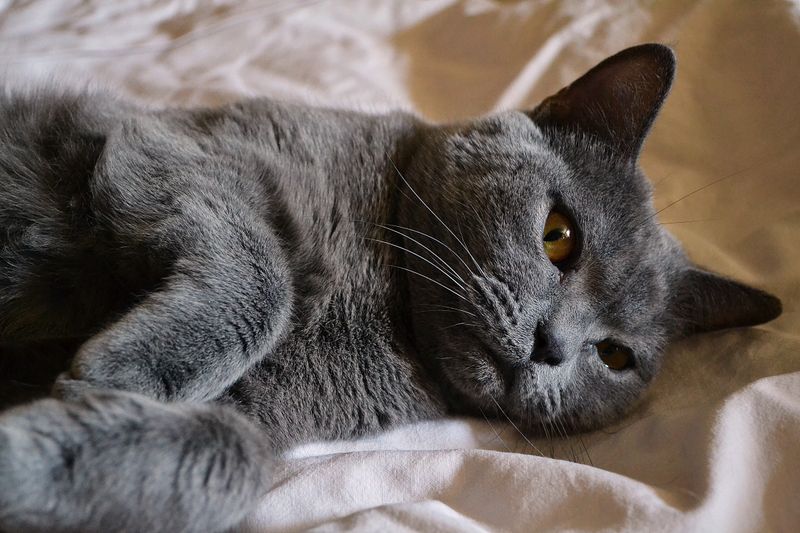 Photo: Juwelia / Pexels
Latest news: cat insurance and cat health in 2026
- Cat premiums jumped. NAPHIA's 2026 State of the Industry highlights put the 2025 U.S. cat accident-and-illness average at $435, up 12.6% from $386. Accident-only cat plans averaged $112.
- Few cats are insured. The same report found 2.29% of U.S. cats insured at the end of 2025, against 5.99% of dogs.
- New diabetes guidelines. The 2026 AAHA feline diabetes guidelines, covered by dvm360 on June 26, 2026, recommend oral SGLT2 inhibitors as first-line therapy for many newly diagnosed cats. Insulin is still advised for cats with advanced kidney disease or systemic illness.
What it means for you: a new treatment option does not lower the need for coverage. Enroll young, before any diagnosis.
What does cat insurance cost on average?
The average U.S. cat accident-and-illness premium was $435 a year in 2025, or $36.25 a month. NAPHIA's 2026 State of the Industry highlights report that figure, up 12.6% from $386 in 2024. The same report puts the U.S. dog average at $836.
NAPHIA also reports that 2.29% of U.S. cats were insured at the end of 2025, against 5.99% of dogs. Cat insurance is the smaller market, but it is growing. U.S. premium volume reached about $5.7 billion, up 19.7%.
Cats cost about half as much to insure as dogs on average. NAPHIA does not give a reason.
How PetBudget models cat insurance by breed
PetBudget starts with the NAPHIA average and adjusts for size and breed risk. The tiers for cats are:
| Risk tier | Cat breeds in the data | Multiplier implied by PetBudget's figures |
|---|---|---|
| 1 (lowest) | 3 | 0.80 |
| 2 | 18 | 0.92 |
| 3 | 24 | 1.00 |
| 4 | 26 | 1.18 |
| 5 (highest) | 4 | 1.38 |
Size works the same way. Small cats get a discount near 10% and large cats a premium near 8%. A medium cat in tier 3 models at $341. A large cat in tier 5 models at $508.
These are modeled estimates built on the 2024 average of $386, not insurer quotes, and NAPHIA's 2025 average is 12.6% higher. Our guide to how insurers price premiums covers the real factors, including age and location.
The cheapest cats to insure
The cheapest cats to insure carry the lowest breed risk. Three breeds model at $273, and two more at $282.
| Breed | Size | Risk tier | Yearly premium | Typical life |
|---|---|---|---|---|
| Domestic Shorthair | Medium | 1 | $273 | 15 years |
| European Shorthair | Medium | 1 | $273 | 16 years |
| Aegean | Medium | 1 | $273 | 11 years |
| Korat | Small | 2 | $282 | 17 years |
| American Curl | Small | 2 | $282 | 14 years |
| Cornish Rex | Small | 3 | $307 | 13 years |
| Mixed-breed cat | Medium | 2 | $314 | 15 years |
| Russian Blue | Medium | 2 | $314 | 17 years |
The Domestic Shorthair is the lowest-risk cat in the data. PetBudget's rationale is wide genetic diversity, which leaves "only common, largely preventable conditions" like dental disease, obesity and upper respiratory infection. That is why a household cat is cheap to insure.
The same breeds are cheap to own overall. A Domestic Shorthair costs $822 a year in the model. See our least expensive cat breeds guide for the full ranking.
The most expensive cats to insure
Large, long-haired and flat-faced cats cost the most. The Ragdoll is highest at $508 a year, followed by the Persian at $471. Several large breeds share $435.
| Breed | Size | Risk tier | Yearly premium |
|---|---|---|---|
| Ragdoll | Large | 5 | $508 |
| Persian | Medium | 5 | $471 |
| Maine Coon | Large | 4 | $435 |
| Bengal | Large | 4 | $435 |
| Savannah | Large | 4 | $435 |
| Norwegian Forest Cat | Large | 4 | $435 |
| British Shorthair | Large | 4 | $435 |
| Siamese | Medium | 4 | $402 |
$273 vs $508
Lowest and highest modeled yearly cat insurance premiums in PetBudget's breed data, an 86% gap. Compare any two cats in the breed comparison tool.
Hypertrophic cardiomyopathy shows up in most of the higher tiers. The Cornell Feline Health Center's hypertrophic cardiomyopathy guide explains the disease. PetBudget's data lists it for the Ragdoll, Persian, Maine Coon, Bengal, Savannah, Siamese and British Shorthair. Our most expensive cat breeds guide shows what these cats cost to own.
Yearly premium versus lifetime premium
Lifetime premiums can reverse the yearly ranking. This table multiplies each breed's modeled yearly premium by its typical lifespan in PetBudget's data. It assumes a flat premium.
| Breed | Yearly premium | Typical life | Premiums over a lifetime |
|---|---|---|---|
| American Curl | $282 | 14 years | $3,948 |
| Domestic Shorthair | $273 | 15 years | $4,095 |
| Mixed-breed cat | $314 | 15 years | $4,710 |
| Korat | $282 | 17 years | $4,794 |
| Exotic Shorthair | $402 | 12 years | $4,824 |
| Siamese | $402 | 13 years | $5,226 |
| Maine Coon | $435 | 13 years | $5,655 |
| Bengal | $435 | 14 years | $6,090 |
| British Shorthair | $435 | 15 years | $6,525 |
| Persian | $471 | 14 years | $6,594 |
| Ragdoll | $508 | 15 years | $7,620 |
Here is what you pay over a lifetime. The Korat's low yearly premium of $282 runs for 17 years, so its lifetime total of $4,794 is above the Domestic Shorthair's $4,095. Cats live long, and every extra year adds a premium. Real premiums usually rise with age, so the true totals will be higher. See our renewal playbook.
Cat insurance cost by size class and risk tier
Size and risk tier explain the whole range. The tables below group PetBudget's 75 cat breeds.
| Size class | Breeds in data | Lowest premium | Highest premium | Average premium |
|---|---|---|---|---|
| Small | 13 | $282 | $424 | $338 |
| Medium | 47 | $273 | $471 | $350 |
| Large | 15 | $339 | $508 | $409 |
| Risk tier | Breeds in data | Lowest premium | Highest premium |
|---|---|---|---|
| 1 (lowest) | 3 | $273 | $273 |
| 2 | 18 | $282 | $339 |
| 3 | 24 | $307 | $368 |
| 4 | 26 | $362 | $435 |
| 5 (highest) | 4 | $424 | $508 |
Most cat breeds sit in tier 3 or tier 4. Only four reach tier 5, including the Ragdoll and the Persian. Large cats average $409, which is 21% above the small-cat average of $338.
Cat versus dog insurance
Cat insurance costs about half as much as dog insurance. The two ranges barely overlap in PetBudget's data.
| Measure | Cats | Dogs |
|---|---|---|
| 2025 U.S. average premium (NAPHIA) | $435 | $836 |
| Share of U.S. pets insured, end of 2025 (NAPHIA) | 2.29% | 5.99% |
| Lowest modeled premium (PetBudget) | $273 | $599 |
| Highest modeled premium (PetBudget) | $508 | $1,240 |
| Typical lifespan in PetBudget's data | 11-17 years | 6-15 years |
The cheapest dog to insure costs more than the average cat to insure. A Great Dane's premium is 2.4 times a Ragdoll's. NAPHIA does not explain the gap, and it does not mean cats are healthier.
Which cat illnesses make insurance worth it?
Three age-related illnesses account for most of the large bills in senior cats. All three can start with heavy drinking, as our thirsty cat guide explains.
- Kidney disease. PetMD calls it one of the most common diseases in cats, and not curable. Management relies on medication, diet and hydration.
- Diabetes. The Cornell Feline Health Center says obese cats are up to four times more likely to develop it. Insulin is given about every 12 hours. If remission does not come within six months, the cat will almost certainly need lifelong insulin.
- Hyperthyroidism. Cats often lose weight despite a big appetite and drink more. A T4 test can find it, and a nonprofit clinic's price list shows that test at $25.
The 2009 dvm360 figures cited below put 12 months of treatment at $860 to $1,401 at median. Those were teaching-hospital costs 17 years ago, so today's totals are likely higher. The point stands: one chronic illness can cost more in a year than several years of premiums.
Insurance only pays for conditions that start after the waiting period. That is why a Domestic Shorthair at $273 a year is a sound bet for a young cat.
Popular cat breeds side by side
Insurance takes between 33% and 39% of a popular cat's yearly cost. This table shows ten common breeds.
| Breed | Yearly premium | Yearly cost after year one | Insurance share |
|---|---|---|---|
| Domestic Shorthair | $273 | $822 | 33% |
| Korat | $282 | $797 | 35% |
| Mixed-breed cat | $314 | $908 | 35% |
| Siamese | $402 | $1,049 | 38% |
| Abyssinian | $402 | $1,028 | 39% |
| Bengal | $435 | $1,190 | 37% |
| Maine Coon | $435 | $1,322 | 33% |
| British Shorthair | $435 | $1,152 | 38% |
| Persian | $471 | $1,299 | 36% |
| Ragdoll | $508 | $1,314 | 39% |
The share barely moves, so the premium tracks the overall cost of the breed. A cheap-to-own cat is cheap to insure. See the Domestic Shorthair breed page for its full budget.
Where insurance sits in a cat's yearly budget
For a Domestic Shorthair, insurance is a bigger line than routine vet care. PetBudget's model breaks the $822 yearly cost into five lines.
| Yearly line | Domestic Shorthair |
|---|---|
| Insurance | $273 |
| Food | $214 |
| Vet care | $221 |
| Supplies and toys | $90 |
| Grooming | $24 |
| Total | $822 |
Insurance is 33% of the yearly bill, and food is 26%. For a Ragdoll, insurance is 39% of $1,314. Insurance does not replace routine vet care. It pays for the unexpected, usually after a deductible and at a reimbursement rate.
Is that a good trade? A 2009 Michigan State University study, reported by dvm360, tracked costs for 12 months after diagnosis. It found median costs of $1,065 for chronic kidney disease, $1,401 for hyperthyroidism and $860 for diabetes. The study excluded exams and hospital stays, and prices have risen since. A single year of treatment equals about four years of Domestic Shorthair premiums at $273.
Those illnesses are age-related, not outdoor risks. Our guide to cat dehydration and excessive thirst explains the early signs and the tests that find them.
What cat insurance costs per month
Monthly premium rates make the breed gap easier to see. The table converts the yearly figures and compares them with the NAPHIA 2025 average of $36.25 a month.
| Cat | Yearly premium | Monthly premium |
|---|---|---|
| Domestic Shorthair | $273 | $22.75 |
| Korat | $282 | $23.50 |
| Mixed-breed cat | $314 | $26.17 |
| NAPHIA 2025 U.S. cat average | $435 | $36.25 |
| Siamese | $402 | $33.50 |
| Maine Coon | $435 | $36.25 |
| Persian | $471 | $39.25 |
| Ragdoll | $508 | $42.33 |
The cheapest cat costs about $13.50 a month less than the national average. The most expensive costs about $6 a month more. That is a spread of $19.58 a month, or $235 a year, between a Domestic Shorthair and a Ragdoll.
Those totals stay modest next to dogs. A Ragdoll's top premium of $42.33 is below the $49.92 monthly cost of the cheapest modeled dog. If you are choosing between a cat and a dog, our lifetime cost of a dog vs a cat guide compares the full budgets.
How to read a cat insurance quote
A cheap quote with narrow coverage can cost more in the end. Check these items.
- Deductible and reimbursement rate. They set how much of each bill you pay.
- Annual limit. A cat that lives 15 years may hit a cap.
- Waiting periods. Illness coverage often starts after a delay.
- Breed-linked exclusions. Owners of Ragdolls, Maine Coons and Persians should check heart and kidney conditions.
- Dental coverage. Dental disease is the most common reason a Domestic Shorthair needs a procedure, per PetBudget's breed data. Read our dental coverage guide.
- Renewal increases. Premiums usually rise each year.
How to get pet insurance for cats for less
You cannot change your cat's breed, but you can change how you buy. These steps apply to any cat.
- Enroll young. A condition diagnosed before coverage starts is usually excluded. Our waiting periods guide explains how.
- Compare three quotes. Match the deductible, reimbursement rate and annual limit.
- Check the exclusions. Look for breed-linked conditions such as heart disease.
- Weigh accident-only. It costs less and covers injuries only. See our accident-only pet insurance guide.
- Consider saving instead. Our insurance vs emergency fund guide shows when that works.
- Compare brands. Use the pet insurance comparison chart.
For the break-even math, read is pet insurance worth it.
Put insurance in your cat's budget
Insurance is only one line, and it varies with breed. Add the other costs in the PetBudget calculator. For the full first-year picture, see how much a cat costs and our kitten first-year checklist.
The bottom line on cat insurance cost
The cheapest cats to insure are the ones with the fewest inherited conditions, and the gap between cheapest and most expensive is $235 a year. That gap is real but modest. The bigger decision is whether to insure at all, and when. A young cat insured before any diagnosis keeps the widest coverage for the rest of its life.
If you are weighing a plan, price the cat's whole budget first. Use the PetBudget calculator and the breed pages linked above. Then compare quotes on the same deductible and reimbursement rate. A plan that costs $22.75 a month for a Domestic Shorthair is a different decision from one that costs $42.33 for a Ragdoll.
Quick answers
- Cheapest cats to insure: Domestic Shorthair, European Shorthair and Aegean at about $273 a year.
- Most expensive: Ragdoll at about $508 a year.
- U.S. average cat premium: $435 a year in 2025, per NAPHIA.
- Cat versus dog: cat insurance costs about half as much on average.
- Best test: compare lifetime premiums, and enroll while your cat is young.
Frequently asked questions
What are the cheapest cats to insure?
In PetBudget's model, the Domestic Shorthair, European Shorthair and Aegean are cheapest at $273 a year. The Korat and American Curl follow at $282. These are breeds with the lowest modeled hereditary risk.
How much is cat insurance a month?
NAPHIA's 2025 average for U.S. cat accident-and-illness insurance was $435 a year, or $36.25 a month, up from $386 in 2024. PetBudget models $273 to $508 a year depending on breed. Your quote depends on age, location and plan.
Is pet insurance for cats worth it?
It depends on your savings and the breed. Insurance is a bet against big bills. A year of chronic kidney disease treatment cost a median $1,065 in a 2009 study, so one illness can exceed several years of premiums.
Why is a Ragdoll more expensive to insure?
PetBudget places the Ragdoll in its highest breed-risk tier because of hypertrophic cardiomyopathy and urinary tract disease. Its large size also raises the modeled premium. The result is $508 a year, against $273 for a Domestic Shorthair.
Do indoor cats need insurance?
Indoor cats still get sick. Kidney disease, diabetes and hyperthyroidism are not outdoor risks. Insurance mainly protects against large unexpected bills, whether the cat goes outside or not.
See your own pet's real numbers.
Run the calculator with your breed, metro area, and care choices for a first-year, annual, and lifetime cost estimate — not a national average.
Comments
Comments are moderated before they appear. Constructive questions, corrections and first-hand pet cost experiences are welcome.
Verified Dialogue
Sort by: Chronological (earliest)Loading comments…