
Cornish Rex Cost & Ownership Dossier
Cornish rex cost starts with a striking, curly-coated cat that ranks among the pricier purebreds to buy but is comparatively cheap to feed and groom day to day. First-year spending typically lands around $1,965, settling to roughly $893 a year, or about $74 a month, once the cat is grown. Over a full lifespan, total ownership approaches $12,681.
Executive cost summary
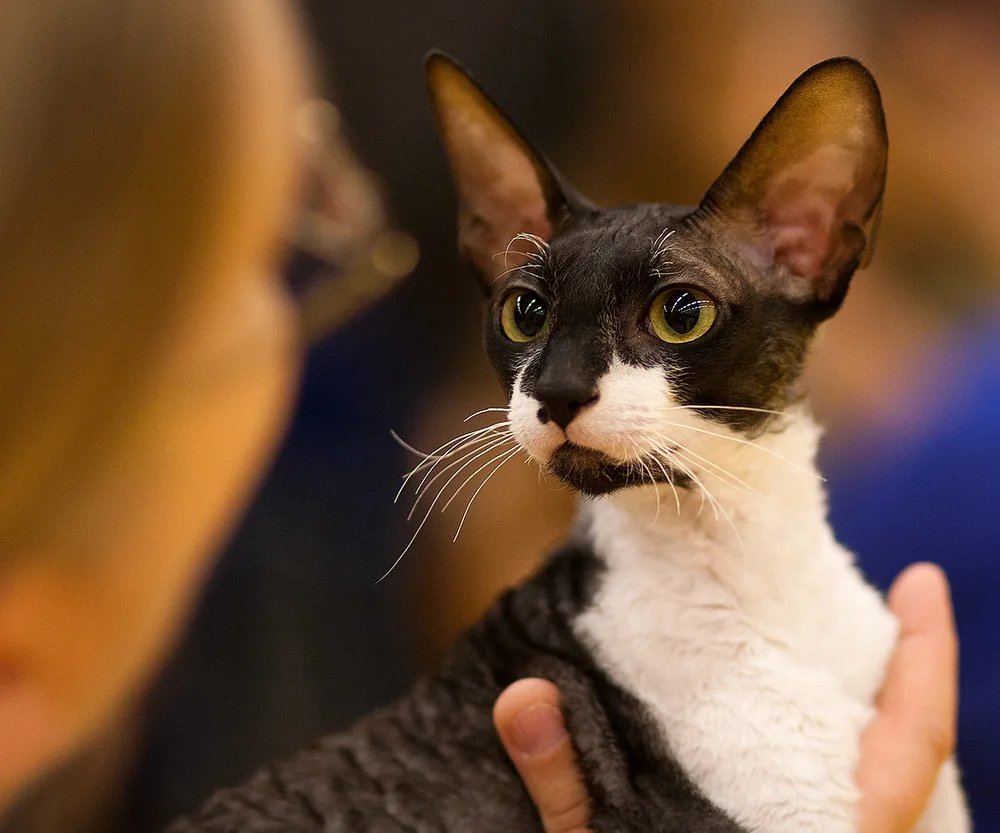
Cornish Rex
Cornish rex cost starts with a striking, curly-coated cat that ranks among the pricier purebreds to buy but is comparatively cheap to feed and groom day to day. First-year spending typically lands around $1,965, settling to roughly $893 a year, or about $74 a month, once the cat is grown. Over a full lifespan, total ownership approaches $12,681.
Acquisition, surgical desexing, initial vet series, and starter hardware.
Normalized baseline at ~$74/month routine cash burn.
Projected over a 13-year Cornish Rex lifespan.
$1,500 Liquid Reserve Mandate
Critical bufferA hereditary retinal disease and a rex-typical patellar luxation risk create moderate, monitorable costs, tempered by the breed's otherwise low grooming and food needs.
Source: MetLife True Cost of Pet Emergencies 2025 (15% of owners hit $3,000+; uninsured surgery $3,000–8,000)
Biometric & phenotypic actuarial spec
Annual Cash Burn Matrix ($893/yr)
Continuous operational expenditure distributed across 5 core maintenance categories, indexed to metabolic demand and regional clinical rates.
Food
Vet Care
Grooming
Pet Insurance
Supplies & Toys
Upfront Entry CapEx
Purchase / Adoption Fee ($600), Initial Vet Visit & Vaccinations ($276), Starter Supplies ($239), Litter & Behavior Basics ($40), First Year Food ($204), First Year Vet Care ($239), First Year Grooming ($60), First Year Insurance ($307).
Comprehensive Lifecycle Ledger
Audited financial breakdown distinguishing immediate first-year fixed capitalization from ongoing annualized operating liabilities over the full 11–15 yrs feline lifespan.
| Expenditure Category | Year 01 Outlay | Annual Steady-State | Lifetime Total | Actuarial Sizing Methodology |
|---|---|---|---|---|
| Purchase / Adoption Fee | $600 | — | $600 | Varies by breeder vs rescue |
| Initial Vet Visit & Vaccinations | $276 | — | $276 | Spay/neuter, microchip, health check |
| Starter Supplies | $239 | — | $239 | Litter box, scratching post, carrier, bowls |
| Litter & Behavior Basics | $40 | — | $40 | Litter box training, scratching post basics |
| First Year Food | $204 | — | $204 | — |
| First Year Vet Care | $239 | — | $239 | — |
| First Year Grooming | $60 | — | $60 | — |
| First Year Insurance | $307 | — | $307 | — |
| Food | — | $204 | $2,652 | — |
| Vet Care | — | $239 | $3,107 | — |
| Grooming | — | $60 | $780 | — |
| Pet Insurance | — | $307 | $3,991 | — |
| Supplies & Toys | — | $83 | $1,079 | — |
| Gross Actuarial Expenditure | $1,965 | $893 / yr | $12,681 | Unadjusted baseline |
Actuarial Health Risk Profile (Tier 3)
A hereditary retinal disease and a rex-typical patellar luxation risk create moderate, monitorable costs, tempered by the breed's otherwise low grooming and food needs.
Progressive Retinal Atrophy
A hereditary, gradual degeneration of the retina that can lead to blindness and is best caught early with ophthalmology screening.
Patellar Luxation
A kneecap that slips out of its groove, common enough in the breed that some cats need surgical correction to walk normally.
Thin-skin sensitivity
With no guard hairs to buffer temperature or sun, the skin is more exposed to sunburn, cold stress, and minor scrapes than a coated cat's.
What Truly Drives the Cornish Rex’s Financial Profile
About the Cornish Rex and its cost
Cornish rex cost reflects a rare, whippet-shaped cat covered only in a soft, wavy undercoat with no guard hairs at all. That thin coat means almost no shedding and easy at-home wipe-downs, but it also means the breed runs cold-sensitive, so owners often add sweaters and heated beds to the budget. Kittens are scarce because only a handful of breeders work with the gene, which keeps $600 on the high side for a purebred cat. Add $276 for the first exam and vaccine series and $239 for bedding, litter gear, and warm sleeping spots. First-year spending totals near $1,965, front-loaded into acquisition rather than ongoing care.
What drives Cornish Rex costs
Two things move Cornish Rex vet bills over a lifetime: the eyes and the knees. The breed carries a hereditary form of progressive retinal atrophy that calls for ophthalmology screening, and loose kneecaps are common enough that a luxating patella can need surgical correction. The near-bald coat itself is not expensive to maintain, but its thinness leaves skin exposed to sunburn and scrapes, so a Cornish Rex sees the vet for skin checks more than a coated cat would. None of this makes the breed as costly as a brachycephalic cat, but it keeps $239 and $307 above the average for a short-haired cat, while $60 stays minimal.
Cornish Rex first-year budget
The first year splits between acquisition and setup. $600 covers the kitten itself, reflecting the breed's limited supply, while $276 pays for the initial exam, core vaccines, and spay or neuter. $239 covers a litter box, scratching post, warm bedding, and a couple of sweaters for this cold-sensitive breed; $40 is optional and usually skipped for cats. Those one-time lines sum to $1,155. Recurring costs add $204, $239 for follow-up visits, $60 for occasional skin wipe-downs, and $307, totaling $810. Combined, plan for $1,965 in year one.
Cornish Rex yearly cost after year one
Steady-state ownership settles near $893 a year, about $74 a month. Food at $204 reflects a small-bodied but high-energy cat that burns through calories quickly. Insurance at $307 is the next largest line, priced to cover the breed's retinal and patellar risk. Routine veterinary care at $239 includes an annual wellness exam, bloodwork as the cat ages, and periodic eye checks. Grooming stays minimal at $60 since the coat needs no brushing, and $83 covers replacement bedding and warm accessories rather than fur-care tools.
Emergency fund for a Cornish Rex
Set aside $1,500 specifically for this breed's two known risks: a patellar luxation repair and advanced diagnostics or management for progressive retinal atrophy. Neither arrives cheaply, and a knee surgery in particular can consume a large share of a single year's budget. Skin injuries from the thin coat are usually minor but add occasional vet visits. Keeping this reserve funded, or carrying an insurance plan with a deductible you can cover immediately, means a sudden eye or joint diagnosis does not become a financial crisis on top of a medical one, and it protects the $12,681 lifetime estimate from a single bad year.
Cutting Cornish Rex costs
The biggest lever is buying from a breeder who has already screened out retinal and patellar problems, since avoiding those conditions protects the $12,681 lifetime total far more than any discount on food. Handling the cat's minimal grooming at home, rather than paying for salon visits meant for coated breeds, saves money every month. Enrolling in insurance while the kitten is healthy locks in coverage for the breed's two main risks before they can be excluded, turning an unpredictable surgery bill into a steady piece of $74. Keeping the cat at a lean weight further protects its joints and stretches the food budget.
5 Prudent Ways to Cut Cornish Rex Costs
Ask for eye and knee screening
Request a breeder's ophthalmologist report on progressive retinal atrophy status and ask whether the parents have had their patellas checked. A kitten from cleared parents is far less likely to need the orthopedic or vision workups that dominate Cornish Rex claims.
Budget for warmth, not fur care
Skip the grooming salon entirely and instead put that money toward a heated cat bed, a couple of sweaters, and warm indoor spaces. A Cornish Rex loses body heat faster than a coated cat, and keeping it warm prevents stress-related illness more cheaply than treating one.
Insure before any diagnosis
Enroll a Cornish Rex kitten in an accident-and-illness plan before its first eye exam so a retinal finding cannot become a pre-existing exclusion. Compare per-condition caps rather than premium alone, since a patella surgery claim can be substantial.
Protect thin skin outdoors
Limit direct sun exposure and use a pet-safe sunscreen on exposed skin during warm months, since the near-bare coat sunburns easily. Catching irritation early with a wipe-down routine avoids costlier dermatology visits later.
Keep a lean, active cat lean
Cornish Rex cats have a fast metabolism and high energy, so measured meals rather than free-feeding keep weight off joints already prone to patellar issues. A trim cat also tolerates anesthesia better if surgery is ever needed.
Peer Class Financial Comparisons
How the Cornish Rex compares to morphological peers on annualized ownership cost.
Cornish Rex
Frequently Asked Financial Questions
How much does a Cornish Rex kitten cost?
Why are Cornish Rex cats so expensive?
How much does it cost to own a Cornish Rex per month?
Are Cornish Rex cats high maintenance?
What health problems are Cornish Rex cats prone to?
Is Cornish Rex pet insurance expensive?
Do Cornish Rex cats need special skin care?
Data sources
- Retinal Degeneration in Dogs and Cats — Merck Veterinary Manual (merckvetmanual.com)
- Patellar Luxation in Cats — VCA Animal Hospitals (vcahospitals.com)
- Cornish Rex — Wikipedia (en.wikipedia.org)
Calculate Your Cornish Rex Cost Adjusted by Metro ZIP Code
Veterinary surgical tariffs and clinical room rates vary widely between metropolitan regions and rural counties. Recalculate this dossier with your exact state, city, and lifestyle parameters.