
German Rex Cost & Ownership Dossier
German rex cost reflects one of the rarest curly-coated cats, a Berlin-born breed with a smaller, less-documented health profile than its better-known rex relatives. First-year spending typically runs near $1,935, easing to about $863 a year, or roughly $72 a month. Over a full lifespan, total ownership approaches $13,154.
Executive cost summary
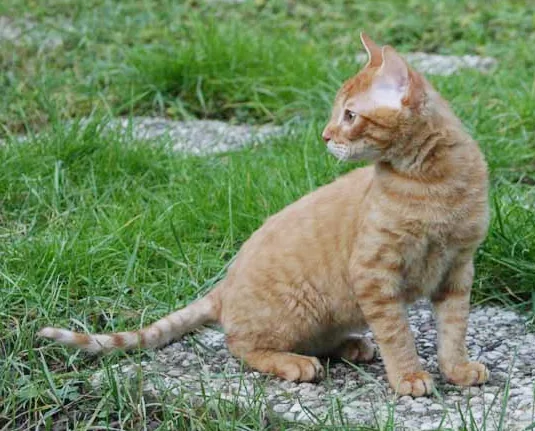
German Rex
German rex cost reflects one of the rarest curly-coated cats, a Berlin-born breed with a smaller, less-documented health profile than its better-known rex relatives. First-year spending typically runs near $1,935, easing to about $863 a year, or roughly $72 a month. Over a full lifespan, total ownership approaches $13,154.
Acquisition, surgical desexing, initial vet series, and starter hardware.
Normalized baseline at ~$72/month routine cash burn.
Projected over a 14-year German Rex lifespan.
$1,500 Liquid Reserve Mandate
Critical bufferA thin, low-insulation coat and a historically narrow gene pool create moderate, monitorable risk, though the breed has fewer documented syndromes than its more established rex relatives.
Source: MetLife True Cost of Pet Emergencies 2025 (15% of owners hit $3,000+; uninsured surgery $3,000–8,000)
Biometric & phenotypic actuarial spec
Annual Cash Burn Matrix ($863/yr)
Continuous operational expenditure distributed across 5 core maintenance categories, indexed to metabolic demand and regional clinical rates.
Food
Vet Care
Grooming
Pet Insurance
Supplies & Toys
Upfront Entry CapEx
Purchase / Adoption Fee ($600), Initial Vet Visit & Vaccinations ($276), Starter Supplies ($239), Litter & Behavior Basics ($40), First Year Food ($174), First Year Vet Care ($239), First Year Grooming ($60), First Year Insurance ($307).
Comprehensive Lifecycle Ledger
Audited financial breakdown distinguishing immediate first-year fixed capitalization from ongoing annualized operating liabilities over the full 12–16 yrs feline lifespan.
| Expenditure Category | Year 01 Outlay | Annual Steady-State | Lifetime Total | Actuarial Sizing Methodology |
|---|---|---|---|---|
| Purchase / Adoption Fee | $600 | — | $600 | Varies by breeder vs rescue |
| Initial Vet Visit & Vaccinations | $276 | — | $276 | Spay/neuter, microchip, health check |
| Starter Supplies | $239 | — | $239 | Litter box, scratching post, carrier, bowls |
| Litter & Behavior Basics | $40 | — | $40 | Litter box training, scratching post basics |
| First Year Food | $174 | — | $174 | — |
| First Year Vet Care | $239 | — | $239 | — |
| First Year Grooming | $60 | — | $60 | — |
| First Year Insurance | $307 | — | $307 | — |
| Food | — | $174 | $2,436 | — |
| Vet Care | — | $239 | $3,346 | — |
| Grooming | — | $60 | $840 | — |
| Pet Insurance | — | $307 | $4,298 | — |
| Supplies & Toys | — | $83 | $1,162 | — |
| Gross Actuarial Expenditure | $1,935 | $863 / yr | $13,154 | Unadjusted baseline |
Actuarial Health Risk Profile (Tier 3)
A thin, low-insulation coat and a historically narrow gene pool create moderate, monitorable risk, though the breed has fewer documented syndromes than its more established rex relatives.
Patellar Luxation
As with other rex breeds, a slipping kneecap occurs often enough to warrant a vet check during routine visits and, occasionally, surgery.
Skin sensitivity
The thin, wavy coat offers little insulation or sun protection, making the German Rex more prone to cold stress and sunburn than a fully coated cat.
Reduced genetic diversity
A historically small founding population raises the odds of recessive hereditary conditions surfacing, which is why genetic screening before breeding matters more than in a larger-population breed.
What Truly Drives the German Rex’s Financial Profile
About the German Rex and its cost
German rex cost starts with a genuinely uncommon breed, developed independently in postwar Berlin around the same curly-coat trait seen in the Cornish Rex but from a separate founding cat. Because so few breeders work with the line worldwide, $600 runs high relative to how modest the breed's care needs otherwise are. Budget $276 for the first exam and vaccines and $239 for warm bedding and a soft blanket, since the thin coat offers little insulation. First-year spending totals near $1,935, driven mostly by the difficulty of finding a kitten at all.
What drives German Rex costs
This breed has fewer documented breed-specific syndromes than the Cornish or Devon Rex, but it shares the same thin, low-insulation coat, which means cold sensitivity and sunburn risk rather than a major organ disease. Loose kneecaps show up occasionally, as in most rex breeds, and are worth checking at routine visits. The bigger long-term consideration is the breed's historically small founding population, which raises the odds of an unexpected recessive condition surfacing and makes genetic screening before breeding especially valuable. None of this pushes $239 much above a typical cat's baseline, though $307 reflects some uncertainty given how little long-term data exists on the breed.
German Rex first-year budget
One-time costs include $600 for a kitten, reflecting the difficulty of finding this rare breed at all, $276 for the first exam, vaccines, and spay or neuter, and $239 for warm bedding and basic gear; $40 rarely applies to a cat. These sum to $1,155. Recurring first-year costs add $174, $239 for follow-up visits, $60 for minimal coat care, and $307, totaling $780. Combined, plan for $1,935, with acquisition as the dominant expense.
German Rex yearly cost after year one
Steady-state spending settles near $863 a year, about $72 a month. Food at $174 is modest for a small-bodied cat. Insurance at $307 reflects some pricing uncertainty given the breed's rarity rather than a documented high-risk profile. Routine veterinary care at $239 should include a knee check and general wellness exam. Grooming at $60 stays low since the coat needs no brushing, and $83 covers warm bedding and basic enrichment items.
Emergency fund for a German Rex
Set aside $1,500 for this breed's more modest but real risks: a patellar luxation repair if a knee slips badly, and skin-related treatment from cold or sun exposure that has gone unmanaged. Because the breed's small population means less is documented about rarer hereditary conditions, a reserve also provides a buffer against the unexpected. Keeping this fund available, or carrying insurance with a deductible you can cover promptly, protects the $13,154 lifetime estimate against surprises this under-studied breed may still hold.
Cutting German Rex costs
Because acquisition, not ongoing care, is this breed's biggest expense, patience in finding a reputable breeder rather than paying a premium for the first available kitten is the clearest saving. Keeping the cat warm and shielded from sun prevents the skin issues its thin coat invites, avoiding vet visits that would otherwise add up. Checking knees at routine visits catches patellar luxation while it is still manageable without surgery. Insuring early smooths any surprise into $72 and protects the $13,154 total.
5 Prudent Ways to Cut German Rex Costs
Ask about the breeding line's history
Because the German Rex population is small, ask a breeder directly about any known health issues in the line and whether outcrossing has been used to maintain genetic diversity. This is more informative than a general health guarantee alone.
Keep the cat warm
The thin, curly coat provides little insulation, so a warm home, soft bedding, and an occasional sweater in cold weather prevent the stress that comes with a cold-sensitive cat. This is a cheap substitute for a coat the breed does not have.
Get knees checked at every visit
Ask your vet to assess the kneecaps at each routine exam, since patellar luxation is common enough across rex breeds to catch early. Early detection avoids a more involved surgical correction later.
Insure early given limited data
Because the German Rex is rare enough that insurers have less claims history to price against, enrolling a kitten early locks in coverage before any condition can be excluded, regardless of how the breed's risk profile is eventually understood.
Protect the coat from sun
Limit unsupervised time in direct sun and consider a pet-safe sunscreen on lightly coated areas, since the thin fur offers less UV protection than a fully coated cat. A few minutes of prevention avoids a vet visit for sunburned skin.
Peer Class Financial Comparisons
How the German Rex compares to morphological peers on annualized ownership cost.
German Rex
Frequently Asked Financial Questions
How much does a German Rex kitten cost?
Why are German Rex cats rare and expensive?
How much does it cost to own a German Rex per month?
What is the difference between a German Rex and a Cornish Rex?
What health problems do German Rex cats have?
Are German Rex cats hypoallergenic?
Is German Rex pet insurance expensive?
Data sources
- German Rex — Wikipedia (en.wikipedia.org)
- Patellar Luxation in Cats — VCA Animal Hospitals (vcahospitals.com)
- Skin Problems in Cats — VCA Animal Hospitals (vcahospitals.com)
Calculate Your German Rex Cost Adjusted by Metro ZIP Code
Veterinary surgical tariffs and clinical room rates vary widely between metropolitan regions and rural counties. Recalculate this dossier with your exact state, city, and lifestyle parameters.