

Key takeaways
- Standard pet insurance covers dental illness and injury, such as broken teeth, periodontal disease, and extractions, but routine cleanings are excluded unless you add a wellness rider that typically costs $10-$25 a month.
- Dental caps are real: Embrace limits dental coverage to $1,000 per policy term, and several insurers, including ASPCA, Spot, and Pumpkin, do not cover root canals.
- Periodontal disease affects nearly 80% of dogs and 70% of cats by age three, per the AVMA, so buy dental coverage while your pet's teeth are healthy, because pre-existing dental disease is excluded.
Pet insurance with dental coverage pays for dental illness and injury, and it almost never pays for routine cleanings. Standard accident-and-illness plans cover extractions and repair of broken teeth, root canals, crowns, stomatitis, and periodontal disease at most insurers, according to Money's pet dental insurance guide. Cleanings require a separate wellness rider that typically adds $10 to $25 a month. Coverage also comes with annual caps, waiting periods, and a hard exclusion for existing dental disease. This guide breaks down what each side pays, so you can judge dog dental insurance and cat dental insurance against the bills you are likely to face.
What pet insurance with dental covers
Dental coverage in a standard policy is an illness-and-injury benefit. It pays when a tooth problem is a medical event, not maintenance.
| Dental event | Typical treatment | Covered by a standard plan? |
|---|---|---|
| Broken or fractured tooth | Extraction or repair | Yes, if it happened after coverage began |
| Periodontal disease | Treatment and extractions | Yes, at most insurers, if not pre-existing |
| Abscessed tooth | Drainage, extraction | Yes, if not pre-existing |
| Routine cleaning | Scaling and polishing under anesthesia | No, wellness rider only |
| Fillings, caps, implants | Cosmetic work | No |
The table follows Money's coverage summary and the Embrace dental coverage page. Embrace lists periodontal disease, abscessed teeth, malocclusions, and gingivitis as covered dental illnesses. It lists tooth loss, jaw fractures, oral trauma, and tooth fractures as covered injuries.
Why dental coverage matters
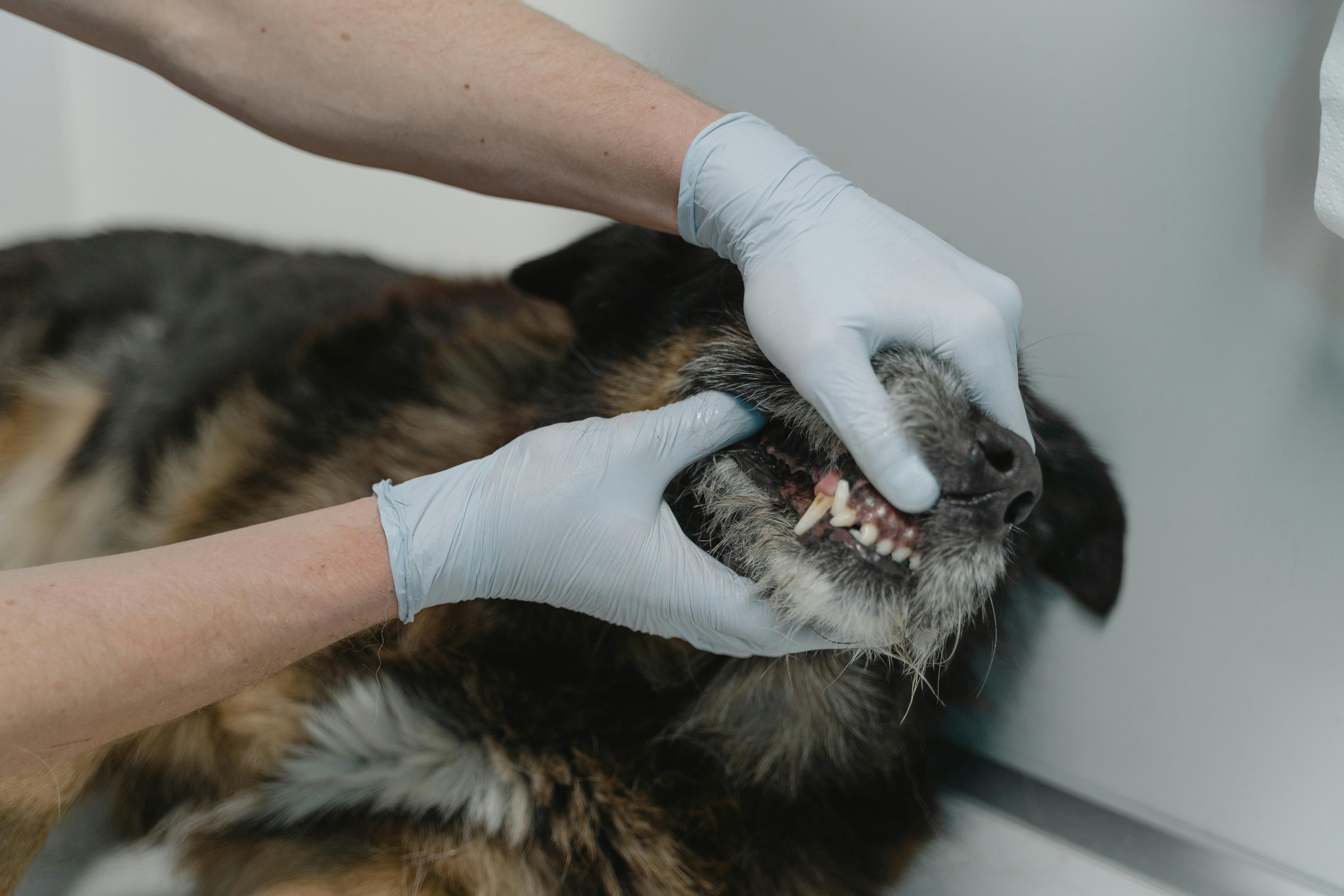 Photo: Tima Miroshnichenko / Pexels
Dental disease is the norm, not the exception. The AVMA says periodontal disease affects nearly 80% of dogs and 70% of cats by age three, in its press release on pet dental disease. The AAHA's 2019 dental care guidelines recommend a first anesthetized dental evaluation by age one for small and medium dogs and for all cats.
That makes timing critical for insurance. A plan excludes any condition that showed signs before coverage began. Enrolling a two-year-old with clean teeth is very different from enrolling a seven-year-old with gum disease.
80% of dogs
have periodontal disease by age three, and 70% of cats, per the AVMA. Estimate your pet's yearly dental spend with the PetBudget calculator.
Does pet insurance cover dental cleaning?
Routine cleaning is the gap in most policies. Money states that pet insurance does not cover preventive dental exams, cleanings, or at-home care supplies. Embrace says the same: cleanings are preventive care, reimbursed only under its optional non-insurance wellness plans.
If you want pet insurance that covers dental cleaning, buy a wellness rider or a wellness plan. Money reports these riders typically cost $10-$25 a month. That is $120-$300 a year by our arithmetic.
Compare that with the cleaning itself. CareCredit's April 2026 guide puts the average dog cleaning at $388 and the average cat cleaning at $375, as we detail in our dog and cat teeth cleaning cost guide. A rider only saves money if it reimburses most of that bill and you use the other benefits it includes. Riders reimburse capped amounts, so read the schedule before you compare price alone. Our wellness plans versus pet insurance guide covers the trade-off.
Dental caps and gaps that catch owners
Coverage limits vary by insurer, and the fine print matters more than the label.
| Insurer detail | What it means | Source |
|---|---|---|
| Embrace dental cap | $1,000 per policy term for dental illness and injury | Embrace |
| Lemonade dental cap | $1,000 a year for dental care | Money guide |
| Lemonade dental illness add-on | Around $13 | Money guide |
| Root canals | Not covered by ASPCA, Prudent Pet, Pumpkin, Spot, or Healthy Paws | Money guide |
Money lists ASPCA, Embrace, Figo, Lemonade, Nationwide Whole Pet with Wellness, Fetch, Pets Best, Prudent Pet, Pumpkin, Spot, and Trupanion among insurers that offer dental coverage. Coverage terms change, so confirm the current policy language before you buy.
What dental coverage excludes
Most dental benefits share four exclusions, per Money's summary:
- Pre-existing conditions. Anything present before enrollment is excluded. Embrace notes it covers some curable pre-existing conditions, so ask about that.
- Waiting periods. These are typically 14 days.
- Neglect-related disease. Dental illness or injury caused by a lack of preventive care can be denied.
- Cosmetic work. Caps, implants, and fillings are not covered.
Our guide to pet insurance waiting periods and pre-existing conditions explains how insurers define pre-existing and how the NAIC model law limits waits.
What dental work costs without insurance
Published estimates vary widely, which is why a cap of $1,000 can be enough or not.
| Procedure | Cost estimate | Source |
|---|---|---|
| Dog cleaning, national average | $388 (range $307-$702) | CareCredit April 2026 guide |
| Cat cleaning, national average | $375 (range $300-$682) | CareCredit April 2026 guide |
| Dog extraction, per tooth | $300-$900 | Money guide |
| Cat extraction, per tooth | $50-$200 | Money guide |
| Tooth extraction, per tooth (PetMD) | $500-$2,500 | PetMD, via our cleaning-cost guide |
The gap between the Money and PetMD extraction figures is large. Ask your vet for a written estimate that lists cleaning, radiographs, anesthesia, and per-tooth extraction fees, since a dental with several extractions can pass a $1,000 cap.
Should you buy dental coverage?
Buy dental coverage under these conditions:
- Your pet is young and its teeth are healthy. You lock in coverage before any dental condition exists.
- Your pet is a small or flat-faced breed. PetMD advises small dogs and flat-faced breeds get a professional cleaning every year, per our cleaning guide.
- You have not budgeted for a $1,000 event. Build a reserve with the emergency fund calculator or test a policy with the pet insurance break-even calculator.
Skip a rider if you only want cleanings paid. Compare $120-$300 a year against a $388 average dog cleaning and the reimbursement cap, and consider a wellness plan instead.
Steps to check a policy before you buy
- Read the dental section of the sample policy, not the marketing page.
- Find the annual dental cap and confirm whether it is per year or per policy term.
- Check for root canal and extraction coverage.
- Ask whether cleanings are included in a rider and how much they reimburse.
- Schedule a dental exam before enrolling, so your vet can document healthy teeth.
Frequently asked questions
Does pet insurance cover dental cleaning?
Usually not. Routine dental cleanings are treated as preventive care, so they are covered only through an optional wellness rider or plan. The rider typically adds $10-$25 a month and reimburses a capped amount per year.
Does pet insurance with dental cover extractions?
Yes, when the extraction treats a covered dental illness or injury. Broken teeth, periodontal disease, and abscesses are typical covered causes. Pre-existing dental disease and problems blamed on skipped preventive care are excluded.
Is dog dental insurance worth it?
It can be worth it if you buy early and your dog is prone to dental disease, since illness-related extractions can cost hundreds of dollars per tooth. If you only want cleanings paid, compare the yearly rider price against the $388 average cleaning cost.
Is cat dental insurance different from dog coverage?
The coverage structure is the same: illness and injury are covered, and cleanings need a wellness add-on. Cat dental bills are usually lower per procedure, so the yearly caps matter less than for dogs.
See your own pet's real numbers.
Run the calculator with your breed, metro area, and care choices for a first-year, annual, and lifetime cost estimate — not a national average.