

Key takeaways
- Veterinary wellness plans like Banfield's Optimum Wellness Plans and VCA CareClub are monthly membership fees for routine preventive care, not insurance — they don't pay out for accidents, injuries, or unexpected illness.
- Pet insurance, including Nationwide's My Pet Protection with Wellness500 add-on, reimburses unpredictable accident and illness bills and can bundle in up to $500 a year toward routine wellness costs.
- Wellness plans make the most sense for a young, healthy pet whose owner wants predictable monthly preventive-care costs; insurance matters more once a big unplanned vet bill becomes the real financial risk.
A wellness plan and pet insurance solve two different budgeting problems. A wellness plan is a monthly membership fee that prepays for routine care you already know is coming — exams, vaccines, a dental cleaning. Pet insurance is a reimbursement policy for the bill you can't predict — a torn ligament, a swallowed toy, a sudden illness. Confusing the two means buying the wrong protection for the actual risk in front of you.
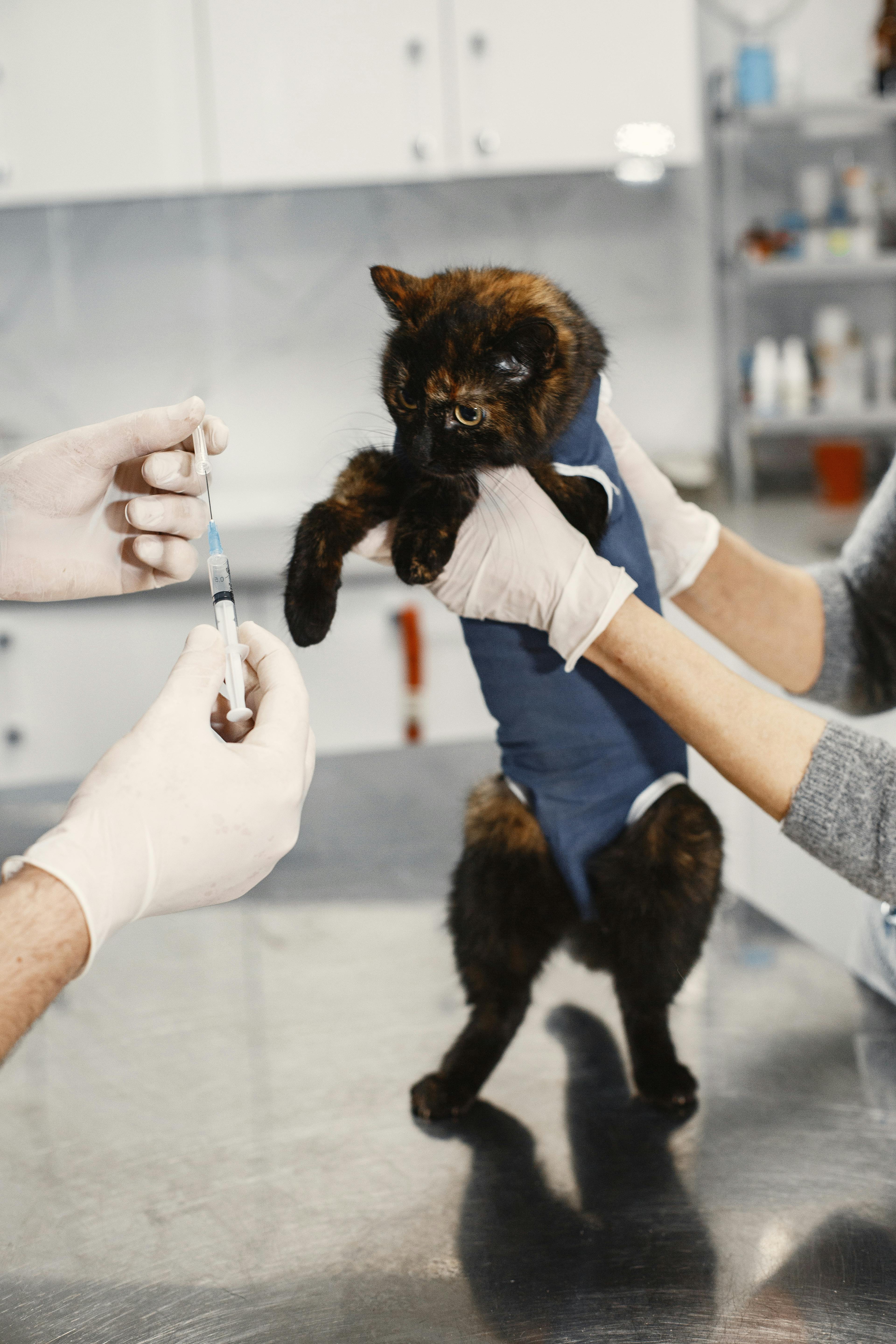 Photo: Gustavo Fring / Pexels
What a veterinary wellness plan actually is
A wellness plan is a monthly membership fee paid to a specific vet chain in exchange for a bundle of preventive services. It is not insurance, and it does not pay out for accidents or illness.
Banfield's Optimum Wellness Plans are the largest example, sold through Banfield hospitals located inside PetSmart stores. They bundle "core preventive care services such as routine checkups, vaccinations, diagnostic testing, and unlimited office visits," per Banfield's own Optimum Wellness Plan FAQ page. The FAQ page states plainly that these plans are "a proactive approach to preventive care" and do not function like insurance — emergency treatment and illness-related care fall outside the plan and are billed separately, though members get a discount on those services too.
VCA CareClub works the same way at VCA-owned hospitals. Plans start at $19.99 a month for unlimited exams, including urgent and emergency visit exams (the exam fee, not treatment costs). One specialty consult per membership year is included too, per VCA's own CareClub page. Select CareClub tiers carry a one-time enrollment fee of $49.99. Like Banfield's plans, CareClub does not cover treatment for accidents, injuries, or unexpected illness. It covers the visit and preventive services, not the surgery that might follow.
Banfield and VCA CareClub pricing
Both chains price tiers by life stage and species, and both charge month-to-month with no annual payout cap, since a membership isn't insuring against risk — it's spreading a known cost over 12 payments.
| Plan | Starting monthly price | What it covers | Covers accidents/illness? |
|---|---|---|---|
| Banfield Access Plan | $15.95-$37.95, per Banfield's Access Plan page | Basic preventive visits and diagnostics | No |
| Banfield Optimum Wellness Plan (Active Care) | ~$42/mo dogs, ~$34/mo cats, per Insurify's 2026 Banfield review | Exams, vaccines, diagnostic testing, unlimited office visits | No |
| Banfield Optimum Wellness Plan (Active Care Plus) | Active Care price plus a dental-cleaning tier, per Banfield's dog plans page | Everything in Active Care, plus one dental cleaning a year | No |
| VCA CareClub | $19.99/mo and up, per VCA's CareClub page | Unlimited exams, early disease screening, vaccines, one specialty consult | No (exam fee only on urgent/emergency visits) |
Banfield's enrollment fee averages about $69 per pet, per Insurify's 2026 Banfield Wellness Plan review. That's on top of the monthly fee, so a first-year Active Care membership for a dog runs roughly $573 (12 months at $42 plus the $69 enrollment fee) before any add-on services.
$19.99-$42/mo
The typical starting range for a wellness membership across Banfield and VCA CareClub. Run your pet's full first-year cost, wellness membership included, on the calculator.
What pet insurance covers instead — and where the "paw plan" fits in
Pet insurance is a different product entirely. You pay a monthly premium, and the insurer reimburses a percentage of eligible vet bills for accidents and illness, after a deductible, subject to an annual benefit cap. Average premiums run $836 a year for dogs and $435 a year for cats, per NAPHIA's 2026 State of the Industry Report. That's covered in more depth in Is Pet Insurance Worth It?, which walks through the full premium-versus-emergency-bill math.
Nationwide sells a product called My Pet Protection, and its wellness add-on is where the "paw plan" naming confusion usually starts. My Pet Protection is accident-and-illness insurance with a $7,500 annual benefit. The My Pet Protection with Wellness500 tier adds up to $500 a year toward routine costs. That covers checkups, vaccines, flea and heartworm prevention, and spay/neuter, drawn from the same $7,500 pool rather than a separate budget, per Nationwide's own pet wellness plan page. That structure makes it a hybrid. It's real insurance for the unpredictable bill, with a wellness allowance folded in, rather than a standalone membership like Banfield's or VCA's.
If you're comparing named insurers on premium, deductible, and reimbursement structure rather than the wellness question, the Figo vs Healthy Paws vs Trupanion vs Lemonade comparison breaks down six major carriers side by side.
Wellness plan vs pet insurance vs paying cash
These three approaches aren't ranked best to worst — they answer different budgeting questions. The table below lines up what each one actually does.
| Wellness plan (Banfield, VCA CareClub) | Pet insurance (with or without wellness add-on) | Cash / self-funded | |
|---|---|---|---|
| Pays for | Routine exams, vaccines, screening | Accidents, illness, emergencies | Whatever you choose, as it happens |
| Cost structure | Fixed monthly membership fee | Monthly premium + deductible + coinsurance | No fixed cost; pay per visit |
| Annual cap style | No cap — it's a subscription, not a payout | Annual benefit limit (e.g., $7,500 on Nationwide's My Pet Protection) | No cap, but no cushion either |
| Covers a torn ligament or sudden illness | No | Yes, after deductible and waiting period | Yes, if you've saved enough |
| When it pays off | Pet uses most or all of the bundled services every year | Pet has one bad year with a large bill | Pet stays healthy and the fund goes unused, or gets reallocated |
When a wellness plan makes sense
A wellness plan is the right fit when the main goal is smoothing out predictable costs, not hedging against a rare, expensive event. Three situations line up well with a membership:
- A kitten or puppy in its first year. First-year pets need a concentrated block of vaccines, deworming, and often a spay or neuter, all within a few months. A kitten wellness plan turns that lumpy bill into a flat monthly payment. It's easier to budget around even if the total cost ends up similar.
- An owner who visits the vet often anyway. If your pet already gets an annual exam, routine bloodwork, and seasonal preventives, bundling them into a membership can be close to cost-neutral versus paying à la carte. It also adds predictability.
- A household that wants zero billing surprises for routine care. A wellness plan's flat fee means no per-visit invoice for the services it covers. Some owners value that even before the math is compared line by line.
When pet insurance (or cash) makes more sense
A wellness membership doesn't touch the actual financial risk in pet ownership: a single emergency surgery commonly costs $1,800-$5,000 for a dog or $1,500-$3,000 for a cat, according to the sourced ranges in Is Pet Insurance Worth It?. No wellness plan reimburses that bill. Two situations favor insurance or a cash reserve over a membership:
- Large-breed dogs and pets over age seven. Both carry higher expected claim sizes for joint, GI, and chronic conditions — the kind of bill a wellness plan was never designed to touch.
- Owners who can't absorb a $1,500+ surprise bill. Rover's 2026 Cost of Dog Parenthood Report found that 38% of pet parents couldn't cover an emergency vet visit without going into debt, a risk a membership plan does nothing to reduce, as cited in Is Pet Insurance Worth It?.
Nothing stops an owner from carrying both. A Banfield or VCA membership handles routine visits, while a standalone accident-and-illness policy or a self-funded emergency reserve covers the bill a membership can't touch. They protect against different risks, so stacking them isn't redundant.
Work out the actual numbers for your pet
National averages are a starting point, not your pet's real cost. The pet cost calculator factors in your pet's breed, age, and life stage to estimate first-year and annual costs, so you can compare a specific wellness plan's monthly fee and a specific insurance quote against what your pet would actually cost you either way.
Sources
Banfield's own Optimum Wellness Plan FAQ, Access Plan page, and dog wellness plans page; Insurify's 2026 Banfield Wellness Plan review for sample monthly pricing and the enrollment fee; VCA's own CareClub page; Nationwide's own pet wellness plan page for the My Pet Protection with Wellness500 structure; and NAPHIA's State of the Industry Report 2025 for average annual premiums.
Frequently asked questions
What is the difference between a wellness plan and pet insurance?
A wellness plan is a monthly membership that prepays for routine preventive care, like exams and vaccines, at a specific vet chain. Pet insurance is a reimbursement policy that pays a percentage of unpredictable accident and illness bills after a deductible, and it doesn't cover routine care unless you add a wellness rider.
Is a kitten wellness plan worth it?
A kitten wellness plan is often worth it because kittens need a concentrated block of vaccines, deworming, and a spay or neuter in their first year, and bundling those into a monthly fee smooths out an otherwise lumpy first-year bill. Compare the plan's monthly cost times 12 against paying for each visit separately before enrolling.
Does Nationwide's My Pet Protection plan include a wellness option?
Yes. Nationwide's My Pet Protection with Wellness500 adds up to $500 a year toward routine costs like checkups, vaccines, and flea and heartworm prevention, drawn from the same $7,500 annual benefit as the accident-and-illness coverage, per Nationwide's own pet wellness plan page.
Can you have both a wellness plan and pet insurance?
Yes, and many owners do — a Banfield or VCA CareClub membership handles routine preventive visits while a separate accident-and-illness insurance policy covers the unpredictable large bill. The two aren't mutually exclusive; they cover different kinds of vet spending.
See your own pet's real numbers.
Run the calculator with your breed, metro area, and care choices for a first-year, annual, and lifetime cost estimate — not a national average.