

Key takeaways
- A puppy's or kitten's first vet visit should happen within the first few days of bringing them home, and no later than around 8 weeks old, per CareCredit's veterinary guidance.
- A puppy first vet visit costs $100-$350 at a full-service practice; a kitten first vet visit runs $75-$250, once the exam fee, fecal test, and first vaccines are added together.
- The wellness exam fee covers a nose-to-tail physical only — vaccines, fecal testing, deworming, and any bloodwork are billed as separate line items on top of it.
A puppy's or kitten's first vet visit should happen within the first few days of bringing them home, and no later than around 8 weeks old, per CareCredit's guidance on when to take a pet to the vet. That first appointment costs $100-$350 for a puppy and $75-$250 for a kitten. The total depends on the exam fee, a fecal test, and any vaccines due that day. This guide covers exactly when to book it, what a wellness exam fee does and doesn't include, and how the visit differs for a puppy versus a kitten.
$100-$350
Typical cost of a puppy's first vet visit at a full-service practice, exam fee and fecal test included. See your breed-adjusted first-year total on the calculator or in the first-year pet cost ledger.
When should I take my puppy to the vet?
Book the appointment within the first few days of bringing a puppy home. Aim for no later than around 8 weeks old. That timing matters because maternal immunity from nursing starts wearing off around that age, according to CareCredit's pet-care guidance on first vet visits. Waiting past 8 weeks leaves a gap. A puppy has neither its mother's antibodies nor its own vaccine-built immunity yet.
The AAHA 2019 Canine Life Stage Guidelines recommend the first puppy exam at 6-8 weeks old. The core vaccine series then finishes between 16 and 20 weeks, across several follow-up visits. A puppy adopted from a shelter or rescue may already have had one exam and a first round of shots. Schedule your own vet's exam anyway, within the first few days. A second set of eyes on a new pet's health record is worth the visit regardless of prior care.
When should I take my kitten to the vet?
The timing matches a puppy's: within the first few days at home, and by about 8 weeks old at the latest. A kitten's first exam carries an added purpose beyond the physical check.
The 2021 AAHA/AAFP Feline Life Stage Guidelines state that the initial veterinary visit is the chance to create a positive experience. It sets the stage for a lifetime of regular veterinary care. That guidance calls for letting a kitten explore the exam room and interact with staff, rather than restraining it immediately. An early bad experience can make every future kitten veterinarian visit harder. Shelters generally avoid placing kittens younger than 8 weeks old, so most kittens hit that first-visit window right around adoption.
What's included in a wellness exam fee versus a la carte add-ons
The exam fee itself pays for the veterinarian's hands-on physical and consultation time — nothing else. Everything else on the visit gets billed as a separate line item added on top of that base fee.
A wellness exam is a head-to-tail physical evaluation. The vet checks eyes, ears, teeth, coat, belly, heart, lungs, and limbs. They also discuss nutrition, parasite prevention, and spay/neuter timing, according to ASPCA Pet Health Insurance's first vet visit guidance. That exam fee alone is a fixed charge. Everything the vet recommends during it — a fecal test, a vaccine, a heartworm test, deworming medication — is a separate a la carte charge. None of it comes bundled into the exam fee automatically.
| Included in the wellness exam fee | Billed as a separate add-on |
|---|---|
| Nose-to-tail physical exam | Vaccines (core and non-core) |
| Weight, growth, and vitals check | Fecal test for intestinal parasites |
| Vet consultation and Q&A time | Deworming medication |
| Behavior and development screening | Heartworm and FeLV/FIV tests |
| — | Flea/tick prevention starter dose |
This is why a first visit's total bill almost never matches the posted exam fee alone. A new owner budgeting for "the vet visit" needs the exam fee plus whatever preventive care gets added that same appointment. The exam fee by itself is not the real number to plan around.
Puppy first vet visit cost, item by item
A puppy check up at a full-service practice runs $100-$350 for the first appointment, once the exam, a fecal test, and deworming are added to the base exam fee.
| Line item | Typical cost |
|---|---|
| Wellness exam fee | $45-$75 |
| Fecal test | $25-$55 |
| Deworming medication | $15-$30 |
| First core vaccine dose | $20-$50 |
| Total first visit | $100-$350 |
Those figures come from Bestie Paws Hospital's veterinary pricing breakdown for a puppy's first vet visit. The same source puts a puppy's complete first-year package at $200-$450 for a general-practice clinic. That figure covers every exam and the full vaccine series through 16-20 weeks. A low-cost vaccine clinic that charges per shot, without a full exam each visit, brings that same package down to $100-$250. This post covers the visit itself; for exact per-shot vaccine pricing, see PetBudget's dog and cat vaccine shot cost guide.
Kitten first vet visit cost, item by item
A kitten first vet visit runs cheaper than a puppy's, mostly because a kitten's core vaccine doses and fecal test price slightly lower on average.
| Line item | Typical cost |
|---|---|
| Physical exam | $50-$100 |
| FVRCP vaccine (first dose) | $25-$50 |
| Fecal exam | $36 |
| Deworming treatment | $20-$50 |
| Total first visit | $75-$250 |
These numbers come from Spot Pet Insurance's kitten vet cost breakdown. It puts the bare exam-plus-initial-vaccine visit at $75-$150. That rises to $150-$250 once fecal testing and deworming are included the same day. The same source estimates a kitten's full first-year veterinary total at $886-$1,181 before any illness or emergency visit. That figure covers three vaccine visits, rabies, spay or neuter, fecal tests, and a full year of flea/tick prevention.
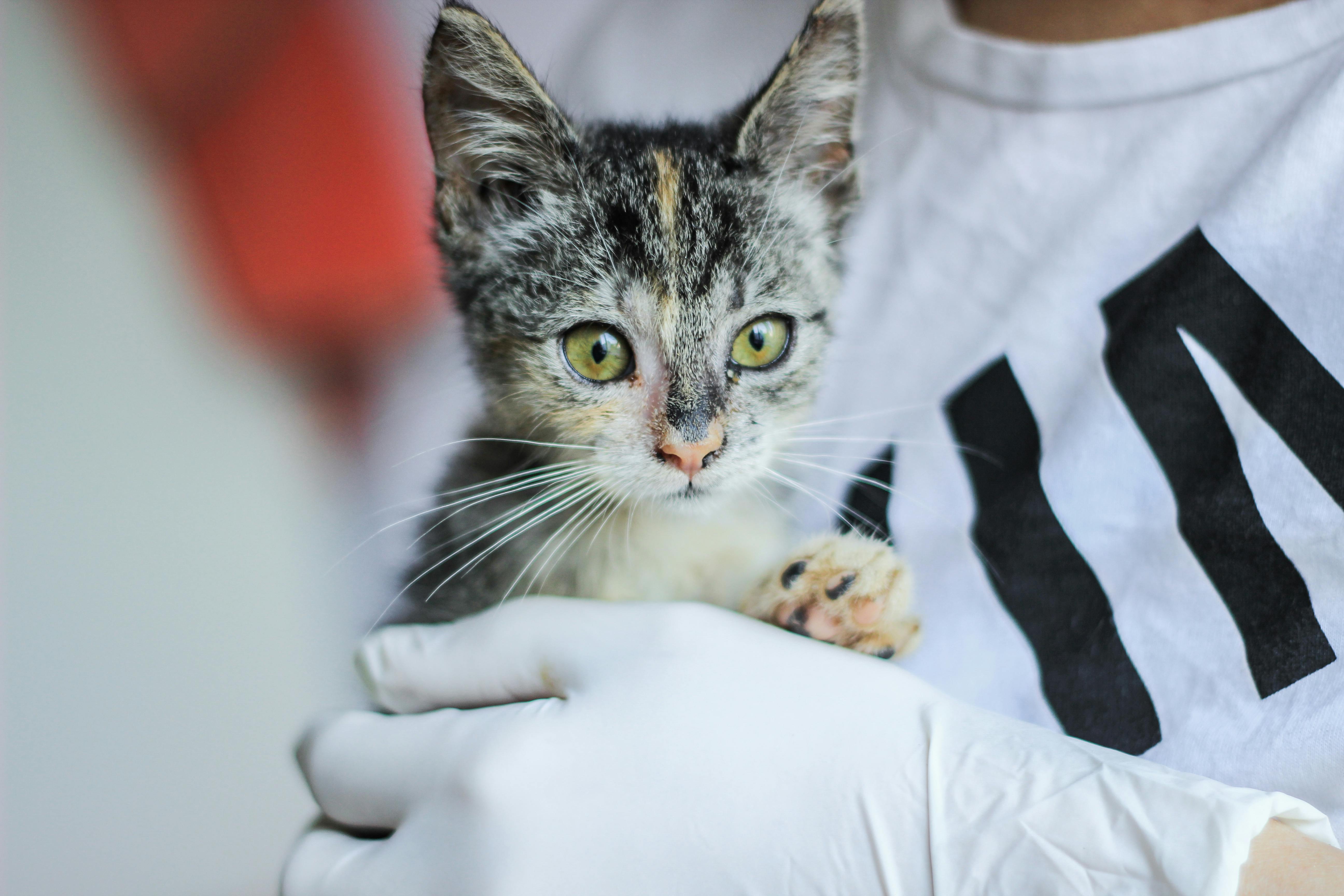 Photo: Natalia Sevruk / Pexels
Puppy versus kitten first-visit timelines, side by side
The exam timing lines up almost exactly between species. What differs is what gets screened for and how the visit itself is handled.
| Puppy | Kitten | |
|---|---|---|
| First visit age | 6-8 weeks, or within days of adoption | 6-8 weeks, or within days of adoption |
| Core vaccine series finishes | 16-20 weeks | 16-20 weeks |
| Parasite screening focus | Intestinal worms, heartworm | Intestinal worms, FeLV/FIV risk |
| Visit-handling priority | Socialization, bite inhibition | Low-stress handling, exam-room exploration |
| First-visit cost | $100-$350 | $75-$250 |
The parasite-screening difference matters for budgeting. A kitten's first visit more often includes an FeLV test, since feline leukemia spreads between cats and shelters can't always confirm a kitten's exposure history. A puppy's first visit is more likely to add a heartworm-preventive discussion instead, since heartworm spreads through mosquitoes rather than direct contact. This guide covers only the first appointment. For how often each species needs a vet visit after that, see PetBudget's guide to vet visit frequency by life stage.
Questions to ask at your puppy's or kitten's first vet visit
Come with a short list rather than relying on memory once you're in the exam room. These five cover the ground most new owners forget to ask about.
- What's the full vaccine schedule from here, and what does each dose cost? Get the total for the remaining series, not just today's bill.
- Is my puppy or kitten's weight and growth on track for its breed? A vet can flag a growth problem months before it becomes visible.
- When should spay or neuter happen, and what does that procedure cost here? Pricing and recommended timing both vary by clinic and by breed size.
- What parasite prevention does my pet need year-round, not just today? Flea, tick, and heartworm prevention is an ongoing monthly cost, not a one-time add-on at this visit.
- What would make you recommend bloodwork or additional testing later? Knowing the trigger signs in advance means you won't be caught off guard by a future add-on charge.
Finding pet wellness exams near you
Searching "pet wellness exams near me" turns up options that range widely in price, so it helps to know what you're comparing before you book.
A general-practice vet charges the highest exam fee. In exchange, it bundles in the most thorough single visit — full physical, same-day vaccines, and a relationship with a vet who'll see your pet again for years. A low-cost vaccine clinic, often run through a local humane society or a retail partner, charges less per vaccine. It usually skips the full physical exam unless you specifically request and pay for one. Some national chains also run standing new-patient exam promotions. PetBudget's guide to free and discounted vet exams covers which chains offer them, and what still costs money once you're in the room. Whichever route you pick, confirm by phone whether the quoted price includes the exam fee itself. That's the line item most often left off an online estimate.
How the first visit fits into your first-year budget
The first visit is one line item in a much bigger first-year total, not the whole bill. PetBudget's first-year pet cost ledger puts a puppy's full baseline first year at $3,221 and a kitten's at $1,904, per ASPCA's published cost figures. Spay/neuter, supplies, and food are all included alongside every vet visit in that total. The first vet visit covered in this guide is a small early piece of it, typically under 10%. It's also the piece that determines how much of the rest gets caught early, versus discovered later as a bigger bill.
Run your own puppy or kitten's numbers, adjusted for breed and location, on PetBudget's calculator to see the full first-year total before you commit to a specific breed or adoption date.
Frequently asked questions
When should I take my new puppy to the vet?
Within the first few days of bringing your puppy home, and no later than around 8 weeks old, according to CareCredit's guidance on when to take a pet to the vet. Even a puppy that looks perfectly healthy needs this first exam, since some conditions have no visible symptoms yet.
When should I take my new kitten to the vet?
On the same timeline as a puppy: within the first few days at home, and no later than about 8 weeks old. The AAHA/AAFP Feline Life Stage Guidelines note this first visit also sets the tone for how a cat tolerates veterinary care for the rest of its life.
How much does a puppy's first vet visit cost?
A puppy first vet visit costs $100-$350 at a full-service practice, covering the wellness exam ($45-$75), a fecal test ($25-$55), and deworming ($15-$30) if the first vaccines are also given that day, per Bestie Paws Hospital's veterinary pricing breakdown.
What's the difference between a wellness exam and a checkup with vaccines?
A wellness exam fee pays only for the veterinarian's hands-on physical exam and consultation time. Vaccines, fecal tests, deworming, and bloodwork are each billed as separate a la carte charges added to that base exam fee, not bundled into it automatically.
See your own pet's real numbers.
Run the calculator with your breed, metro area, and care choices for a first-year, annual, and lifetime cost estimate — not a national average.