

Key takeaways
- A free first vet exam is real and widely available: Banfield and VCA both offer a no-charge first physical exam for new patients at hundreds of U.S. locations.
- The exam itself is the only free part. Banfield's own disclosed pricing puts the typical rest of a first puppy visit at $150-$250 and a first adult cat visit at $200-$350 once vaccines, fecal tests, and deworming are added.
- 52% of U.S. pet owners skipped or declined recommended veterinary care in the past year, and 71% of them cite cost as the reason, per the PetSmart Charities-Gallup State of Pet Care Study.
A free vet exam is a real, no-catch offer at two of the country's largest veterinary chains. Most humane society and SPCA clinics run some kind of discounted visit too. What isn't free is everything that usually follows an exam: vaccines, bloodwork, x-rays, and treatment all carry real costs, and that's money you still have to budget for. This guide covers where a free first visit vet offer actually exists, what a free vet examination does and doesn't cover, and where to find genuinely low-cost care if your pet needs more than a checkup.
$150-$350
Typical total cost of a "free" first vet visit once vaccines and basic tests are added, per Banfield's own disclosed pricing. See a full first-year cost ledger or run your own numbers on the calculator.
Vet first visit free offers: who actually runs them
Two national chains run a standing free-exam promotion, not a one-off coupon. Both apply to new patients only. Both explicitly exclude anything beyond the physical exam itself.
- Banfield Pet Hospital offers a complimentary first office visit and general physical exam for new dog and cat patients. It's available at roughly 1,000 U.S. locations, most inside PetSmart stores. Banfield's own promotion terms cover one visit per new pet, with fees applying to "diagnostic tests, medications, treatment and hospitalization," per Banfield's promotions page.
- VCA Animal Hospitals runs a parallel offer. It's limited to two pets per household, described on VCA's free first exam page.
- Petco's Vetco Total Care hospitals charge a standard exam fee. Vetco's separate vaccination clinics periodically run free microchipping and low-cost shot events instead, which is a different offer from a full exam.
A vet free first visit offer at Banfield or VCA is a genuine nose-to-tail physical. A licensed veterinarian performs it, not a technician alone. It's also a new-client acquisition tool. The practice expects some visitors to book vaccines, bloodwork, or a wellness plan during that same appointment.
Free exam vet near me: how to actually search
Searching "free exam vet near me" mostly returns ad listings. That makes it hard to tell a real offer from an expired one. Use this sequence instead.
- Check the chain's own promotions page first. Banfield and VCA post current, location-verified offers. Third-party coupon sites often list expired terms.
- Enter your ZIP code, not just a city name. Offer availability is set per location, not per region.
- Confirm "new patient" status. Every free-exam offer in this guide applies only to pets with no prior visit history at that specific hospital chain. Switching locations within the same chain doesn't requalify you.
- Call ahead to confirm the offer is still active locally. Veterinary promotions change without notice.
- Ask what's excluded before you book. The same call can tell you the clinic's vaccine and bloodwork pricing up front.
Free and low-cost clinics from humane societies and SPCAs
Humane societies and SPCAs are the other major source of a free pet exam or a steeply discounted one. Most layer income-based pricing on top, rather than running a blanket free offer.
The Humane Society's Pet Help Finder tool lets you search "Veterinary Services" by city, state, or ZIP code. It surfaces financially friendly clinics, payment plans, and low-income discount programs near you, according to Humane World's pet-affordability resource page. Local affiliates run their own clinics on top of that directory. Animal Humane Society's Minnesota clinics offer income-based discounts on already reduced fees, and Houston Humane Society's clinic offers affordable exams alongside its spay/neuter program.
The ASPCA takes a similar two-track approach. It runs direct low-cost and free spay/neuter services in New York City, Los Angeles, and the Asheville, North Carolina area through the ASPCA Spay/Neuter Alliance. For every other part of the country, it points pet owners to the SpayUSA database to locate a participating low-cost provider by location, per ASPCA's low-cost spay/neuter programs page. A veterinary exam is included as part of the pre-surgery intake at these clinics, even when it isn't marketed as a stand-alone free exam.
Veterinary discounts through vet school teaching hospitals
Veterinary school teaching hospitals are the least-advertised source of veterinary discounts. They don't market to the public the way a retail chain does, but most accept walk-in or referred clients anyway.
There are 37 AVMA-accredited veterinary colleges in the U.S. as of 2026. Each runs an affiliated teaching hospital where supervised students perform exams and procedures under a licensed veterinarian, per the AVMA's list of accredited veterinary colleges. UC Davis's William R. Pritchard Veterinary Medical Teaching Hospital alone treats more than 55,000 animals a year across species. Fees at teaching hospitals typically run lower than private specialty practice for comparable procedures, since students provide labor under faculty supervision. Some, like the University of New Hampshire's student-run PAWS Veterinary Clinic, price services on an explicit sliding scale for income-qualifying pet owners.
To find one near you, search "[your state] veterinary teaching hospital," or check the AVMA's accredited-college list above for the nearest campus. Then call the hospital's community or primary-care service directly. Most schools separate a lower-cost general practice track from their specialty/referral service, and only the general practice track is priced for public affordability.
Banfield Foundation and other financial-assistance grants
The Banfield Foundation is a separate nonprofit from Banfield Pet Hospital. It mostly funds other organizations rather than paying individual pet owners directly. Its HOPE Funds program is the exception: income- qualified pet owners whose pet has an immediately life-threatening condition can apply for financial assistance. The application must start at a physical Banfield Pet Hospital location, not online, and approval isn't guaranteed. In its most recent report, the Banfield Foundation disclosed $3.4 million in grants distributed in 2025 to under-resourced communities, mostly channeled through nonprofit partners rather than direct individual payments, according to the Banfield Foundation's 2025 Impact Report.
Other national assistance funds work similarly. The Pet Fund, Frankie's Friends, and state-specific programs listed through Best Friends Animal Society and 211.org all require applying before treatment. Expect income documentation requirements, and expect partial rather than full coverage in most cases.
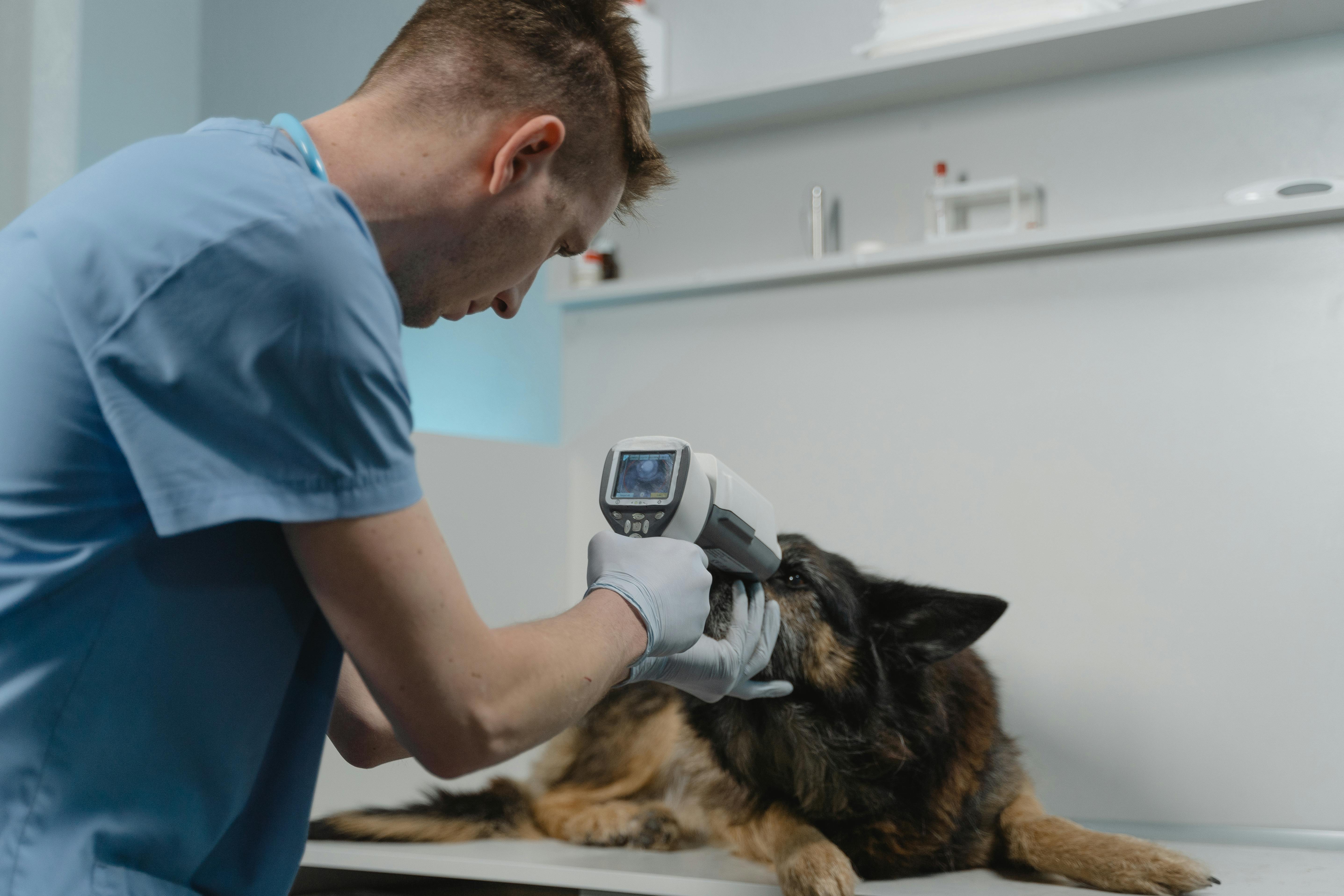 Photo: Tima Miroshnichenko / Pexels
What a free vet exam covers — and what it doesn't
This is the part promotional pages bury in fine print. A free vet examination is real, but it's one line item out of a much longer visit.
| Included in the free exam | Billed separately |
|---|---|
| Physical exam (eyes, ears, teeth, heart, lungs, abdomen, skin, joints) | Vaccinations (core + non-core) |
| Vet's diagnosis and recommendations | Bloodwork, urinalysis, fecal testing |
| Basic weight and vitals check | Deworming and parasite prevention |
| Time with a licensed veterinarian, not a tech alone | X-rays and other imaging |
| — | Prescription medications |
| — | Any recommended treatment or procedure |
Banfield's own disclosed typical pricing puts the realistic total for a first puppy visit — exam plus vaccines, fecal test, and deworming — at $150 to $250. A first adult cat visit with vaccines and baseline bloodwork runs $200 to $350, according to figures reported from Banfield's pricing by Bestie Paws Hospital's breakdown of the offer. That's the real number to budget for, not $0. For a full first-year picture that includes spay/neuter, starter supplies, and food on top of that first visit, the first-year pet cost ledger breaks down a $3,221 dog / $1,904 cat baseline. The calculator adjusts that baseline for your specific breed and location.
Low-cost x-rays for dogs near me and other diagnostics that still cost money
Imaging is the diagnostic most likely to blow up an otherwise-cheap free-exam visit. It's rarely covered by any free-exam offer. The national average cost of a dog x-ray is $213, typically ranging from $169 to $388 depending on location, sedation needs, and how many images the vet needs, per CareCredit's dog x-ray pricing guide. Sedation, when required, adds $31 to $444 on top of that.
For a lower price on low cost x rays for dogs near me, the same two channels that offer discounted exams tend to offer discounted imaging too.
- Humane society and SPCA clinics that run in-house diagnostic equipment, found through Pet Help Finder's veterinary services search.
- Vet school teaching hospitals, where imaging performed by supervised students under faculty review is typically priced below private specialty practice rates.
Financing tools like CareCredit, Scratchpay, and in-house payment plans don't lower the price of an x-ray. They just spread a $213 charge over several months instead of requiring it up front. That's worth asking about at checkout regardless of which clinic you use.
Why "free" offers exist at all
None of this is charity marketing dressed up as generosity. It's a documented affordability problem the industry is responding to. 52% of U.S. pet owners report having skipped needed veterinary care in the past year, and among that group, 71% cite cost as the reason they declined or avoided care. That pattern holds across age, race, and income levels, per the PetSmart Charities-Gallup State of Pet Care Study, conducted November 2024 through January 2025. A free first exam is a chain's answer to that gap. It gets a hesitant new client in the door, and the clinic absorbs the cost of one exam as an acquisition expense against the vaccines and follow-up visits that typically come next.
How this guide was verified
Every offer, price, and eligibility rule above was checked against the source's own published page or a dated report. That includes Banfield's and VCA's promotions pages, the ASPCA's and Humane World's own resource pages, the AVMA's accredited-college registry, CareCredit's published pricing data, and the Banfield Foundation's dated impact report. Local participation still varies by clinic and changes without notice. Confirming eligibility by phone before booking is worth the five-minute call.
For the complete cost picture beyond a single visit, see the first-year pet cost ledger for a full itemized breakdown. Or run the calculator for a number adjusted to your breed and metro area.
Frequently asked questions
Is there a free first vet exam near me?
Likely yes. Banfield Pet Hospital and VCA Animal Hospitals both run standing free-first-exam offers for new dog and cat patients at most U.S. locations. Many independent clinics run similar new-client promotions too. Search the chain's own promotions page by ZIP code, since local participation varies.
What does a free pet exam actually include?
A licensed veterinarian's nose-to-tail physical exam. That covers eyes, ears, teeth, heart, lungs, abdomen, skin, and joints. It does not include vaccines, bloodwork, fecal or urine tests, deworming, x-rays, medications, or any treatment the vet recommends during the visit.
Where can I find low-cost x-rays for dogs near me?
Ask your regular vet's price first. A national average dog x-ray runs $213, typically $169-$388, per CareCredit's pricing data. For a lower price, call vet school teaching hospitals or humane society veterinary clinics in your state, since supervised students often perform the imaging there.
How do I find free or low-cost vet care by state?
Use the Humane Society's Pet Help Finder tool, or search the ASPCA's SpayUSA database. You can also check the AVMA's accredited veterinary college list for a teaching hospital in your state. Local humane societies and SPCAs run their own low-cost clinics too, usually with income-based fee scales.
Are veterinary discounts only for low-income pet owners?
No. Free first-exam offers from chains like Banfield and VCA are open to any new patient, regardless of income. Income-qualified discounts and grant programs, like Banfield Foundation HOPE Funds or humane society sliding-scale clinics, are the pathways reserved specifically for financial need.
See your own pet's real numbers.
Run the calculator with your breed, metro area, and care choices for a first-year, annual, and lifetime cost estimate — not a national average.