

Key takeaways
- The Dutch Smoushond is a 20 to 22 pound, yellow, shaggy-coated Dutch stable ratter that nearly vanished in World War II and was rebuilt from 1973, partly with Border Terrier crosses.
- The UKC lists the breed in its Terrier Group, but I found no AKC recognition and no US breeder directory, so most buyers will deal with a Dutch breeder and the CDC's import form.
- PetBudget models the dog at $4,018 for the first year and $1,943 a year after, or $27,334 over 13 years; the rough coat adds $312 a year in grooming.
The Dutch Smoushond is a small ratting dog that almost disappeared, then came back from a handful of crossbred survivors. That history matters more to a buyer than the price tag. A rebuilt breed has a narrow family tree, and the breeder you pick decides how well that tree is managed.
This guide covers where the dog came from, how it was rebuilt, what its registries say, what to ask a breeder and what it costs to keep. The modeled numbers sit on the Dutch Smoushond breed page.
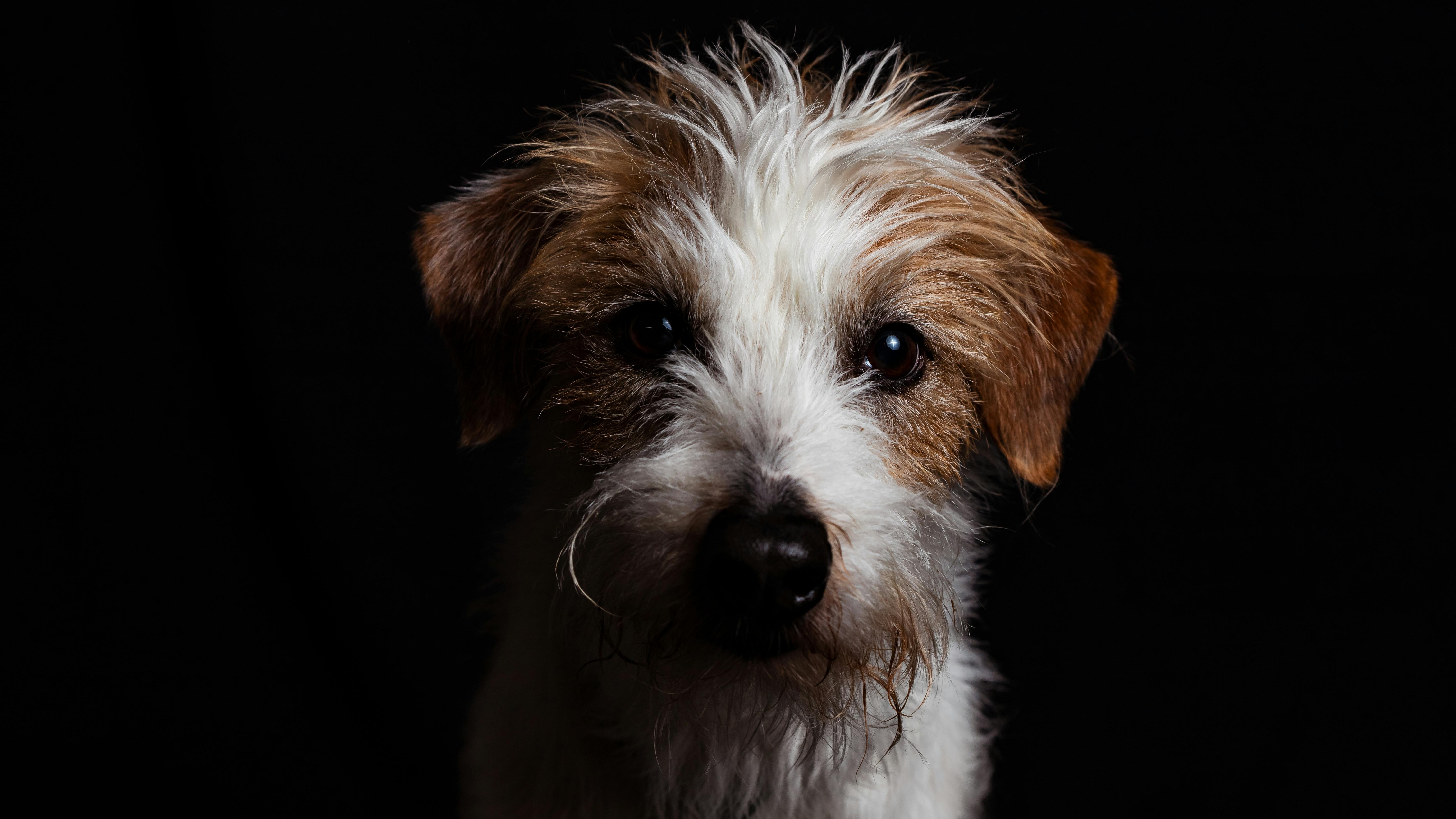 Photo: Bastian Riccardi / Pexels. A terrier portrait shown as a similar small type; the source does not name the breed.
Where did the Dutch Smoushond come from?
The Dutch Smoushond was a stable dog and household ratter in the Netherlands. Wikipedia's Dutch Smoushond entry says the Hollandse Smoushond Club formed in 1905 to register the dog as a purebred, because the type was in danger of dying out. The name "Dutch" was added to avoid confusion with the similar Brussels Griffon.
Wikipedia notes the breed may trace to an ancestor of the Schnauzer. That is a theory, not a documented pedigree. The dog is also called the Dutch Ratter in English, which tells you the job it was bred for.
How was the breed rebuilt after World War II?
Wikipedia says the breed nearly disappeared during World War II. In 1973 breeders began to reconstruct it from the few remaining dogs, most of which had been crossed with other breeds. Much of the work used Border Terrier crosses. The FCI, the international federation, definitively accepted the rebuilt breed in 1981 as standard No. 308.
One timeline in my search results gave an earlier FCI date, so treat the year as a Wikipedia claim and ask a Dutch breeder for the club's own record. The rebuild dates are the useful part. They put the modern dog's founders in the 1970s, which is only a few dog generations ago.
Why does a rebuilt breed need a careful breeder?
A breed rebuilt from few dogs has a small gene pool, and a small gene pool concentrates both good and bad traits. Genetic studies of other rare breeds show the scale of the effect. A PLOS One study of the Norwegian Lundehund estimated an effective population size of about 10 to 13 and genomic inbreeding near 0.80 in 28 dogs. The Lundehund is an extreme case, and nobody has published matching numbers for the Smoushond that I could find.
The same literature has a hopeful side. A Canine Genetics and Epidemiology study of UK pedigrees from 1980 to 2014 found that inbreeding rates peaked in the 1980s and 1990s and then declined, with a stronger decline in rarer breeds. Careful breeding can widen a narrow base over time. It takes breeders who track pedigrees and plan matings.
That gives you a practical test. A breeder who can explain which Border Terrier or other outcross lines sit in the pedigree is managing the gene pool. A breeder who cannot is guessing.
What should you ask a Dutch Smoushond breeder?
Ask six questions before you pay a deposit. Each one is cheap to ask and expensive to skip.
- Which registry holds the puppy's papers, and can I see a three-generation pedigree?
- How related are the sire and dam, and do you calculate an inbreeding figure for the litter?
- Have the parents had their hips and kneecaps examined, and by whom?
- How many litters do you breed a year, and how many dogs of the breed live in your country?
- Will you take the dog back at any age if I cannot keep it?
- Can I speak to a past buyer outside your own country?
PetBudget's breed data lists two health lines for the dog: hip dysplasia and patellar luxation. Both are joint problems that a parent exam can screen for. Patellar luxation means the kneecap slips out of its groove. The American College of Veterinary Surgeons says surgery is most often considered for grade 2 and higher, and that asymptomatic cases in small dogs are usually monitored.
What do registries say about the breed?
The registry picture is split between Europe and the US. The FCI accepted the breed in 1981, and the Dutch kennel club holds the standard. The United Kennel Club lists the Dutch Smoushond in its Terrier Group, and its breed standard describes a rough-coated, squarely built dog. A search summary of the UKC page gave the recognition year as 2006, but I could not open the page directly, so confirm the year with the UKC.
I found no AKC recognition and no US breeder directory. One third-party site claims the UKC does not recognize the breed, which contradicts the UKC's own standard. Trust the primary source.
The practical result is simple. Searches for Dutch Smoushond puppies lead to European kennels, so if you want this dog, plan to buy from the Netherlands or another European breeder and bring the dog in under CDC rules.
What are the CDC rules for bringing one home?
The Netherlands did not appear on the CDC's high-risk list for dog rabies in the versions I checked, so a dog that has lived only in low-risk countries follows the simpler rules. The CDC announced them on July 22, 2024, and they took effect August 1, 2024, per the AKC's summary of the CDC update.
| Requirement | Dog from a low-risk country |
|---|---|
| Minimum age | Older than 6 months |
| Microchip | Required, readable by a universal scanner |
| CDC Dog Import Form | Free online; receipt valid 6 months |
| Rabies vaccine paperwork | Not required by the CDC, though some states may ask |
| Health on arrival | Dog must appear healthy |
The 6-month floor means you cannot import a young puppy. You will meet an older puppy or an adult. Check the CDC's Dog Importation Navigator before you book, because the rules change and airline policy is separate.
What does a Dutch Smoushond cost to keep?
A Dutch Smoushond costs about $1,943 a year in PetBudget's model, or $162 a month, after a first year of $4,018. The first-year figure uses a modeled puppy price of $900, which is an estimate and not a quote. Import, flight and breeder-side costs are not included.
| Annual line | Dutch Smoushond |
|---|---|
| Food | $305 |
| Vet care | $577 |
| Grooming | $312 |
| Insurance | $620 |
| Supplies and toys | $129 |
| Total per year | $1,943 |
Grooming is the line that sets this dog apart from other small ratters. The rough coat is brushed weekly and trimmed or stripped a few times a year, which the model prices at $312. A short-coated terrier of similar size, such as the Brazilian Terrier, carries $78.
$27,334
Modeled lifetime cost of a Dutch Smoushond over 13 years, before any import fees. Try your own inputs in the calculator.
How does it compare with other small terriers?
The Dutch Smoushond costs more than the short-coated small terriers and less than a medium sporting dog. The gap to the Border Terrier is almost all coat and insurance.
| Breed | Weight | Annual cost | Lifetime cost |
|---|---|---|---|
| Toy Fox Terrier | 4 to 9 pounds | $1,483 | $21,585 |
| Brazilian Terrier | 15 to 22 pounds | $1,681 | $23,928 |
| Border Terrier | 11 to 15 pounds | $1,851 | $27,989 |
| Dutch Smoushond | 20 to 22 pounds | $1,943 | $27,334 |
| Miniature Schnauzer | 11 to 20 pounds | $2,315 | $33,327 |
The Border Terrier row is worth a second look because the breed shaped the Smoushond's rebuild. Our Border Terrier page shows a lower weight and a similar bill. If you like the look but cannot find a Smoushond, a Border Terrier is a far easier dog to buy in the US.
How much exercise does a Dutch Smoushond need?
PetBudget's model assumes 60 minutes a day and an energy rating of 4 out of 5. The breed data describes the temperament as lively, alert, affectionate, fearless and playful. A bored dog of this type digs, barks and chews, so the cost of the dog includes toys, a secure yard or daily walks, and training.
The model puts training at $260 for a basic group class. That is one-time, and it is worth spending early, because a fearless ratter with no recall is a dog that leaves a yard.
What does the first year look like?
The first year costs $4,018, and a little over half of it is one-time spending. Most of that is the puppy, the first vet work and starter gear.
| First-year line | Amount |
|---|---|
| Purchase or adoption (modeled) | $900 |
| Initial vet visit and vaccinations | $607 |
| Starter supplies | $437 |
| Training classes | $260 |
| Food, vet care, grooming and insurance | $1,814 |
| Total before import costs | $4,018 |
An imported dog arrives older than 6 months, so part of the puppy vaccine series may already be done. Ask the breeder for the vaccine record and ask your US vet which shots still apply. Book a first exam within the first week, and use it to check the kneecaps and hips against the parents' results.
Should you keep a reserve for surgery?
Yes, keep a reserve for the two joint risks. PetBudget's reserve for a small dog is $2,000. MetLife Pet Insurance puts luxating patella surgery at $1,000 to $5,000 per leg, and ACVS says both knees are involved in half of diagnosed cases. A bilateral case can therefore reach the top of the reserve.
Our pet insurance versus emergency fund guide explains how to choose between a plan and a savings reserve. Insurance bought before a knee problem appears is the only version that usually covers it, so the timing matters more than the brand.
Is a Dutch Smoushond right for you?
The Dutch Smoushond suits an active owner who wants a small, sturdy, characterful dog and accepts a long search. It does not suit a buyer who needs a puppy this year, a buyer who wants a clipped, low-maintenance coat, or anyone who cannot tolerate an import process.
If the wait is the problem, the practical alternatives are a Border Terrier, a Miniature Schnauzer or a rescue terrier mix. Run each against your budget in our calculator and compare the totals side by side on the breed comparison page.
What is the bottom line?
A Dutch Smoushond costs about $1,943 a year to keep, and finding one is the hard part. The breed was rebuilt from crossbred survivors starting in 1973, so a careful breeder with a documented pedigree is worth more than a fast delivery date. Ask the six questions, check the knees and hips, and budget for the coat.
These numbers are modeled and no veterinarian has reviewed them. Get written quotes for transport and the first exam before you pay a deposit.
Frequently asked questions
What is a Dutch Smoushond?
A Dutch Smoushond, or Hollandse Smoushond, is a small rough-coated dog from the Netherlands that was used to catch rats in stables and homes. It weighs up to about 22 pounds and has a shaggy yellow coat and a bearded face.
Is the Dutch Smoushond rare?
Yes. Wikipedia calls it rare and not well known outside the Netherlands, and I found no US breeder directory. Expect a wait and a search that may reach into Europe.
Is the Dutch Smoushond recognized by the AKC?
I found no AKC recognition. The FCI accepted the rebuilt breed in 1981, and the United Kennel Club lists it in its Terrier Group.
How much does a Dutch Smoushond cost to keep?
PetBudget models $1,943 a year, or about $162 a month, once the first year is over. The first year costs $4,018 with a modeled $900 puppy price, and import costs are extra.
See your own pet's real numbers.
Run the calculator with your breed, metro area, and care choices for a first-year, annual, and lifetime cost estimate — not a national average.
Comments
Comments are moderated before they appear. Constructive questions, corrections and first-hand pet cost experiences are welcome.
Verified Dialogue
Sort by: Chronological (earliest)Loading comments…