

Key takeaways
- A healthy adult cat needs about 4 ounces of water per 5 pounds of body weight per day, so a 10-pound cat needs roughly 1 cup in total, per the Cornell Feline Health Center.
- Wet food is about 80% water and dry food only about 8%, so a cat on kibble must drink far more from the bowl than a cat on canned food.
- Lethargy, poor appetite, dry gums, skin that stays tented, and sunken eyes are the five signs of dehydration, and a cat that shows them needs a vet visit the same day.
A healthy adult cat should drink about 4 ounces of water per 5 pounds of body weight each day. For a 10-pound cat that is roughly 1 cup in total, counting the water in its food. This guide covers how much water should a cat drink a day at every size, how much a kitten needs, and the five signs your cat needs more hydration.
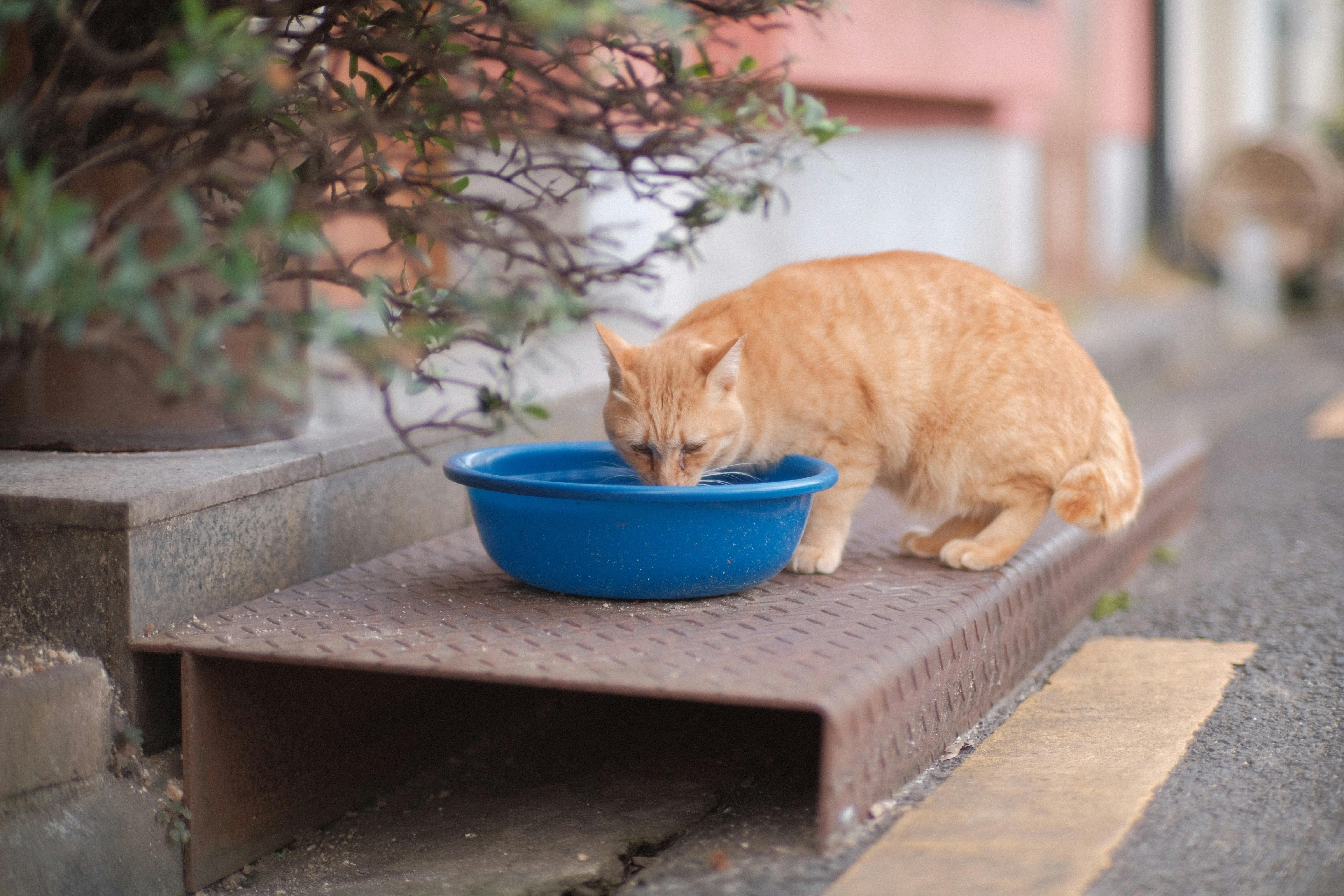 Photo: Mak_jp / Pexels
Many cat owners never measure water at all. That works until something changes. Knowing the normal number gives you a baseline, and a baseline is what lets you spot trouble early.
How much water should a cat drink a day?
How much water should a cat drink a day depends on weight, and the rule is simple. Cats need about 4 ounces of water per 5 pounds of lean body weight per day, per the Cornell Feline Health Center hydration guide. PetMD gives the same figure of about 4 ounces per 5 pounds.
4 ounces per 5 pounds
is the daily water a healthy cat needs, per the Cornell Feline Health Center. A 10-pound cat needs about 1 cup. A hydrated cat is also a cheaper cat to keep, since kidney and urinary problems drive some of the largest vet bills. See what a year of care costs in the PetBudget calculator.
Here is that rule applied to common cat weights. The totals include water from food, not only the bowl.
| Cat weight | Total water per day | In cups |
|---|---|---|
| 5 lb | 4 oz | 1/2 cup |
| 8 lb | 6.4 oz | 3/4 cup |
| 10 lb | 8 oz | 1 cup |
| 12 lb | 9.6 oz | 1 1/5 cups |
| 15 lb | 12 oz | 1 1/2 cups |
Use lean body weight, not the number on the scale for an overweight cat. An overweight 16-pound cat with a lean weight near 12 pounds needs about 9.6 ounces, not 12.8.
International Cat Care publishes the same idea in metric units. Its cat water intake guide lists 200 milliliters a day for a 4-kilogram cat and 300 milliliters for a 6-kilogram cat. Those convert to about 6.8 and 10.1 ounces, and they match the Cornell rule closely.
Treat every figure as a starting point. The Expert Cat Care water intake calculator notes that activity level, room temperature, health, and diet all move the number. Your vet can tell you whether your cat's own number is normal.
How much water should a cat drink daily by diet
How much water should a cat drink daily from the bowl depends mostly on what is in the food dish. Wet food contains up to 80% water, so cats that eat it drink less, and cats on dry kibble drink more, per the Cornell Feline Health Center.
Expert Cat Care puts dry food at only about 8% moisture. The gap is large enough to change a cat's whole routine.
| Diet | Water in the food | Bowl water needed |
|---|---|---|
| All wet food | About 80% | Low |
| Half wet, half dry | Mixed | Moderate |
| All dry food | About 8% | High |
A 3-ounce can of wet food at 80% moisture carries about 2.4 ounces of water. Two such cans a day supply nearly 5 ounces, which is more than half of what a 10-pound cat needs. The same cat on kibble must drink almost the full 8 ounces from the bowl.
This is why do cats drink water is a trickier question than it sounds. Cats on canned food do drink water, just less of it. Do not read a quiet water bowl as a problem until you check the diet.
How much water does a cat drink a day at different life stages
How much water does a cat drink a day changes as the cat grows. Kittens, adults, and seniors all run on slightly different rules.
Kittens. How much water should a kitten drink? International Cat Care lists 70 milliliters a day for a kitten up to 3 months old at about 1.4 kilograms. A 6-month-old kitten at about 2.7 kilograms needs 135 milliliters. That is roughly 2.4 ounces and 4.6 ounces. Kittens that eat wet food get much of this from meals. Fresh water should still be available at all times.
Adults. Healthy adults follow the 4-ounces-per-5-pounds rule above. Indoor adults on a mixed diet often drink a few ounces from the bowl and get the rest from food.
Seniors. Older cats are more likely to develop kidney disease, diabetes, and hyperthyroidism. The Cornell Feline Health Center lists all three among the diseases that raise water loss. A senior cat that suddenly drinks much more than before deserves a checkup. Our guide to how often to take a dog or cat to the vet explains the twice-yearly senior schedule.
How often do cats drink water
How often do cats drink water has no fixed answer. Most cats drink in several short sessions across the day and night, not one long drink. What matters is your cat's own pattern.
You can measure intake at home. International Cat Care suggests filling a measuring jug at the start of the day, pouring that amount into the bowls, and measuring what is left at the end. The difference is what your cat drank. Repeat it for two or three days to get a baseline, and remember that wet food adds water the bowl never shows.
A sudden change matters more than a single number. If your cat's intake doubles or drops by half, note the date and call your vet.
5 signs your cat needs more hydration
Five signs point to dehydration in a cat. The first two are behavior changes. The last three are physical signs you can check in under a minute.
- Lethargy and weakness. The Cornell Feline Health Center lists lethargy and weakness among the first signs. A cat that stops playing or hides more than usual may be low on fluid.
- Poor appetite. Cornell also lists poor appetite. A cat that skips meals and drinks little at the same time needs attention.
- Dry or tacky gums. PetMD says to press a gum with a finger. The pink color should return within 2 seconds. Slow return or sticky gums mean fluid is low.
- Skin that stays tented. Gently lift the skin over the shoulders. In a hydrated cat it snaps back almost at once, per Cornell. In a dehydrated cat it returns slowly or stays tented.
- Sunken eyes. Eyes that look recessed into the head are a sign of more serious dehydration, per both Cornell and PetMD.
Two more clues are worth knowing. PetMD lists constipation, with small, hard stools, as a sign. Vomiting and diarrhea cause fast fluid loss on their own.
Do not wait on these signs. PetMD warns that dehydration in cats can become fatal within three to four days. A cat with several of these signs needs a vet the same day.
Increased thirst: when too much water is the problem
A cat that drinks far more than normal is a different warning. Excess thirst usually points to a disease, not a lack of water. The Cornell Feline Health Center names chronic kidney disease, diabetes, and hyperthyroidism as causes, along with vomiting, diarrhea, and some heart medications.
Watch for a bigger water bowl emptying faster, more trips to the litter box, or larger urine clumps. Any of these in a senior cat is worth a call. Early testing is cheaper than late treatment. Our vet visit cost guide shows what an exam usually costs, so you can plan for it.
Cat owners are a big group, and the number is growing. The 2025 APPA National Pet Owners Survey found that 53 million U.S. households own a cat, or about 39% of all households, per Pet Food Industry. Each of those cats depends on its owner noticing a change in drinking.
How to keep your cat hydrated
You can raise your cat's water intake with a few low-cost changes. Most cost nothing, and none needs a special product.
Choose the right food. Add canned food to the daily diet. Wet food is the simplest way to add moisture, because it is about 80% water. Even one canned meal a day helps a kibble-fed cat.
Provide fresh water. Refill bowls daily and wash them. PetMD suggests ceramic or stainless steel bowls instead of plastic. Place several bowls around the house.
Separate water from food and litter. International Cat Care says cats usually drink more when water sits away from food and litter trays. Put one bowl in a quiet corner and another near where your cat naps.
Encourage drinking. Cats like moving water. PetMD suggests a pet water fountain, since cats naturally seek running water. Place bowls away from loud appliances and busy walkways.
A cat that still refuses to drink after you try these steps needs a vet visit. So does a cat that has stopped drinking and is also vomiting, has diarrhea, or won't eat.
Cat hydration and the cost of cat care
Hydration is cheap to manage and expensive to ignore. A cat's yearly upkeep runs $900-$1,600, per our how much does a cat cost guide, and a healthy diet and clean water bowl are a small part of that. A kidney or urinary emergency can add hundreds of dollars in a single visit.
Plan for it before it happens. Add your cat's breed and age to the PetBudget calculator to see a full-year estimate. Then compare the numbers with a rainy-day fund or a pet insurance plan.
The bottom line
A healthy cat needs about 4 ounces of water per 5 pounds of body weight each day, with wet food covering most of it. Watch for the five signs of dehydration, track any big change in drinking, and call your vet when your cat's pattern shifts. Small habits like a second bowl, a fountain, or a daily can of wet food keep a cat hydrated and keep vet costs down.
Frequently asked questions
How much water should a cat drink a day?
A healthy adult cat needs about 4 ounces of water per 5 pounds of body weight per day, per the Cornell Feline Health Center. A 10-pound cat needs about 8 ounces, which is 1 cup. Part of that comes from food, and wet food supplies most of it.
How much water should a kitten drink?
A kitten needs roughly 50 milliliters of water per kilogram of body weight per day, which is about 70 milliliters (2.4 ounces) at 3 months and 135 milliliters (4.6 ounces) at 6 months, per International Cat Care. Kittens eating wet food get much of this from meals.
Do cats drink water on a wet food diet?
Yes, but they drink less from the bowl because wet food is about 80% water. A cat on canned food can look like it never drinks and still be fully hydrated. A cat on dry kibble has to drink much more.
How often do cats drink water?
Most cats take several small drinks spread across the day and night instead of one long drink. Watch for a change from your cat's normal pattern, because a sudden jump or drop in drinking is a stronger signal than any fixed number of visits to the bowl.
How long can a cat go without water?
Not long. PetMD warns that dehydration in cats can become fatal within three to four days. A cat that refuses water for a day, or that shows vomiting, diarrhea, or lethargy, should see a vet.
See your own pet's real numbers.
Run the calculator with your breed, metro area, and care choices for a first-year, annual, and lifetime cost estimate — not a national average.