

Key takeaways
- Weighing puppies at home takes one accurate scale, one routine, and one notebook: use a baby or kitchen scale under about 10 pounds, a bathroom scale above that, and weigh at the same time of day before meals.
- Newborn puppies should gain 5-10% of their body weight per day and double their birth weight within 7-10 days, per veterinary proceedings on dvm360, while older puppies are judged by the trend line on a growth chart.
- A flat or falling weight line is the earliest reliable sign of trouble, so call your vet if a newborn loses more than 10% of birth weight or an older puppy stops gaining for two weeks.
Learning to weigh puppies accurately at home works when you use one accurate scale, one routine, and one written log. A baby or kitchen scale handles puppies under about 10 pounds, and a bathroom scale handles the rest. This guide shows you how to start weighing puppies the right way, what the numbers mean at each age, and when a number means you should call the vet.
Most owners guess at their puppy's weight until the first vet visit. That guess is usually wrong, and it hides the one trend that matters: whether your puppy is gaining at a steady, healthy pace. A simple weekly weigh-in fixes that for the price of a $20-$40 scale.
Why weighing puppies at home matters
Weighing puppies at home matters because weight is the earliest and cheapest health signal you can measure. A puppy that stops gaining often looks fine for days. The scale shows the problem first.
Veterinary proceedings published on dvm360 put it plainly: "poor weight gain is an early and reliable indicator of illness" in newborn puppies. The same proceedings say that records of birth weight and weight gain are essential. The principle holds for older puppies too, because a flat line on a chart is a warning no matter the age.
Home weigh-ins also protect you from the opposite problem. Overfeeding is easy to do with a hungry, charming puppy. The 2022 U.S. Pet Obesity Prevalence Survey from the Association for Pet Obesity Prevention found that 59% of U.S. dogs are overweight or obese. Habits that cause adult obesity start in puppyhood.
2 to 3 pounds per week
is how fast a giant-breed puppy typically gains, with the largest dogs gaining up to 5 pounds per week, per Elanco's puppy growth chart. At that speed a missed month hides a lot of change, so weigh on a schedule. Once you know the likely adult size, the PetBudget calculator shows what that size costs to own each year.
Weighing also gives you a record that your vet can use. A log of dates and weights makes every appointment faster and more useful. You arrive with a trend instead of a vague story about appetite.
The number of owners who need this is large. The 2023-2024 APPA National Pet Owners Survey counted 65.1 million dog-owning households, as summarized by Pet Food Industry. Every one of those homes started with a puppy that someone had to feed by the right amount.
Puppy development stages and what weight does in each
Puppy development stages run from birth to about 18 months, and weight behaves differently in each one. Knowing the stage tells you how fast to expect gain and how often to weigh.
Nylabone's puppy development guide splits early life into five stages. Here is how weight fits into each:
| Stage | Age | What happens | What to expect from the scale |
|---|---|---|---|
| Neonatal | Birth to 2 weeks | Puppies depend on the mother for food and warmth | Fast daily gain, birth weight doubles in 7-10 days |
| Transitional | 2 to 4 weeks | Eyes open, hearing starts, first steps | Steady gain as soft food is introduced |
| Socialization | 4 to 12 weeks | Play, personality, first vaccines, most puppies go home around 8 weeks | The age where owners usually start weighing puppies |
| Ranking | 3 to 6 months | Adult teeth arrive and chewing increases | Strong growth, fastest in large breeds |
| Adolescence | 6 to 18 months | Spay or neuter timing, high energy | Growth slows, then stops by size class |
The neonatal and transitional stages matter most for breeders and fosters. Most families meet their puppy at the socialization stage, around week 8. That is the right moment to start a weight log.
The juvenile and adolescent stages carry the biggest budget impact. Large and giant breeds still gain weight after 12 months, which is why food and medication costs keep rising. Elanco's growth timeline says toy breeds finish in 6-8 months, medium breeds in about 12 months, large breeds in 14-18 months, and giant breeds in about two years.
Each stage has its own risks. Newborns lose heat and sugar quickly. Weaning puppies can lose weight when they switch foods. Teething puppies sometimes eat less for a few days. Knowing the stage helps you tell a normal dip from a real problem.
Puppy weight chart: typical weights by size and age
A puppy weight chart shows the weight range you can expect at each age for each size class. Elanco publishes one of the clearest charts for U.S. owners, and the table below reproduces its ranges.
| Age | Toy | Small | Medium | Large | Giant |
|---|---|---|---|---|---|
| 2 months | 11 oz to 3 lbs | 2-4 lbs | 4-8 lbs | 9-15 lbs | 16-21 lbs |
| 4 months | 1.25-4.5 lbs | 3-8 lbs | 8-16 lbs | 18-30 lbs | not listed |
| 6 months | 2-7 lbs | 5-13 lbs | 13-26 lbs | 26-49 lbs | 52-69 lbs |
| 8 months | 3.5-12 lbs | 7-18 lbs | 18-35 lbs | not listed | not listed |
| 10 months | not listed | 8-25 lbs (10-12 mo) | 21-50 lbs (10-12 mo) | 50-80 lbs | 86-113 lbs |
| 18 months | not listed | not listed | not listed | 88-100 lbs | 156-204 lbs |
The ranges are wide on purpose. A healthy 6-month medium-breed puppy can weigh anywhere from 13 to 26 pounds. Your puppy's number matters less than whether it moves along a steady curve.
Use the chart in three steps:
- Pick the size class that matches your puppy's expected adult weight.
- Find the row closest to your puppy's age.
- Compare your puppy's weight with the range, then compare again two weeks later.
If your puppy sits at the low end of the range and gains steadily, that is normal. If it sits in the middle and then drops toward the bottom over a month, that is the signal worth noticing.
Veterinary teams often use a more detailed type of puppy weight chart. WALTHAM's research is based on 50,000 healthy young dogs tracked at Banfield Pet Hospitals in the United States. It publishes 14 charts, one for each sex in seven weight classes. WALTHAM advises a vet consultation if your puppy crosses two or more centile lines, and its charts are validated from 12 weeks of age.
For a deeper look at charts and formulas, see our guide to the puppy weight calculator and growth chart.
Understanding puppy weight ranges
Understanding puppy weight ranges means accepting that healthy puppies of the same breed can differ by several pounds. Genetics, sex, litter size, and feeding all move the number.
Four things widen the normal range:
- Parent size. A puppy from two large parents will usually finish large, even inside a breed with a wide standard.
- Sex. Males tend to grow larger and faster than females, which is why growth charts are split by sex.
- Litter position. Puppies in big litters can start lighter and catch up, or stay a little smaller.
- Feeding. Food does not change the genetic ceiling, but overfeeding pushes a puppy up the chart too quickly.
Mixed-breed puppies have the widest ranges. If you do not know the parents, pick the size class that fits the paws, frame, and coat, and expect to move to a different class once your puppy is a few months old.
A useful mindset is to watch the line instead of the dot. One weigh-in is a dot. Four weigh-ins make a line, and the line tells you whether your puppy is on track.
How much should my puppy weigh?
How much should my puppy weigh depends on three inputs: age, size class, and body condition. The size class sets the range, age picks the row, and body condition tells you whether the number is right for your dog's frame.
Start with the chart above. A 4-month-old medium-breed puppy should weigh about 8-16 pounds. A 4-month-old large-breed puppy should weigh about 18-30 pounds. A toy puppy at the same age sits between 1.25 and 4.5 pounds.
Then check body condition, because the same weight can be healthy on one dog and heavy on another. The AKC's body condition guide says you should be able to feel your dog's ribs easily with light finger pressure, without seeing them clearly from a distance. From above, there should be a slight hourglass shape, and the belly should slope up behind the rib cage.
Treat both signals together. A puppy in the middle of the weight range with a clear waist is healthy. A puppy at the top of the range with no waist and hidden ribs is carrying extra weight, and the answer is smaller portions, not a bigger scale.
If you want one number to track, track the trend. Your puppy should gain a little every week in the first six months. A puppy that gains too much is as worth a conversation as one that gains too little.
How much does a puppy weigh at birth?
How much does a puppy weigh at birth depends on breed size. Veterinary proceedings on dvm360 give these birth weight ranges: 100-200 grams for toy breeds, 400-500 grams for large breeds, and about 700 grams for giant breeds.
Those numbers are small enough to need a gram scale. A 150-gram toy puppy weighs about 5.3 ounces. A 450-gram large-breed puppy weighs just under a pound.
Birth weight is worth writing down for three reasons:
- It is the base for every later comparison, including the doubling rule.
- It identifies the weakest puppies in a litter.
- It helps predict survival. The proceedings call birth weight the most accurate predictor of a newborn's chance of survival.
Low birth weight is a risk flag. Per the same proceedings, puppies weighing less than 25% of the litter average are at high risk for low blood sugar, low body temperature, and infection. If a litter averages 400 grams, a puppy under 100 grams needs immediate veterinary attention.
Most families do not see birth weights. If you adopt from a breeder, ask for them. The breeder's record of birth weight and the weight at going-home age gives you a head start on understanding your puppy's growth curve.
How big can a dog get?
How big can a dog get depends on breed class, from under 12 pounds for toy breeds to well over 100 pounds for giant breeds. Elanco's chart shows a giant-breed puppy reaching 156-204 pounds by 18 months.
Omni Calculator's dog size calculator uses five size classes, and they make a useful map:
| Size class | Adult weight |
|---|---|
| Toy | Under 12 lbs (5.4 kg) |
| Small | 12-22 lbs (5.4-10 kg) |
| Medium | 22-57 lbs (10-25.9 kg) |
| Large | 57-99 lbs (25.9-44.9 kg) |
| Giant | Over 99 lbs (44.9 kg) |
The gap between the ends is huge. A toy dog can weigh less than a bag of flour at adulthood. A giant dog can outweigh many adults.
That gap drives costs. PetBudget's model puts average yearly food cost near $128 for a toy breed and $959 for a giant breed, as covered in our dog food cost guide. See the difference on the Chihuahua cost page and the Great Dane cost page.
Adult size also affects the things you buy once, such as a crate, a car harness, and a bed. A correct size estimate before you buy saves money. Buying a toy-size crate for a puppy that grows into a large dog means buying twice.
How much will my puppy weigh as an adult?
How much will my puppy weigh as an adult is estimated with one formula: current weight divided by age in weeks, multiplied by 52. Omni Calculator publishes this as Adult weight = (Puppy weight / Puppy age in weeks) × 52.
Here is a worked example using the formula:
- Your puppy weighs 12 pounds at 16 weeks.
- Divide 12 by 16 to get 0.75.
- Multiply 0.75 by 52 to get 39 pounds.
The answer is an estimate with a wide margin. The formula assumes a puppy reaches adult weight at 52 weeks, but large and giant breeds keep growing for months longer. Small breeds finish earlier, so the formula can overshoot for them if you use it too early.
Run the formula every time you weigh. The estimates will wobble at first and then settle. When three results in a row land within a few pounds of each other, you have a usable number.
Here is a sample log for a medium-breed puppy, with the formula applied at each weigh-in:
| Age | Weight | Estimated adult weight |
|---|---|---|
| 8 weeks | 6.0 lbs | 39.0 lbs |
| 10 weeks | 8.2 lbs | 42.6 lbs |
| 12 weeks | 10.5 lbs | 45.5 lbs |
| 14 weeks | 12.6 lbs | 46.8 lbs |
| 16 weeks | 15.1 lbs | 49.1 lbs |
The sample puppy's estimate climbs and then flattens near 47-49 pounds. That is the pattern you want to see. Treat the early estimates as a low guess and the later ones as a better one.
Puppy weighing scales: which type to buy
Puppy weighing scales fall into four types: gram scales, baby scales, bathroom scales, and dedicated dog scales. The right one depends on how much your puppy weighs today, not how much it will weigh later.
Great Pet Care's weighing guide gives these price points and size limits:
| Scale type | Best for | Typical cost |
|---|---|---|
| Gram or kitchen scale | Newborns and toy puppies | Low cost |
| Baby scale | Pets under 10 lbs | $20-$40 |
| Bathroom scale (hold the puppy) | Pets under about 25 lbs | Already owned |
| Dedicated dog scale | Dogs over 40 lbs | From $100 |
Match the scale to the weight, and pay attention to resolution. A bathroom scale that reads in whole pounds is useless for a 2-pound puppy, because a half-pound gain is a 25% change. A scale that reads in ounces or grams shows real change.
Look for these features when you shop:
- A tare or zero button. This lets you place a box or blanket on the scale and subtract it.
- Fine resolution. Choose 0.1 pound, 1 ounce, or 1 gram readings for small puppies.
- A flat, wide platform. A puppy on a tiny platform will wobble.
- A hold function. Some scales lock the number after a few seconds, which helps with wiggly puppies.
- A stable base. Rubber feet keep the scale from sliding on tile.
If you have a litter, a kitchen scale with a plastic tray is the best investment. It costs little, it is easy to clean, and the tray stops puppies from sliding. For a single puppy at home, the baby scale is the best buy, and it keeps working until the puppy outgrows it.
Step-by-step: how to start weighing puppies at home
To start weighing puppies at home, set up a scale, calm the puppy, read a stable number, and write it down. The whole process takes about two minutes once the puppy is used to it.
Follow these steps:
- Choose a flat, hard floor. Scales on carpet often read wrong, so use tile, wood, or vinyl.
- Zero the scale. If you use a box, blanket, or tray, place it on the scale first and press the tare button.
- Place the puppy gently. Lower the puppy into the container and keep one hand nearby without pressing down.
- Wait for a stable number. Great Pet Care advises waiting until your pet is still and the number stops changing.
- Record the date, time, and weight. A phone note, a spreadsheet, or a notebook all work.
- Reward the puppy. A small treat and calm praise teach the puppy to enjoy the scale.
The routine matters more than the tool. Use the same scale, the same location, and the same time of day. The best time is before breakfast, when the stomach is empty and the number is most repeatable.
For a puppy between 10 and 25 pounds, use the hold method on a bathroom scale. The formula from Great Pet Care is: your weight holding your pet minus your weight alone equals your pet's weight. For example, 160.0 pounds holding the puppy minus 152.4 pounds alone gives a puppy weight of 7.6 pounds.
For dogs over 40 pounds, the hold method is awkward and risky. Use a dedicated dog scale or ask your vet clinic if you can step in for a quick weigh-in. Ask your clinic whether you can stop in for a quick weigh-in. For what a first clinic visit costs, see our puppy and kitten first vet visit cost guide.
Getting a wiggly puppy to stand still
Getting a wiggly puppy to stand still takes practice, not force. A puppy that is scared of the scale gives bad readings and learns to hate weigh-ins.
Great Pet Care recommends practicing without measuring. It suggests placing your pet on the scale once or twice a day for several days, with no reading taken, and giving a treat or praise each time. After a few days the scale becomes a normal part of the day.
Use these tricks to get a clean reading:
- Weigh right after exercise. A tired puppy holds still more easily.
- Use a box with a towel. A towel gives grip and reduces slipping.
- Try a lick mat. A smear of peanut butter on a mat keeps the puppy busy for ten seconds.
- Weigh in a quiet room. Other pets and noise raise the puppy's energy.
- Take two readings. If they differ by a lot, take a third and use the middle one.
Never hold the puppy against the scale to force stillness. Pressure adds false weight, and fear makes the next session harder. If a reading will not settle, stop, play for a minute, and try again.
Weighing newborn puppies
Weighing newborn puppies is a daily job for breeders and fosters, and it needs a gram scale. Veterinary proceedings on dvm360 say that weight should be recorded twice daily for the first week of life.
The rules for a healthy newborn are simple:
- Double birth weight in 7-10 days. Proceedings on dvm360 say puppies should double their birth weight in the first 7-10 days.
- Gain 5-10% per day. The same proceedings say a healthy puppy gains 5-10% of its body weight each day.
- Gain about 2 grams per kilogram of expected adult weight each day. This gives a quick check by breed size.
Here is how the numbers work. A large-breed puppy born at 400 grams should gain 20-40 grams on a typical day. That is 5-10% of 400 grams. After 10 days at about 7% per day, the puppy weighs close to 800 grams.
The adult-weight rule works too. A breed with a 30-kilogram adult weight should gain about 60 grams a day. A breed with a 2-kilogram adult weight should gain about 4 grams a day.
Weight loss needs a plan. The dvm360 proceedings note that some normal puppies may not gain or may lose a slight amount (under 10% of body weight) in the first 12-24 hours. A loss of more than 10% is an indicator of a severe problem. For a 400-gram puppy, that means a loss of more than 40 grams.
Puppies cannot keep themselves warm, either. The same proceedings say neonates are generally unable to maintain a body temperature more than 12-15°F above the temperature of the room. A cold puppy stops feeding, which stops weight gain, which is why the scale and the thermometer go together.
For any newborn that fails to gain, contact a vet right away. Time matters at this age, and the dvm360 proceedings call lagging gain an indication for immediate examination.
Tracking puppy weight gain over time
Tracking puppy weight gain means recording each weigh-in and looking at the trend every few weeks. A simple log is enough. You do not need an app, though apps make graphs.
Record these fields at each weigh-in:
- Date and time
- Weight in pounds or grams
- Age in weeks
- Which scale you used
- A note on appetite, stool, and energy
How often you weigh depends on age. A schedule that works for most homes:
| Age | How often |
|---|---|
| Birth to 1 week | Twice a day |
| 1 to 3 weeks | Once a day |
| 3 to 8 weeks | Every 2-3 days |
| 8 weeks to 6 months | Every 1-2 weeks |
| 6 months to 1 year | Monthly |
| Adult | Every couple of months |
The first row follows the dvm360 proceedings. The later rows are a practical schedule, not a clinical rule. Great Pet Care suggests weighing healthy adult pets every couple of months and overweight or underweight pets monthly.
WALTHAM's guidance in our companion guide uses a slower schedule: every 2-4 weeks until 6 months, then every 1-3 months. That works well for a calm household. If you want faster feedback, weigh weekly.
Graph the points. A line chart of weight against age shows a smooth upward curve in a healthy puppy. Flat sections and dips show up at once. Many vets will accept a screenshot of your graph.
Keep the log after your puppy is grown. An adult weight history makes it easy to see a slow gain of a pound or two a year, which is how most dogs become overweight.
Common puppy weight gain patterns
Common puppy weight gain patterns include steady climbs, short plateaus, and growth spurts. Most of them are normal when you read them over weeks.
The steady climb. Weight rises a little at every weigh-in, with similar gains each time. This is the healthy default. The pattern is smooth because puppies eat and grow on a regular rhythm.
The plateau. Weight stays the same for a week and then resumes. Short plateaus happen around vaccinations, changes in food, or a new home. A plateau of one weigh-in is not a problem. A plateau of two weeks or more is a reason to call.
The growth spurt. Weight jumps over a week or two, then slows. Check body condition to make sure the jump is growth and not extra fat.
The dip. Weight falls a little after a stressful event, such as a long car ride, a vaccine, or a diarrhea day. A small dip that recovers within a week is usually fine.
The slide. Weight falls across several weigh-ins. This pattern is never normal for a puppy. Call your vet.
The fast climb. Weight rises faster than the chart's line for the puppy's size class. In large breeds this matters for joints. Lean puppies stay healthier longer, and the best-known evidence is the Labrador Retriever lifespan study. In that study, lean-fed Labradors had a median lifespan of 13 years versus 11.2 years, per Purina's summary.
The takeaway is that faster is not better. A steady line inside the range is the goal.
What weight tells you at a puppy health check
A puppy health check always includes a weight, and your home log makes that visit more useful. The vet compares your puppy's weight and body condition against its age, breed size, and vaccine schedule.
Expect a weigh-in at every early visit. Early vaccine visits each include a weigh-in, which you can compare with your home numbers. A large gap between your scale and the clinic scale is a reason to check your scale, not to panic.
Bring these items to each visit:
- Your weight log or a printed graph
- Photos of the stool if there is a concern
- A list of foods, treats, and supplements, with amounts
- Questions about the estimated adult weight
Ask your vet three questions. What is a healthy weight range for my puppy at this age? What is the body condition score? What adult weight should I plan for? The answers set your targets.
For a view of how many visits to plan for and what they cost, see how often to take your dog or cat to the vet.
How weight relates to puppy health
Weight relates to puppy health in both directions: too little and too much each cause problems. A puppy that is too thin may have parasites, a food problem, or a medical condition. A puppy that is too heavy risks stress on young joints and a lifelong weight struggle.
Elanco notes that an underweight or overweight puppy may have an underlying condition, such as intestinal parasites, that keeps growth from tracking normally. A pot-bellied puppy with a thin frame is a classic sign, because worms steal nutrients while the belly looks round.
Excess weight is the more common problem in adult dogs. The AKC's body condition article notes that lean dogs can live up to two-and-a-half years longer than overweight dogs. The Association for Pet Obesity Prevention also found a perception gap. In its 2023 opinion survey of 527 U.S. pet owners, only 17% of dog owners called their own dog overweight, while 84% described their dog's body condition as ideal or healthy.
That gap is why a scale helps. A number and a chart are more objective than a glance at a cute, round puppy.
Weight is also tied to money. An overweight dog costs more in food, medication, and joint care over a lifetime. On the Labrador Retriever cost page, PetBudget estimates food at about $732 of a $2,813 annual cost, and weight-related care adds to that over a dog's life.
Identifying potential health issues
Identifying potential health issues starts with a short list of red flags. Each one shows up on the scale or in behavior before it becomes an emergency.
Call your vet if you see any of these:
- A newborn loses more than 10% of birth weight. Proceedings on dvm360 call this an indicator of severe problems.
- A newborn fails to gain, or lags behind its littermates. The same source calls this a reason for immediate examination.
- A puppy weighs less than 25% of the litter average. These puppies are at high risk of low blood sugar and low body temperature.
- An older puppy stops gaining for two weeks or more.
- Your puppy crosses two or more centile lines on a growth chart. WALTHAM advises a vet consultation.
- The belly is swollen or hard, or the stool is loose for more than a day.
- Appetite falls, energy drops, or the puppy seems weak.
Do not wait for a visible problem. The scale is a screening tool, and early action is cheaper than late action. An exam costs far less than treatment for a puppy that has gone downhill for two weeks.
Keep the log handy. When you call, the first thing the clinic will ask is the puppy's age, current weight, and recent change. Having the numbers ready speeds up triage.
Body condition score: what the scale cannot tell you
A body condition score tells you whether a weight is healthy for your puppy's frame, which a scale cannot do alone. Use it every month along with the weigh-in.
The AKC's guide describes a three-part check you can do in under a minute:
- Ribs. Stand behind your dog and feel along the rib cage. You should feel the ribs easily with light pressure.
- Waist. Look from above. A healthy dog has a slight hourglass shape, with the waist narrower than the rib cage.
- Belly. Look from the side. The belly should slope upward where it meets the hind legs.
The AKC says to aim for 3 on a 5-point scale or between 4 and 5 on a 9-point scale. A score below that range means too thin. A score above it means too heavy.
Puppies carry a bit of baby fat, so do not expect a sharp waist at 8 weeks. Look for it to appear by 4-6 months. If a puppy has no waist at all and the ribs are hard to feel, reduce portions and ask your vet for a feeding plan.
Combine the weight trend with the score. A puppy that is gaining on schedule with a good score is healthy. A puppy that is on schedule but heavy on the score may be growing too fast. A puppy that is below schedule with visible ribs needs a vet visit.
Common mistakes when weighing puppies
The most common mistakes in weighing puppies are inconsistency, poor equipment, and trusting a single reading. Each one is easy to fix.
- Switching scales. A bathroom scale and a clinic scale can disagree by half a pound or more. Pick one for home and stick with it.
- Weighing at random times. A full stomach adds weight, especially on a toy puppy. Weigh before meals.
- Using a bathroom scale for a tiny puppy. A scale that reads in whole pounds cannot show small gains.
- Weighing on carpet. Soft floors change the reading. Use a hard, flat surface.
- Forgetting the container weight. If you use a box, zero the scale with the box on it.
- Counting age from the adoption date. Use the birth date when you apply the weight formula. Ask the breeder or shelter.
- Panicking over one number. A single reading can be off by an ounce or more. Look at the trend.
- Never logging the numbers. Without a record, you cannot see a trend.
Another mistake is skipping the vet scale. Your home scale shows the trend, and the clinic scale shows the truth. Great Pet Care advises confirming any significant change at a veterinary clinic.
What puppy weight means for your budget
Puppy weight predicts spending, because food, medication, and supplies scale with size. A reliable adult-weight estimate lets you plan for the next decade.
Here is where weight changes your budget:
- Food. Giant breeds eat several times more than toy breeds, so a bag that lasts a month for a small dog lasts days for a giant dog.
- Parasite prevention. Flea, tick, and heartworm products are dosed by weight band, and heavier bands cost more.
- Supplies. Crates, beds, harnesses, and leashes cost more at large and giant sizes.
- Boarding and grooming. Many facilities charge by size class.
- Vet care. Anesthesia, medication, and some procedures are priced by weight.
Put your estimate to work. Enter your puppy's breed and expected size in the PetBudget calculator to see a first-year and lifetime estimate. Use the breed comparison tool to see how a medium dog differs from a large dog. For a first-year overview, read how much a dog costs.
Buying right the first time matters. A puppy that grows from 10 to 70 pounds will need at least three sizes of collar, two sizes of crate, and several food bag sizes. Plan for the adult number and buy adjustable gear.
A simple weekly routine for weighing puppies
A simple weekly routine for weighing puppies fits into five minutes and builds the habit you need. Pick one day and one time, and keep both for six months.
Use this routine:
- Pick a day. Choose a day you will remember, such as Saturday morning.
- Weigh before breakfast. The stomach is empty and the number is consistent.
- Log the weight. Record the date, weight, and age in weeks.
- Run the formula. Divide the weight by age in weeks and multiply by 52.
- Check the chart. Compare the weight with the puppy weight chart for the size class.
- Do a quick body check. Feel the ribs and look for a waist.
- Note changes. Write down anything unusual about appetite, stool, or energy.
After six months, move to a monthly schedule, then every couple of months for an adult. The habit takes almost no time and gives you a decade of useful data.
Final checklist for weighing puppies at home
The best way to finish is with a short checklist you can follow every time. Accurate weighing comes from repeating a small routine, not from owning an expensive scale.
- Choose a scale that matches your puppy's weight: gram or baby scale for small puppies, bathroom scale for mid-size puppies, dog scale for large dogs.
- Use a hard, flat floor and zero the scale with any container on it.
- Weigh at the same time every time, before meals.
- Write down the date, age in weeks, and weight.
- Compare with a puppy weight chart for the right size class.
- Estimate adult size with the weight formula, and expect the number to settle after 12-16 weeks.
- Do a monthly body condition check for ribs, waist, and belly.
- Know the red flags: more than 10% loss in a newborn, no gain for two weeks in an older puppy, or crossing two centile lines.
- Bring your log to every puppy health check.
- Use the estimate to plan your budget in the PetBudget calculator.
Start with the next weigh-in. Put the date in your phone, pick up a scale, and write down the first number. Six weeks from now you will have a trend, and the trend is what keeps your puppy healthy.
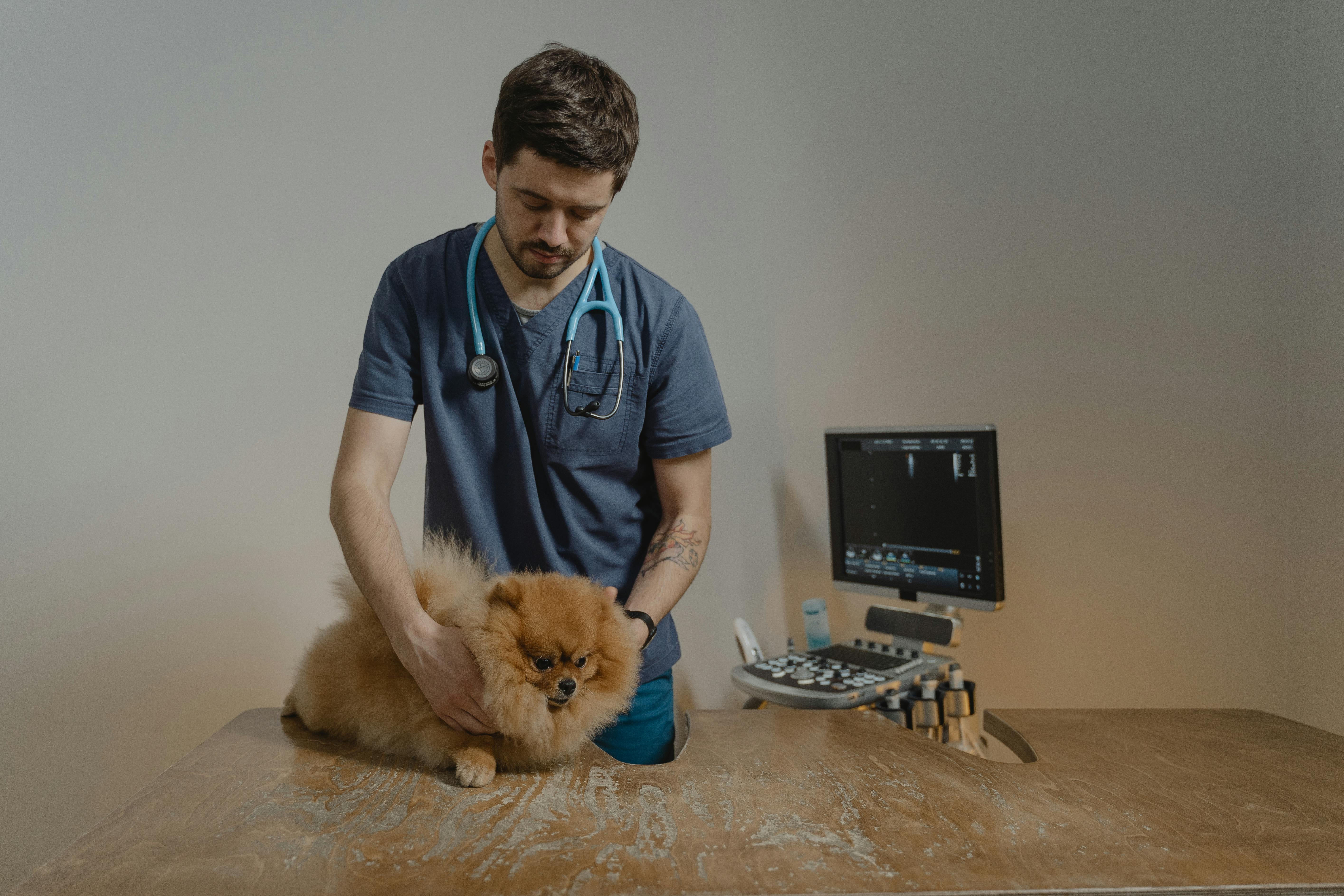 Photo: Tima Miroshnichenko / Pexels
Frequently asked questions
How much does a puppy weigh at birth?
Birth weight depends on breed size. Toy breeds are born at about 100-200 grams, large breeds at 400-500 grams, and giant breeds at about 700 grams, per veterinary proceedings on dvm360. Record each puppy's birth weight, because every later weight is compared with it.
How much should my puppy weigh at 4 months?
It depends on the adult size class. Elanco lists 1.25-4.5 pounds for a toy breed, 8-16 pounds for a medium breed, and 18-30 pounds for a large breed at 4 months. Compare your puppy with its own size group, not with a different breed.
How often should I weigh my puppy?
Weigh newborns twice a day for the first week, then daily for the first two to three weeks if you are the breeder. Weigh a puppy that lives in your home every 2-4 weeks until about 6 months. Use the same scale and the same time of day each time.
Can I weigh a puppy on a bathroom scale?
Yes, but only the right way. Weigh yourself holding the puppy, weigh yourself alone, and subtract the second number from the first. This works for puppies from about 10 pounds up, while smaller puppies need a baby or kitchen scale for a readable number.
How big can a dog get?
Dogs range from under 12 pounds for toy breeds to over 100 pounds for giant breeds. Elanco's growth chart shows a giant-breed puppy reaching 156-204 pounds by 18 months. The adult size depends on breed, sex, and parent size.
See your own pet's real numbers.
Run the calculator with your breed, metro area, and care choices for a first-year, annual, and lifetime cost estimate — not a national average.