
How Much Does a Great Dane Cost Per Year?
Great Dane cost runs high mainly because of scale: this is one of the largest dog breeds, and every recurring line from food to medication is priced by body weight. Add a real risk of bloat and heart disease, and the first year and the ongoing years both carry a heavier tab than a mid-size dog. Budgeting for a Great Dane means planning around its size and its short, cardiology-watched lifespan from day one.
Executive cost summary
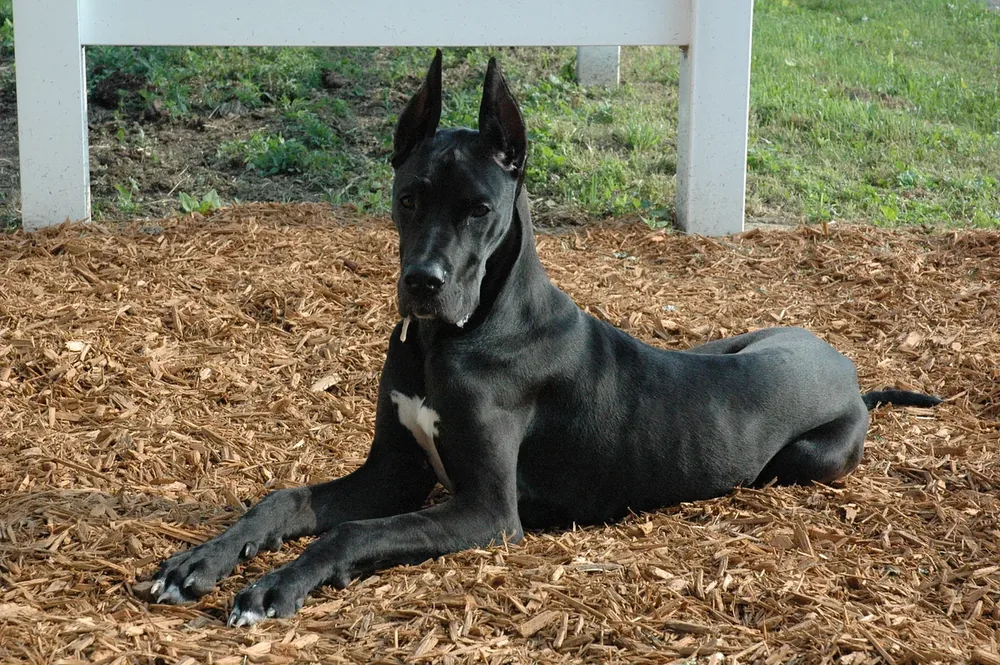
Great Dane
Great Dane cost runs high mainly because of scale: this is one of the largest dog breeds, and every recurring line from food to medication is priced by body weight. Add a real risk of bloat and heart disease, and the first year and the ongoing years both carry a heavier tab than a mid-size dog. Budgeting for a Great Dane means planning around its size and its short, cardiology-watched lifespan from day one.
Acquisition, surgical desexing, initial vet series, and starter hardware.
Normalized baseline at ~$306/month routine cash burn.
Projected over a 8-year Great Dane lifespan.
$5,000 Liquid Reserve Mandate
Critical bufferBloat risk, an elevated dilated cardiomyopathy rate, and a short giant-breed lifespan stack into recurring cardiology and emergency-surgery exposure that few breeds combine.
Source: MetLife True Cost of Pet Emergencies 2025 (15% of owners hit $3,000+; uninsured surgery $3,000–8,000)
Biometric & phenotypic actuarial spec
What a Great Dane costs, year by year
Cumulative spend across a 8-year life in today's dollars, with the same curve at 3% and 8% yearly inflation. Year 1 carries the acquisition and setup bill.
- Food & nutrition
- Vet & insurance
- Grooming & coat
- Setup & sundries
- - - - at 3% inflation: $35,518
- · · · at 8%: $41,927
Where the big bills land
Bars are routine one-off vet events (vaccine boosters, dental cleanings, bloodwork, spay/neuter). Diamonds are sourced condition treatments for this breed.
100th percentile
51st percentile
Ranked against 265 other dog breeds in this directory.
View as a table
| Year | Spend | Cumulative | Routine vet events |
|---|---|---|---|
| 1 | $6,522 | $6,522 | $772 |
| 2 | $3,674 | $10,196 | $77 |
| 3 | $3,674 | $13,870 | $543 |
| 4 | $3,674 | $17,544 | $164 |
| 5 | $3,674 | $21,218 | $620 |
| 6 | $3,674 | $24,892 | $328 |
| 7 | $3,674 | $28,566 | $707 |
| 8 | $3,674 | $32,240 | $405 |
- Gastric dilatation-volvulus (bloat): about $3,200 once, from year 8 (Trupanion, Commonly Claimed Conditions: Great Dane (vet.trupanion.com/assets/pdf/commonly-claimed-conditions.pdf, form HF235-0619), 2019-06, medium confidence)
- Osteosarcoma: about $3,550 once, from year 8 (Trupanion, Commonly Claimed Conditions: Great Dane (vet.trupanion.com/assets/pdf/commonly-claimed-conditions.pdf, form HF235-0619), 2019-06, medium confidence)
Annual Cash Burn Matrix ($3,674/yr)
Continuous operational expenditure distributed across 5 core maintenance categories, indexed to metabolic demand and regional clinical rates.
Food
Source: Derived: veterinary MER formula + mid-tier dry kibble price (2026-01)
Vet Care
Source: Modeled estimate, not a sourced figure. Category basis: ASPCA / AAHA routine wellness composite (annual exam, vaccines, parasite control) x size 1.14 x risk 1.22 (2026-01)
Grooming
Source: Modeled estimate, not a sourced figure. Category basis: Rover / PetSmart service menu, short-coat baseline (grooming rating 2) x coat 1 (2026-01)
Pet Insurance
Source: Derived: NAPHIA State of the Industry 2025 (2024 data), accident & illness dog average x size 1.2 x risk 1.38 (2026-01)
Supplies & Toys
Source: Derived: Synchrony Pet Lifetime of Care 2025 (toy replacement $50–150/yr) plus routine consumables x size 1.3 (2026-01)
Upfront Entry CapEx
Purchase / Adoption Fee ($1,400), Initial Vet Visit & Vaccinations ($752), Starter Supplies ($618), Training Classes ($260), First Year Food ($1,139), First Year Vet Care ($918), First Year Grooming ($195), First Year Insurance ($1,240).
Comprehensive Lifecycle Ledger
Audited financial breakdown distinguishing immediate first-year fixed capitalization from ongoing annualized operating liabilities over the full 7–10 yrs canine lifespan.
| Expenditure Category | Year 01 Outlay | Annual Steady-State | Lifetime Total | Actuarial Sizing Methodology |
|---|---|---|---|---|
| Purchase / Adoption Fee | $1,400 | — | $1,400 | Varies by breeder vs rescue |
| Initial Vet Visit & Vaccinations | $752 | — | $752 | Spay/neuter, microchip, health check |
| Starter Supplies | $618 | — | $618 | Bed, crate, collar, bowls, toys |
| Training Classes | $260 | — | $260 | Basic obedience recommended |
| First Year Food | $1,139 | — | $1,139 | — |
| First Year Vet Care | $918 | — | $918 | — |
| First Year Grooming | $195 | — | $195 | — |
| First Year Insurance | $1,240 | — | $1,240 | — |
| Food | — | $1,139 | $9,112 | — |
| Vet Care | — | $918 | $7,344 | — |
| Grooming | — | $195 | $1,560 | — |
| Pet Insurance | — | $1,240 | $9,920 | — |
| Supplies & Toys | — | $182 | $1,456 | — |
| Gross Actuarial Expenditure | $6,522 | $3,674 / yr | $32,240 | Unadjusted baseline |
Actuarial Health Risk Profile (Tier 5)
Bloat risk, an elevated dilated cardiomyopathy rate, and a short giant-breed lifespan stack into recurring cardiology and emergency-surgery exposure that few breeds combine.
Gastric dilatation-volvulus (bloat)
The stomach fills with gas and can twist on itself, cutting off blood flow within hours; this is an emergency-surgery case and one of the top killers of deep-chested giant breeds.
- Typical treatment cost (one-time)
- $2,500–$3,900
Typically appears at age 9–12
medium confidence · Trupanion, Commonly Claimed Conditions: Great Dane, 2019-06
Dilated Cardiomyopathy
The heart muscle thins and enlarges, weakening its pumping ability; the Great Dane carries one of the higher breed rates of this condition, and it often needs lifelong cardiac medication and periodic cardiology screening.
- Typical treatment cost (one-time)
- $1,900–$3,200
medium confidence · Trupanion, Commonly Claimed Conditions: Great Dane, 2019-06
Hip Dysplasia
A malformed hip joint that loosens with growth and leads to early arthritis; the breed's rapid frame growth and heavy adult weight both add mechanical strain to the joint.
- Typical treatment cost (one-time)
- $7,000–$9,000
medium confidence · Iowa State University Lloyd Veterinary Medical Center, Total Hip Replacement, 2026-09
Osteosarcoma
An aggressive bone cancer that shows up disproportionately in large and giant breeds, usually in a limb, and typically calls for amputation or limb-sparing surgery plus chemotherapy.
- Typical treatment cost (one-time)
- $2,200–$4,900
Typically appears around age 7
medium confidence · Trupanion, Commonly Claimed Conditions: Great Dane, 2019-06
Hypothyroidism
An underactive thyroid slows metabolism, causing weight gain, lethargy, and coat changes; it is manageable but needs daily medication and periodic blood monitoring for life.
Typically appears at age 4–10
medium confidence
Costs are typical for the condition in general, not specific to the Great Dane. See the Great Dane cost timeline
What Truly Drives the Great Dane’s Financial Profile
About the Great Dane and its cost
Great Dane cost starts with sheer size. Standing among the tallest dog breeds, a Great Dane eats, is dosed, and is boarded like the giant it is, so line items that look modest for a smaller dog scale up fast. The coat is short and easy to maintain, which keeps grooming costs low relative to other giants, but that saving is small next to what size drives elsewhere. Housing one also means larger everything: crate, bed, collar, car space, which shows up as a bigger starter-supplies bill in year one. Owners drawn to the breed's famously gentle, patient temperament should walk in expecting a dog whose scale, not its coat or its energy, sets the budget.
What drives the price of owning a Great Dane
Two forces push Great Dane spending above the average large-breed budget: body mass and breed-specific health risk. Food, medication dosing, and anesthesia are all priced per pound, so a full-grown Great Dane is meaningfully pricier to feed and treat than a mid-size dog on the same protocol. Layered on top is the breed's real exposure to bloat, an emergency that requires immediate surgery, and a documented tendency toward dilated cardiomyopathy, which calls for periodic cardiac screening. Orthopedic strain from a heavy frame and a breed-wide predisposition toward certain bone cancers add further recurring vet-visit and imaging cost across the dog's life.
Eight years, five-figure risks
A Great Dane's typical lifespan is about 8 years, so every large cost lands in a short window. Bloat surgery runs $2,500 to $3,900 on this page's data, and the breed's deep chest makes the risk real; many owners ask their vet about a preventive stomach tacking at spay or neuter. Dilated cardiomyopathy runs $1,900 to $3,200 for workup and management, and osteosarcoma $2,200 to $4,900. Giant size also raises the cost of ordinary things: food, medication dosing, anesthesia and a crate or car that can hold 110 to 175 pounds. Because years are few, the lifetime total of $32,240 reflects a $3,674 annual cost.
Great Dane first-year budget
The first year for a Great Dane combines a large one-time outlay with heavier-than-average recurring costs. $1,400 covers the puppy or adoption fee, $752 handles the initial vaccine series and exam, $618 buys giant-sized gear like a crate, bed, and leash, and $260 covers early obedience work, which matters even more for a dog that will soon reach full giant-breed size. Together the one-time costs total $3,030. On the recurring side, $1,139 funds large-breed puppy food scaled to rapid growth, $918 covers wellness visits plus early screening, $195 stays modest thanks to the short coat, and $1,240 reflects giant-breed, higher-risk pricing, for a first-year recurring total of $3,492. All in, the first-year total lands at $6,522.
Great Dane yearly cost after year one
Once past puppyhood, a Great Dane's steady-state budget still runs on the high side of large dogs because every recurring line scales with body weight. $1,139 funds a full-grown appetite that dwarfs a mid-size dog's, $918 covers wellness exams plus the periodic cardiac screening this breed's risk profile calls for, $195 stays low given the short coat, and $1,240 reflects continued giant-breed underwriting. $182 keeps toys, bedding, and consumables stocked at giant-breed scale. Add these together and annual ongoing cost comes to $3,674, which breaks down to roughly $306 a month, a helpful number for building a household budget around a dog this size.
Emergency fund for a Great Dane
A Great Dane's emergency fund deserves more weight than most breeds' because bloat is a real, fast-developing surgical emergency, and the breed's cardiomyopathy tendency can also escalate into urgent cardiac care. $5,000 is the reserve worth holding specifically for a scenario like emergency gastropexy, a cardiac crisis, or an unplanned orthopedic repair, none of which are optional once they occur. Viewed against $32,240 in total lifetime spending, this fund is not a rare add-on for the Great Dane; deep-chested giant breeds see these emergencies often enough that treating the reserve as a core, not optional, part of ownership planning is the safer approach for this breed specifically.
Cutting Great Dane costs
Because a Great Dane's budget is driven mostly by size and breed-specific risk rather than by lifestyle extras, the biggest savings come from managing those two forces directly rather than trimming everyday spending. Choosing insurance underwritten with giant-breed risk in mind, and screening for cardiac issues before they become emergencies, both protect against the largest possible bills far more effectively than smaller belt-tightening moves. Since annual ongoing cost runs to $3,674, or about $306 monthly, treating that figure as a baseline rather than a ceiling helps owners plan realistically. Weighed against $32,240 over the dog's life, proactive health management is consistently the highest-leverage way to keep a Great Dane's true cost down.
6 Prudent Ways to Cut Great Dane Costs
Buy large-breed food in bulk
A Great Dane's size means a bag of large-breed kibble disappears fast, so buying in bulk or through a subscription usually beats small-bag retail pricing. Confirm the formula is sized and dosed for giant breeds rather than generic large-breed food.
Screen for cardiomyopathy early
A baseline cardiology screening while the dog is young and healthy is cheaper than diagnosing heart disease during an emergency visit. Catching it early also opens up more affordable, earlier-stage treatment options.
Ask about bloat-prevention surgery at desexing
Many vets can perform a prophylactic gastropexy at the same time as a spay or neuter, tacking on a modest fee instead of a full separate emergency surgery later. Discuss the option and its cost with your vet before that first procedure.
Compare giant-breed insurance riders
Not every pet insurer prices bloat and cardiomyopathy the same way for giant breeds, so compare policies specifically built around large-breed risk before you commit. A slightly higher premium that actually covers these conditions is usually cheaper than paying out of pocket.
Budget furniture and gear built for scale
A Great Dane-sized bed, crate, and ramp cost more up front than standard sizes, but undersized gear wears out and gets replaced, costing more over time. Buying the right size once is usually the cheaper path.
Front-load health screening since the lifespan is short
"Great dane life span" and "life expectancy of a great dane" are searched almost as often as puppy and breeder terms, and the answer, typically 7-10 years, means cardiac and hip problems have less time to reveal themselves before they become expensive. Paying for OFA hip and cardiac clearances upfront protects more of that compressed lifetime than screening later would.
Peer Class Financial Comparisons
How the Great Dane compares to morphological peers on annualized ownership cost.
Great Dane
Frequently Asked Financial Questions
How much does a Great Dane puppy cost from a breeder?
How much does it cost to adopt a Great Dane?
What is the lifetime cost of owning a Great Dane?
How much do Great Danes cost per year?
Why are rare color Great Danes so expensive?
Is a Great Dane expensive to feed?
Do Great Danes need pet insurance?
What is the biggest hidden cost of owning a Great Dane?
Does a Great Dane's short lifespan change the lifetime cost math?
Should a Great Dane have a preventive gastropexy?
Why is a Great Dane's annual cost so high?
Related reading
Data sources
- Great Dane — American Kennel Club (akc.org)
- Bloat in Dogs (Gastric Dilatation and Volvulus) — VCA Animal Hospitals (vcahospitals.com)
- Great Dane — Wikipedia (en.wikipedia.org)
- Pet Health Insurance — North American Pet Health Insurance Association (naphia.org)
Calculate Your Great Dane Cost Adjusted by Metro ZIP Code
Veterinary surgical tariffs and clinical room rates vary widely between metropolitan regions and rural counties. Recalculate this dossier with your exact state, city, and lifestyle parameters.