
Black Russian Terrier Cost & Ownership Dossier
Black Russian Terrier cost reflects its status as a giant guardian breed, with $6,364 covering a large puppy, initial vaccines, and heavy-duty starter gear. Ongoing spend runs above average at roughly $293, driven by food volume, joint monitoring, and coat upkeep for the dense double coat. Across its working-dog lifespan, total spending trends toward $41,524.
Executive cost summary
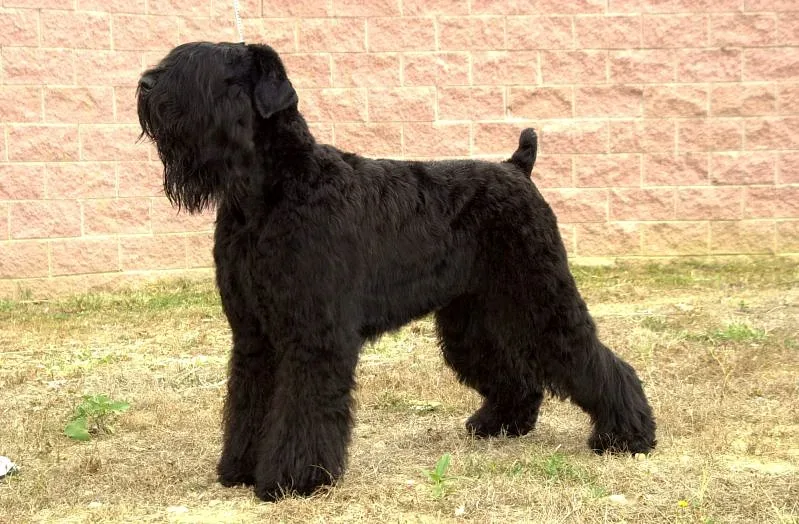
Black Russian Terrier
Black Russian Terrier cost reflects its status as a giant guardian breed, with $6,364 covering a large puppy, initial vaccines, and heavy-duty starter gear. Ongoing spend runs above average at roughly $293, driven by food volume, joint monitoring, and coat upkeep for the dense double coat. Across its working-dog lifespan, total spending trends toward $41,524.
Acquisition, surgical desexing, initial vet series, and starter hardware.
Normalized baseline at ~$293/month routine cash burn.
Projected over a 11-year Black Russian Terrier lifespan.
$5,000 Liquid Reserve Mandate
Critical bufferA giant frame with orthopedic load plus a breed-associated cardiac and neuropathy predisposition creates elevated, recurring cost.
Source: MetLife True Cost of Pet Emergencies 2025 (15% of owners hit $3,000+; uninsured surgery $3,000–8,000)
Biometric & phenotypic actuarial spec
Annual Cash Burn Matrix ($3,516/yr)
Continuous operational expenditure distributed across 5 core maintenance categories, indexed to metabolic demand and regional clinical rates.
Food
Vet Care
Grooming
Pet Insurance
Supplies & Toys
Upfront Entry CapEx
Purchase / Adoption Fee ($1,400), Initial Vet Visit & Vaccinations ($752), Starter Supplies ($618), Training Classes ($260), First Year Food ($938), First Year Vet Care ($828), First Year Grooming ($507), First Year Insurance ($1,061).
Comprehensive Lifecycle Ledger
Audited financial breakdown distinguishing immediate first-year fixed capitalization from ongoing annualized operating liabilities over the full 10–12 yrs canine lifespan.
| Expenditure Category | Year 01 Outlay | Annual Steady-State | Lifetime Total | Actuarial Sizing Methodology |
|---|---|---|---|---|
| Purchase / Adoption Fee | $1,400 | — | $1,400 | Varies by breeder vs rescue |
| Initial Vet Visit & Vaccinations | $752 | — | $752 | Spay/neuter, microchip, health check |
| Starter Supplies | $618 | — | $618 | Bed, crate, collar, bowls, toys |
| Training Classes | $260 | — | $260 | Basic obedience recommended |
| First Year Food | $938 | — | $938 | — |
| First Year Vet Care | $828 | — | $828 | — |
| First Year Grooming | $507 | — | $507 | — |
| First Year Insurance | $1,061 | — | $1,061 | — |
| Food | — | $938 | $10,318 | — |
| Vet Care | — | $828 | $9,108 | — |
| Grooming | — | $507 | $5,577 | — |
| Pet Insurance | — | $1,061 | $11,671 | — |
| Supplies & Toys | — | $182 | $2,002 | — |
| Gross Actuarial Expenditure | $6,364 | $3,516 / yr | $41,524 | Unadjusted baseline |
Actuarial Health Risk Profile (Tier 4)
A giant frame with orthopedic load plus a breed-associated cardiac and neuropathy predisposition creates elevated, recurring cost.
Hip and elbow dysplasia
A large, heavy frame makes malformed hip and elbow joints common, often leading to arthritis or corrective surgery.
Dilated Cardiomyopathy
The heart muscle weakens and enlarges over time in some lines, a progressive condition that needs lifelong cardiac medication.
Progressive retinal atrophy
An inherited condition slowly destroys the retina, leading to gradual, irreversible blindness that has no cure but is manageable at home.
Juvenile Laryngeal Paralysis-Polyneuropathy
A breed-associated nerve disorder can affect young dogs' breathing and swallowing, sometimes requiring surgery early in life.
What Truly Drives the Black Russian Terrier’s Financial Profile
About the Black Russian Terrier and its cost
The Black Russian Terrier was developed in the Soviet Union as a military and guard dog, built from working breeds to be large, powerful, and unshakeable under pressure. Black Russian Terrier cost starts high at the puppy stage given the breed's rarity outside Russia and Eastern Europe, reflected in $1,400. Its dense, wiry double coat needs regular brushing and periodic trimming to prevent matting, keeping $507 a real recurring line rather than an occasional expense. Feeding a dog this size also means $938 runs well above what a medium breed requires.
What drives Black Russian Terrier costs
Scale and genetics both drive this breed's cost. Carrying well over a hundred pounds on a large frame makes hip and elbow dysplasia a real risk, and orthopedic surgery for a giant breed costs more than the same procedure on a smaller dog. Some lines carry a predisposition to dilated cardiomyopathy, which means lifelong cardiac monitoring and medication once diagnosed. A rarer, breed-associated laryngeal and nerve condition can also surface in young dogs. Together these push $828 and $1,061 higher than for a working breed without a defining health concern.
Black Russian Terrier first-year budget
The first year begins with $1,400 for the puppy, then $752 for exams, core vaccines, and deworming scaled to a giant breed. $618 covers a heavy-duty crate, bed, and collar built for an adult that will exceed a hundred pounds, and early obedience $260 pays off given the dog's protective instincts. Those one-time costs total $3,030. On the recurring side, rapid growth demands substantial $938, while $828 covers puppy visits and orthopedic monitoring, and $507 handles the dense double coat; add $1,061 if starting a policy early. Together, $3,334 on top of setup brings year one to $6,364.
Black Russian Terrier yearly cost after year one
After year one, $938 remains substantial given the breed's giant size, while $828 covers annual exams plus any cardiac or joint follow-up. $507 stays a meaningful line thanks to the dense double coat, and $1,061 is worth carrying given the breed's orthopedic and cardiac risk. $182 covers replacement gear sized for a large, strong dog. Altogether these add up to $3,516, or close to $293 on a monthly basis.
Emergency fund for a Black Russian Terrier
A dedicated $5,000 matters for this breed because both hip or elbow surgery and a cardiomyopathy diagnosis are realistic, high-cost scenarios for a dog this size. Giant-breed orthopedic surgery in particular costs more than the same procedure on a smaller dog, simply because of the frame involved. Planning this reserve alongside the $41,524 for the dog's full life turns a sudden diagnosis into a budgeting decision rather than a financial emergency.
Cutting Black Russian Terrier costs
Learning to maintain the double coat at home, rather than relying entirely on a professional groomer, is the biggest lever for lowering $3,516 for this breed. Buying giant-breed food in bulk and keeping the dog at a lean weight through its growth phase both reduce long-run vet costs tied to joint strain. Comparing insurance plans annually instead of auto-renewing helps hold down $293. Together these habits meaningfully lower the $41,524 without compromising the dog's care.
5 Prudent Ways to Cut Black Russian Terrier Costs
Buy from hip- and elbow-screened parents
Ask for OFA or equivalent clearances on both parents before buying a puppy. It costs more upfront but meaningfully lowers the odds of an expensive orthopedic surgery later in life.
Brush the double coat weekly
Regular brushing prevents the mats that turn a routine groom into a costly de-matting session. Learning to trim the coat at home also reduces reliance on professional grooming.
Schedule a baseline cardiac check
An early heart screening establishes a baseline and can catch dilated cardiomyopathy before symptoms appear. Early management is generally cheaper and more effective than treating an advanced case.
Keep the dog lean through growth
Controlled growth on a large-breed puppy diet reduces stress on developing joints. A lean adult weight lowers the odds of early arthritis and the vet bills that come with it.
Buy giant-breed food and gear in bulk
Large bags of appropriately formulated food and heavy-duty leashes or beds cost less per use than replacing smaller gear repeatedly. This keeps $182 and $938 from creeping upward.
Peer Class Financial Comparisons
How the Black Russian Terrier compares to morphological peers on annualized ownership cost.
Black Russian Terrier
Frequently Asked Financial Questions
How much does a Black Russian Terrier cost?
How much does a Black Russian Terrier puppy cost from a breeder?
What is the lifetime cost of owning a Black Russian Terrier?
How much does it cost to adopt a Black Russian Terrier?
Why do Black Russian Terrier prices vary by region?
How much does a Black Russian Terrier cost per year?
Is a Black Russian Terrier expensive to insure?
Data sources
- Black Russian Terrier Breed Overview — American Kennel Club (akc.org)
- Black Russian Terrier — Wikipedia (en.wikipedia.org)
- Hip Dysplasia — Orthopedic Foundation for Animals (ofa.org)
Calculate Your Black Russian Terrier Cost Adjusted by Metro ZIP Code
Veterinary surgical tariffs and clinical room rates vary widely between metropolitan regions and rural counties. Recalculate this dossier with your exact state, city, and lifestyle parameters.