
Bombay Cost & Ownership Dossier
Bombay cost is shaped less by the breed's sleek black coat, which needs almost no grooming, and more by its compact-skulled Burmese ancestry, which can bring occasional breathing or eye-tearing visits to the vet. Most owners spend near $2,238 in the first year once a breeder fee, vaccines, and starter supplies are covered. Ongoing costs settle to roughly $928 a year, about $77 a month.
Executive cost summary
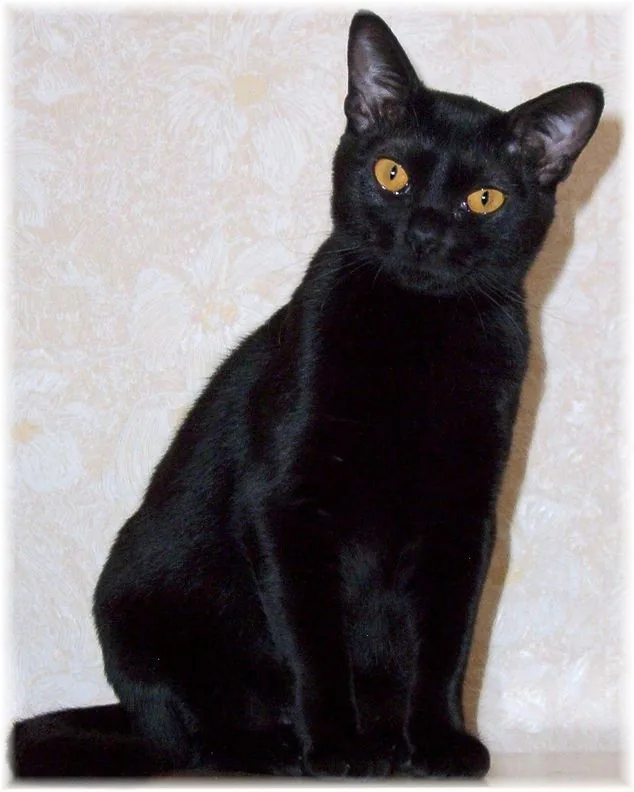
Bombay
Bombay cost is shaped less by the breed's sleek black coat, which needs almost no grooming, and more by its compact-skulled Burmese ancestry, which can bring occasional breathing or eye-tearing visits to the vet. Most owners spend near $2,238 in the first year once a breeder fee, vaccines, and starter supplies are covered. Ongoing costs settle to roughly $928 a year, about $77 a month.
Acquisition, surgical desexing, initial vet series, and starter hardware.
Normalized baseline at ~$77/month routine cash burn.
Projected over a 14-year Bombay lifespan.
$2,000 Liquid Reserve Mandate
Critical bufferA moderately shortened muzzle and an occasional hyperesthesia predisposition raise vet attention slightly, but the Bombay lacks the severe airway compromise of true brachycephalic breeds.
Source: MetLife True Cost of Pet Emergencies 2025 (15% of owners hit $3,000+; uninsured surgery $3,000–8,000)
Biometric & phenotypic actuarial spec
Annual Cash Burn Matrix ($928/yr)
Continuous operational expenditure distributed across 5 core maintenance categories, indexed to metabolic demand and regional clinical rates.
Food
Vet Care
Grooming
Pet Insurance
Supplies & Toys
Upfront Entry CapEx
Purchase / Adoption Fee ($800), Initial Vet Visit & Vaccinations ($300), Starter Supplies ($260), Litter & Behavior Basics ($40), First Year Food ($213), First Year Vet Care ($260), First Year Grooming ($24), First Year Insurance ($341).
Comprehensive Lifecycle Ledger
Audited financial breakdown distinguishing immediate first-year fixed capitalization from ongoing annualized operating liabilities over the full 12–16 yrs feline lifespan.
| Expenditure Category | Year 01 Outlay | Annual Steady-State | Lifetime Total | Actuarial Sizing Methodology |
|---|---|---|---|---|
| Purchase / Adoption Fee | $800 | — | $800 | Varies by breeder vs rescue |
| Initial Vet Visit & Vaccinations | $300 | — | $300 | Spay/neuter, microchip, health check |
| Starter Supplies | $260 | — | $260 | Litter box, scratching post, carrier, bowls |
| Litter & Behavior Basics | $40 | — | $40 | Litter box training, scratching post basics |
| First Year Food | $213 | — | $213 | — |
| First Year Vet Care | $260 | — | $260 | — |
| First Year Grooming | $24 | — | $24 | — |
| First Year Insurance | $341 | — | $341 | — |
| Food | — | $213 | $2,982 | — |
| Vet Care | — | $260 | $3,640 | — |
| Grooming | — | $24 | $336 | — |
| Pet Insurance | — | $341 | $4,774 | — |
| Supplies & Toys | — | $90 | $1,260 | — |
| Gross Actuarial Expenditure | $2,238 | $928 / yr | $14,302 | Unadjusted baseline |
Actuarial Health Risk Profile (Tier 3)
A moderately shortened muzzle and an occasional hyperesthesia predisposition raise vet attention slightly, but the Bombay lacks the severe airway compromise of true brachycephalic breeds.
Mild Brachycephalic Airway Conformation
A shortened muzzle inherited from the Burmese side can cause noisy breathing and reduced heat tolerance, though rarely as severe as in flat-faced breeds.
Feline Hyperesthesia Syndrome
A neurological rippling-skin and overgrooming condition reported more often in Burmese-derived breeds like the Bombay, sometimes needing behavioral or medical management.
Excessive Tearing (Epiphora)
The shortened nasal passages associated with the breed's compact face can cause persistent eye tearing that stains fur and occasionally needs cleaning or treatment.
What Truly Drives the Bombay’s Financial Profile
About the Bombay and its cost
Bombay cost tracks the breed's status as a deliberately engineered look-alike for a wild panther: a Burmese crossed with an American Shorthair to produce a solid black, compact, muscular cat with copper eyes. Because the breed is less common than an American Shorthair but not as rare as a hybrid like the Chausie, purchase prices sit mid-market among purebred cats. The short, patent-leather coat needs almost no grooming spend, which keeps day-to-day maintenance cheap. Most variability in lifetime cost comes from the breed's compact head shape rather than from coat care or size.
What drives Bombay costs
The Bombay's shortened muzzle, a legacy of its Burmese parentage, can mean noisier breathing, more eye tearing, and slightly reduced heat tolerance compared with a longer-nosed shorthair, which occasionally shows up as extra $260 visits. Some individuals also show hyperesthesia, a nervous-system quirk that can prompt a behavioral consult or medication. The breed's medium, muscular build keeps $213 portions moderate. Because Bombays are highly people-oriented and dislike long solitude, boarding or a pet sitter during travel is a recurring cost many first-time owners forget to budget for.
Bombay first-year budget
Bringing home a Bombay kitten starts with $800 paid to the breeder, plus $300 for vaccines, deworming, and spay or neuter. Starter supplies such as a litter box, scratching post, and carrier add $260, while $40 is typically minimal beyond litter habituation. That puts one-time setup near $1,400. Add the first year of $213, $260 visits, $24 wipe-downs, and $341 for a recurring total of $838, bringing the full first year to $2,238.
Bombay yearly cost after year one
After the first year, a Bombay's budget is dominated by $213, an annual exam plus any airway or eye follow-up under $260, light $24 supplies, $341, and $90 for litter and enrichment toys that suit an active, playful cat. Together this runs about $928 a year, or $77 a month. Grooming stays a minor line item relative to other breeds, shifting the balance toward food and veterinary care.
Emergency fund for a Bombay
Because the breed carries a mild brachycephalic conformation and an occasional hyperesthesia predisposition, an $2,000 reserve is best earmarked for an unplanned airway procedure or a neurological workup rather than routine illness. Combined with typical aging costs, that risk profile supports a $14,302 for full lifetime ownership. A cash cushion matters because the diagnostic imaging for either condition is often needed before insurance will process a claim.
Cutting Bombay costs
Grooming is already the Bombay's cheapest category, so the bigger savings come from prevention: daily eye wipes and airway-friendly play sessions head off vet visits before they start. Enrolling in insurance while the cat is young and symptom-free protects the $14,302 outlook against the breed's two known predispositions. Choosing a home sitter over boarding avoids stress-related illness in this highly people-attached breed, and steady portion control prevents the weight gain that would otherwise worsen breathing and nudge $77 higher.
5 Prudent Ways to Cut Bombay Costs
Check breathing before you buy
Ask to hear the kitten breathe at rest and during play, and avoid lines bred for an extremely flat face. A moderate muzzle length lowers the odds of costly airway surgery down the line.
Wipe eyes as part of a daily routine
A quick daily face wipe prevents tear staining from becoming a skin infection that needs a vet visit. This is a near-zero-cost habit that heads off a recurring $260 expense.
Keep the coat routine minimal
The Bombay's short coat rarely needs more than a weekly wipe-down with a rubber grooming mitt. Resist the urge to buy grooming tools and services meant for longhaired breeds.
Enroll in insurance while the kitten is asymptomatic
Because hyperesthesia and airway issues can appear gradually, locking in $341 coverage early avoids a pre-existing condition exclusion if symptoms show up later.
Line up a sitter instead of a boarding facility
A Bombay's attachment to its people means a home sitter or drop-in visitor is usually less stressful and cheaper than a boarding kennel, and it avoids stress-related vet visits after a stay.
Peer Class Financial Comparisons
How the Bombay compares to morphological peers on annualized ownership cost.
Bombay
Frequently Asked Financial Questions
How much does a Bombay cat cost?
Why are Bombay cats so expensive?
How much does it cost to own a Bombay?
What is the average price of a Bombay kitten?
Are Bombay cats expensive to maintain?
How much does Bombay pet insurance cost?
Do Bombay cats shed a lot?
How much does it cost to feed a Bombay?
Data sources
- Brachycephalic Airway Syndrome — VCA Animal Hospitals (vcahospitals.com)
- Bombay Cat — Wikipedia (en.wikipedia.org)
- Pet Care Resources — American Veterinary Medical Association (avma.org)
Calculate Your Bombay Cost Adjusted by Metro ZIP Code
Veterinary surgical tariffs and clinical room rates vary widely between metropolitan regions and rural counties. Recalculate this dossier with your exact state, city, and lifestyle parameters.