
Burmilla Cost & Ownership Dossier
Burmilla cost is shaped by a hybrid heritage, part Chinchilla Persian, part Burmese, that brings a shimmering shaded coat and a couple of inherited risks worth screening for rather than a single dominant health concern. Most owners spend near $2,258 in the first year for the kitten, vaccines, and setup gear. Ongoing costs then run about $948 a year, roughly $79 a month.
Executive cost summary
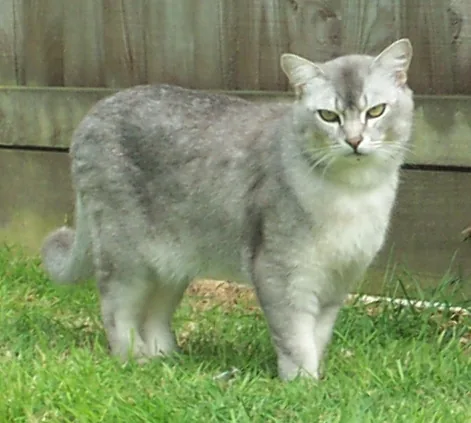
Burmilla
Burmilla cost is shaped by a hybrid heritage, part Chinchilla Persian, part Burmese, that brings a shimmering shaded coat and a couple of inherited risks worth screening for rather than a single dominant health concern. Most owners spend near $2,258 in the first year for the kitten, vaccines, and setup gear. Ongoing costs then run about $948 a year, roughly $79 a month.
Acquisition, surgical desexing, initial vet series, and starter hardware.
Normalized baseline at ~$79/month routine cash burn.
Projected over a 13-year Burmilla lifespan.
$2,000 Liquid Reserve Mandate
Critical bufferInherited kidney-cyst and mild diabetes risks passed down from Persian and Burmese ancestry keep this breed at a moderate, breed-average cost profile rather than an elevated one.
Source: MetLife True Cost of Pet Emergencies 2025 (15% of owners hit $3,000+; uninsured surgery $3,000–8,000)
Biometric & phenotypic actuarial spec
Annual Cash Burn Matrix ($948/yr)
Continuous operational expenditure distributed across 5 core maintenance categories, indexed to metabolic demand and regional clinical rates.
Food
Vet Care
Grooming
Pet Insurance
Supplies & Toys
Upfront Entry CapEx
Purchase / Adoption Fee ($800), Initial Vet Visit & Vaccinations ($300), Starter Supplies ($260), Litter & Behavior Basics ($40), First Year Food ($197), First Year Vet Care ($260), First Year Grooming ($60), First Year Insurance ($341).
Comprehensive Lifecycle Ledger
Audited financial breakdown distinguishing immediate first-year fixed capitalization from ongoing annualized operating liabilities over the full 10–15 yrs feline lifespan.
| Expenditure Category | Year 01 Outlay | Annual Steady-State | Lifetime Total | Actuarial Sizing Methodology |
|---|---|---|---|---|
| Purchase / Adoption Fee | $800 | — | $800 | Varies by breeder vs rescue |
| Initial Vet Visit & Vaccinations | $300 | — | $300 | Spay/neuter, microchip, health check |
| Starter Supplies | $260 | — | $260 | Litter box, scratching post, carrier, bowls |
| Litter & Behavior Basics | $40 | — | $40 | Litter box training, scratching post basics |
| First Year Food | $197 | — | $197 | — |
| First Year Vet Care | $260 | — | $260 | — |
| First Year Grooming | $60 | — | $60 | — |
| First Year Insurance | $341 | — | $341 | — |
| Food | — | $197 | $2,561 | — |
| Vet Care | — | $260 | $3,380 | — |
| Grooming | — | $60 | $780 | — |
| Pet Insurance | — | $341 | $4,433 | — |
| Supplies & Toys | — | $90 | $1,170 | — |
| Gross Actuarial Expenditure | $2,258 | $948 / yr | $13,634 | Unadjusted baseline |
Actuarial Health Risk Profile (Tier 3)
Inherited kidney-cyst and mild diabetes risks passed down from Persian and Burmese ancestry keep this breed at a moderate, breed-average cost profile rather than an elevated one.
Polycystic Kidney Disease
A cyst-forming kidney condition traceable to the breed's Persian/Chinchilla ancestry, worth screening for since it can progress silently for years.
Diabetes mellitus
A milder version of the elevated diabetes risk seen in the Burmese side of the Burmilla's ancestry, tied closely to body weight management.
Seborrhea and Coat Sensitivity
The shaded, tipped coat can develop a slightly oily texture and mild skin flaking in some individuals, occasionally needing a medicated shampoo.
What Truly Drives the Burmilla’s Financial Profile
About the Burmilla and its cost
Burmilla cost sits in the middle of the purebred cat market: the breed is uncommon enough that breeders are limited, but not so rare that kittens command extreme prices. Its short-to-semi-long shaded coat, a legacy of Chinchilla Persian ancestry, needs only light regular brushing, keeping grooming spend modest. A medium, muscular body inherited from its Burmese side keeps food portions moderate. Because the Burmilla is a relatively young breed developed from a cross, its inherited health risks trace directly back to its two parent breeds rather than to anything unique to the Burmilla itself.
What drives Burmilla costs
The Persian side of the pedigree carries a polycystic kidney disease risk that responsible breeders screen for with ultrasound, and a kidney diagnosis later in life can mean ongoing specialist monitoring. From the Burmese side, the Burmilla inherits a milder version of that breed's elevated diabetes tendency, which weight management can largely offset. A mild skin sensitivity tied to the shaded coat occasionally calls for a medicated shampoo. None of these conditions are severe on their own, which keeps $260 spending closer to breed-average than to a high-risk breed's.
Burmilla first-year budget
Year one starts with $800 to the breeder, plus $300 for vaccines, deworming, and spay or neuter. Starter supplies add $260, with $40 kept minimal. One-time setup lands near $1,400. Add the first year of $197, $260 visits including a baseline kidney check, light $60, and $341 for a recurring $858, bringing the full year to $2,258. Setting aside a modest cushion beyond these line items covers ordinary first-year surprises, from an unplanned dental check to a minor scrape picked up during normal kitten exploration.
Burmilla yearly cost after year one
Ongoing costs run through $197 portioned to manage diabetes risk, an annual exam plus periodic kidney screening under $260, light coat-care $60, $341, and $90 for litter and enrichment. Together these total roughly $948 a year, or $79 a month, a moderate figure reflecting the breed's manageable inherited risks. Routine wellness exams, parasite prevention, and litter or supply restocking make up the bulk of this steady-state figure, and owners who keep $341 active convert one unpredictable expense into a fixed monthly line instead.
Emergency fund for a Burmilla
Because the Burmilla carries an inherited kidney-cyst risk and a milder diabetes tendency, an $2,000 reserve should be sized for a kidney ultrasound and follow-up bloodwork or a metabolic workup rather than a single acute event. Over a full lifespan, this moderate risk profile supports a reasonable $13,634 for total ownership, lower than breeds with a more dominant single predisposition.
Cutting Burmilla costs
Weight management is the clearest saving lever, since it directly reduces the odds of the breed's inherited diabetes tendency ever becoming symptomatic. A single well-timed kidney ultrasound in early middle age is a small upfront cost that can avoid a much larger bill if polycystic kidney disease is caught late instead of early. Because grooming and food costs are already modest for this medium-sized, short-coated breed, prevention rather than reduction is where $948 savings really come from.
5 Prudent Ways to Cut Burmilla Costs
Ask for a kidney ultrasound on the parents
Polycystic kidney disease can be screened for with imaging well before symptoms appear. Confirming clear parents at purchase avoids years of uncertainty and a potentially large specialist bill.
Feed measured portions from the start
Because the breed carries a mild diabetes tendency through its Burmese ancestry, a consistent, portion-controlled diet is the cheapest and most effective prevention available.
Brush weekly to manage coat oiliness
A light weekly brushing session distributes natural oils and prevents the mild seborrhea some Burmillas develop, avoiding a medicated shampoo purchase later.
Enroll in insurance during kittenhood
Because both inherited risks can take years to appear, locking in $341 early avoids either becoming a pre-existing exclusion if a screening or symptom shows up later.
Schedule a baseline kidney screening around midlife
A single ultrasound in early middle age can catch polycystic kidney disease before it progresses, often making the difference between a manageable and a costly outcome.
Peer Class Financial Comparisons
How the Burmilla compares to morphological peers on annualized ownership cost.
Burmilla
Frequently Asked Financial Questions
How much does a Burmilla cat cost?
Why are Burmilla cats so expensive?
How much does it cost to own a Burmilla?
What is the average price of a Burmilla kitten?
Are Burmilla cats expensive to maintain?
How much does Burmilla pet insurance cost?
Do Burmilla cats need much grooming?
How much does it cost to feed a Burmilla?
Data sources
- Polycystic Kidney Disease — Cornell Feline Health Center (vet.cornell.edu)
- Burmilla — Wikipedia (en.wikipedia.org)
- Pet Care Resources — American Veterinary Medical Association (avma.org)
Calculate Your Burmilla Cost Adjusted by Metro ZIP Code
Veterinary surgical tariffs and clinical room rates vary widely between metropolitan regions and rural counties. Recalculate this dossier with your exact state, city, and lifestyle parameters.