
Caucasian Shepherd Dog Cost & Ownership Dossier
Caucasian Shepherd Dog cost reflects one of the largest guardian breeds an owner can bring home, with size driving nearly every line item. First-year spending reaches $6,254 once a giant-breed puppy is vaccinated, fed, and equipped. Annual upkeep afterward runs near $3,406, with food and insurance among the biggest recurring costs.
Executive cost summary
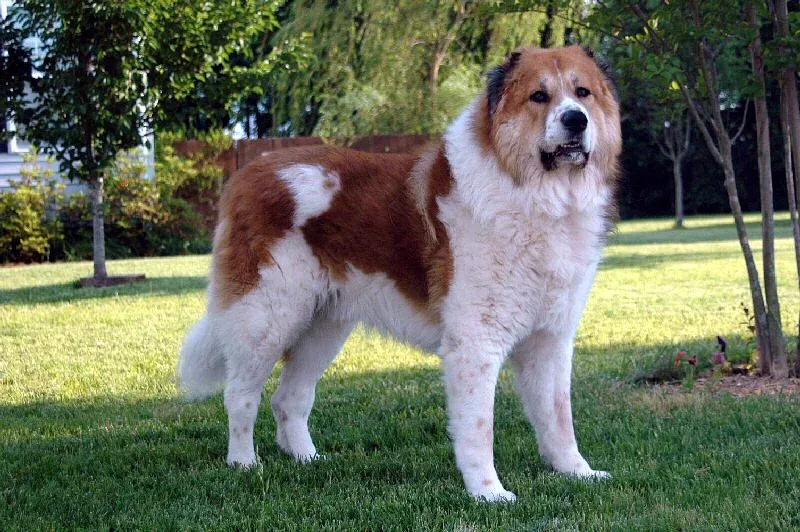
Caucasian Shepherd Dog
Caucasian Shepherd Dog cost reflects one of the largest guardian breeds an owner can bring home, with size driving nearly every line item. First-year spending reaches $6,254 once a giant-breed puppy is vaccinated, fed, and equipped. Annual upkeep afterward runs near $3,406, with food and insurance among the biggest recurring costs.
Acquisition, surgical desexing, initial vet series, and starter hardware.
Normalized baseline at ~$284/month routine cash burn.
Projected over a 11-year Caucasian Shepherd Dog lifespan.
$5,000 Liquid Reserve Mandate
Critical bufferGiant size combines with bloat and cardiac predisposition to create recurring, sometimes emergency-level veterinary cost.
Source: MetLife True Cost of Pet Emergencies 2025 (15% of owners hit $3,000+; uninsured surgery $3,000–8,000)
Biometric & phenotypic actuarial spec
Annual Cash Burn Matrix ($3,406/yr)
Continuous operational expenditure distributed across 5 core maintenance categories, indexed to metabolic demand and regional clinical rates.
Food
Vet Care
Grooming
Pet Insurance
Supplies & Toys
Upfront Entry CapEx
Purchase / Adoption Fee ($1,400), Initial Vet Visit & Vaccinations ($752), Starter Supplies ($618), Training Classes ($260), First Year Food ($1,023), First Year Vet Care ($828), First Year Grooming ($312), First Year Insurance ($1,061).
Comprehensive Lifecycle Ledger
Audited financial breakdown distinguishing immediate first-year fixed capitalization from ongoing annualized operating liabilities over the full 10–12 yrs canine lifespan.
| Expenditure Category | Year 01 Outlay | Annual Steady-State | Lifetime Total | Actuarial Sizing Methodology |
|---|---|---|---|---|
| Purchase / Adoption Fee | $1,400 | — | $1,400 | Varies by breeder vs rescue |
| Initial Vet Visit & Vaccinations | $752 | — | $752 | Spay/neuter, microchip, health check |
| Starter Supplies | $618 | — | $618 | Bed, crate, collar, bowls, toys |
| Training Classes | $260 | — | $260 | Basic obedience recommended |
| First Year Food | $1,023 | — | $1,023 | — |
| First Year Vet Care | $828 | — | $828 | — |
| First Year Grooming | $312 | — | $312 | — |
| First Year Insurance | $1,061 | — | $1,061 | — |
| Food | — | $1,023 | $11,253 | — |
| Vet Care | — | $828 | $9,108 | — |
| Grooming | — | $312 | $3,432 | — |
| Pet Insurance | — | $1,061 | $11,671 | — |
| Supplies & Toys | — | $182 | $2,002 | — |
| Gross Actuarial Expenditure | $6,254 | $3,406 / yr | $40,314 | Unadjusted baseline |
Actuarial Health Risk Profile (Tier 4)
Giant size combines with bloat and cardiac predisposition to create recurring, sometimes emergency-level veterinary cost.
Hip and elbow dysplasia
As a heavy-boned giant breed, joint malformation is common and can require lifelong pain management or surgery.
Bloat (gastric dilatation-volvulus)
Deep-chested giant breeds face elevated risk of this life-threatening emergency, which needs immediate surgical intervention.
Cardiac disease
Giant breeds are prone to dilated cardiomyopathy, which can require ongoing cardiology monitoring and medication.
Shortened lifespan and early arthritis
Rapid growth to a very large adult size accelerates joint wear, often requiring supplements or anti-inflammatory care by middle age.
What Truly Drives the Caucasian Shepherd Dog’s Financial Profile
About the Caucasian Shepherd Dog and its cost
The Caucasian Shepherd Dog is a mountain guardian breed built to protect livestock against predators, and its sheer scale defines its cost profile more than any single health issue. A dog that can weigh well over a hundred pounds eats substantially more than an average large breed, needs stronger fencing and secure containment, and requires furniture, crates, and bedding sized for a giant animal. Its dense double coat sheds heavily, especially seasonally, which raises grooming costs above what a short-coated guardian breed would need. Because the breed matures slowly but grows fast as a puppy, veterinary guidance during the first two years focuses heavily on controlled growth to protect developing joints, adding structured vet visits that a smaller breed would not need at the same stage.
What drives Caucasian Shepherd Dog costs
Giant size is the dominant cost driver, touching food volume, medication dosing, boarding fees, and insurance premiums all at once. Layered on top of size is a real risk of bloat, a sudden emergency that can require overnight surgery and intensive care if it occurs, making the emergency reserve especially important for this breed. Cardiac disease adds another layer, sometimes requiring periodic cardiology screening as the dog ages. Orthopedic wear from carrying a very heavy frame also tends to show up earlier than in medium breeds, often requiring joint supplements or anti-inflammatory management by middle age. Owners who invest early in weight management and controlled puppy growth tend to see fewer orthopedic costs later.
Caucasian Shepherd Dog first-year budget
First-year cost totals $6,254, combining one-time setup with twelve months of recurring care. The one-time portion, $3,030, includes $1,400 for a guardian-line puppy, $752 for vaccines and early exams, $618 for giant-breed-sized crates and bedding, and $260 for early socialization critical to managing a protective adult dog. Recurring first-year costs, $3,224, cover $1,023 for a fast-growing giant puppy, $828 for growth-monitoring visits, $312 as the double coat comes in, and $1,061 enrolled early to cover breed-specific risks before they can be excluded.
Caucasian Shepherd Dog yearly cost after year one
After the first year, costs settle to $3,406 annually, or about $284 a month. $1,023 remains the largest line given the breed's giant size, while $828 covers wellness exams plus any cardiac or orthopedic monitoring recommended as the dog ages. $312 rises seasonally with heavy shedding, and $1,061 continues to protect against bloat and cardiac emergencies. $182 tends to run higher too, since toys and bedding built for a giant dog cost more and wear out faster under its size and strength.
Emergency fund for a Caucasian Shepherd Dog
An emergency fund of $5,000 is essential given this breed's bloat risk, a sudden condition that can require immediate overnight surgery. Cardiac disease can also surface with age, sometimes needing ongoing medication or specialist visits. Because giant breeds generally have shorter lifespans, unplanned costs are concentrated into fewer years, meaningfully shaping the $40,314 figure. Owners should treat this reserve as a standing requirement rather than a one-time purchase, replenishing it after any claim or major vet visit.
Cutting Caucasian Shepherd Dog costs
Controlling puppy growth rate and body weight throughout life is the single biggest lever against future orthopedic and cardiac cost, directly shaping the $40,314 outcome. Learning bloat symptoms and discussing preventive gastropexy with a vet can avoid a catastrophic emergency bill entirely. Buying giant-breed-rated gear once, rather than replacing undersized items, keeps $182 spending efficient. None of this changes the fundamental $3,406 baseline of feeding and insuring a very large dog, but it narrows the gap between a routine year and a costly one.
5 Prudent Ways to Cut Caucasian Shepherd Dog Costs
Control puppy growth carefully
Avoid free-feeding or over-supplementing a growing giant-breed puppy, since too-fast growth strains developing joints and raises long-term orthopedic risk. Follow a vet-guided large-breed puppy feeding plan instead.
Learn bloat warning signs
Knowing the symptoms of gastric dilatation-volvulus and acting immediately can be the difference between an affordable visit and an expensive emergency surgery. Some owners also discuss preventive gastropexy with their vet.
Insure before middle age
Cardiac and orthopedic conditions common to giant breeds become harder to insure once symptoms appear, so enrolling a young, healthy dog locks in more favorable $1,061 terms.
Budget for a giant-breed food volume
Do not estimate food costs from an average dog; this breed's $1,023 line reflects a genuinely large daily intake, and shopping in bulk from a reputable large-breed formula helps control per-pound cost.
Brush through shedding seasons
Regular brushing during heavy seasonal shedding reduces the need for professional deshedding sessions, keeping the $312 line closer to a manageable baseline.
Peer Class Financial Comparisons
How the Caucasian Shepherd Dog compares to morphological peers on annualized ownership cost.
Caucasian Shepherd Dog
Frequently Asked Financial Questions
How much does a caucasian shepherd dog cost per month?
Is a caucasian shepherd dog expensive to own?
What are the yearly costs of owning a caucasian shepherd dog?
How much are caucasian shepherd dog vet bills?
Do caucasian shepherd dogs need pet insurance?
How much does a caucasian shepherd dog puppy cost?
What is the lifetime cost of owning a caucasian shepherd dog?
Are caucasian shepherd dogs cheap to feed?
Data sources
- Caucasian Shepherd Dog Breed Standard — AKC (akc.org)
- Caucasian Shepherd Dog — Wikipedia (en.wikipedia.org)
- Gastric Dilatation-Volvulus — American College of Veterinary Surgeons (acvs.org)
Calculate Your Caucasian Shepherd Dog Cost Adjusted by Metro ZIP Code
Veterinary surgical tariffs and clinical room rates vary widely between metropolitan regions and rural counties. Recalculate this dossier with your exact state, city, and lifestyle parameters.