
Chartreux Cost & Ownership Dossier
Chartreux cost is shaped by a solid, muscular body under a woolly blue double coat, a combination that eats and sheds more than a lean cat but stays cheap to groom thanks to a self-maintaining texture. Most owners spend near $2,370 in the first year for the kitten, vaccines, and setup gear. After that, budget roughly $1,060 a year, about $88 a month.
Executive cost summary
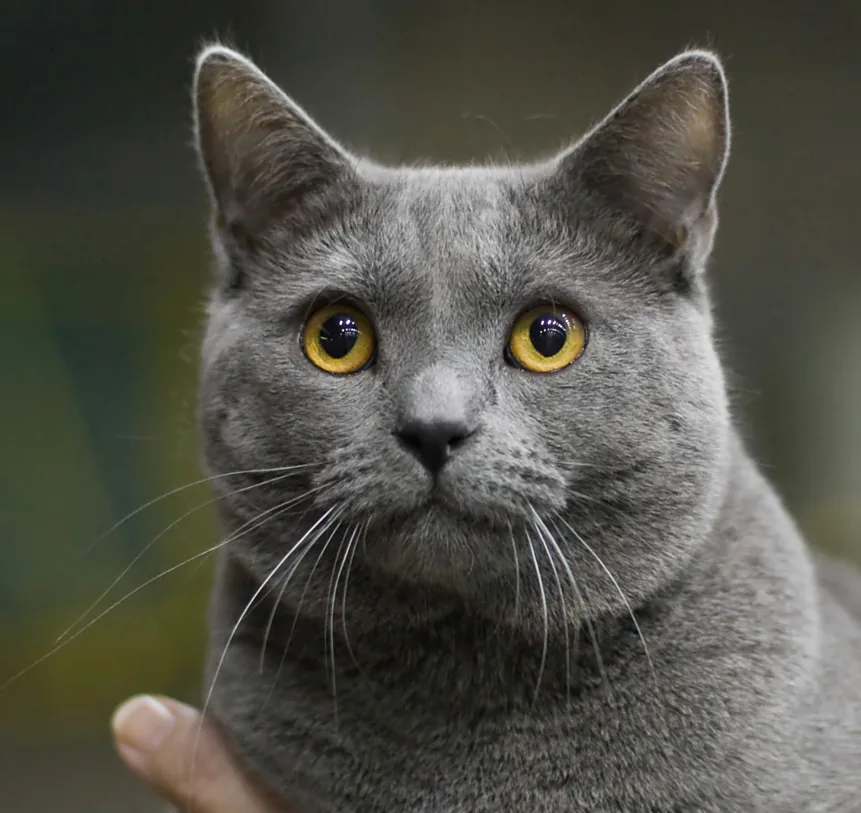
Chartreux
Chartreux cost is shaped by a solid, muscular body under a woolly blue double coat, a combination that eats and sheds more than a lean cat but stays cheap to groom thanks to a self-maintaining texture. Most owners spend near $2,370 in the first year for the kitten, vaccines, and setup gear. After that, budget roughly $1,060 a year, about $88 a month.
Acquisition, surgical desexing, initial vet series, and starter hardware.
Normalized baseline at ~$88/month routine cash burn.
Projected over a 14-year Chartreux lifespan.
$2,000 Liquid Reserve Mandate
Critical bufferA documented orthopedic predisposition combined with a heavy-boned build's obesity and urinary tract risk pushes recurring cost above breed-average.
Source: MetLife True Cost of Pet Emergencies 2025 (15% of owners hit $3,000+; uninsured surgery $3,000–8,000)
Biometric & phenotypic actuarial spec
Annual Cash Burn Matrix ($1,060/yr)
Continuous operational expenditure distributed across 5 core maintenance categories, indexed to metabolic demand and regional clinical rates.
Food
Vet Care
Grooming
Pet Insurance
Supplies & Toys
Upfront Entry CapEx
Purchase / Adoption Fee ($800), Initial Vet Visit & Vaccinations ($300), Starter Supplies ($260), Litter & Behavior Basics ($40), First Year Food ($222), First Year Vet Care ($286), First Year Grooming ($60), First Year Insurance ($402).
Comprehensive Lifecycle Ledger
Audited financial breakdown distinguishing immediate first-year fixed capitalization from ongoing annualized operating liabilities over the full 12–16 yrs feline lifespan.
| Expenditure Category | Year 01 Outlay | Annual Steady-State | Lifetime Total | Actuarial Sizing Methodology |
|---|---|---|---|---|
| Purchase / Adoption Fee | $800 | — | $800 | Varies by breeder vs rescue |
| Initial Vet Visit & Vaccinations | $300 | — | $300 | Spay/neuter, microchip, health check |
| Starter Supplies | $260 | — | $260 | Litter box, scratching post, carrier, bowls |
| Litter & Behavior Basics | $40 | — | $40 | Litter box training, scratching post basics |
| First Year Food | $222 | — | $222 | — |
| First Year Vet Care | $286 | — | $286 | — |
| First Year Grooming | $60 | — | $60 | — |
| First Year Insurance | $402 | — | $402 | — |
| Food | — | $222 | $3,108 | — |
| Vet Care | — | $286 | $4,004 | — |
| Grooming | — | $60 | $840 | — |
| Pet Insurance | — | $402 | $5,628 | — |
| Supplies & Toys | — | $90 | $1,260 | — |
| Gross Actuarial Expenditure | $2,370 | $1,060 / yr | $16,150 | Unadjusted baseline |
Actuarial Health Risk Profile (Tier 4)
A documented orthopedic predisposition combined with a heavy-boned build's obesity and urinary tract risk pushes recurring cost above breed-average.
Patellar Luxation
A kneecap that slips out of its groove, documented in Chartreux lines, ranging from an occasional skip to a gait that needs surgical correction.
Obesity
A robust, heavy-boned build combined with a hearty appetite makes weight gain easy without portion control, adding joint and metabolic strain over time.
Feline Lower Urinary Tract Disease
A cluster of bladder and urethral conditions common in stocky, less active cats that can cause painful, sometimes urgent, urinary blockages.
What Truly Drives the Chartreux’s Financial Profile
About the Chartreux and its cost
Chartreux cost reflects a centuries-old French breed built for a dense, water-resistant double coat and a stocky, muscular frame that can run notably heavier than most medium cats. The wool-like coat resists matting and needs only routine brushing, which keeps grooming spend lower than the coat's plush appearance might suggest. Because the breed is uncommon outside dedicated cattery circles, purchase prices sit above an average shorthair but below the rarest breeds. Its calm, quiet temperament and modest exercise needs mean toys and enrichment are a smaller budget line than for a high-energy breed.
What drives Chartreux costs
A documented predisposition to patellar luxation means some individuals develop a skipping gait that, at its more severe grades, needs surgical correction, a cost worth planning around even if most cats never need it. The breed's heavy, muscular build combined with a hearty appetite makes weight gain easy, and excess weight compounds both the joint strain from luxation and the risk of urinary tract disease common in less active, stocky cats. None of these conditions affect grooming, which stays inexpensive thanks to the coat's dense but low-maintenance texture.
Chartreux first-year budget
Year one starts with $800 to the breeder, plus $300 for vaccines, deworming, and spay or neuter. Starter supplies including a sturdy litter box sized for a larger cat add $260, and $40 stays minimal. One-time setup lands near $1,400. Add the first year of $222 for a heavy frame, $286 visits, $60 for the double coat, and $402 for a recurring $970, bringing the full year to $2,370.
Chartreux yearly cost after year one
Ongoing costs run through $222 portioned to manage the breed's weight-gain tendency, an annual exam plus any orthopedic follow-up under $286, seasonal $60, $402, and $90 for litter and a water fountain to support urinary health. Together these total roughly $1,060 a year, or $88 a month. Routine wellness exams, parasite prevention, and litter or supply restocking make up the bulk of this steady-state figure, and owners who keep $402 active convert one unpredictable expense into a fixed monthly line instead.
Emergency fund for a Chartreux
Given the breed's documented patellar luxation risk and its tendency toward weight-related urinary tract disease, an $2,000 reserve should be sized for an orthopedic surgery or a urinary blockage, both of which can require urgent, same-day treatment. Across a full lifespan, this risk profile supports a $16,150 for total ownership. A cash cushion matters because a urinary blockage in particular can become an emergency within hours.
Cutting Chartreux costs
Weight management is the highest-leverage saving available, since it directly reduces both the joint strain from patellar luxation and the risk of urinary tract disease, the breed's two biggest cost drivers. Adding a water fountain is a small upfront cost that meaningfully lowers urinary crystal risk. Enrolling in insurance while the cat is young protects the $16,150 outlook against an orthopedic surgery becoming a pre-existing exclusion, and since grooming is already inexpensive, there's little further to trim there.
5 Prudent Ways to Cut Chartreux Costs
Ask about patellar screening in the line
A responsible breeder can share whether the kitten's parents have been checked for kneecap stability. Screening doesn't guarantee an unaffected cat, but it lowers the odds of an expensive orthopedic surgery later.
Measure every meal for this heavy-boned breed
The Chartreux gains weight easily, and extra pounds worsen both patellar luxation and urinary tract risk. A kitchen scale for food is a cheap habit that reduces two cost drivers at once.
Add a water fountain to encourage hydration
Better hydration lowers urinary crystal formation, a key contributor to feline lower urinary tract disease. A modest one-time purchase can meaningfully cut the odds of an emergency vet visit.
Brush weekly during coat changes
The dense double coat sheds more heavily during seasonal transitions. A weekly brushing session during those windows prevents mats without needing a professional groomer.
Insure before any lameness is noted
Once a vet documents a skipping gait or knee instability, it becomes a pre-existing exclusion. Enrolling in $402 while the kitten is still healthy protects against the breed's costliest known risk.
Peer Class Financial Comparisons
How the Chartreux compares to morphological peers on annualized ownership cost.
Chartreux
Frequently Asked Financial Questions
How much does a Chartreux cat cost?
Why are Chartreux cats so expensive?
How much does it cost to own a Chartreux?
What is the average price of a Chartreux kitten?
Are Chartreux cats expensive to maintain?
How much does Chartreux pet insurance cost?
Do Chartreux cats gain weight easily?
How much does it cost to feed a Chartreux?
Data sources
- Feline Lower Urinary Tract Disease — Cornell Feline Health Center (vet.cornell.edu)
- Chartreux — Wikipedia (en.wikipedia.org)
- Pet Care Resources — American Veterinary Medical Association (avma.org)
Calculate Your Chartreux Cost Adjusted by Metro ZIP Code
Veterinary surgical tariffs and clinical room rates vary widely between metropolitan regions and rural counties. Recalculate this dossier with your exact state, city, and lifestyle parameters.