
How Much Does a Curly-Coated Retriever Cost Per Year?
Curly-coated retriever cost planning has to look beyond the puppy price to a large, deep-chested gundog with a genuine bloat risk and several inherited conditions to screen for. First-year spending runs near $5,338, settling to about $2,893 a year afterward, or roughly $241 a month. Across a full lifespan, total ownership approaches $34,268.
Executive cost summary
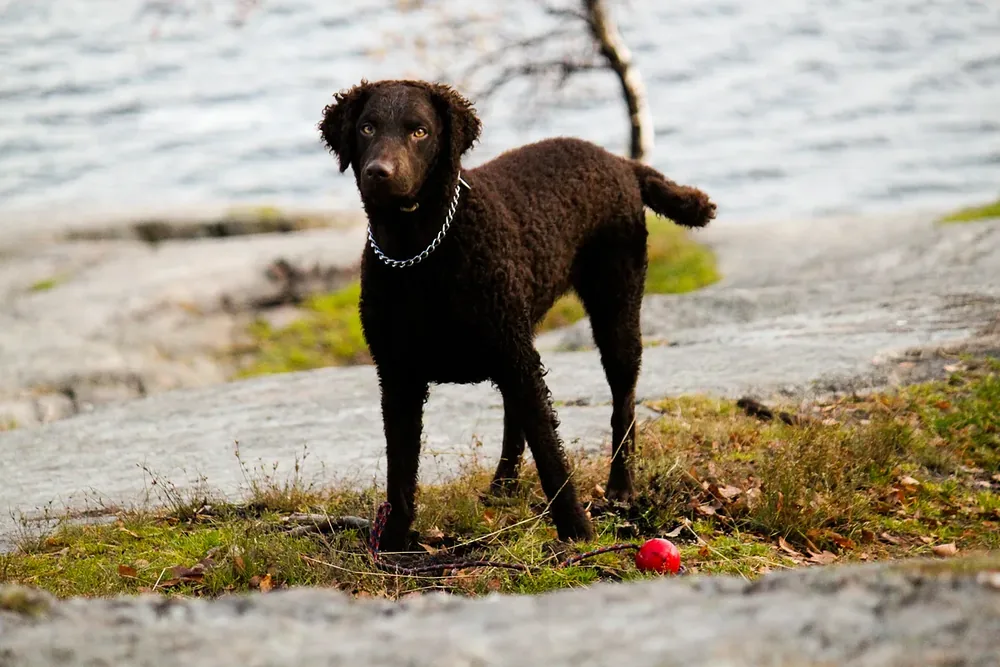
Curly-Coated Retriever
Curly-coated retriever cost planning has to look beyond the puppy price to a large, deep-chested gundog with a genuine bloat risk and several inherited conditions to screen for. First-year spending runs near $5,338, settling to about $2,893 a year afterward, or roughly $241 a month. Across a full lifespan, total ownership approaches $34,268.
Acquisition, surgical desexing, initial vet series, and starter hardware.
Normalized baseline at ~$241/month routine cash burn.
Projected over a 11-year Curly-Coated Retriever lifespan.
$4,000 Liquid Reserve Mandate
Critical bufferThe deep-chested build carries a life-threatening bloat risk while breed-linked hip dysplasia, progressive retinal atrophy, and epilepsy add recurring diagnostic and treatment costs on top.
Source: MetLife True Cost of Pet Emergencies 2025 (15% of owners hit $3,000+; uninsured surgery $3,000–8,000)
Biometric & phenotypic actuarial spec
What a Curly-Coated Retriever costs, year by year
Cumulative spend across a 11-year life in today's dollars, with the same curve at 3% and 8% yearly inflation. Year 1 carries the acquisition and setup bill.
- Food & nutrition
- Vet & insurance
- Grooming & coat
- Setup & sundries
- - - - at 3% inflation: $39,498
- · · · at 8%: $50,600
Where the big bills land
Bars are routine one-off vet events (vaccine boosters, dental cleanings, bloodwork, spay/neuter). Diamonds are sourced condition treatments for this breed.
80th percentile
67th percentile
Ranked against 265 other dog breeds in this directory.
View as a table
| Year | Spend | Cumulative | Routine vet events |
|---|---|---|---|
| 1 | $5,338 | $5,338 | $751 |
| 2 | $2,893 | $8,231 | $77 |
| 3 | $2,893 | $11,124 | $543 |
| 4 | $2,893 | $14,017 | $164 |
| 5 | $2,893 | $16,910 | $620 |
| 6 | $2,893 | $19,803 | $164 |
| 7 | $2,893 | $22,696 | $543 |
| 8 | $2,893 | $25,589 | $405 |
| 9 | $2,893 | $28,482 | $707 |
| 10 | $2,893 | $31,375 | $328 |
| 11 | $2,893 | $34,268 | $784 |
- Gastric dilatation-volvulus (bloat): about $4,750 once, from year 11 (MetLife Pet Insurance, Bloat in Dogs (metlifepetinsurance.com/blog/pet-health/bloat-in-dogs), 2026-09, medium confidence)
Annual Cash Burn Matrix ($2,893/yr)
Continuous operational expenditure distributed across 5 core maintenance categories, indexed to metabolic demand and regional clinical rates.
Food
Source: Derived: veterinary MER formula + mid-tier dry kibble price (2026-01)
Vet Care
Source: Modeled estimate, not a sourced figure. Category basis: ASPCA / AAHA routine wellness composite (annual exam, vaccines, parasite control) x size 1.06 x risk 1.1 (2026-01)
Grooming
Source: Modeled estimate, not a sourced figure. Category basis: Rover / PetSmart service menu, short-coat baseline (grooming rating 2) x coat 1 (2026-01)
Pet Insurance
Source: Derived: NAPHIA State of the Industry 2025 (2024 data), accident & illness dog average x size 1.08 x risk 1.18 (2026-01)
Supplies & Toys
Source: Derived: Synchrony Pet Lifetime of Care 2025 (toy replacement $50–150/yr) plus routine consumables x size 1.15 (2026-01)
Upfront Entry CapEx
Purchase / Adoption Fee ($1,100), Initial Vet Visit & Vaccinations ($700), Starter Supplies ($546), Training Classes ($260), First Year Food ($812), First Year Vet Care ($770), First Year Grooming ($195), First Year Insurance ($955).
Comprehensive Lifecycle Ledger
Audited financial breakdown distinguishing immediate first-year fixed capitalization from ongoing annualized operating liabilities over the full 9–14 yrs canine lifespan.
| Expenditure Category | Year 01 Outlay | Annual Steady-State | Lifetime Total | Actuarial Sizing Methodology |
|---|---|---|---|---|
| Purchase / Adoption Fee | $1,100 | — | $1,100 | Varies by breeder vs rescue |
| Initial Vet Visit & Vaccinations | $700 | — | $700 | Spay/neuter, microchip, health check |
| Starter Supplies | $546 | — | $546 | Bed, crate, collar, bowls, toys |
| Training Classes | $260 | — | $260 | Basic obedience recommended |
| First Year Food | $812 | — | $812 | — |
| First Year Vet Care | $770 | — | $770 | — |
| First Year Grooming | $195 | — | $195 | — |
| First Year Insurance | $955 | — | $955 | — |
| Food | — | $812 | $8,932 | — |
| Vet Care | — | $770 | $8,470 | — |
| Grooming | — | $195 | $2,145 | — |
| Pet Insurance | — | $955 | $10,505 | — |
| Supplies & Toys | — | $161 | $1,771 | — |
| Gross Actuarial Expenditure | $5,338 | $2,893 / yr | $34,268 | Unadjusted baseline |
Actuarial Health Risk Profile (Tier 4)
The deep-chested build carries a life-threatening bloat risk while breed-linked hip dysplasia, progressive retinal atrophy, and epilepsy add recurring diagnostic and treatment costs on top.
Gastric dilatation-volvulus (bloat)
The deep, narrow chest lets a gas-filled stomach twist on itself, a same-day surgical emergency that is often fatal without immediate treatment.
- Typical treatment cost (one-time)
- $2,000–$7,500
Typically appears at age 9–12
medium confidence · MetLife Pet Insurance, Bloat in Dogs, 2026-09
Hip Dysplasia
Malformed hip joints that wear unevenly, causing arthritis and lameness that can require lifelong management or surgical correction.
- Typical treatment cost (one-time)
- $7,000–$9,000
medium confidence · Iowa State University Lloyd Veterinary Medical Center, Total Hip Replacement, 2026-09
Progressive retinal atrophy (PRA)
An inherited, breed-associated eye disease that gradually degrades the retina and leads to blindness, needing specialist ophthalmic monitoring.
Epilepsy
Recurrent seizures with no identifiable cause, requiring lifelong anticonvulsant medication and periodic bloodwork to monitor drug levels.
Typically appears at age 0.5–6
medium confidence
Costs are typical for the condition in general, not specific to the Curly-Coated Retriever. See the Curly-Coated Retriever cost timeline
What Truly Drives the Curly-Coated Retriever’s Financial Profile
About the Curly-Coated Retriever and its cost
Curly-coated retriever cost starts with a rare, tall gundog bred to retrieve waterfowl through cold water and heavy cover, distinguished by a dense mat of tight curls rather than the feathered coat of other retrievers. The breed is reserved with strangers, confident, and independent compared with its retriever cousins, which shapes training needs. Litters are uncommon, so a health-tested puppy from a screening breeder commands a real price, while rescue placement is rarer still. Budget $1,100 at acquisition and $700 for the first veterinary series, plus $260 since this independent-minded dog benefits from structured early obedience work.
What drives Curly-Coated Retriever costs
Size is the first multiplier: a large, deep-chested dog eats more, needs bigger medication doses, and pays higher surgical and boarding fees than a mid-size breed. The bigger driver is the health profile. The narrow, deep chest carries a genuine bloat risk that can mean emergency surgery with almost no warning, hip dysplasia can progress to costly joint disease, and the breed carries an above-average rate of progressive retinal atrophy and epilepsy, both needing specialist follow-up and, for epilepsy, lifelong medication. These conditions push vet bills and insurance pricing above what a typical large-breed owner expects, even though the tight curls themselves need very little grooming.
Tight curls, deep chest
The Curly-Coated Retriever weighs 60 to 95 pounds and carries a coat of tight curls that sheds little but should not be brushed out, only wetted and lightly combed. The deep, narrow chest raises bloat risk, a same-day surgical emergency, and hip dysplasia is the joint risk. Progressive retinal atrophy and epilepsy are the other inherited issues; epilepsy means lifelong medication. Curlies are independent and slow to mature, so training takes time. Annual cost is $2,893 and lifetime $34,268.
Curly-Coated Retriever first-year budget
The first year splits into setup and recurring lines. One-time costs are $1,100 for the puppy, $700 for the initial exam, vaccine series, and spay or neuter, $546 for a large crate, bed, and bowls, and $260 for structured obedience given this independent-minded breed. Those sum to $2,606. First-year recurring costs add $812 for large-breed food, $770 for follow-up visits and parasite prevention, $195 for at-home coat upkeep, and $955 for an accident-and-illness policy, totaling $2,732. Combined, plan for $5,338, weighted toward setup before any illness costs appear.
Curly-Coated Retriever yearly cost after year one
Once grown and settled, yearly spending steadies near $2,893, about $241 a month. Food is a leading line at $812 since a large, active gundog eats more than a mid-size breed. Insurance at $955 follows closely and typically rises with age given the breed's surgical and chronic-condition risk. Routine veterinary care runs $770 for a wellness exam, bloodwork, and preventives, with eye and neurologic checks folded in as the dog ages. Grooming stays low at $195 thanks to the low-shed curls, and $161 covers replacement bedding, chews, and toys.
Emergency fund for a Curly-Coated Retriever
Keep $4,000 in a dedicated reserve from the day the dog comes home. The tier-driving risks here strike with little warning: gastric dilatation-volvulus needs surgery within hours of onset, hip dysplasia can eventually require joint surgery, and a seizure disorder can mean an emergency neurology visit plus a lifetime of medication. Any single one of these can consume a large share of the $34,268 lifetime total in one year, so a funded reserve or a low insurance deductible matters more than it does for a lower-risk breed.
Cutting Curly-Coated Retriever costs
The biggest lifetime savings come from prevention rather than discounts. Choosing a puppy from hip- and eye-tested parents lowers the odds of the expensive interventions that inflate the $34,268 total. Learning bloat prevention and acting fast on early signs can be the difference between a bill and a loss. Keeping the dog lean protects joints and trims the food bill, the largest recurring line, while insuring early converts unpredictable surgery costs into a steady piece of $241. Handling the minimal grooming at home rather than paying a groomer keeps $2,893 from climbing for no health benefit.
5 Prudent Ways to Cut Curly-Coated Retriever Costs
Buy only from health-tested lines
Ask for OFA hip results and current eye clearances (CERF/OFA eye exam) on both parents before committing to a puppy. Because litters are scarce, it can be tempting to skip screening, but doing so raises the odds of paying for the exact conditions this breed is prone to.
Insure before any diagnosis
Enroll your Curly-Coated Retriever in accident-and-illness coverage as a young, healthy puppy so hips, eyes, and seizure activity are not later excluded as pre-existing. A high per-condition cap matters more than a low premium given the breed's surgical risks.
Learn bloat prevention and warning signs
Feed smaller meals from a floor-level bowl, avoid vigorous exercise right after eating, and know the signs of unproductive retching and a distending abdomen. Discuss a preventive gastropexy during any planned abdominal surgery, since acting within the first hour often determines the outcome.
Keep your dog lean and active
A visible waist and daily exercise reduce joint load and support cardiovascular health, cutting the odds of early arthritis and trimming lifetime food volume. Weight management is one of the cheapest tools available against this breed's orthopedic risk.
Schedule annual eye and neurologic checks
Routine ophthalmologic exams catch progressive retinal atrophy early, and a baseline neurologic exam gives your vet something to compare against if seizures ever appear. Catching either condition sooner keeps management costs lower and more predictable.
Peer Class Financial Comparisons
How the Curly-Coated Retriever compares to morphological peers on annualized ownership cost.
Curly-Coated Retriever
Frequently Asked Financial Questions
How much does a curly-coated retriever cost per month?
Is a curly-coated retriever expensive to own?
What are the yearly costs of owning a curly-coated retriever?
How much are curly-coated retriever vet bills?
Do curly-coated retrievers need pet insurance?
How much does a curly-coated retriever puppy cost?
Do curly-coated retrievers need professional grooming?
What is the lifetime cost of owning a curly-coated retriever?
Does a curly-coated retriever shed a lot?
Is a curly-coated retriever hypoallergenic?
Where do I find curly-coated retriever breeders or puppies for sale?
Should a Curly-Coated Retriever be brushed?
Are Curly-Coated Retrievers prone to epilepsy?
Data sources
- Curly-Coated Retriever — American Kennel Club (akc.org)
- Bloat in Dogs (Gastric Dilatation and Volvulus) — VCA Animal Hospitals (vcahospitals.com)
- Curly-Coated Retriever — Wikipedia (en.wikipedia.org)
- Curly-Coated Retriever Club of America — CCRCA (ccrca.org)
Calculate Your Curly-Coated Retriever Cost Adjusted by Metro ZIP Code
Veterinary surgical tariffs and clinical room rates vary widely between metropolitan regions and rural counties. Recalculate this dossier with your exact state, city, and lifestyle parameters.