
How Much Does a Dutch Shepherd Cost Per Year?
Dutch Shepherd cost runs highest in the first year, when purchase price, vaccines, and training combine with steady food and vet bills. After that, $2,474 a year is the realistic baseline for an active working dog. Over a typical lifespan, owners should plan toward $31,943.
Executive cost summary
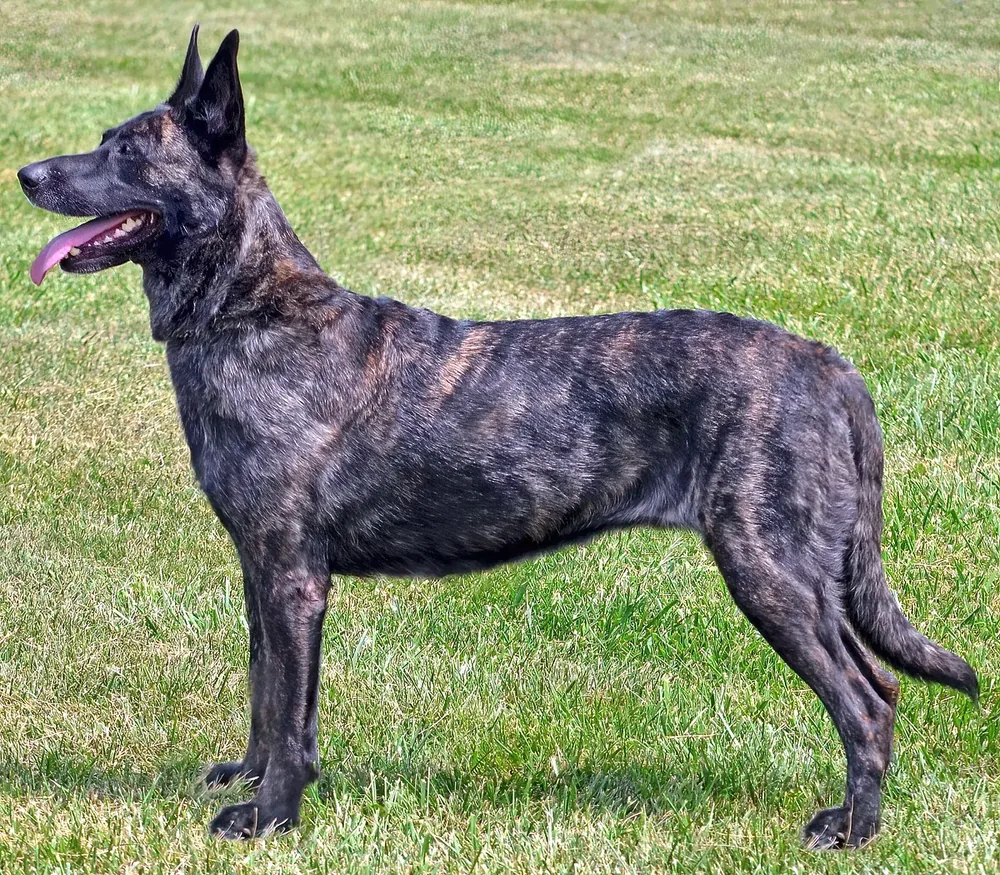
Dutch Shepherd
Dutch Shepherd cost runs highest in the first year, when purchase price, vaccines, and training combine with steady food and vet bills. After that, $2,474 a year is the realistic baseline for an active working dog. Over a typical lifespan, owners should plan toward $31,943.
Acquisition, surgical desexing, initial vet series, and starter hardware.
Normalized baseline at ~$206/month routine cash burn.
Projected over a 12-year Dutch Shepherd lifespan.
$3,000 Liquid Reserve Mandate
Critical bufferOrthopedic and neurological conditions common to active herding breeds create recurring but not extreme veterinary cost.
Source: MetLife True Cost of Pet Emergencies 2025 (15% of owners hit $3,000+; uninsured surgery $3,000–8,000)
Biometric & phenotypic actuarial spec
What a Dutch Shepherd costs, year by year
Cumulative spend across a 12-year life in today's dollars, with the same curve at 3% and 8% yearly inflation. Year 1 carries the acquisition and setup bill.
- Food & nutrition
- Vet & insurance
- Grooming & coat
- Setup & sundries
- - - - at 3% inflation: $37,366
- · · · at 8%: $49,204
Where the big bills land
Bars are routine one-off vet events (vaccine boosters, dental cleanings, bloodwork, spay/neuter). Diamonds are sourced condition treatments for this breed.
57th percentile
48th percentile
Ranked against 265 other dog breeds in this directory.
View as a table
| Year | Spend | Cumulative | Routine vet events |
|---|---|---|---|
| 1 | $4,729 | $4,729 | $735 |
| 2 | $2,474 | $7,203 | $77 |
| 3 | $2,474 | $9,677 | $543 |
| 4 | $2,474 | $12,151 | $164 |
| 5 | $2,474 | $14,625 | $620 |
| 6 | $2,474 | $17,099 | $164 |
| 7 | $2,474 | $19,573 | $543 |
| 8 | $2,474 | $22,047 | $241 |
| 9 | $2,474 | $24,521 | $871 |
| 10 | $2,474 | $26,995 | $328 |
| 11 | $2,474 | $29,469 | $784 |
| 12 | $2,474 | $31,943 | $328 |
- Elbow dysplasia: about $2,750 once, from year 2 (PetMD, Elbow Dysplasia in Dogs (petmd.com/dog/conditions/musculoskeletal/elbow-dysplasia-in-dogs), 2026-09, medium confidence)
Annual Cash Burn Matrix ($2,474/yr)
Continuous operational expenditure distributed across 5 core maintenance categories, indexed to metabolic demand and regional clinical rates.
Food
Source: Derived: veterinary MER formula + mid-tier dry kibble price (2026-01)
Vet Care
Source: Modeled estimate, not a sourced figure. Category basis: ASPCA / AAHA routine wellness composite (annual exam, vaccines, parasite control) x size 1 x risk 1 (2026-01)
Grooming
Source: Modeled estimate, not a sourced figure. Category basis: Rover / PetSmart service menu, short-coat baseline (grooming rating 2) x coat 1 (2026-01)
Pet Insurance
Source: Derived: NAPHIA State of the Industry 2025 (2024 data), accident & illness dog average x size 1 x risk 1 (2026-01)
Supplies & Toys
Source: Derived: Synchrony Pet Lifetime of Care 2025 (toy replacement $50–150/yr) plus routine consumables x size 1 (2026-01)
Upfront Entry CapEx
Purchase / Adoption Fee ($1,000), Initial Vet Visit & Vaccinations ($660), Starter Supplies ($475), Training Classes ($260), First Year Food ($730), First Year Vet Care ($660), First Year Grooming ($195), First Year Insurance ($749).
Comprehensive Lifecycle Ledger
Audited financial breakdown distinguishing immediate first-year fixed capitalization from ongoing annualized operating liabilities over the full 11–14 yrs canine lifespan.
| Expenditure Category | Year 01 Outlay | Annual Steady-State | Lifetime Total | Actuarial Sizing Methodology |
|---|---|---|---|---|
| Purchase / Adoption Fee | $1,000 | — | $1,000 | Varies by breeder vs rescue |
| Initial Vet Visit & Vaccinations | $660 | — | $660 | Spay/neuter, microchip, health check |
| Starter Supplies | $475 | — | $475 | Bed, crate, collar, bowls, toys |
| Training Classes | $260 | — | $260 | Basic obedience recommended |
| First Year Food | $730 | — | $730 | — |
| First Year Vet Care | $660 | — | $660 | — |
| First Year Grooming | $195 | — | $195 | — |
| First Year Insurance | $749 | — | $749 | — |
| Food | — | $730 | $8,760 | — |
| Vet Care | — | $660 | $7,920 | — |
| Grooming | — | $195 | $2,340 | — |
| Pet Insurance | — | $749 | $8,988 | — |
| Supplies & Toys | — | $140 | $1,680 | — |
| Gross Actuarial Expenditure | $4,729 | $2,474 / yr | $31,943 | Unadjusted baseline |
Actuarial Health Risk Profile (Tier 3)
Orthopedic and neurological conditions common to active herding breeds create recurring but not extreme veterinary cost.
Hip Dysplasia
A malformed hip joint that develops with growth and heavy exercise, common in working-line herding dogs of this size.
- Typical treatment cost (one-time)
- $7,000–$9,000
medium confidence · Iowa State University Lloyd Veterinary Medical Center, Total Hip Replacement, 2026-09
Elbow dysplasia
A group of developmental elbow abnormalities that can cause lifelong forelimb lameness in active, medium-to-large breeds.
- Typical treatment cost (one-time)
- $1,500–$4,000
Typically appears at age 0.5–6
medium confidence · PetMD, Elbow Dysplasia in Dogs, 2026-09
Degenerative myelopathy
A progressive spinal cord disease seen in herding breeds that gradually weakens the hind limbs later in life.
Typically appears around age 8
low confidence
Exercise-induced conditions
A high-drive working dog pushed hard in sport or protection work carries elevated risk of soft-tissue and joint strain injuries.
Costs are typical for the condition in general, not specific to the Dutch Shepherd. See the Dutch Shepherd cost timeline
What Truly Drives the Dutch Shepherd’s Financial Profile
About the Dutch Shepherd and its cost
Dutch Shepherd cost reflects a breed built for work, not the show ring, so most buyers pay a breeder for proven working lines rather than adopting through rescue. That upfront figure, $1,000, sits alongside $660 for the first round of vaccines and exams and $475 to outfit a crate, leash, and bedding suited to a strong, athletic dog. Because the breed is bred for drive and trainability, most new owners also budget $260 for structured obedience classes early on, which pays off in a dog that is easier and cheaper to manage for life. Combined, the one-time setup total is $2,395. Buyers who skip early training often pay more later in behavioral consults or destroyed property, so this line is one of the few worth treating as non-negotiable for this breed.
What drives Dutch Shepherd costs
Two things push Dutch Shepherd spending above a sedentary breed of similar size: activity level and joint risk. This is a medium-to-large dog bred for herding and protection work, so food costs, $730, run higher than a couch-oriented breed because of the calories a working dog burns. Orthopedic conditions like hip and elbow dysplasia are the main long-term cost drivers, which is why routine vet care, $660, and insurance, $749, matter more here than for lower-drive breeds. Grooming stays modest at $195 since the double coat is low-maintenance and mainly needs seasonal brushing. Owners who keep the dog lean, exercised appropriately, and screened early for joint issues tend to see fewer surprise bills across the dog's working lifetime.
Three coat types and a high-drive work ethic
The Dutch Shepherd comes in short, long and rough coat types. The bigger cost story is drive: a working dog pushed hard in sport or protection work faces soft-tissue and joint strain on top of hip and elbow dysplasia and degenerative myelopathy. Training and activity spending belong in the budget. Year one is $4,729, annual $2,474, lifetime about $31,943.
Dutch Shepherd first-year budget
The first year is the most expensive stretch of Dutch Shepherd ownership. Acquisition starts things off at $1,000, followed by $660 for the initial vaccine series, exam, and parasite prevention. New owners also typically spend $475 on a crate, leash, collar, and bedding sized for a growing athletic dog, plus $260 for foundational obedience work that this high-drive breed genuinely needs. Those one-time costs sum to $2,395. Layer on recurring first-year spending, food at $730, routine vet visits at $660, grooming at $195, and insurance at $749, which together make up the $2,334 recurring total. Combined, the full first-year figure lands at $4,729, the highest single year in the dog's lifetime unless a major medical event occurs later.
Dutch Shepherd yearly cost after year one
Once the puppy-year setup costs fall away, Dutch Shepherd ownership settles into a steadier rhythm. Food remains the largest recurring line at $730, reflecting the calorie needs of an athletic, working-bred dog. Routine veterinary care, $660, covers annual exams, vaccines, and preventives, while grooming stays modest at $195 thanks to a low-maintenance double coat. Insurance, $749, is worth keeping active given the breed's orthopedic risk profile. Add a smaller allowance for supplies and toys, $140, to replace worn gear for an active dog. Altogether these recurring lines total $2,474 a year, which breaks down to roughly $206 a month, a useful figure for budgeting a steady household expense.
Emergency fund for a Dutch Shepherd
Because hip dysplasia, elbow dysplasia, and degenerative myelopathy are the conditions most likely to drive a large unplanned bill in this breed, an emergency reserve matters more here than for a lower-risk breed. A fund of $3,000 gives an owner room to cover diagnostic imaging, orthopedic surgery, or extended medication without financial strain. This reserve is separate from routine annual spending and should be built up early, ideally before any joint symptoms appear, since orthopedic issues in working-line dogs can surface during the physically demanding years of adulthood. Viewed against the $31,943 lifetime estimate, the emergency fund is a small but important buffer that keeps one bad diagnosis from becoming a financial crisis rather than a manageable expense.
Cutting Dutch Shepherd costs
The clearest way to bend the $31,943 lifetime figure downward is to reduce the odds of an expensive orthopedic event, since that risk, not routine care, is what separates a cheap ownership experience from a costly one. Keeping the dog appropriately exercised without over-stressing developing joints, maintaining a lean body condition, and catching problems early through routine screening all reduce the chance of a five-figure surgical bill. On the recurring side, $2,474 a year and $206 a month are both manageable when insurance is active before symptoms appear, since claims on pre-existing conditions are typically denied. Buying from a health-tested breeder rather than an unscreened source is itself a savings strategy, lowering the statistical odds of the conditions that make this breed's ownership expensive in the first place.
5 Prudent Ways to Cut Dutch Shepherd Costs
Screen the parents before you buy
Ask for hip and elbow certifications on both parents before committing to a puppy. A breeder who screens reduces your odds of costly orthopedic surgery later.
Invest in training early
A structured obedience or sport program in year one is cheaper than fixing behavioral problems in a bored, under-exercised working dog. It also lowers the odds of injury from unstructured, unsupervised energy.
Match food to activity level, not size
Buy a performance-formula food suited to the dog's actual workload rather than defaulting to premium options built for sedentary breeds. This keeps the recurring food line under control without sacrificing condition.
Insure while young and healthy
Enroll before any joint symptoms appear, since pre-existing condition exclusions are the biggest reason owners end up paying out of pocket for orthopedic care later.
Keep weight lean through adulthood
Excess weight is one of the strongest modifiable risk factors for hip and elbow problems in this breed. A lean dog needs less orthopedic intervention over its lifetime.
Peer Class Financial Comparisons
How the Dutch Shepherd compares to morphological peers on annualized ownership cost.
Dutch Shepherd
Frequently Asked Financial Questions
How much does a dutch shepherd cost per month?
Is a dutch shepherd expensive to own?
What are the yearly costs of owning a dutch shepherd?
How much are dutch shepherd vet bills?
Do dutch shepherds need pet insurance?
How much does a dutch shepherd puppy cost from a breeder?
What is the lifetime cost of owning a dutch shepherd?
How much does dutch shepherd training cost?
Is a Dutch Shepherd more expensive than a Belgian Malinois?
What coat types does the Dutch Shepherd come in?
Does a Dutch Shepherd need a job?
Data sources
- Dutch Shepherd Breed Standard — American Kennel Club (akc.org)
- Section 3: Average Pet Insurance Premiums — NAPHIA (naphia.org)
- Dutch Shepherd — Wikipedia (en.wikipedia.org)
- Choosing a Responsible Dog Breeder — American Veterinary Medical Association (avma.org)
Calculate Your Dutch Shepherd Cost Adjusted by Metro ZIP Code
Veterinary surgical tariffs and clinical room rates vary widely between metropolitan regions and rural counties. Recalculate this dossier with your exact state, city, and lifestyle parameters.