
How Much Does a Greater Swiss Mountain Dog Cost Per Year?
Greater Swiss Mountain Dog cost is set by size: $6,068 covers the puppy, initial vetting, and the oversized gear a growing giant needs. Ongoing care settles near $268, mostly food, preventive medication, and insurance, since the short coat keeps grooming low. Budget $35,048 across a lifespan that is short for its size.
Executive cost summary
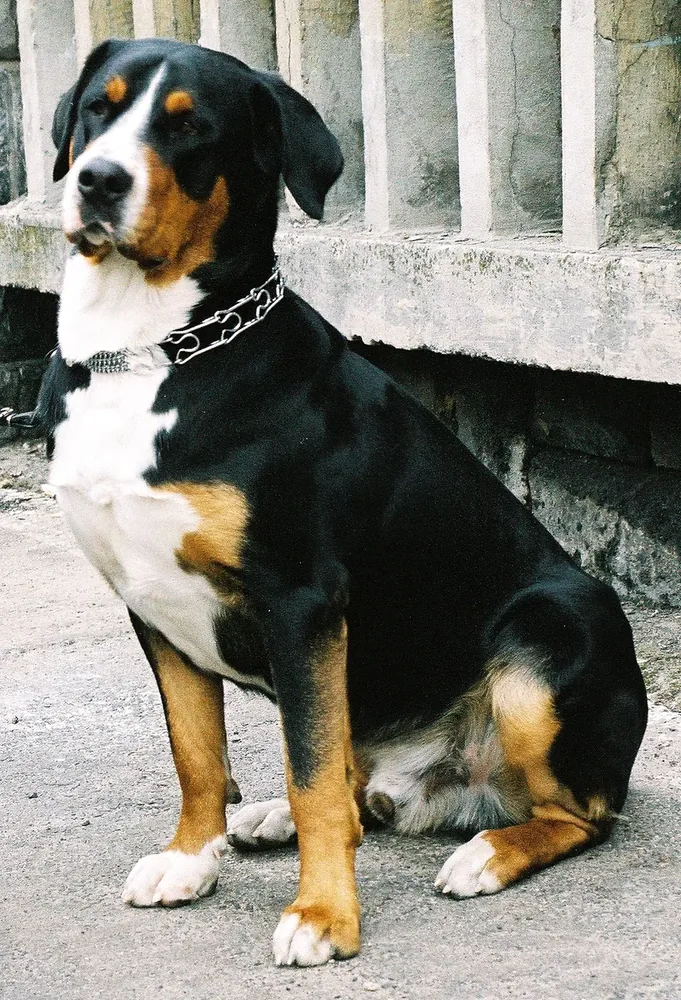
Greater Swiss Mountain Dog
Greater Swiss Mountain Dog cost is set by size: $6,068 covers the puppy, initial vetting, and the oversized gear a growing giant needs. Ongoing care settles near $268, mostly food, preventive medication, and insurance, since the short coat keeps grooming low. Budget $35,048 across a lifespan that is short for its size.
Acquisition, surgical desexing, initial vet series, and starter hardware.
Normalized baseline at ~$268/month routine cash burn.
Projected over a 10-year Greater Swiss Mountain Dog lifespan.
$5,000 Liquid Reserve Mandate
Critical bufferA giant, deep-chested frame carries bloat emergency risk and heavy-dog hip and elbow dysplasia with recurring cost, and a short lifespan concentrates the expensive years.
Source: MetLife True Cost of Pet Emergencies 2025 (15% of owners hit $3,000+; uninsured surgery $3,000–8,000)
Biometric & phenotypic actuarial spec
What a Greater Swiss Mountain Dog costs, year by year
Cumulative spend across a 10-year life in today's dollars, with the same curve at 3% and 8% yearly inflation. Year 1 carries the acquisition and setup bill.
- Food & nutrition
- Vet & insurance
- Grooming & coat
- Setup & sundries
- - - - at 3% inflation: $39,762
- · · · at 8%: $49,495
Where the big bills land
Bars are routine one-off vet events (vaccine boosters, dental cleanings, bloodwork, spay/neuter). Diamonds are sourced condition treatments for this breed.
91st percentile
74th percentile
Ranked against 265 other dog breeds in this directory.
View as a table
| Year | Spend | Cumulative | Routine vet events |
|---|---|---|---|
| 1 | $6,068 | $6,068 | $772 |
| 2 | $3,220 | $9,288 | $77 |
| 3 | $3,220 | $12,508 | $543 |
| 4 | $3,220 | $15,728 | $164 |
| 5 | $3,220 | $18,948 | $620 |
| 6 | $3,220 | $22,168 | $164 |
| 7 | $3,220 | $25,388 | $543 |
| 8 | $3,220 | $28,608 | $405 |
| 9 | $3,220 | $31,828 | $707 |
| 10 | $3,220 | $35,048 | $328 |
- Elbow dysplasia: about $2,750 once, from year 2 (PetMD, Elbow Dysplasia in Dogs (petmd.com/dog/conditions/musculoskeletal/elbow-dysplasia-in-dogs), 2026-09, medium confidence)
Annual Cash Burn Matrix ($3,220/yr)
Continuous operational expenditure distributed across 5 core maintenance categories, indexed to metabolic demand and regional clinical rates.
Food
Source: Derived: veterinary MER formula + mid-tier dry kibble price (2026-01)
Vet Care
Source: Modeled estimate, not a sourced figure. Category basis: ASPCA / AAHA routine wellness composite (annual exam, vaccines, parasite control) x size 1.14 x risk 1.1 (2026-01)
Grooming
Source: Modeled estimate, not a sourced figure. Category basis: Rover / PetSmart service menu, short-coat baseline (grooming rating 2) x coat 1 (2026-01)
Pet Insurance
Source: Derived: NAPHIA State of the Industry 2025 (2024 data), accident & illness dog average x size 1.2 x risk 1.18 (2026-01)
Supplies & Toys
Source: Derived: Synchrony Pet Lifetime of Care 2025 (toy replacement $50–150/yr) plus routine consumables x size 1.3 (2026-01)
Upfront Entry CapEx
Purchase / Adoption Fee ($1,400), Initial Vet Visit & Vaccinations ($752), Starter Supplies ($618), Training Classes ($260), First Year Food ($954), First Year Vet Care ($828), First Year Grooming ($195), First Year Insurance ($1,061).
Comprehensive Lifecycle Ledger
Audited financial breakdown distinguishing immediate first-year fixed capitalization from ongoing annualized operating liabilities over the full 8–11 yrs canine lifespan.
| Expenditure Category | Year 01 Outlay | Annual Steady-State | Lifetime Total | Actuarial Sizing Methodology |
|---|---|---|---|---|
| Purchase / Adoption Fee | $1,400 | — | $1,400 | Varies by breeder vs rescue |
| Initial Vet Visit & Vaccinations | $752 | — | $752 | Spay/neuter, microchip, health check |
| Starter Supplies | $618 | — | $618 | Bed, crate, collar, bowls, toys |
| Training Classes | $260 | — | $260 | Basic obedience recommended |
| First Year Food | $954 | — | $954 | — |
| First Year Vet Care | $828 | — | $828 | — |
| First Year Grooming | $195 | — | $195 | — |
| First Year Insurance | $1,061 | — | $1,061 | — |
| Food | — | $954 | $9,540 | — |
| Vet Care | — | $828 | $8,280 | — |
| Grooming | — | $195 | $1,950 | — |
| Pet Insurance | — | $1,061 | $10,610 | — |
| Supplies & Toys | — | $182 | $1,820 | — |
| Gross Actuarial Expenditure | $6,068 | $3,220 / yr | $35,048 | Unadjusted baseline |
Actuarial Health Risk Profile (Tier 4)
A giant, deep-chested frame carries bloat emergency risk and heavy-dog hip and elbow dysplasia with recurring cost, and a short lifespan concentrates the expensive years.
Gastric Dilatation and Volvulus (Bloat)
The stomach fills with gas and can twist in a deep-chested dog, a surgical emergency that needs treatment within hours.
Hip Dysplasia
A loose, malformed hip joint in a heavy, fast-growing dog leads to arthritis, long-term pain control, and sometimes hip surgery.
- Typical treatment cost (one-time)
- $7,000–$9,000
medium confidence · Iowa State University Lloyd Veterinary Medical Center, Total Hip Replacement, 2026-09
Elbow dysplasia
Abnormal elbow development causes front-leg lameness in growing large dogs and often ends in arthroscopic surgery and lifelong joint care.
- Typical treatment cost (one-time)
- $1,500–$4,000
Typically appears at age 0.5–6
medium confidence · PetMD, Elbow Dysplasia in Dogs, 2026-09
Entropion
The eyelid rolls inward and rubs the cornea, causing chronic irritation and ulcers until a surgeon tacks or trims the lid.
Costs are typical for the condition in general, not specific to the Greater Swiss Mountain Dog. See the Greater Swiss Mountain Dog cost timeline
What Truly Drives the Greater Swiss Mountain Dog’s Financial Profile
About the Greater Swiss Mountain Dog and its cost
Greater Swiss Mountain Dog cost is driven by size more than anything else. This is the largest of the four Swiss mountain breeds, a draft and farm dog built to pull carts and move cattle, and it eats, medicates, and boards like a giant. Puppies from health-testing breeders are pricey and often waitlisted, while the adoption fee at rescue is far lower, but the purchase price is a small slice of the total. The short double coat is easy to groom, so grooming stays cheap, and food, prevention, and insurance carry the budget. A shorter lifespan compresses those years, though each one is expensive.
What drives Greater Swiss Mountain Dog costs
Vet risk, not upkeep, sets the pace. Gastric dilatation and volvulus, known as bloat, is the defining emergency for deep-chested giants and can require surgery within hours. Hip and elbow dysplasia are common in heavy, fast-growing dogs and lead to imaging, joint supplements, and sometimes surgery. Splenic torsion, eyelid entropion, and urinary incontinence in spayed females add smaller recurring bills. Doses, anesthesia, and boarding all scale with body mass, so every vet bill is larger than it would be for a mid-sized dog. Insurance premiums for giant breeds also run above average for the same reason.
Elbows, eyelids and a draft dog's frame
The Greater Swiss Mountain Dog is a heavy, fast-growing 85 to 140 pound breed from draft-dog stock. Hip dysplasia is $7,000 to $9,000 per hip on this page's data and elbow dysplasia $1,500 to $4,000, both worsened by rapid growth, so a giant-breed puppy diet matters. Entropion rolls the eyelid inward and needs a surgeon to tack or trim it. Bloat is the deep-chest emergency. Annual cost is $3,220 over a typical 10-year life, for a lifetime of $35,048. The short double coat sheds but needs only weekly brushing.
Greater Swiss Mountain Dog first-year budget
The first year is front-loaded. $1,400 secures the puppy from a health-testing breeder, then $752 covers the vaccine series, spay or neuter, microchip, and early exams. $618 buys a large crate, a sturdy bed, heavy-duty leash and harness, and gear that must be replaced as the puppy outgrows it, and $260 pays for a puppy class that matters when an adolescent weighs as much as an adult person. Recurring lines stay large: $954 for large-breed puppy food, $828 for prevention and rechecks, $195 for baths and nail care, and $1,061 if you enroll early. One-time items total $3,030, recurring items $3,038, and the year lands at $6,068.
Greater Swiss Mountain Dog yearly cost after year one
Once setup is done, the Swissy settles into a steady pattern near $3,220 a year, or about $268 a month. $954 is the largest line because the dog is a heavy eater. $1,061 is the next fixed cost and the one most worth keeping. $828 covers an annual wellness exam, bloodwork as the dog ages, and joint monitoring. $195 stays modest thanks to the short coat, though seasonal shedding calls for good brushes and the occasional bath. $182 for replacement beds, chews, and cart or hiking gear rounds out the year. A surgery or bloat year sits on top of this baseline.
Emergency fund for a Greater Swiss Mountain Dog
Keep $5,000 set aside for this breed. The clearest trigger is bloat, where a twisted stomach needs same-day surgery, intensive care, and sometimes removal of a damaged spleen or stomach section. Hip or elbow dysplasia can also demand surgery and rehabilitation, and heavy dogs recover slowly. An eyelid procedure for entropion is a smaller draw on the reserve. Funding this account early keeps a single bad year from distorting the $35,048 you have planned for, and lets you choose a higher insurance deductible to lower monthly premiums.
Cutting Greater Swiss Mountain Dog costs
The biggest controllable lever is health risk, because one avoided surgery outweighs years of small savings. Buying from screened parents, having a gastropexy done alongside a spay or neuter, and keeping the dog lean all lower the odds of the bills that dominate a bad year. Feed measured portions of a suitable large-breed food, and buy in bulk to stabilize $3,220. Comparing insurance quotes each renewal can trim $268 without dropping coverage. Together these habits can shave a meaningful fraction off the $35,048 without cutting care quality.
6 Prudent Ways to Cut Greater Swiss Mountain Dog Costs
Ask for hip and elbow clearances
Buy only from a breeder who shares OFA hip and elbow results for both parents. Dysplasia is the biggest predictable orthopedic bill in this breed, and screened lines lower the odds. A higher purchase price is cheaper than one joint surgery.
Ask about a preventive gastropexy
A gastropexy tacks the stomach in place so it cannot twist, and it is often done during spay or neuter. Doing it then costs much less than emergency bloat surgery. Discuss it with your vet before the dog is fully grown.
Feed a large-breed puppy diet and keep the dog lean
Controlled growth protects developing joints, and excess weight speeds arthritis in a dog this heavy. Measured portions also keep the food line from creeping upward. Adult dogs kept trim tend to need less joint medication.
Insure early and pick a workable deductible
Enroll while the Swissy is young so hips, elbows, and eyes are not excluded as pre-existing. Compare annual limits carefully, because giant-breed claims can be large. A higher deductible lowers the premium if you also keep a reserve.
Buy food and prevention in bulk
Large bags and multi-dose preventive packs cost less per pound and per dose, and food is the biggest recurring line for this breed. Ask your vet about weight-based dosing options. Rotate chews and toys rather than replacing them constantly.
Compare against Bernese pricing before committing to a waitlist
"Greater swiss mountain dog vs bernese" is a top comparison search for this breed, and puppy pricing between the two runs similar. What differs is availability: Swissie litters are fewer and waitlists longer, so budget extra lead time rather than expecting a lower price to compensate.
Peer Class Financial Comparisons
How the Greater Swiss Mountain Dog compares to morphological peers on annualized ownership cost.
Greater Swiss Mountain Dog
Frequently Asked Financial Questions
How much does a greater swiss mountain dog cost per month?
Is a greater swiss mountain dog expensive to own?
What are the yearly costs of owning a greater swiss mountain dog?
How much are greater swiss mountain dog vet bills?
Do greater swiss mountain dogs need pet insurance?
How much is a Greater Swiss Mountain Dog puppy?
How much does a Greater Swiss Mountain Dog cost over its lifetime?
How much is a Greater Swiss Mountain Dog puppy compared with a Bernese Mountain Dog?
Do Greater Swiss Mountain Dogs need hip and elbow screening?
How long do Greater Swiss Mountain Dogs live?
Data sources
- Greater Swiss Mountain Dog Breed Information — American Kennel Club (akc.org)
- Greater Swiss Mountain Dog — Wikipedia (en.wikipedia.org)
- Cutting Pet Care Costs — ASPCA (aspca.org)
Calculate Your Greater Swiss Mountain Dog Cost Adjusted by Metro ZIP Code
Veterinary surgical tariffs and clinical room rates vary widely between metropolitan regions and rural counties. Recalculate this dossier with your exact state, city, and lifestyle parameters.