
Lykoi Cost & Ownership Dossier
Lykoi cat cost starts with a steep kitten price set by a still-small breeding population, then settles into a moderate ongoing budget built around skin care and warmth rather than chronic disease. Because so few catteries produce this natural mutation, $600 is the biggest lever in year one. After that, $77 covers food, routine vet visits, and the occasional skin-focused product.
Executive cost summary
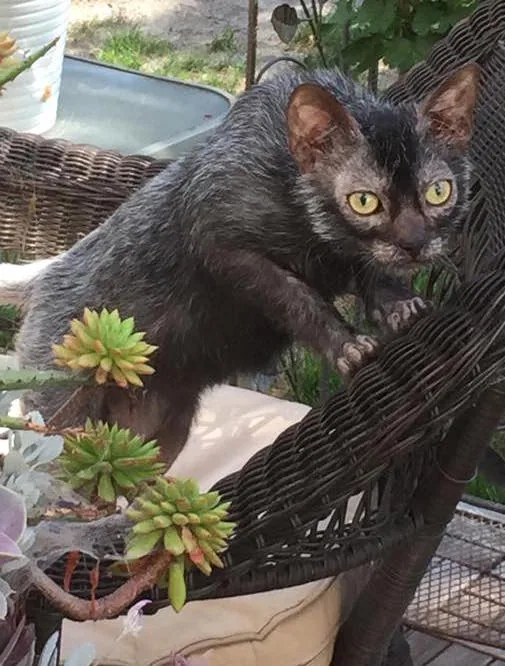
Lykoi
Lykoi cat cost starts with a steep kitten price set by a still-small breeding population, then settles into a moderate ongoing budget built around skin care and warmth rather than chronic disease. Because so few catteries produce this natural mutation, $600 is the biggest lever in year one. After that, $77 covers food, routine vet visits, and the occasional skin-focused product.
Acquisition, surgical desexing, initial vet series, and starter hardware.
Normalized baseline at ~$77/month routine cash burn.
Projected over a 13-year Lykoi lifespan.
$1,500 Liquid Reserve Mandate
Critical bufferThe Lykoi's thin, molting coat drives ongoing skin care and warmth management rather than one dominant costly syndrome.
Source: MetLife True Cost of Pet Emergencies 2025 (15% of owners hit $3,000+; uninsured surgery $3,000–8,000)
Biometric & phenotypic actuarial spec
Annual Cash Burn Matrix ($919/yr)
Continuous operational expenditure distributed across 5 core maintenance categories, indexed to metabolic demand and regional clinical rates.
Food
Vet Care
Grooming
Pet Insurance
Supplies & Toys
Upfront Entry CapEx
Purchase / Adoption Fee ($600), Initial Vet Visit & Vaccinations ($276), Starter Supplies ($239), Litter & Behavior Basics ($40), First Year Food ($194), First Year Vet Care ($239), First Year Grooming ($96), First Year Insurance ($307).
Comprehensive Lifecycle Ledger
Audited financial breakdown distinguishing immediate first-year fixed capitalization from ongoing annualized operating liabilities over the full 12–15 yrs feline lifespan.
| Expenditure Category | Year 01 Outlay | Annual Steady-State | Lifetime Total | Actuarial Sizing Methodology |
|---|---|---|---|---|
| Purchase / Adoption Fee | $600 | — | $600 | Varies by breeder vs rescue |
| Initial Vet Visit & Vaccinations | $276 | — | $276 | Spay/neuter, microchip, health check |
| Starter Supplies | $239 | — | $239 | Litter box, scratching post, carrier, bowls |
| Litter & Behavior Basics | $40 | — | $40 | Litter box training, scratching post basics |
| First Year Food | $194 | — | $194 | — |
| First Year Vet Care | $239 | — | $239 | — |
| First Year Grooming | $96 | — | $96 | — |
| First Year Insurance | $307 | — | $307 | — |
| Food | — | $194 | $2,522 | — |
| Vet Care | — | $239 | $3,107 | — |
| Grooming | — | $96 | $1,248 | — |
| Pet Insurance | — | $307 | $3,991 | — |
| Supplies & Toys | — | $83 | $1,079 | — |
| Gross Actuarial Expenditure | $1,991 | $919 / yr | $13,019 | Unadjusted baseline |
Actuarial Health Risk Profile (Tier 3)
The Lykoi's thin, molting coat drives ongoing skin care and warmth management rather than one dominant costly syndrome.
Patchy coat and skin sensitivity
The gene behind the Lykoi's sparse, roan-like coat also thins the skin's natural oil and hair barrier, so sunburn, dry patches, and minor skin infections come up more often than in a fully coated cat.
Thermoregulation Difficulty
With thin, patchy fur the Lykoi loses body heat faster than a normal-coated cat, which means a warmer indoor environment and closer monitoring in cold weather to avoid chills.
Limited gene pool health screening
Because the breed descends from a small number of founder cats, responsible breeders track for narrowing genetic diversity, which can surface as unpredictable minor immune or coat-cycling issues down the line.
What Truly Drives the Lykoi’s Financial Profile
About the Lykoi and its cost
The Lykoi cat cost reflects its status as one of the newest and rarest natural mutations in the cat fancy, first identified in feral litters in Virginia and Tennessee around 2010. Its partial hairlessness comes from a spontaneous gene affecting hair follicle growth, not from crossbreeding with the Sphynx. Because only a handful of breeders worldwide work with the line, kitten prices sit well above an average domestic shorthair, and buyers should expect a waitlist. Once home, a Lykoi behaves like an energetic, dog-like companion that follows its people from room to room, which keeps enrichment costs modest but skin and coat maintenance ongoing.
What drives Lykoi costs
Two things push the Lykoi's budget above a typical shorthair: the founder-population price tag on kittens, and the skin care that comes with a coat that molts in and out unpredictably. Owners often add sunscreen-safe window coverings, gentle moisturizing shampoos, and slightly warmer bedding, none of which is dramatic but all of which adds up. Because the breed is still building its health record, insurers may price policies cautiously, and a first-year visit for a skin check is common. Recurring costs otherwise track close to a small, short-haired cat.
Lykoi first-year budget
The first year for a Lykoi is dominated by $600, since kittens from the limited pool of breeders command a premium over an average shorthair. Add $276 for the standard kitten series and a first skin-focused wellness check, plus $239 for a litter box, carrier, and gentle grooming supplies suited to thin fur. $40 covers basic litter and scratch-post habituation. Together the $1,155 in one-time costs plus $836 in food, vet, and grooming bring the $1,991 total for year one well above a typical domestic cat, almost entirely because of the purchase price.
Lykoi yearly cost after year one
Once the kitten-year purchase cost is behind you, a Lykoi settles into a budget close to any small shorthair cat. $194 covers a quality diet, $239 handles annual exams plus the occasional skin check, and $96 pays for gentle shampoo and moisturizing wipes for the sparse coat. $307 is worth carrying given the breed's short health track record, and $83 keeps this active, people-focused cat mentally engaged. All together, $919 a year works out to roughly $77 a month.
Emergency fund for a Lykoi
A Lykoi's emergency risk centers on skin infections, sunburn, or a cold-related illness rather than a major organ syndrome, so a moderate $1,500 reserve is appropriate. Because replacing this cat is difficult given how few are bred each year, owners often keep a slightly larger cushion than the $13,019 average cat would need, simply to cover an unexpected dermatology referral without delay.
Cutting Lykoi costs
The biggest savings lever for a Lykoi is patience: waiting for an available litter from a direct breeder relationship avoids reseller markups that can inflate the purchase price further. After that, keeping the home at a stable temperature and using simple, fragrance-free skin products prevents small irritations from becoming vet visits. Over a $13,019 lifespan, consistent preventive care and an early insurance policy do more to control $77 spending than any single purchase decision.
5 Prudent Ways to Cut Lykoi Costs
Buy directly from a registered Lykoi breeder
Skip resellers marking up scarce kittens. A direct relationship with a founder-line breeder usually includes a health guarantee that offsets $276 surprises.
Invest once in skin-safe grooming products
A gentle, fragrance-free shampoo and a soft microfiber towel handle most Lykoi skin upkeep. Buying quality once beats repeated vet visits for irritation.
Keep the home consistently warm
A stable indoor temperature reduces the coat-related vet visits that come from a chilled or overheated Lykoi. This is cheaper than treatment after the fact.
Enroll in insurance while the cat is a kitten
Because the breed is new, insurers reward early enrollment before any skin issue becomes a pre-existing condition, keeping $307 lower over the cat's life.
Ask the breeder for a coat-cycling timeline
Lykoi coats shed in and out in patches; knowing what's normal avoids paying for unnecessary vet exams during a natural molt.
Peer Class Financial Comparisons
How the Lykoi compares to morphological peers on annualized ownership cost.
Lykoi
Frequently Asked Financial Questions
How much does a Lykoi cat cost?
Why are Lykoi cats so expensive?
Is a Lykoi cat expensive to own?
What are the yearly costs of owning a Lykoi cat?
Do Lykoi cats have health problems?
Do Lykoi cats need pet insurance?
How much do Lykoi kittens cost from a breeder?
Data sources
- Werewolf Cat — Wikipedia (en.wikipedia.org)
- Caring for Hairless Cat Breeds — VCA Animal Hospitals (vcahospitals.com)
- Feline Health Topics — Cornell Feline Health Center (vet.cornell.edu)
Calculate Your Lykoi Cost Adjusted by Metro ZIP Code
Veterinary surgical tariffs and clinical room rates vary widely between metropolitan regions and rural counties. Recalculate this dossier with your exact state, city, and lifestyle parameters.