
Minskin Cost & Ownership Dossier
Minskin cat cost is high from the outset because this hybrid breed, combining short legs with a nearly bare coat, is bred by only a small number of catteries worldwide. $600 reflects that scarcity, while $263 stays elevated year over year to cover skin care and joint monitoring tied to its dwarf frame. Total first-year spending reaches $2,003.
Executive cost summary
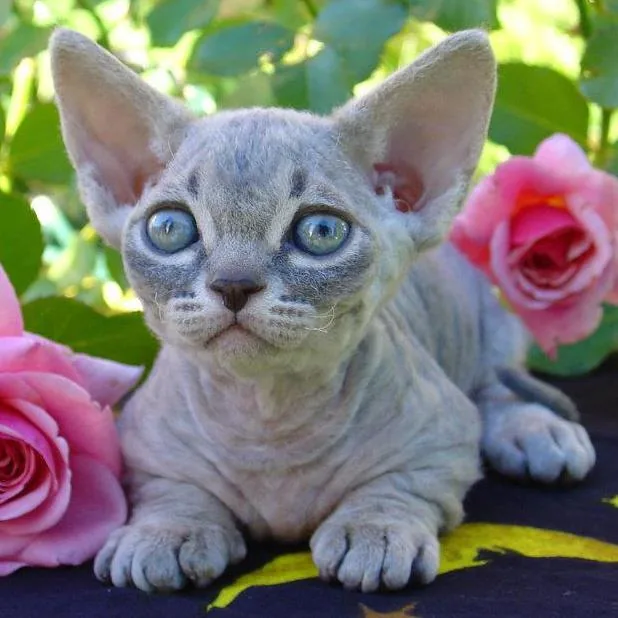
Minskin
Minskin cat cost is high from the outset because this hybrid breed, combining short legs with a nearly bare coat, is bred by only a small number of catteries worldwide. $600 reflects that scarcity, while $263 stays elevated year over year to cover skin care and joint monitoring tied to its dwarf frame. Total first-year spending reaches $2,003.
Acquisition, surgical desexing, initial vet series, and starter hardware.
Normalized baseline at ~$78/month routine cash burn.
Projected over a 13-year Minskin lifespan.
$1,500 Liquid Reserve Mandate
Critical bufferCombining the short-leg dwarfism gene with a near-hairless coat stacks skeletal and skin risk in one small-bodied breed.
Source: MetLife True Cost of Pet Emergencies 2025 (15% of owners hit $3,000+; uninsured surgery $3,000–8,000)
Biometric & phenotypic actuarial spec
Annual Cash Burn Matrix ($931/yr)
Continuous operational expenditure distributed across 5 core maintenance categories, indexed to metabolic demand and regional clinical rates.
Food
Vet Care
Grooming
Pet Insurance
Supplies & Toys
Upfront Entry CapEx
Purchase / Adoption Fee ($600), Initial Vet Visit & Vaccinations ($276), Starter Supplies ($239), Litter & Behavior Basics ($40), First Year Food ($127), First Year Vet Care ($263), First Year Grooming ($96), First Year Insurance ($362).
Comprehensive Lifecycle Ledger
Audited financial breakdown distinguishing immediate first-year fixed capitalization from ongoing annualized operating liabilities over the full 12–14 yrs feline lifespan.
| Expenditure Category | Year 01 Outlay | Annual Steady-State | Lifetime Total | Actuarial Sizing Methodology |
|---|---|---|---|---|
| Purchase / Adoption Fee | $600 | — | $600 | Varies by breeder vs rescue |
| Initial Vet Visit & Vaccinations | $276 | — | $276 | Spay/neuter, microchip, health check |
| Starter Supplies | $239 | — | $239 | Litter box, scratching post, carrier, bowls |
| Litter & Behavior Basics | $40 | — | $40 | Litter box training, scratching post basics |
| First Year Food | $127 | — | $127 | — |
| First Year Vet Care | $263 | — | $263 | — |
| First Year Grooming | $96 | — | $96 | — |
| First Year Insurance | $362 | — | $362 | — |
| Food | — | $127 | $1,651 | — |
| Vet Care | — | $263 | $3,419 | — |
| Grooming | — | $96 | $1,248 | — |
| Pet Insurance | — | $362 | $4,706 | — |
| Supplies & Toys | — | $83 | $1,079 | — |
| Gross Actuarial Expenditure | $2,003 | $931 / yr | $13,175 | Unadjusted baseline |
Actuarial Health Risk Profile (Tier 4)
Combining the short-leg dwarfism gene with a near-hairless coat stacks skeletal and skin risk in one small-bodied breed.
Skeletal issues from dwarfism
The short-legged achondroplasia gene that gives the Minskin its stature can also affect joint alignment and cartilage development, which may need orthopedic monitoring as the cat ages.
Skin sensitivity and sunburn
The Minskin's sparse, chamois-like coat with only fine fur at the points leaves most of its skin exposed, requiring the same sunburn precautions and moisturizing care as a fully hairless breed.
Thermoregulation Difficulty
With minimal insulating fur and a small body mass, the Minskin loses heat quickly, making it more prone to chills than a standard coated cat of the same size.
What Truly Drives the Minskin’s Financial Profile
About the Minskin and its cost
Minskin cat cost starts with its unusual origin story: bred deliberately starting in 1998 by crossing Munchkin, Sphynx, Devon Rex, and Burmese lines to combine short legs with a mostly hairless body. The result is one of the smallest cat breeds by adult size, with fur limited mostly to the face, ears, legs, and tail. Because so few breeders maintain the line, kitten prices sit at the high end of the cat fancy. Temperamentally the Minskin is highly social and people-focused, which keeps entertainment costs modest but makes skin and joint monitoring a real, recurring line item.
What drives Minskin costs
Two structural traits push cost above a typical small cat: the short-legged dwarfism gene, which can affect joint and cartilage development over time, and the sparse coat, which needs the same sun protection and moisturizing care as a hairless breed. Because the Minskin is a newer hybrid with a small population, breeders and insurers alike price conservatively around its still-developing health record. Owners typically spend more on climate control, skin products, and periodic orthopedic checkups than they would with an average shorthair of similar size.
Minskin first-year budget
Year one starts with $600 for a kitten from one of the few dedicated breeders, plus $276 for vaccines and an early joint and skin assessment. $239 covers a warm bed, gentle skin wipes, and a small litter box and carrier sized for this compact breed, while $40 handles basic litter and handling habituation. $1,155 in one-time costs and $848 in food, vet, and grooming bring the $2,003 total to one of the higher first-year figures among cat breeds, driven mainly by the purchase price.
Minskin yearly cost after year one
Ongoing costs stay above an average small cat's: $127 covers a portion-appropriate diet for its compact frame, $263 includes annual exams plus periodic orthopedic and skin checks, and $96 covers moisturizing wipes rather than brushing. $362 is worth carrying given the breed's combined dwarfism and skin risk, and $83 keeps this affectionate cat engaged. The total lands at $931 a year, or $78 a month.
Emergency fund for a Minskin
A Minskin's emergency risk splits between sudden joint or spinal changes tied to its dwarf frame and skin infections or sunburn from its sparse coat. A $1,500 reserve weighted toward orthopedic imaging and dermatology fits this breed better than a generic cushion, and given how hard the breed is to replace, many owners keep it toward the higher end relative to its $13,175 lifetime cost.
Cutting Minskin costs
The clearest saving is choosing a breeder who screens both the Munchkin and Sphynx sides of the pedigree, since that reduces the odds of a major skeletal or skin problem down the line. Keeping the home warm and stocking simple skin-care basics prevents small issues from becoming vet visits. Over a $13,175 lifespan, an early orthopedic baseline and consistent preventive care keep $78 spending as predictable as this rare breed allows.
5 Prudent Ways to Cut Minskin Costs
Choose a breeder who screens both parent lines
Because the Minskin combines Munchkin and Sphynx genetics, a breeder who screens for both skeletal and skin issues reduces the odds of a costly problem later.
Keep the home consistently warm
A stable indoor temperature protects a Minskin's sparse coat from chills, cutting down on cold-related vet visits.
Stock gentle, fragrance-free skin products
A basic moisturizing wipe routine prevents the dry skin and minor irritation that would otherwise require a dermatology visit.
Get a baseline orthopedic exam early
An early joint and spine check establishes what's normal for this dwarf body plan, so any future change is caught while it is still cheap to manage.
Buy directly from an established breeder
Given how few Minskin breeders exist, going direct avoids reseller markups that inflate an already premium purchase price.
Peer Class Financial Comparisons
How the Minskin compares to morphological peers on annualized ownership cost.
Minskin
Frequently Asked Financial Questions
How much does a Minskin cat cost?
Why are Minskin cats so expensive?
Is a Minskin cat expensive to own?
What are the yearly costs of owning a Minskin cat?
Do Minskin cats have health problems?
Do Minskin cats need pet insurance?
How much grooming does a Minskin cat need?
Data sources
- Minskin — Wikipedia (en.wikipedia.org)
- Caring for Hairless Cat Breeds — VCA Animal Hospitals (vcahospitals.com)
- Congenital and Hereditary Skin Disorders in Cats — Merck Veterinary Manual (merckvetmanual.com)
Calculate Your Minskin Cost Adjusted by Metro ZIP Code
Veterinary surgical tariffs and clinical room rates vary widely between metropolitan regions and rural counties. Recalculate this dossier with your exact state, city, and lifestyle parameters.