
Munchkin Cost & Ownership Dossier
Munchkin cat cost is driven by demand for its short-legged look rather than by exotic rarity, since the mutation appears in an otherwise ordinary domestic cat body. $600 runs above a standard shorthair because of that popularity, while $239 stays modestly elevated to monitor the spine and joints tied to the dwarfism gene. Expect $1,945 in year one.
Executive cost summary
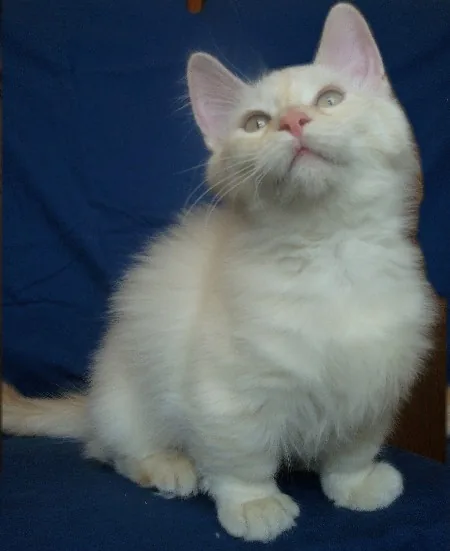
Munchkin
Munchkin cat cost is driven by demand for its short-legged look rather than by exotic rarity, since the mutation appears in an otherwise ordinary domestic cat body. $600 runs above a standard shorthair because of that popularity, while $239 stays modestly elevated to monitor the spine and joints tied to the dwarfism gene. Expect $1,945 in year one.
Acquisition, surgical desexing, initial vet series, and starter hardware.
Normalized baseline at ~$73/month routine cash burn.
Projected over a 13-year Munchkin lifespan.
$1,500 Liquid Reserve Mandate
Critical bufferThe achondroplasia-linked short legs create a moderate, ongoing orthopedic monitoring need rather than one universally severe defect.
Source: MetLife True Cost of Pet Emergencies 2025 (15% of owners hit $3,000+; uninsured surgery $3,000–8,000)
Biometric & phenotypic actuarial spec
Annual Cash Burn Matrix ($873/yr)
Continuous operational expenditure distributed across 5 core maintenance categories, indexed to metabolic demand and regional clinical rates.
Food
Vet Care
Grooming
Pet Insurance
Supplies & Toys
Upfront Entry CapEx
Purchase / Adoption Fee ($600), Initial Vet Visit & Vaccinations ($276), Starter Supplies ($239), Litter & Behavior Basics ($40), First Year Food ($184), First Year Vet Care ($239), First Year Grooming ($60), First Year Insurance ($307).
Comprehensive Lifecycle Ledger
Audited financial breakdown distinguishing immediate first-year fixed capitalization from ongoing annualized operating liabilities over the full 12–15 yrs feline lifespan.
| Expenditure Category | Year 01 Outlay | Annual Steady-State | Lifetime Total | Actuarial Sizing Methodology |
|---|---|---|---|---|
| Purchase / Adoption Fee | $600 | — | $600 | Varies by breeder vs rescue |
| Initial Vet Visit & Vaccinations | $276 | — | $276 | Spay/neuter, microchip, health check |
| Starter Supplies | $239 | — | $239 | Litter box, scratching post, carrier, bowls |
| Litter & Behavior Basics | $40 | — | $40 | Litter box training, scratching post basics |
| First Year Food | $184 | — | $184 | — |
| First Year Vet Care | $239 | — | $239 | — |
| First Year Grooming | $60 | — | $60 | — |
| First Year Insurance | $307 | — | $307 | — |
| Food | — | $184 | $2,392 | — |
| Vet Care | — | $239 | $3,107 | — |
| Grooming | — | $60 | $780 | — |
| Pet Insurance | — | $307 | $3,991 | — |
| Supplies & Toys | — | $83 | $1,079 | — |
| Gross Actuarial Expenditure | $1,945 | $873 / yr | $12,421 | Unadjusted baseline |
Actuarial Health Risk Profile (Tier 3)
The achondroplasia-linked short legs create a moderate, ongoing orthopedic monitoring need rather than one universally severe defect.
Lordosis and spinal curvature
The short-legged gene is linked in some Munchkins to an exaggerated inward curve of the spine, which can compress the chest cavity and, in severe cases, affect breathing or organ function.
Pectus Excavatum
A sunken breastbone shows up more often in short-legged breeds than average, and moderate to severe cases can need surgical correction in kittenhood.
Early-onset arthritis
The shortened limb bones alter gait and joint loading, which can bring on stiffness and mild arthritis earlier than in a standard-legged cat of similar age.
What Truly Drives the Munchkin’s Financial Profile
About the Munchkin and its cost
Munchkin cat cost reflects a breed defined by a single spontaneous gene mutation that shortens the leg bones while leaving the rest of the body proportionate to a standard cat. First formally recognized in 1991, the Munchkin remains controversial in some cat fancy circles over welfare concerns about the shortened limbs, which keeps prices high relative to its otherwise unremarkable body size and coat needs. In temperament the Munchkin is notably playful and curious, often described as moving more like a ferret than a typical cat, which keeps entertainment costs modest but favors low furniture and ramps over tall cat trees.
What drives Munchkin costs
The dwarfism gene is the main cost factor: it is linked in some individuals to spinal curvature, a sunken chest, and earlier joint wear than a standard-legged cat. Responsible breeders avoid pairing two short-legged parents, since that combination raises the odds of more severe skeletal problems, and that careful breeding adds to kitten price. Otherwise, the Munchkin's short coat and average size keep food and grooming costs close to a typical domestic shorthair, so cost pressure concentrates in orthopedic monitoring rather than daily care.
Munchkin first-year budget
The first year includes $600 for a kitten from a breeder avoiding risky dwarf-to-dwarf pairings, $276 for the vaccine series and a spine and gait check, and $239 for a low-sided litter box, ramps, and a carrier. $40 covers basic litter and play habituation for this energetic breed. $1,155 in one-time costs plus $790 in food and vet care bring the $1,945 total to a level above an average shorthair but below the rarer hybrid breeds.
Munchkin yearly cost after year one
Ongoing costs track close to a standard shorthair: $184 for an appropriately portioned diet, $239 for annual exams with attention to gait and spinal alignment, and $60 for routine short-coat brushing. $307 adds a safety net for orthopedic issues, and $83 keeps this playful cat entertained with low-impact toys and ramps. The total comes to $873 a year, or $73 a month.
Emergency fund for a Munchkin
A Munchkin's emergency risk centers on the spine and chest: a sudden change in gait, breathing, or posture warrants prompt imaging given the breed's dwarfism-linked risk. A moderate $1,500 reserve, sized similarly to the breed's $12,421 lifetime cost, covers most plausible orthopedic scenarios without over-preparing for conditions this breed rarely develops. Cats are skilled at masking pain, so sudden lethargy, appetite loss, or vomiting deserves an urgent vet visit rather than a wait-and-see approach, since catching a problem early is almost always cheaper than treating it once it has progressed.
Cutting Munchkin costs
The most effective saving is choosing a breeder who pairs a short-legged parent with a standard-legged one, since that single decision meaningfully lowers the odds of severe skeletal problems. Ramps instead of tall furniture and consistent weight management also reduce joint stress over time. Across a $12,421 lifespan, these low-cost habits do more to control $73 spending than any single product purchase.
5 Prudent Ways to Cut Munchkin Costs
Buy from a breeder who avoids dwarf-to-dwarf pairings
Breeding a short-legged Munchkin to a standard-legged cat produces healthier litters than pairing two short-legged parents. This single choice reduces long-term orthopedic risk.
Provide ramps instead of tall jumps
Low ramps and steps protect the Munchkin's shortened limbs from repetitive-impact stress, which can delay or prevent early arthritis.
Keep the cat lean
Extra weight is harder on shortened legs and a potentially curved spine than on a standard-bodied cat, so weight management is a genuinely cost-saving habit here.
Get an early spinal and chest check
A young-adult exam that checks for lordosis or pectus excavatum lets you catch a problem while it is still manageable rather than after symptoms appear.
Skip the premium 'rare color' upcharge
Munchkin coat color and pattern vary widely; paying extra for a fashionable color adds to purchase price without changing health outcomes.
Peer Class Financial Comparisons
How the Munchkin compares to morphological peers on annualized ownership cost.
Munchkin
Frequently Asked Financial Questions
How much does a Munchkin cat cost?
Why are Munchkin cats so expensive?
Is a Munchkin cat expensive to own?
What are the yearly costs of owning a Munchkin cat?
Do Munchkin cats have health problems?
Do Munchkin cats need pet insurance?
Are Munchkin cats less mobile than other cats?
Data sources
- Munchkin cat — Wikipedia (en.wikipedia.org)
- Congenital and Hereditary Skin Disorders in Cats — Merck Veterinary Manual (merckvetmanual.com)
- Caring for Hairless Cat Breeds — VCA Animal Hospitals (vcahospitals.com)
Calculate Your Munchkin Cost Adjusted by Metro ZIP Code
Veterinary surgical tariffs and clinical room rates vary widely between metropolitan regions and rural counties. Recalculate this dossier with your exact state, city, and lifestyle parameters.