
How Much Does a St. Bernard Cost Per Year?
The St. Bernard cost is driven by size: food, medication doses and surgery all scale with a giant frame. Expect $6,341 in year one and about $3,493 a year after that. Bloat and joint disease are the big budget risks.
Executive cost summary
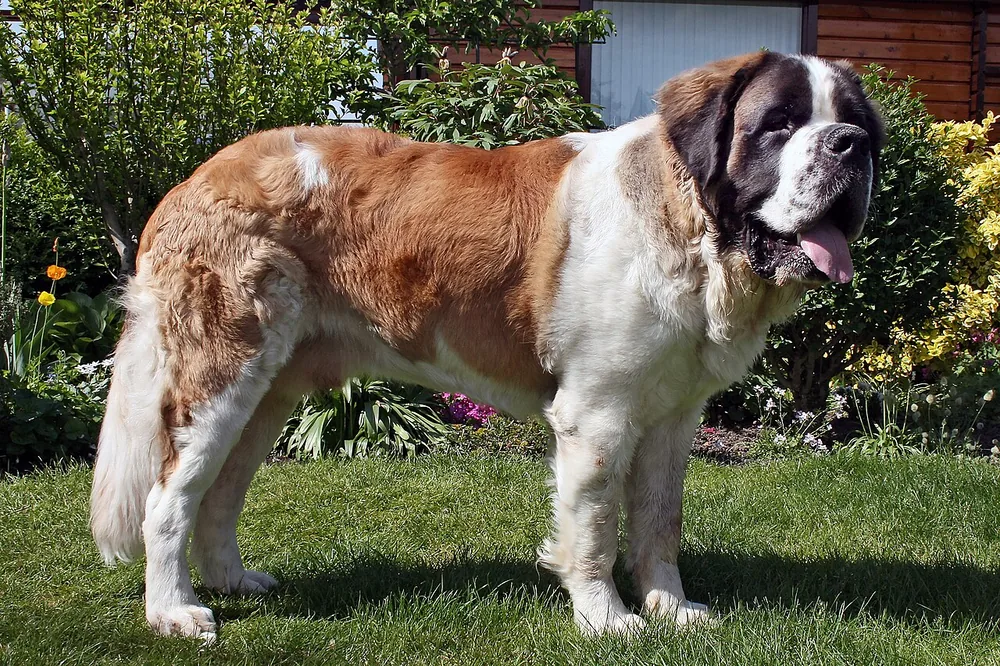
St. Bernard
The St. Bernard cost is driven by size: food, medication doses and surgery all scale with a giant frame. Expect $6,341 in year one and about $3,493 a year after that. Bloat and joint disease are the big budget risks.
Acquisition, surgical desexing, initial vet series, and starter hardware.
Normalized baseline at ~$291/month routine cash burn.
Projected over a 9-year St. Bernard lifespan.
$5,000 Liquid Reserve Mandate
Critical bufferA giant, deep-chested build brings bloat and joint disease, and a short lifespan with cardiac risk adds recurring, expensive care.
Source: MetLife True Cost of Pet Emergencies 2025 (15% of owners hit $3,000+; uninsured surgery $3,000–8,000)
Biometric & phenotypic actuarial spec
Annual Cash Burn Matrix ($3,493/yr)
Continuous operational expenditure distributed across 5 core maintenance categories, indexed to metabolic demand and regional clinical rates.
Food
Source: Derived: veterinary MER formula + mid-tier dry kibble price (2026-01)
Vet Care
Source: Derived: REPLACE — ASPCA / AAHA routine wellness composite (annual exam, vaccines, parasite control) x size 1.14 x risk 1.1 (2026-01)
Grooming
Source: Derived: REPLACE — Rover / PetSmart service menu, short-coat baseline (grooming rating 2) x coat 1.6 (2026-01)
Pet Insurance
Source: Derived: NAPHIA State of the Industry 2025 (2024 data), accident & illness dog average x size 1.2 x risk 1.18 (2026-01)
Supplies & Toys
Source: Derived: Synchrony Pet Lifetime of Care 2025 (toy replacement $50–150/yr) plus routine consumables x size 1.3 (2026-01)
Upfront Entry CapEx
Purchase / Adoption Fee ($1,400), Initial Vet Visit & Vaccinations ($752), Starter Supplies ($618), Training Classes ($260), First Year Food ($1,110), First Year Vet Care ($828), First Year Grooming ($312), First Year Insurance ($1,061).
Comprehensive Lifecycle Ledger
Audited financial breakdown distinguishing immediate first-year fixed capitalization from ongoing annualized operating liabilities over the full 8–10 yrs canine lifespan.
| Expenditure Category | Year 01 Outlay | Annual Steady-State | Lifetime Total | Actuarial Sizing Methodology |
|---|---|---|---|---|
| Purchase / Adoption Fee | $1,400 | — | $1,400 | Varies by breeder vs rescue |
| Initial Vet Visit & Vaccinations | $752 | — | $752 | Spay/neuter, microchip, health check |
| Starter Supplies | $618 | — | $618 | Bed, crate, collar, bowls, toys |
| Training Classes | $260 | — | $260 | Basic obedience recommended |
| First Year Food | $1,110 | — | $1,110 | — |
| First Year Vet Care | $828 | — | $828 | — |
| First Year Grooming | $312 | — | $312 | — |
| First Year Insurance | $1,061 | — | $1,061 | — |
| Food | — | $1,110 | $9,990 | — |
| Vet Care | — | $828 | $7,452 | — |
| Grooming | — | $312 | $2,808 | — |
| Pet Insurance | — | $1,061 | $9,549 | — |
| Supplies & Toys | — | $182 | $1,638 | — |
| Gross Actuarial Expenditure | $6,341 | $3,493 / yr | $34,285 | Unadjusted baseline |
Actuarial Health Risk Profile (Tier 4)
A giant, deep-chested build brings bloat and joint disease, and a short lifespan with cardiac risk adds recurring, expensive care.
Hip Dysplasia
Loose hip joints wear into arthritis, which is common in heavy giant breeds and can end in joint replacement.
- Typical treatment cost (one-time)
- $1,200–$6,000
Typically appears around age 0.5
medium confidence · MetLife Pet Insurance, Dog Hip Dysplasia Surgery Costs, 2024-10
Bloat (gastric dilatation-volvulus)
The stomach fills with gas and can twist, which is a surgical emergency in deep-chested giant breeds.
- Typical treatment cost (one-time)
- $2,000–$7,500
medium confidence · MetLife Pet Insurance, Bloat in Dogs: Warning Signs, Causes, & Surgery Cost, 2026-08
Dilated Cardiomyopathy
The heart muscle weakens and enlarges, reducing pumping ability and needing lifelong monitoring and medication.
Typically appears at age 4–10
low confidence
Entropion
Eyelids roll inward and irritate the cornea, and loose facial skin makes this a recurring St. Bernard eye problem that often needs surgery.
Costs are typical for the condition in general, not specific to the St. Bernard. See the St. Bernard cost timeline
What Truly Drives the St. Bernard’s Financial Profile
About the St. Bernard and its cost
The St. Bernard cost picture starts with the dog itself. This is one of the largest breeds, gentle and calm, with a heavy double coat that sheds steadily and drools freely. Most of the expense is ordinary and predictable: a big appetite, larger doses of preventives and medication, sturdy bedding, and a crate or vehicle space that fits. Buying from a breeder is costly, and adoption is cheaper, but both are shaped by the same running costs afterward. The breed is patient and easygoing, so training needs are moderate, though manners matter when a dog this size pulls or leans. Plan for a lifespan on the shorter side, which caps the lifetime total but concentrates health spending.
What drives St. Bernard costs
Size drives nearly every line item, from food to anesthesia, because dosing follows body weight. Health conditions add the swing. Bloat is an emergency that can require surgery within hours. Hip dysplasia and other joint problems can lead to long-term pain management or major orthopaedic procedures. Dilated cardiomyopathy calls for cardiology visits and daily medication once diagnosed. Entropion, common in breeds with loose facial skin, may need corrective eyelid surgery. Insurance can smooth these spikes, especially if enrolled while the dog is young and free of pre-existing conditions. Skipping it means building a bigger cash reserve.
St. Bernard first-year budget
The first year is the most expensive after any emergency. One-time costs total $3,030, including $1,400 for the dog, $752 for initial vet care and vaccines, $618 for a large crate, bed and gear, and $260 for classes. Recurring lines add $3,311: $1,110 for food, $828 for care, $312 for grooming and $1,061 for insurance. Together that reaches $6,341. Growth is fast, so expect to replace collars, beds and crates as your puppy outgrows them.
St. Bernard yearly cost after year one
After the first year, costs settle into a steady pattern. Food is the biggest item at $1,110, followed by $828 for veterinary care, $1,061 for insurance, $312 for grooming and $182 for supplies and toys. The yearly total is $3,493, or roughly $291 a month. Frequent brushing and face cleaning help control drool and coat upkeep at home. Costs tend to climb in the later years as joint support, heart monitoring and more frequent checkups become necessary.
Emergency fund for a St. Bernard
A reserve of $5,000 is a sensible baseline for this breed. Bloat is the main reason: a twisted stomach needs surgery quickly, and delay is dangerous. Joint disease and heart conditions can also produce large single bills or long-term medication costs. Across a lifetime estimate of $34,285, this reserve covers only part of a major event, so many owners pair it with insurance. Keep the fund liquid and separate from everyday accounts so that a midnight emergency does not force a delayed decision.
Cutting St. Bernard costs
Savings come from prevention more than discounts. Steady weight control, sensible exercise for growing joints and careful feeding routines lower the odds of the costliest problems. With a baseline of $3,493 a year, or $291 a month, even small percentage savings on food and supplies add up over a lifetime of $34,285. Compare vets for routine work like vaccines and dental cleanings, but keep a trusted emergency clinic identified in advance. Pet insurance premiums also vary by provider, so quote several.
6 Prudent Ways to Cut St. Bernard Costs
Insure early
Enrol while your puppy is young and healthy, before any joint or heart condition becomes a pre-existing exclusion. A giant breed is likely to use the coverage.
Feed smaller meals more often
Splitting food into two or three meals and avoiding hard exercise around feeding may lower bloat risk. Ask your vet about a preventive stomach-tacking procedure, which can be done during a spay or neuter.
Keep your dog lean
Extra weight strains hips and elbows and shortens mobility. A lean St. Bernard costs less in joint care and medication over its life.
Buy food in bulk
Large-breed kibble is your biggest recurring cost. Big bags, autoship discounts and comparing per-pound prices can trim it without changing quality.
Screen breeders for health testing
Ask for hip, elbow and heart clearances on both parents. Paying more up front for a screened puppy can reduce expensive orthopaedic and cardiac bills later.
Ask breeders for health clearances
Hip, elbow and heart screening on both parents costs a breeder money, so a screened St Bernard puppy often costs more than the $1,400 assumed here. It is still cheaper than a bloat surgery or joint replacement later, so ask to see the paperwork before you pay a deposit.
Peer Class Financial Comparisons
How the St. Bernard compares to morphological peers on annualized ownership cost.
St. Bernard
Frequently Asked Financial Questions
How much does a st. bernard cost per month?
Is a st. bernard expensive to own?
What are the yearly costs of owning a st. bernard?
How much are st. bernard vet bills?
Do st. bernards need pet insurance?
How long do St. Bernards live?
How much does a St. Bernard puppy cost?
How much does a St Bernard cost?
What is the St Bernard lifespan?
How much do St Bernard breeders charge?
Is a St Bernard cheaper than a Newfoundland or a Mastiff?
Data sources
- St. Bernard breed overview — American Kennel Club (akc.org)
- Bloat (Gastric Dilatation and Volvulus) in Dogs — VCA Animal Hospitals (vcahospitals.com)
- Canine Hip Dysplasia — VCA Animal Hospitals (vcahospitals.com)
Calculate Your St. Bernard Cost Adjusted by Metro ZIP Code
Veterinary surgical tariffs and clinical room rates vary widely between metropolitan regions and rural counties. Recalculate this dossier with your exact state, city, and lifestyle parameters.