

Key takeaways
- A cat urinary blockage costs $1,500-$5,000 or more, per Embrace Pet Insurance, because the bill stacks emergency stabilization ($1,000-$3,000), surgery if needed ($1,500-$3,000) and one to three hospital days ($500-$1,500).
- A male cat that cannot pass urine can die in as little as 24 hours, per Small Door Veterinary, so the decision to spend money has to be made in hours, not days.
- Blockages come back: a 51-cat trial found 16% of treated male cats re-blocked within 6 months, and each repeat catheter episode adds $1,000-$3,000, which is why many vets discuss perineal urethrostomy (PU) surgery.
A male cat with a urinary blockage costs $1,500 to $5,000 or more to treat, per Embrace Pet Insurance's PU surgery guide. The number depends on one question: did the vet clear the blockage with a catheter, or did your cat need surgery? This guide breaks the bill into its parts, shows how often blockages return, and gives you a savings target so the decision is about your cat and not your bank balance.
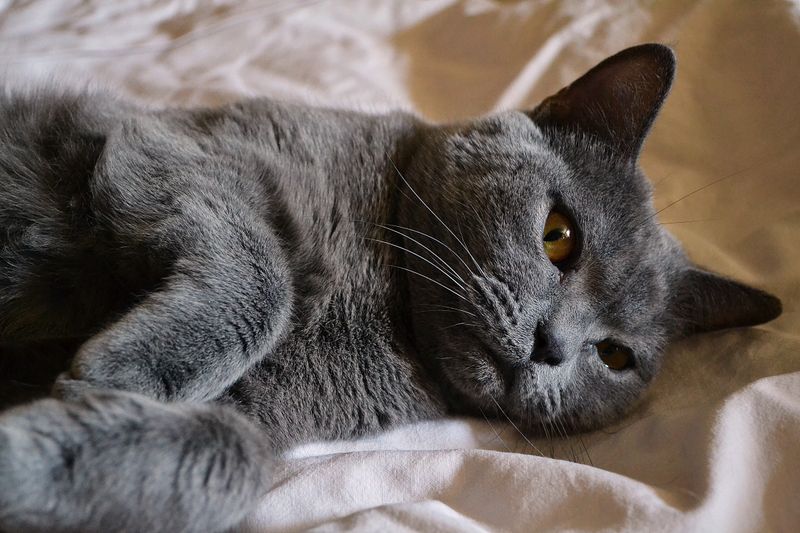 Photo: Juwelia / Pexels
What a urinary blockage is and why it is an emergency
A urinary blockage means a cat cannot pass urine because the urethra, the narrow tube from the bladder, is plugged. Male cats are the usual patients because their urethra is long and narrow. Small Door Veterinary explains that when the bladder overfills, it "can lead to severe damage to the bladder and kidneys, and can be fatal in as little as 24 hours."
Embrace Pet Insurance describes the same clock a little wider. In its urinary obstruction overview, a cat that has not urinated for more than 24 hours can become very ill, because urine carries toxic waste the kidneys have filtered out. Its PU surgery guide says a complete blockage can become fatal within 24 to 72 hours.
A cat that can't pee is an emergency. The cat can't pee emergency cost starts in the four figures. The signs are specific. Watch for:
- Repeated trips to the litter box with little or no urine.
- Crying or straining while squatting.
- Frequent licking of the genital area.
- Hiding, low energy, or refusing food.
- A painful, hard belly that the cat guards when touched.
A cat showing these signs needs a vet the same day, not a wait-and-see night. If your cat has been drinking far more than usual beforehand, read the cat dehydration and excessive thirst guide, since urinary trouble and thirst changes often overlap.
Cat urinary blockage cost, line by line
Treatment for a blocked cat is built from the same pieces every time, and each piece has its own price range. Embrace Pet Insurance puts a cat PU surgery episode at $1,500 to $5,000 or more, and the table below uses its published component ranges. Your clinic may price each line differently.
| Bill component | Typical range | What it covers |
|---|---|---|
| Emergency stabilization | $1,000-$3,000 | IV fluids, bloodwork, catheterization |
| PU surgery plus anesthesia | $1,500-$3,000 | Only if a catheter will not solve it |
| Hospitalization (1-3 days) | $500-$1,500 | Monitoring, fluids, urinary catheter care |
| Post-op medications | $50-$200 | Pain relief, antibiotics |
| Follow-up visits | $100-$300 | Recheck and urinalysis |
| Total estimated range | $1,500-$5,000+ | Varies by region and clinic type |
Source: Embrace Pet Insurance, PU surgery for cats.
Embrace's separate overview lists the pieces differently. It gives $100 to $750 for diagnosis and $150 to $450 per day for hospitalization. Both guides agree on the headline: one blockage episode rarely costs less than $1,500, and a specialty hospital with a complicated case can pass $5,000.
$1,500-$5,000+
One blockage episode for a male cat, per Embrace Pet Insurance. Set that against your own cushion with the emergency fund calculator.
Catheter or PU surgery: where the price jumps
The usual first treatment for a blocked cat is to sedate it, pass a urinary catheter to clear the plug, and keep the catheter in place. Small Door Veterinary says the catheter usually stays for 48 to 72 hours while the cat gets fluids and monitoring. That path is the lower half of the range, mostly stabilization plus hospital days.
Perineal urethrostomy, or PU surgery, is the second option. The surgeon removes the narrow end of the urethra and attaches the wider part to the skin, creating a larger opening that is harder to plug. Embrace says the operation takes 45 minutes to 1.5 hours, most cats stay one to three days, and the cat is stabilized first for 12 to 48 hours.
PU is not a free fix. Embrace cites outcome studies that report short-term complication rates of 13% to 25% and long-term rates of 20% to 42%, including urinary tract infection, stricture, and incontinence. In one study of 86 cats, 87% lived longer than 6 months after surgery, and 88% of owners rated their cat's quality of life as good.
The table compares the two paths so you can ask the right question at the estimate stage.
| Factor | Catheter and medical care | PU surgery |
|---|---|---|
| Typical hospital time | 2-3 days with catheter | 1-3 days after 12-48 hours of stabilization |
| Cost driver | Stabilization and hospital days | Stabilization plus surgery and anesthesia |
| Chance of repeat blockage | Meaningful, see the next section | Lower, because the opening is wider |
| Main risk | Re-blocking after catheter removal | Infection, stricture, incontinence |
Ask your vet two direct questions: "What is the written estimate for the catheter path?" and "At what point would you recommend PU, and what does it add to the estimate?" Both answers let you plan the cash before you commit.
How often cats block again
A blockage is often not a one-time event, and that changes the cost math. Small Door Veterinary notes that some cats re-block hours or days after the catheter comes out, while others re-block months or years later, and there is no way to predict which.
A prospective randomized trial in 51 male cats with obstructive idiopathic cystitis, indexed on PubMed Central, measured recurrence after discharge. The rates were 2% at 10 days, 4% at 1 month, 8% at 2 months, and 16% at 6 months. That is a managed setting with follow-up care, so a cat at home with no diet change may do worse.
Embrace puts each repeat catheter episode at $1,000 to $3,000. Two repeats can cost as much as the one-time PU surgery, which is why vets raise PU after a second or third blockage. The cheapest plan is the one that stops the third trip to the emergency room.
What it means for a monthly budget
A $3,000 blockage bill sounds abstract until you divide it. Here is the arithmetic at three savings horizons for a $3,000 target, with no interest counted.
| Months to save | Monthly deposit for $3,000 | Monthly deposit for $5,000 |
|---|---|---|
| 12 | $250 | $417 |
| 24 | $125 | $208 |
| 36 | $83 | $139 |
A cat insurance premium offers the other side of the trade. A Forbes Advisor estimate quoted by a local-news consumer report puts a plan with $5,000 of annual coverage and a $250 deductible at about $23 a month for cats. That is $276 a year. A $3,000 bill equals roughly 10.9 years of those premiums, so a single blockage can outweigh a decade of payments if the policy pays.
Most cats are not insured. Per a NAPHIA summary in Insurance Business, only 2.29% of U.S. cats carry a policy, compared with 5.99% of dogs. Most owners who face this bill pay it from savings or credit.
Cash on hand matters because the line between "can pay" and "cannot" is low. In its 2026 Pet Parent Perspective, Spot Pet Insurance found that 21% of owners say $500 is the point where a vet bill becomes impossible to pay. A blockage starts at triple that amount.
Does pet insurance cover a blockage
Insurance covers a blockage when the first event happens after your coverage starts and your illness waiting period ends. Illness waiting periods vary by insurer, so a cat that blocks soon after enrollment may not qualify.
A blockage that occurred before enrollment becomes a pre-existing condition, and insurers generally exclude it, along with conditions they judge to be related. The waiting periods and pre-existing conditions guide explains how those clocks work, and the cheapest cats to insure post compares cat premiums by breed.
Accident-only plans do not help here. A blockage is an illness, not an injury, so an accident-only policy will deny it. If you are weighing cover against a savings fund, the pet insurance break-even calculator shows how many years of premiums equal your expected bill. For the decision itself, see pet insurance vs. an emergency fund.
How to pay when the cash is not there
Decide on a payment route before you walk in, because the estimate is usually due at admission. These are the options in order of cost to you.
- Ask for the written estimate and the lowest safe plan. Request the catheter-only estimate, then ask what changes if a second blockage occurs.
- Ask about a payment plan. The vets that take payment plans guide lists which clinics offer in-house plans and which use outside lenders.
- Use a vet credit line. Compare terms in the guide to vet credit cards like CareCredit and Scratchpay, and check the deferred-interest rules before you sign.
- Look for charity or school help. Some veterinary colleges run reduced-fee emergency clinics, and nonprofit funds can cover part of a bill.
Do not delay care to search for the cheapest option. A cat that cannot urinate is a 24-hour problem, and the cost of waiting is often a larger bill.
Reduce the odds of a second blockage
You cannot guarantee a cat will not block again, but you can cut some risk factors. The Embrace overview recommends increasing water intake, and a vet may suggest a urinary prescription diet, wet food, and more water bowls or a fountain. These steps cost money too, so fold them into your ongoing cost of owning a cat.
Some practical steps:
- Feed wet food, which adds water to the diet.
- Keep several clean litter boxes and clean them daily.
- Ask your vet about a calm routine, since your vet knows the cause behind your cat's blockage.
- Keep your cat at a healthy weight.
- Book a recheck after any blockage, even if the cat seems fine.
Ask the vet whether a prescription urinary diet makes sense. Those foods cost more per bag than standard food, and that difference is a monthly line in your budget.
Questions to ask before you approve the estimate
A written estimate turns a frightening night into a set of choices. Ask for the estimate in line items, since each line in the table above can be discussed separately. These questions get the most useful answers.
- Is this the catheter-only estimate or does it include surgery? Many estimates are written for the worst case, so ask for both versions.
- How many hospital days are in the estimate? Small Door Veterinary says the catheter commonly stays 48 to 72 hours, so a one-day estimate for a fully blocked cat is likely too low.
- What happens to the price if my cat blocks again overnight? The answer tells you whether the clinic bills a repeat catheter as a new episode.
- Which tests are essential today? Bloodwork matters for a blocked cat because kidney values and potassium guide the treatment, so do not skip it, but ask which extra imaging can wait.
- Can you give me the discharge plan in writing? Diet, water, and recheck instructions affect whether you pay for a second episode.
If the number is more than you can cover, say so plainly. Vets can often adjust the plan, split the bill across a payment option, or point to a lower-cost emergency clinic. What they cannot do is undo the clock on a blocked bladder, so ask these questions while treatment starts, not before it.
Get a number for your own cat
The price range above is national. Your risk depends on whether your cat is male, how old, and whether you carry insurance. Plug your cat's profile into the PetBudget calculator for a full annual and lifetime estimate, then use the emergency fund calculator to set a target that covers a blockage plus one more emergency. The emergency vet cost guide shows what other common emergencies cost so you can size the fund for more than one scenario.
Each cost line in the calculator traces back to a published source listed on the methodology page. The blockage ranges above are planning figures for a budget, so get a written estimate from your own vet.
Frequently asked questions
How much does it cost to treat a blocked male cat?
A urinary blockage typically costs $1,500 to $5,000 or more. Embrace Pet Insurance lists $100-$750 for diagnosis and $150-$450 per hospital day, and a cat that needs PU surgery lands at the high end.
How fast can a urinary blockage kill a cat?
A complete blockage can be fatal in as little as 24 hours, per Small Door Veterinary. Embrace Pet Insurance gives a window of 24 to 72 hours. A cat straining in the litter box with little or no urine is an emergency.
Does pet insurance cover a cat urinary blockage?
Usually yes, if the first blockage happens after enrollment and after the illness waiting period. A blockage that occurred before you bought the policy is typically excluded as pre-existing, so the time to insure is before symptoms appear.
Will my cat block again after treatment?
It can. A prospective trial of 51 male cats found recurrence in 16% by 6 months after discharge. Some cats re-block within hours or days, and others re-block years later, per Small Door Veterinary.
See your own pet's real numbers.
Run the calculator with your breed, metro area, and care choices for a first-year, annual, and lifetime cost estimate — not a national average.
Comments
Comments are moderated before they appear. Constructive questions, corrections and first-hand pet cost experiences are welcome.
Verified Dialogue
Sort by: Chronological (earliest)Loading comments…