

Key takeaways
- Dog arthritis treatment cost runs about $408-$626 a year with a generic anti-inflammatory, $684-$1,586 with Galliprant, and $1,104-$3,986 with a monthly Librela injection, once exams and a blood panel are added.
- Over five years, those options total about $2,040-$3,130, $3,420-$7,930 and $5,520-$19,930, so the drug you start matters far more than the first month's price suggests.
- The FDA approved Librela in May 2023, then issued a letter to veterinarians about reported neurologic adverse events, so ask your vet about monitoring before choosing on price alone.
A dog with arthritis costs about $408 to $3,986 a year to treat, depending mainly on which pain medicine your vet chooses. That is $34 to $332 a month. A generic anti-inflammatory sits at the bottom of that range, a daily Galliprant tablet sits in the middle, and a monthly Librela injection sits at the top.
This guide prices each option side by side, adds the exams and lab work that every option needs, and projects the total over five years. It also lays out the safety record you should weigh next to the price, because the cheapest and most expensive options differ in more than dollars. The totals are our arithmetic on the published prices linked below.
Dog arthritis treatment cost by option
The dog arthritis treatment cost for one year is about $408-$626 on a generic NSAID, $684-$1,586 on Galliprant, and $1,104-$3,986 on Librela. Each total is the drug plus two recheck exams and one chemistry panel. The table shows the build.
| Option | Drug per month | Drug per year | Exams and panel per year | Yearly total | Per month |
|---|---|---|---|---|---|
| Generic carprofen (NSAID tablet) | $17-$20 | $204-$240 | $204-$386 | $408-$626 | $34-$52 |
| Galliprant (daily tablet) | $40-$100 | $480-$1,200 | $204-$386 | $684-$1,586 | $57-$132 |
| Librela (monthly injection) | $75-$300 | $900-$3,600 | $204-$386 | $1,104-$3,986 | $92-$332 |
The dog arthritis medication cost per month is the first column, and here is where each input comes from:
- Carprofen. Retail listings show a 30-count bottle at about $16.59 for 25 mg and $18.89 for 75 mg on PetSmart's generic carprofen caplet page, with a brand-name 25 mg chewable at $19.84 on Tractor Supply's Carprieve listing. A prescription is required, and a very large dog may need more tablets.
- Galliprant. A 30-count bottle of 60 mg tablets lists at $88.69 on Chewy's Galliprant page, and listings start at $49.69 on Valley Vet's Galliprant page. Great Pet Care puts small dogs at $40 to $50 a month and large dogs near $100, per its Galliprant cost overview.
- Librela. A price guide puts a realistic budget at $75 to $300 or more per injection, with the low end for small dogs, per ThePricer's Librela cost guide. That guide cites about $75 a month for a small dog and about $150 for a large dog in Chicago in May 2026.
- Exams and panel. The same guide cites exam fees of $50 to $100 and a chemistry panel of $104 to $186. We assume two exams and one panel a year.
These are retail and price-guide figures, not a quote. Your clinic marks up or discounts each one, and a pharmacy price often beats the clinic price for tablets.
$2,040 to $19,930
Five-year cost of treating arthritis in a dog diagnosed at age 8, from a generic NSAID at the low end to a monthly injection at the high end. Add it to the baseline in our dog cost guide or run your own dog through the PetBudget calculator.
Five-year cost of a dog arthritis diagnosis
The five-year dog osteoarthritis cost is about $2,040-$3,130 on a generic NSAID, $3,420-$7,930 on Galliprant, and $5,520-$19,930 on Librela. Arthritis is chronic, so a monthly price becomes a multi-year commitment. We multiply each yearly total by five, the typical number of years between a diagnosis at age 8 and a median dog lifespan of 13 in the PetBudget breed model.
| Option | Five-year total | One-time diagnosis cost (X-ray plus blood count) |
|---|---|---|
| Generic carprofen | $2,040-$3,130 | $232-$559 |
| Galliprant | $3,420-$7,930 | $232-$559 |
| Librela | $5,520-$19,930 | $232-$559 |
The one-time diagnosis cost uses X-rays at $149 to $331 and a blood count at $83 to $228, again from the same price guide's exam and lab table. Add it once, whatever you choose.
A large dog diagnosed at age 6 gets a longer horizon and a bigger bill, while a small dog diagnosed at 12 may face only two or three years. Adjust the multiplier to your own dog. If the dog is a large breed, our dog lifespan by breed guide helps you set it.
Small dog or large dog: the same drug, a very different bill
Drug cost scales with weight, so the two ends of our ranges describe different dogs. A small dog sits near the low end of each drug price, and a large dog sits near the high end. The horizon differs too, because a large breed may be diagnosed earlier and live a shorter life after it.
The table below makes both assumptions explicit. The small dog uses the low-end drug price and a three-year horizon. The large dog uses the high-end drug price and a seven-year horizon. Both horizons are illustrations, not predictions, and both hold prices flat.
| Option | Small dog, per year | Small dog, 3 years | Large dog, per year | Large dog, 7 years |
|---|---|---|---|---|
| Generic carprofen | $408-$590 | $1,224-$1,770 | $444-$626 | $3,108-$4,382 |
| Galliprant | $684-$866 | $2,052-$2,598 | $1,404-$1,586 | $9,828-$11,102 |
| Librela | $1,104-$1,286 | $3,312-$3,858 | $3,804-$3,986 | $26,628-$27,902 |
The finding is the spread. For a small dog the three options differ by a few thousand dollars over the horizon. For a large dog on a long course the injection approaches $27,000 against about $3,100-$4,400 for the generic tablet. That is why the first-line choice matters most for big dogs. A very large dog on a NSAID may also need a higher-strength tablet, so ask for the actual monthly figure for your dog.
Your vet decides what is medically right. If a dog needs the injection, the table is a planning tool for savings, insurance and timing. If either option would work, it shows what the choice is worth.
How common dog osteoarthritis is, and why costs are rising
Osteoarthritis is the most common form of arthritis in dogs. The FDA estimates it affects at least 25 percent of dogs at some point in their lifetime, per its announcement of the first monoclonal antibody approval for canine osteoarthritis pain. A long-term budget for any dog should leave room for a joint problem.
The trend is also upward. Banfield Pet Hospital reported that osteoarthritis rose 66 percent in dogs and 150 percent in cats over the prior ten years, per its 2019 osteoarthritis spotlight report. Banfield links the rise to excess weight. Joint pain makes a dog less active, which can add weight, which worsens the joint in turn.
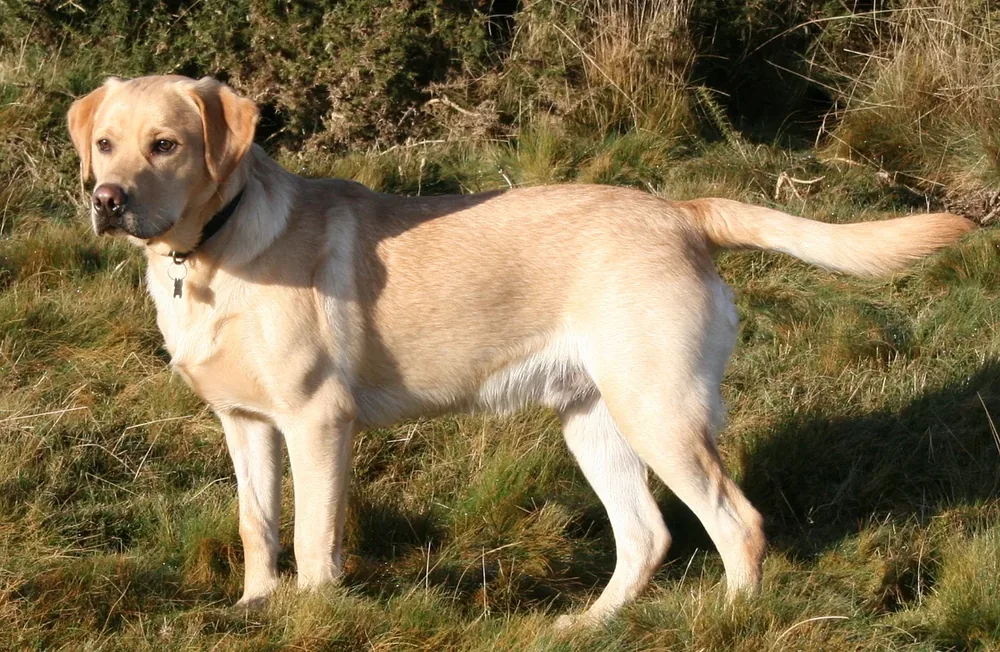 Photo: Labrador on Quantock by IDS.photos from Tiverton, UK / Wikimedia Commons, CC BY-SA 2.0

What the safety record says about each option
Price is not the only difference between these options. The FDA approved Librela on May 5, 2023, as a monthly subcutaneous injection dosed by weight range to target at least 0.5 mg/kg. The approval listed common side effects including increased blood urea nitrogen, urinary tract infection, bacterial skin infection, dermatitis, injection-site reactions, vomiting and loss of appetite.
After approval, the agency received reports from the field. An FDA Dear Veterinarian letter on Librela adverse events lists ataxia, seizures, and other neurologic signs, including paresis, recumbency and urinary incontinence, plus polyuria and polydipsia. It states that death, including euthanasia, was reported as an outcome in some cases. The letter gives no incidence rate.
Zoetis, the maker, updated the US label on February 4, 2025, based on post-approval experience, per its label update press release. The company says the product has treated more than one million dogs in the US as of December 2024. It also says that across nearly 25 million doses distributed globally, no individual adverse-event sign has been reported at a rate higher than rare.
Both statements can be true at once, and neither tells you what will happen to your dog. The FDA says it does not currently have the authority to mandate safety-related labeling changes, and it may request updates. Reported events are not proof that the drug caused them.
Generic NSAIDs and Galliprant have their own warnings. NSAIDs are why a blood panel appears in every row of the cost table, since vets monitor kidney and liver values during long-term use. Read the leaflet your pharmacy gives you, and report any new vomiting, appetite loss or behavior change to your vet. This guide covers cost and does not replace a veterinary opinion.
A decision guide for the budget-minded owner
Start from the cheapest option your vet considers safe for your dog, and move up only if pain control is inadequate. That is not a rule about which drug is best. It is a way to avoid paying $3,000 a year for pain relief a $400 plan might have delivered.
Use these questions at the visit:
- Is my dog a candidate for a generic NSAID? A dog with kidney or liver trouble may not be. Ask which labs you need first.
- If a NSAID fails or is unsuitable, which next step does the vet recommend and why? Ask whether the injection or the tablet is the better fit for your dog's weight and history.
- What signs mean I should call the clinic right away? Ask for the list in writing, including the neurologic signs in the FDA letter.
- What is the monitoring schedule, and which tests are optional? Each panel is $104 to $186, so know which ones drive decisions.
- Can I fill the tablet at a pharmacy? The retail gap between a clinic and a pharmacy can be large over twelve months.
- What non-drug steps would help? Ask about weight, exercise and home changes.
The PetSmart Charities-Gallup veterinarian survey found that 81% of 933 US veterinarians say they often or always recommend an alternative plan when clients decline care for cost. It also found that 73% of owners who declined care for cost say they were not offered a lower-cost option, per the Gallup veterinarian report. If cost is a constraint, say so at the start.
Cheap levers that change the bill
Weight is the lowest-cost intervention with a clear mechanism. Banfield's spotlight describes a weight-management program that combines a veterinary therapeutic diet and exercise among the steps a vet may recommend. Our dog calorie calculator sets a daily target, and the dog walking and exercise calculator helps you pace the activity.
A joint supplement is an optional add-on. A dvm360 cost example for a 40-pound dog lists $216 a year for a daily joint supplement, alongside $400 for a daily anti-inflammatory chew and $180 for monitoring blood tests, a total of about $800, per dvm360's osteoarthritis cost article. That example sits inside our generic-to-Galliprant range. Ask your vet whether a supplement is worth adding to your plan, since evidence varies by product.
Our senior dog and cat care costs guide places this arthritis cost beside screening and kidney costs. Surgery for a cruciate tear is a different scale of expense, covered in our TPLO surgery cost guide.
Insurance, timing and savings
Arthritis found before a policy starts is usually a pre-existing condition. Insurers often exclude it, and some apply a waiting period to joint conditions even for new problems. Our guide to pet insurance coverage for IVDD, allergies and hip dysplasia explains how those joint exclusions read.
If your dog already has the diagnosis, save to the tier you expect. A one-year reserve of $626 for the generic option takes about $26 a month over 24 months, and $3,986 for the injection takes about $166 a month. The PetBudget emergency fund calculator helps size a separate cushion for a joint emergency.
What to do this week
If your dog is slowing down on stairs, hesitating to jump, or lagging on walks, book an exam before assuming it is just age. Ask for the diagnosis in writing, a priced plan with at least two options, and the monitoring schedule. Then compare the yearly totals above against your budget.
Run your dog through the PetBudget calculator to see a baseline annual cost, then add the tier that fits. Planning for a chronic condition costs less than reacting to one.
Prices are US figures from the sources linked above and from PetBudget's own arithmetic. They are not veterinary advice or a quote, and your clinic's price list is the number that counts.
Frequently asked questions
How much does dog arthritis medication cost per month?
Roughly $17 to $20 a month for a generic carprofen tablet in the 25-75 mg listings we found, about $40 to $100 a month for Galliprant depending on dog weight, and about $75 to $300 a month for a Librela injection. Exams and lab work add to each.
What is the cost of Librela for dogs?
Price guides put a Librela injection at about $75 to $300 or more per monthly dose, with small dogs near the low end and large dogs near the high end. A year of injections is therefore about $900 to $3,600 before exams.
Is Librela safe for dogs?
The FDA approved it in 2023, and the agency later sent veterinarians a letter about reported adverse events including ataxia and seizures. Zoetis says no individual sign has been reported at higher than a rare rate. Your vet can weigh both for your dog.
Does pet insurance cover dog arthritis?
Only if the policy started before arthritis signs appeared. Arthritis diagnosed before enrollment is usually treated as pre-existing, and some plans exclude joint conditions in a waiting period. Read the joint-condition wording before you buy.
See your own pet's real numbers.
Run the calculator with your breed, metro area, and care choices for a first-year, annual, and lifetime cost estimate — not a national average.
Comments
Comments are moderated before they appear. Constructive questions, corrections and first-hand pet cost experiences are welcome.
Verified Dialogue
Sort by: Chronological (earliest)Loading comments…