
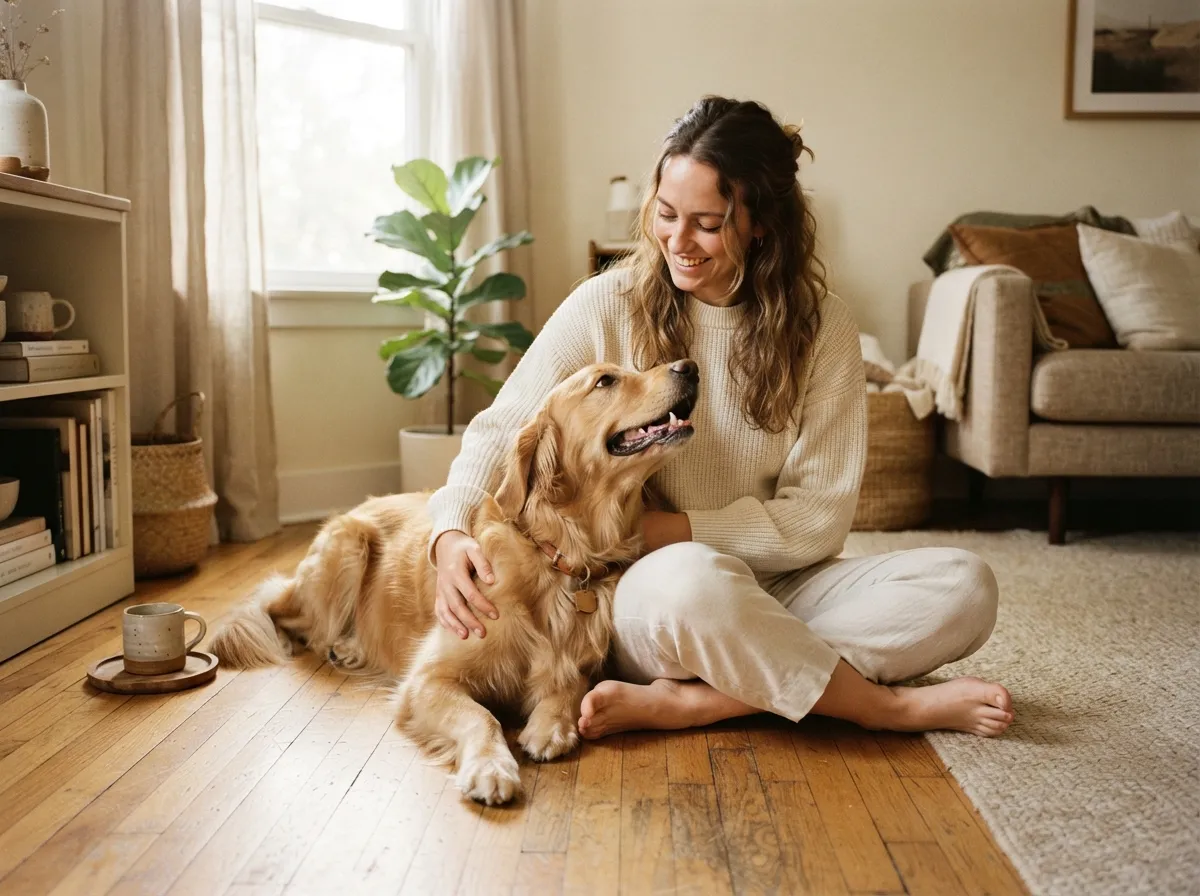
Key takeaways
- Puppies need about 5 minutes of exercise per month of age, up to twice a day, so a 4-month-old needs about 20 minutes twice daily.
- Adult dogs range from about 25-45 minutes a day for low-energy breeds to 60-120 minutes for high-energy breeds, based on PetBudget's data for 236 dog breeds.
- Walking is also a weight tool: roughly 11 calories per kilometer for a 22-pound dog and 33 for a 66-pound dog, so food and exercise should be planned together.
Most adult dogs need 30 to 90 minutes of exercise a day, and the exact number depends on age, size, and breed energy. This guide works like a how long should i walk my dog calculator: pick your dog's life stage and energy level, read the daily minutes off the tables, and adjust for weight and health.
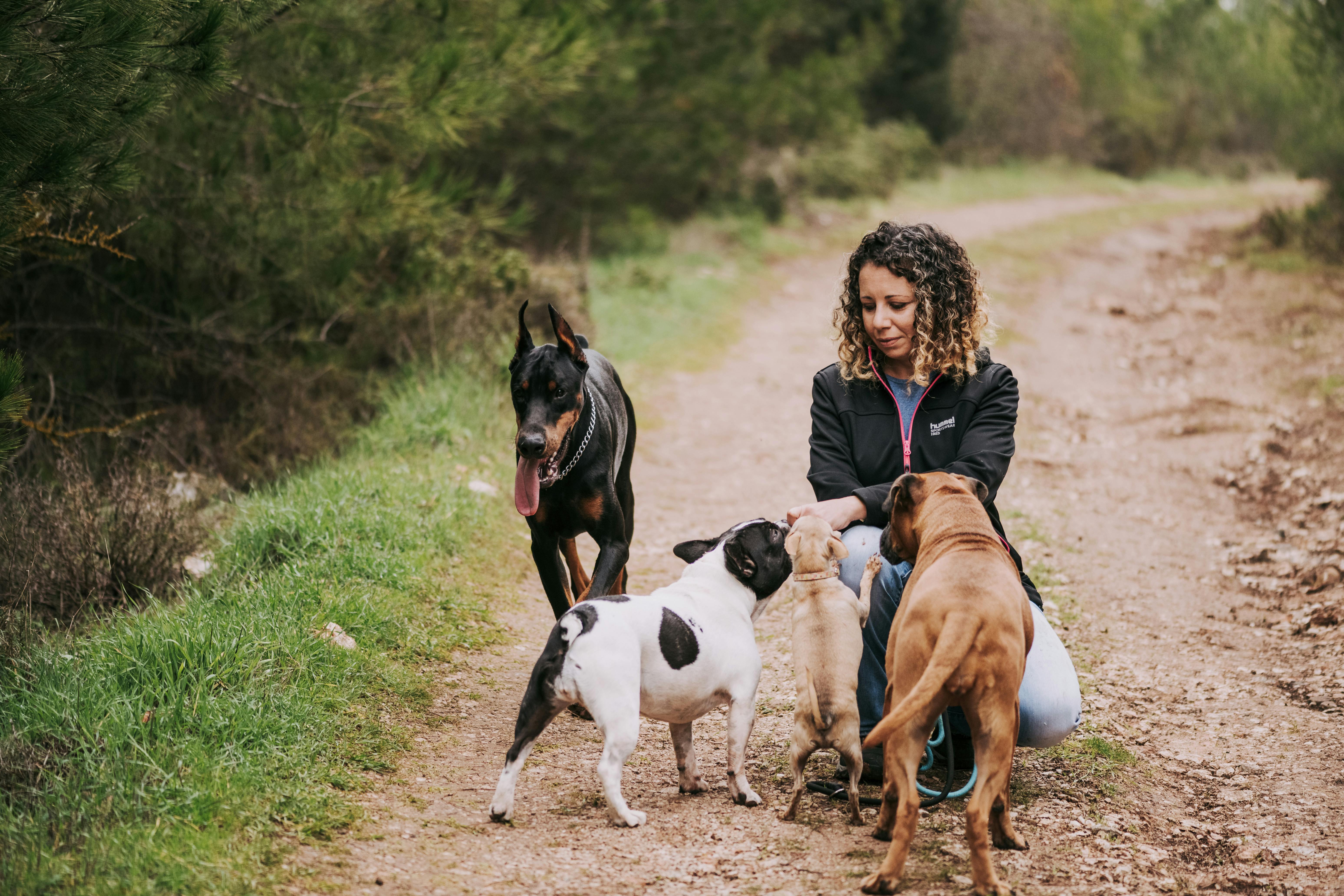 Photo: Aysun Kahraman Öktem / Pexels
How long should I walk my dog calculator: the quick method
A dog exercise calculator needs three inputs: life stage, breed energy, and body condition. Start with the life-stage rule, then use the breed energy table, then adjust for your dog's weight and vet advice.
Follow these steps:
- Find the life stage. Puppy, adult, or senior.
- Find the energy level. Use the breed tables below, or check your breed on our breed pages.
- Set a daily total. Split it into two or three outings.
- Check the result. Weigh your dog monthly and watch for tiredness or soreness.
Treat the answer as a starting range. Individual dogs vary, and health problems change the plan.
Puppy exercise: the five-minute rule
Puppies need about five minutes of exercise per month of age, up to twice a day, per the World Animal Foundation's dog exercise guide. A 4-month-old puppy should get about 20 minutes twice daily. The guide recommends gentle activity such as short leash walks and playtime, and no strenuous high-impact exercise.
| Puppy age | Minutes per session | Sessions per day |
|---|---|---|
| 2 months | 10 | up to 2 |
| 3 months | 15 | up to 2 |
| 4 months | 20 | up to 2 |
| 6 months | 30 | up to 2 |
| 9 months | 45 | up to 2 |
| 12 months | 60 | up to 2 |
The table applies the five-minute rule to each month. Large and giant breeds are the ones to watch, since their joints grow longer. Check your puppy's weight against our puppy weight calculator guide while you build the routine.
Puppies also need rest. Sleep and short play beat a long forced walk.
Adult dogs: daily minutes by breed energy level
Adult dog exercise needs follow breed energy more than size. The World Animal Foundation puts active breeds like Border Collies and Labrador Retrievers at over two hours daily, and low-energy breeds like Bulldogs and Basset Hounds at 30 minutes to an hour.
PetBudget's breed data adds a finer scale. Each of 236 dog breeds carries an energy rating from 1 to 5 and a recommended daily exercise time. The table below summarizes that data.
| Energy level | Breeds | Daily exercise range | Typical (median) | Example breeds |
|---|---|---|---|---|
| 1 (very low) | 1 | 20 min | 20 min | Bulldog |
| 2 (low) | 26 | 25-45 min | 40 min | Pug, French Bulldog, Shih Tzu |
| 3 (moderate) | 68 | 30-60 min | 45 min | Dachshund, Chihuahua, Greyhound |
| 4 (high) | 88 | 40-90 min | 60 min | Labrador Retriever, Golden Retriever, Beagle |
| 5 (very high) | 53 | 60-120 min | 90 min | Border Collie, Australian Shepherd, Siberian Husky |
These ranges are PetBudget's own breed data, not a veterinary standard. Use them as a planning guide.
90 minutes
The median daily exercise for the 53 very-high-energy dog breeds in PetBudget's data. Find your breed's number on the breed pages, or match a dog to your lifestyle with the breed quiz.
Dog walk calculator by example breeds
A dog walk calculator is easiest to read with real breeds. These examples come from the same PetBudget data.
| Breed | Size | Energy (1-5) | Daily exercise |
|---|---|---|---|
| Pug | Small | 2 | 30 min |
| Dachshund | Small | 3 | 30 min |
| Chihuahua | Toy | 3 | 30 min |
| Greyhound | Large | 3 | 40 min |
| Beagle | Small | 4 | 60 min |
| Golden Retriever | Large | 4 | 60 min |
| German Shepherd Dog | Large | 4 | 90 min |
| Border Collie | Medium | 5 | 90 min |
| Siberian Husky | Medium | 5 | 120 min |
Notice that size does not predict need. A small Beagle needs twice the exercise of a large Greyhound. Energy and the breed's original job matter more.
Senior dogs: shorter, gentler, still daily
Senior dogs need regular low-impact exercise, with shorter sessions. The World Animal Foundation names swimming and walking as ideal and advises watching for fatigue or discomfort. Skip the long runs, and add a second short walk instead.
Signs to slow down include stiffness after rest, lagging behind, and reluctance to climb stairs. Our guide on how to tell a dog's age lists the signs of aging, and our dog years to human years chart shows when each size becomes a senior. Large breeds reach that stage earlier.
Senior dogs should see the vet more often, which our vet visit frequency guide explains. Ask the vet to set an exercise limit if your senior has arthritis or heart disease.
Walking and weight: calories burned
Walking burns fewer calories than most owners expect. The Association for Pet Obesity Prevention's dog walking calorie estimator uses a reference formula of 1.1 x body weight in kilograms x distance in kilometers. That works out to about 11 calories per kilometer for a 10-kilogram (22-pound) dog and about 33 for a 30-kilogram (66-pound) dog.
In miles, that is roughly 18 calories per mile for the 22-pound dog and 53 for the 66-pound dog. The estimator warns that this is a general reference, not measured calorie use, and should not drive feeding or exercise changes on its own.
A 3-mile walk burns only about 160 calories for a 66-pound dog, using the same formula. A single handful of treats can cancel it. Weight control still depends mostly on how much you feed.
The stakes are high. The Association for Pet Obesity Prevention's 2022 survey found that 59% of US dogs were overweight or obese, as cited on APOP's survey history. Use our guides to how much to feed your dog and the dog calorie calculator to match food to activity.
How to split the daily total
Split the daily total into two or three outings, rather than one long trip. Dogs need bathroom breaks, sniffing time, and mental work, not just distance. A 60-minute target can be a 25-minute morning walk, a 10-minute midday break, and a 25-minute evening walk.
Mix in activities that tire the mind:
- Sniff walks. Let your dog stop and smell. It is mental exercise.
- Training sessions. Five minutes of cues tires a dog quickly.
- Fetch or tug. Good for high-energy breeds, in short bursts.
- Swimming. Low-impact and useful for older or heavy dogs.
High-energy breeds with too little activity often turn to chewing and barking. Match the plan to the breed before bad habits form.
Health limits to respect
Some dogs need less exercise than their breed suggests. Overweight dogs, dogs with joint disease, and flat-faced breeds can struggle in heat or long walks. Our breed data lists French Bulldogs at just 25 minutes a day.
Ask your vet before you raise the load if your dog is overweight, recovering from surgery, or has a heart condition. Build up slowly. Add five to ten minutes each week rather than doubling the walk.
What exercise costs
Exercise itself is free, but the dog attached to it is not. Our dog cost guide puts the first year at $2,600-$5,600 and annual upkeep at $1,400-$3,200. A high-energy breed that needs 90 minutes a day also costs time, or a walker, if your schedule does not fit.
Check the fit before you adopt. Use the breed quiz to match activity levels, then run the numbers in the PetBudget calculator for first-year and lifetime costs by breed.
FAQ: dog exercise
These are the common questions behind a dog exercise search.
Can a dog get too much exercise?
Yes. Overdoing it can strain joints, especially in puppies and seniors. Signs include heavy panting that does not ease, limping, and reluctance to move. Reduce the load and call your vet if signs persist.
Do I need to walk my dog if I have a yard?
Yes. A yard is not exercise unless you play in it. Dogs rarely run on their own. Walks add sniffing, new places, and time with you.
What if I can't walk my dog for 90 minutes?
Split the total, add play and training, and consider a walker or daycare for high-energy dogs. If your schedule cannot support a high-energy breed, a lower-energy breed is the better fit.
Bottom line
Use this how long should i walk my dog calculator as a starting point: five minutes per month for puppies, 25-45 minutes for low-energy adults, and 60-120 minutes for high-energy adults. Adjust for age, weight, and your vet's advice. Then pair the plan with the right food amount using the dog calorie calculator.
Frequently asked questions
How long should I walk my dog each day?
Most adult dogs need 30-90 minutes of activity a day, depending on breed energy. Low-energy breeds like Bulldogs and Pugs do well on 20-40 minutes, while herding and working breeds like Border Collies and Huskies need 90-120 minutes.
How much exercise does a puppy need?
Use five minutes per month of age, up to twice a day. A 4-month-old puppy gets about 20 minutes twice daily. Keep it to short leash walks and gentle play, and avoid high-impact exercise on growing joints.
How much exercise does a senior dog need?
Senior dogs need regular low-impact activity, usually for shorter sessions. Walking and swimming are ideal. Watch for tiredness, stiffness, or limping, and ask your vet to adjust the plan.
Is a 30-minute walk enough for a dog?
Thirty minutes is enough for a low-to-moderate energy dog such as a Pug, Dachshund, or Chihuahua. It is not enough for a high-energy breed like a Border Collie or Siberian Husky, which need 90-120 minutes plus mental work.
Can a dog walk calculator replace vet advice?
No. A dog walk calculator gives a starting range based on age, size, and energy. Your vet should set limits for dogs with joint problems, heart disease, obesity, or short noses.
See your own pet's real numbers.
Run the calculator with your breed, metro area, and care choices for a first-year, annual, and lifetime cost estimate — not a national average.