
Appenzeller Sennenhund Cost & Ownership Dossier
Appenzeller Sennenhund cost planning starts with the breed's working-dog build: a sturdy medium-sized herder that stays active well into its teens. Budget for a solid $4,734 in year one once vaccines, gear, and training are covered, then a steadier $2,479 most years after. Set aside an $3,000 for the joint and neurological issues that show up most often in this line.
Executive cost summary
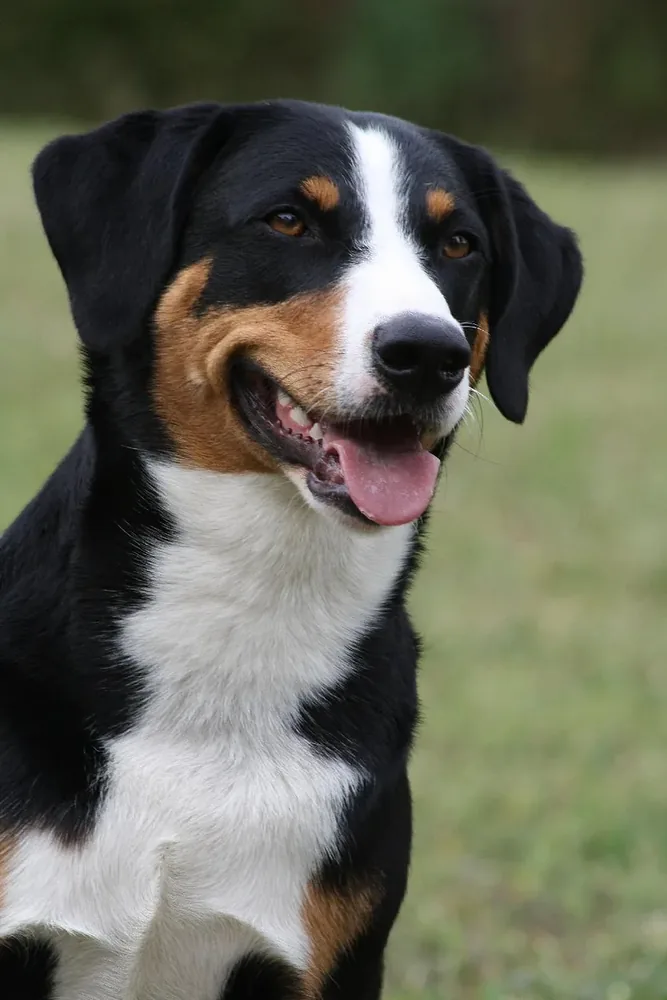
Appenzeller Sennenhund
Appenzeller Sennenhund cost planning starts with the breed's working-dog build: a sturdy medium-sized herder that stays active well into its teens. Budget for a solid $4,734 in year one once vaccines, gear, and training are covered, then a steadier $2,479 most years after. Set aside an $3,000 for the joint and neurological issues that show up most often in this line.
Acquisition, surgical desexing, initial vet series, and starter hardware.
Normalized baseline at ~$207/month routine cash burn.
Projected over a 13-year Appenzeller Sennenhund lifespan.
$3,000 Liquid Reserve Mandate
Critical bufferA physically sound working breed whose main cost drivers are joint wear and an inherited seizure risk rather than any single defining syndrome.
Source: MetLife True Cost of Pet Emergencies 2025 (15% of owners hit $3,000+; uninsured surgery $3,000–8,000)
Biometric & phenotypic actuarial spec
Annual Cash Burn Matrix ($2,479/yr)
Continuous operational expenditure distributed across 5 core maintenance categories, indexed to metabolic demand and regional clinical rates.
Food
Vet Care
Grooming
Pet Insurance
Supplies & Toys
Upfront Entry CapEx
Purchase / Adoption Fee ($1,000), Initial Vet Visit & Vaccinations ($660), Starter Supplies ($475), Training Classes ($260), First Year Food ($735), First Year Vet Care ($660), First Year Grooming ($195), First Year Insurance ($749).
Comprehensive Lifecycle Ledger
Audited financial breakdown distinguishing immediate first-year fixed capitalization from ongoing annualized operating liabilities over the full 12–15 yrs canine lifespan.
| Expenditure Category | Year 01 Outlay | Annual Steady-State | Lifetime Total | Actuarial Sizing Methodology |
|---|---|---|---|---|
| Purchase / Adoption Fee | $1,000 | — | $1,000 | Varies by breeder vs rescue |
| Initial Vet Visit & Vaccinations | $660 | — | $660 | Spay/neuter, microchip, health check |
| Starter Supplies | $475 | — | $475 | Bed, crate, collar, bowls, toys |
| Training Classes | $260 | — | $260 | Basic obedience recommended |
| First Year Food | $735 | — | $735 | — |
| First Year Vet Care | $660 | — | $660 | — |
| First Year Grooming | $195 | — | $195 | — |
| First Year Insurance | $749 | — | $749 | — |
| Food | — | $735 | $9,555 | — |
| Vet Care | — | $660 | $8,580 | — |
| Grooming | — | $195 | $2,535 | — |
| Pet Insurance | — | $749 | $9,737 | — |
| Supplies & Toys | — | $140 | $1,820 | — |
| Gross Actuarial Expenditure | $4,734 | $2,479 / yr | $34,482 | Unadjusted baseline |
Actuarial Health Risk Profile (Tier 3)
A physically sound working breed whose main cost drivers are joint wear and an inherited seizure risk rather than any single defining syndrome.
Hip Dysplasia
A loose or malformed hip joint that shows up as this active herding breed matures, sometimes needing lifelong joint management or surgery.
Epilepsy
An inherited seizure disorder reported in the breed that requires lifelong anticonvulsant medication and periodic bloodwork once diagnosed.
Cataracts
A clouding of the eye lens that can progress toward vision loss and may need surgical removal to preserve sight.
Cryptorchidism
A retained testicle that occurs at above-average rates in the breed and calls for a more involved abdominal neuter than a routine procedure.
What Truly Drives the Appenzeller Sennenhund’s Financial Profile
About the Appenzeller Sennenhund and its cost
The Appenzeller Sennenhund is a compact, muscular Swiss herding and driving dog bred to work cattle in alpine terrain, and that working heritage shapes what ownership costs. It needs a real job or heavy daily exercise, so early obedience and structured activity are not optional line items but part of the $2,395 most owners pay in the first weeks. The breed is rare outside Switzerland, which pushes $1,000 higher than for more common working breeds and can mean a longer wait list or import costs. Routine care stays moderate because the double coat sheds seasonally but needs only occasional brushing rather than professional grooming.
What drives Appenzeller Sennenhund costs
Two forces drive the ongoing budget: joint health and neurological risk. Hip dysplasia can appear in a breed this active and heavy-boned, so $660 spending often includes periodic orthopedic checks, and a flare can mean imaging or surgery well above routine care. Epilepsy, seen at above-average rates in the line, adds a lifetime medication cost once diagnosed, which is why $749 with a strong accident-and-illness rider is worth pricing early. Because the breed is uncommon in North America, specialty referrals may involve a longer drive, adding modestly to the $660 line over the dog's life.
Appenzeller Sennenhund first-year budget
Year one starts with $1,000 for the puppy itself, plus $660 for the vaccination series, deworming, and spay or neuter. Add $475 for a crate, bedding, and gear sized for a sturdy medium-sized dog, and $260 for the obedience foundation this working breed needs early. Those one-time costs form the $2,395, while ongoing $735, $660, $195, and $749 spending makes up the $2,339. Combined, most new owners land near $4,734 by the end of month twelve.
Appenzeller Sennenhund yearly cost after year one
Once the setup costs are behind you, the budget settles into a steadier rhythm built from $735, $660 checkups, occasional $195, $749, and $140 for replacement gear and enrichment. Together these add up to the $2,479, which spreads out to roughly $207 when budgeting month to month. Years with a joint flare-up or a seizure workup will run above this baseline, so treat it as the steady-state figure rather than a hard ceiling.
Emergency fund for an Appenzeller Sennenhund
This breed's defining cost risks are orthopedic and neurological, so an $3,000 sized for imaging, orthopedic surgery, or long-term seizure medication is worth building before either issue appears. Owners who plan around the $34,482 figure tend to treat the reserve as a standing account rather than a one-time purchase, replenishing it after any major claim. A dog that develops both hip dysplasia and epilepsy will draw down this fund faster than one that stays clear of either.
Cutting Appenzeller Sennenhund costs
The biggest lever on lifetime cost is avoiding the breed's two known risk areas: health-tested breeding stock lowers the odds of an expensive hip or eye claim, and early insurance locks in coverage before any epilepsy diagnosis excludes it. Keeping the dog at a lean weight and giving it the structured exercise it needs also reduces injury-driven vet visits over time. Owners who manage both factors well tend to land toward the lower end of the $34,482 range, while the $207 figure stays close to the breed-average baseline rather than climbing with unmanaged risk.
5 Prudent Ways to Cut Appenzeller Sennenhund Costs
Ask breeders for hip and eye screening results
Reputable Appenzeller Sennenhund breeders test breeding stock for hip dysplasia and eye disease. Choosing a puppy from screened parents lowers the odds of an expensive orthopedic or ophthalmic bill later, even if it means a higher $1,000 upfront.
Buy insurance before any symptoms appear
Because epilepsy and hip dysplasia are both breed-known risks, locking in $749 while the puppy is healthy avoids a pre-existing-condition exclusion. Compare accident-and-illness plans rather than accident-only ones for this breed.
Invest in structured exercise early
This is a working breed that needs a job; skipping $260 or daily structured activity often leads to destructive behavior and avoidable vet visits from injury or anxiety. Herding, agility, or scent work channels the drive productively.
Keep the dog lean through middle age
Extra weight accelerates hip and joint wear in a breed already predisposed to dysplasia. Portion-controlled food keeps the $735 line predictable and reduces the chance of an orthopedic bill eating into your $3,000.
Source specialty care before you need it
Because the breed is uncommon in North America, find a vet familiar with epilepsy management and orthopedic referral options before an emergency. Knowing the nearest specialty hospital in advance avoids added cost and delay during a crisis.
Peer Class Financial Comparisons
How the Appenzeller Sennenhund compares to morphological peers on annualized ownership cost.
Appenzeller Sennenhund
Frequently Asked Financial Questions
How much does an Appenzeller Sennenhund puppy cost?
How much does it cost to own an Appenzeller Sennenhund per year?
Why are Appenzeller Sennenhund puppies so expensive?
How much does an Appenzeller Sennenhund cost per month for food?
What is the lifetime cost of owning an Appenzeller Sennenhund?
How much does Appenzeller Sennenhund pet insurance cost?
Are Appenzeller Sennenhunds expensive to maintain?
Where can I find Appenzeller Sennenhund puppies for sale?
Data sources
- Appenzeller Sennenhund — American Kennel Club (akc.org)
- Appenzeller Sennenhund — Wikipedia (en.wikipedia.org)
- Section 3: Average Pet Insurance Premiums — NAPHIA (naphia.org)
Calculate Your Appenzeller Sennenhund Cost Adjusted by Metro ZIP Code
Veterinary surgical tariffs and clinical room rates vary widely between metropolitan regions and rural counties. Recalculate this dossier with your exact state, city, and lifestyle parameters.