
Australian Shepherd Cost & Ownership Dossier
Australian shepherd cost starts with a moderate puppy or adoption fee and continues through years of active-dog feeding, training, and preventive screening for joint, eye, and drug-sensitivity issues. Because this is an energetic, working-bred herding dog, $4,789 in the first year and $2,534 in later years is a realistic range. Over a typical lifespan, total spend adds up to roughly $35,197.
Executive cost summary
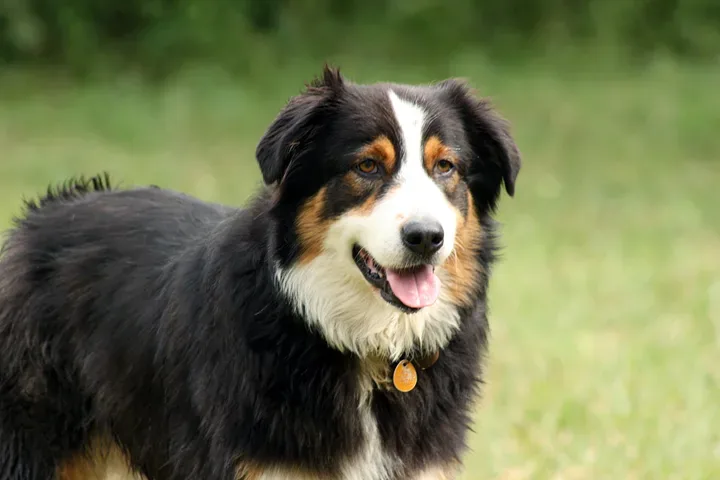
Australian Shepherd
Australian shepherd cost starts with a moderate puppy or adoption fee and continues through years of active-dog feeding, training, and preventive screening for joint, eye, and drug-sensitivity issues. Because this is an energetic, working-bred herding dog, $4,789 in the first year and $2,534 in later years is a realistic range. Over a typical lifespan, total spend adds up to roughly $35,197.
Acquisition, surgical desexing, initial vet series, and starter hardware.
Normalized baseline at ~$211/month routine cash burn.
Projected over a 13-year Australian Shepherd lifespan.
$3,000 Liquid Reserve Mandate
Critical bufferA generally hardy herding breed, but hip dysplasia, an inherited drug-sensitivity mutation, and eye and seizure conditions in some lines create recurring screening and monitoring costs.
Source: MetLife True Cost of Pet Emergencies 2025 (15% of owners hit $3,000+; uninsured surgery $3,000–8,000)
Biometric & phenotypic actuarial spec
Annual Cash Burn Matrix ($2,534/yr)
Continuous operational expenditure distributed across 5 core maintenance categories, indexed to metabolic demand and regional clinical rates.
Food
Vet Care
Grooming
Pet Insurance
Supplies & Toys
Upfront Entry CapEx
Purchase / Adoption Fee ($1,000), Initial Vet Visit & Vaccinations ($660), Starter Supplies ($475), Training Classes ($260), First Year Food ($673), First Year Vet Care ($660), First Year Grooming ($312), First Year Insurance ($749).
Comprehensive Lifecycle Ledger
Audited financial breakdown distinguishing immediate first-year fixed capitalization from ongoing annualized operating liabilities over the full 12–15 yrs canine lifespan.
| Expenditure Category | Year 01 Outlay | Annual Steady-State | Lifetime Total | Actuarial Sizing Methodology |
|---|---|---|---|---|
| Purchase / Adoption Fee | $1,000 | — | $1,000 | Varies by breeder vs rescue |
| Initial Vet Visit & Vaccinations | $660 | — | $660 | Spay/neuter, microchip, health check |
| Starter Supplies | $475 | — | $475 | Bed, crate, collar, bowls, toys |
| Training Classes | $260 | — | $260 | Basic obedience recommended |
| First Year Food | $673 | — | $673 | — |
| First Year Vet Care | $660 | — | $660 | — |
| First Year Grooming | $312 | — | $312 | — |
| First Year Insurance | $749 | — | $749 | — |
| Food | — | $673 | $8,749 | — |
| Vet Care | — | $660 | $8,580 | — |
| Grooming | — | $312 | $4,056 | — |
| Pet Insurance | — | $749 | $9,737 | — |
| Supplies & Toys | — | $140 | $1,820 | — |
| Gross Actuarial Expenditure | $4,789 | $2,534 / yr | $35,197 | Unadjusted baseline |
Actuarial Health Risk Profile (Tier 3)
A generally hardy herding breed, but hip dysplasia, an inherited drug-sensitivity mutation, and eye and seizure conditions in some lines create recurring screening and monitoring costs.
Hip Dysplasia
A malformed hip joint is common in active medium and large breeds and can lead to arthritis or lameness requiring imaging or surgery.
Multidrug resistance mutation (MDR1)
A hereditary gene mutation found in herding breeds causes sensitivity to certain common drugs and requires lifelong caution and genetic testing.
Progressive retinal atrophy and collie eye anomaly
Inherited eye disorders can cause gradual or early vision loss and typically need periodic ophthalmologic screening to track.
Epilepsy
Recurring seizures appear in some lines and often require lifelong anticonvulsant medication and periodic bloodwork to monitor.
What Truly Drives the Australian Shepherd’s Financial Profile
About the Australian Shepherd and its cost
The Australian shepherd was bred in the American West to herd livestock, and that working drive shapes what owners spend today. An Australian shepherd cost reflects a medium-to-large athletic build, a dense double coat, and a mind that needs constant engagement, so budgets run above those for a low-energy companion breed. Buyers typically pay a moderate fee for a puppy from health-tested parents, since hip and eye screening are standard practice among responsible breeders. From the first year onward, training classes, activity gear, and preventive veterinary visits are the biggest recurring costs, and owners who skip genetic testing for the MDR1 mutation risk a costly adverse drug reaction later.
What drives Australian Shepherd costs
Activity level and genetics are the two biggest cost drivers for this breed. An Aussie's high energy demands daily exercise, structured training, or dog sports, and owners who under-invest here often face higher behavioral and veterinary costs down the line. Health-wise, hip dysplasia, the MDR1 drug-sensitivity mutation, inherited eye disorders, and epilepsy in some lines are the conditions most likely to generate ongoing vet and insurance spending, since each can require imaging, genetic testing, or long-term medication. Owners who budget for insurance or a dedicated emergency fund are better positioned when one of these conditions appears.
Australian Shepherd first-year budget
The first year combines one-time costs with a full year of recurring expenses. One-time items include $1,000 for the puppy or adoption fee, $660 for early vaccinations and a wellness exam, $475 for a crate, bed, and other gear sized for an active medium-large dog, and $260 for basic obedience classes, which matter for a breed this driven to work. Together these one-time costs make up $2,395. On top of that, the first year of recurring costs, $673 for food, $660 for veterinary care, $312 for coat maintenance, and $749 if enrolled, adds up to $2,394, bringing the full first-year total to $4,789.
Australian Shepherd yearly cost after year one
Once the one-time setup costs are behind you, ongoing yearly expenses settle into a steadier pattern. Food remains a significant line at $673 given the breed's activity level, followed by $660 for routine checkups and any monitoring tied to hip, eye, or genetic risk, $312 for coat care, and $749 if carried, along with $140 for replacement gear and enrichment toys. Altogether that comes to $2,534 per year, or roughly $211 on a monthly basis, a useful figure for budgeting a recurring household expense.
Emergency fund for an Australian Shepherd
Given this breed's average-to-elevated risk profile, driven by hip dysplasia, the MDR1 drug-sensitivity mutation, and inherited eye or seizure conditions in some lines, a dedicated emergency reserve is worth prioritizing. A fund around $3,000 covers an unplanned diagnostic workup, an orthopedic consultation, or a course of specialist treatment without derailing the household budget. Building this reserve early matters more for this breed than for one with a cleaner health profile, and it should be viewed alongside the $35,197 total lifetime estimate rather than as a one-time expense.
Cutting Australian Shepherd costs
The biggest lever for lowering lifetime spend is prevention: choosing a breeder who screens for hip and eye health, testing for the MDR1 mutation before any medication is needed, and enrolling in insurance before problems arise all reduce the odds of costly interventions later. Channeling the dog's energy into structured training or dog sports rather than letting behavioral issues develop also trims veterinary and property costs over time. Because this breed's $35,197 lifetime estimate is driven as much by activity needs as by health risk, proactive management does more to control the $211 monthly cost than any single purchase decision.
5 Prudent Ways to Cut Australian Shepherd Costs
Test for the MDR1 mutation early
A simple genetic test identifies whether your Aussie carries the MDR1 mutation before any medication is prescribed. Knowing this in advance avoids a dangerous, expensive adverse reaction to common drugs later.
Invest in training and structured activity upfront
An Aussie given consistent exercise and mental work from puppyhood is less likely to develop destructive habits that lead to costly vet or property damage. Group classes or dog sports channel their drive productively.
Screen hips and eyes before symptoms appear
OFA hip evaluation and routine ophthalmologic exams catch problems early, when management is cheaper and more effective. Many breed clubs offer screening events at reduced cost.
Insure while young and healthy
Enrolling a puppy in pet insurance before any diagnosis avoids pre-existing condition exclusions for hip, eye, or seizure disorders. This is one of the most reliable ways to control long-term risk.
Buy activity and training gear that lasts
Durable leashes, long lines, and agility equipment cost more upfront but survive years of heavy use by an active dog. Replacing cheap gear repeatedly adds up faster than one solid purchase.
Peer Class Financial Comparisons
How the Australian Shepherd compares to morphological peers on annualized ownership cost.
Australian Shepherd
Frequently Asked Financial Questions
How much does an Australian Shepherd cost?
How much does it cost to own an Australian Shepherd?
Why are Australian Shepherds so expensive?
How much do Australian Shepherds cost per year?
How much does it cost to adopt an Australian Shepherd?
Do Australian Shepherds have expensive health problems?
Is pet insurance worth it for an Australian Shepherd?
Data sources
- Australian Shepherd — AKC (akc.org)
- Australian Shepherd — Wikipedia (en.wikipedia.org)
- Pet Health Insurance — NAPHIA (naphia.org)
- Caring for Your Dog's Joint Health — AVMA (avma.org)
Calculate Your Australian Shepherd Cost Adjusted by Metro ZIP Code
Veterinary surgical tariffs and clinical room rates vary widely between metropolitan regions and rural counties. Recalculate this dossier with your exact state, city, and lifestyle parameters.