
Manx Cost & Ownership Dossier
Manx cat cost is shaped less by the famous missing tail and more by what that same gene can do to the spine underneath it. A responsible breeder screens litters for Manx syndrome before sale, which keeps $800 moderate but makes $286 an important ongoing line. Most healthy Manx cats then cost close to $1,052 a year to keep.
Executive cost summary
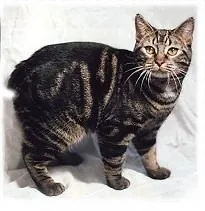
Manx
Manx cat cost is shaped less by the famous missing tail and more by what that same gene can do to the spine underneath it. A responsible breeder screens litters for Manx syndrome before sale, which keeps $800 moderate but makes $286 an important ongoing line. Most healthy Manx cats then cost close to $1,052 a year to keep.
Acquisition, surgical desexing, initial vet series, and starter hardware.
Normalized baseline at ~$88/month routine cash burn.
Projected over a 13-year Manx lifespan.
$2,000 Liquid Reserve Mandate
Critical bufferThe tailless gene is linked to spinal malformation in a meaningful share of the breed, creating a recurring risk of neurological or bowel complications.
Source: MetLife True Cost of Pet Emergencies 2025 (15% of owners hit $3,000+; uninsured surgery $3,000–8,000)
Biometric & phenotypic actuarial spec
Annual Cash Burn Matrix ($1,052/yr)
Continuous operational expenditure distributed across 5 core maintenance categories, indexed to metabolic demand and regional clinical rates.
Food
Vet Care
Grooming
Pet Insurance
Supplies & Toys
Upfront Entry CapEx
Purchase / Adoption Fee ($800), Initial Vet Visit & Vaccinations ($300), Starter Supplies ($260), Litter & Behavior Basics ($40), First Year Food ($214), First Year Vet Care ($286), First Year Grooming ($60), First Year Insurance ($402).
Comprehensive Lifecycle Ledger
Audited financial breakdown distinguishing immediate first-year fixed capitalization from ongoing annualized operating liabilities over the full 12–14 yrs feline lifespan.
| Expenditure Category | Year 01 Outlay | Annual Steady-State | Lifetime Total | Actuarial Sizing Methodology |
|---|---|---|---|---|
| Purchase / Adoption Fee | $800 | — | $800 | Varies by breeder vs rescue |
| Initial Vet Visit & Vaccinations | $300 | — | $300 | Spay/neuter, microchip, health check |
| Starter Supplies | $260 | — | $260 | Litter box, scratching post, carrier, bowls |
| Litter & Behavior Basics | $40 | — | $40 | Litter box training, scratching post basics |
| First Year Food | $214 | — | $214 | — |
| First Year Vet Care | $286 | — | $286 | — |
| First Year Grooming | $60 | — | $60 | — |
| First Year Insurance | $402 | — | $402 | — |
| Food | — | $214 | $2,782 | — |
| Vet Care | — | $286 | $3,718 | — |
| Grooming | — | $60 | $780 | — |
| Pet Insurance | — | $402 | $5,226 | — |
| Supplies & Toys | — | $90 | $1,170 | — |
| Gross Actuarial Expenditure | $2,362 | $1,052 / yr | $14,986 | Unadjusted baseline |
Actuarial Health Risk Profile (Tier 4)
The tailless gene is linked to spinal malformation in a meaningful share of the breed, creating a recurring risk of neurological or bowel complications.
Manx syndrome (spinal deformity)
The same gene that produces the Manx's short or absent tail can shorten the spine itself, which sometimes leaves kittens with malformed vertebrae, nerve damage, and bladder or bowel control problems.
Megacolon and constipation
Reduced nerve function in the lower spine can slow colon motility in some Manx cats, leading to chronic constipation that occasionally needs dietary management or surgery.
Arthritis in the tailless spine
The shortened spine and altered gait of a rumpy Manx can predispose the lower back to early arthritic changes, showing up as stiffness that benefits from joint support later in life.
What Truly Drives the Manx’s Financial Profile
About the Manx and its cost
Manx cat cost starts with a breed whose defining trait, a short or absent tail, comes from a natural mutation isolated for centuries on the Isle of Man. Manx cats range from fully tailless "rumpies" to cats with a partial or near-normal tail, and breeders price kittens accordingly, with the most extreme tail lengths often commanding the highest price. Beyond the tail, the Manx is a sturdy, round-bodied cat known for a loyal, almost dog-like attachment to its people, fetching toys and following owners room to room, which keeps entertainment costs modest but makes routine vet visits worthwhile to catch spinal issues early.
What drives Manx costs
The single biggest cost driver in this breed is Manx syndrome, the spinal malformation that can accompany the tailless gene and range from mild to severe. Reputable breeders test and cull affected kittens before sale, which is why a well-bred Manx costs more upfront than an unscreened one. Once past kittenhood, a cleared Manx has a fairly ordinary cost profile, though chronic constipation from reduced nerve function in the lower spine is common enough that many owners keep a fiber-adjusted diet on hand.
Manx first-year budget
The first year includes $800 for a spine-screened kitten, $300 for vaccines and a thorough physical exam that checks gait and tail-base sensitivity, and $260 for a litter box, scratching post, and carrier. $40 covers basic litter and play habituation for this active, dog-like breed. Together $1,400 in one-time costs and $962 in food and vet care bring the $2,362 total to a level close to an average purebred shorthair's first year.
Manx yearly cost after year one
A cleared, healthy Manx settles into a fairly typical shorthair budget: $214 for a quality diet with attention to fiber content, $286 for annual exams plus bowel-health monitoring, and $60 for the low-maintenance double coat. $402 adds a safety net against spinal complications, and $90 supports this playful, fetch-loving breed. The total comes to $1,052 a year, or $88 a month.
Emergency fund for a Manx
A Manx's emergency risk centers on the spine: sudden loss of bladder or bowel control, or a megacolon flare-up, can require urgent diagnostics and sometimes surgery. A moderate $2,000 reserve, weighted toward neurological and gastrointestinal care, fits this breed's $14,986 lifetime cost profile better than a generic cushion. Cats are skilled at masking pain, so sudden lethargy, appetite loss, or vomiting deserves an urgent vet visit rather than a wait-and-see approach, since catching a problem early is almost always cheaper than treating it once it has progressed.
Cutting Manx costs
The most effective saving happens before purchase, by choosing a breeder who screens for spinal defects and avoiding the cheaper, unscreened kittens sold outside that system. After that, maintaining a lean body weight and a fiber-appropriate diet reduces the odds of a costly constipation episode. Over a $14,986 lifespan, catching mobility or bowel changes early keeps $88 spending on the lower end of the breed's range.
5 Prudent Ways to Cut Manx Costs
Buy only from breeders who screen for Manx syndrome
A spinal exam before eight weeks catches most cases of the deformity early. Paying more upfront for a screened kitten avoids a much larger neurological bill later.
Watch litter box habits closely
Catching early signs of constipation or incontinence lets you adjust diet before it becomes a costly megacolon case requiring surgery.
Keep the cat at a lean weight
Extra weight stresses an already shortened spine. A lean Manx has an easier time with mobility and a lower lifetime vet bill.
Ask about tail length before buying
Rumpy (fully tailless) Manx cats carry the highest spinal-defect risk and price; a longy or stumpy Manx often costs less and carries somewhat lower risk.
Build a fiber-friendly diet plan early
A vet-guided diet that supports regular bowel movements from kittenhood can prevent the chronic constipation that leads to expensive megacolon treatment.
Peer Class Financial Comparisons
How the Manx compares to morphological peers on annualized ownership cost.
Manx
Frequently Asked Financial Questions
How much does a Manx cat cost?
Is a Manx cat expensive to own?
Why are Manx cats so expensive?
What are the yearly costs of owning a Manx cat?
Do Manx cats have health problems?
What is Manx syndrome?
Do Manx cats need pet insurance?
Data sources
- Manx cat — Wikipedia (en.wikipedia.org)
- Caring for Hairless Cat Breeds — VCA Animal Hospitals (vcahospitals.com)
- Congenital and Hereditary Skin Disorders in Cats — Merck Veterinary Manual (merckvetmanual.com)
Calculate Your Manx Cost Adjusted by Metro ZIP Code
Veterinary surgical tariffs and clinical room rates vary widely between metropolitan regions and rural counties. Recalculate this dossier with your exact state, city, and lifestyle parameters.