

Key takeaways
- The life expectancy of Great Dane dogs is 7-10 years per Spot Pet Insurance, and PetBudget's breed data uses 8 years.
- Bloat is the biggest threat, with a 42.4% lifetime risk in a Purdue study, and a preventive gastropexy cut repeat bloat from 76% to 6%.
- An 8-year Great Dane costs $32,240 in PetBudget's model, or $4,030 for each year of life, because insurance and food run $2,379 a year.
What is the life expectancy of Great Dane dogs? Most Great Danes live 7-10 years, and PetBudget's breed data uses 8 years as the typical figure. That short life still costs about $32,240 in PetBudget's model, or $4,030 for each year of life, because a 110-175 pound dog eats, insures and heals at giant-breed prices.
Life expectancy of Great Dane dogs at a glance
The life expectancy of Great Dane dogs is 7-10 years, which is several years shorter than a small dog's life. The table lines up the main numbers and where each one comes from.
| Measure | Figure | Source |
|---|---|---|
| Great Dane lifespan, text range | 8-10 years | Spot Pet Insurance, updated September 21, 2026 |
| Great Dane lifespan, key points | 7-10 years | Spot Pet Insurance |
| Typical lifespan in PetBudget data | 8 years | PetBudget breed model |
| All giant dogs, life expectancy at birth | 9.51 years | Banfield Pet Hospitals records |
| Lifetime bloat risk, Great Dane | 42.4% | Purdue study via VIN |
| Lifetime cost at 8 years | $32,240 | PetBudget model |
| Cost per year of life | $4,030 | PetBudget model |
7-10 years
Life expectancy of a Great Dane in Spot Pet Insurance's Great Dane cost guide. PetBudget models 8 years. See the full Great Dane cost breakdown.
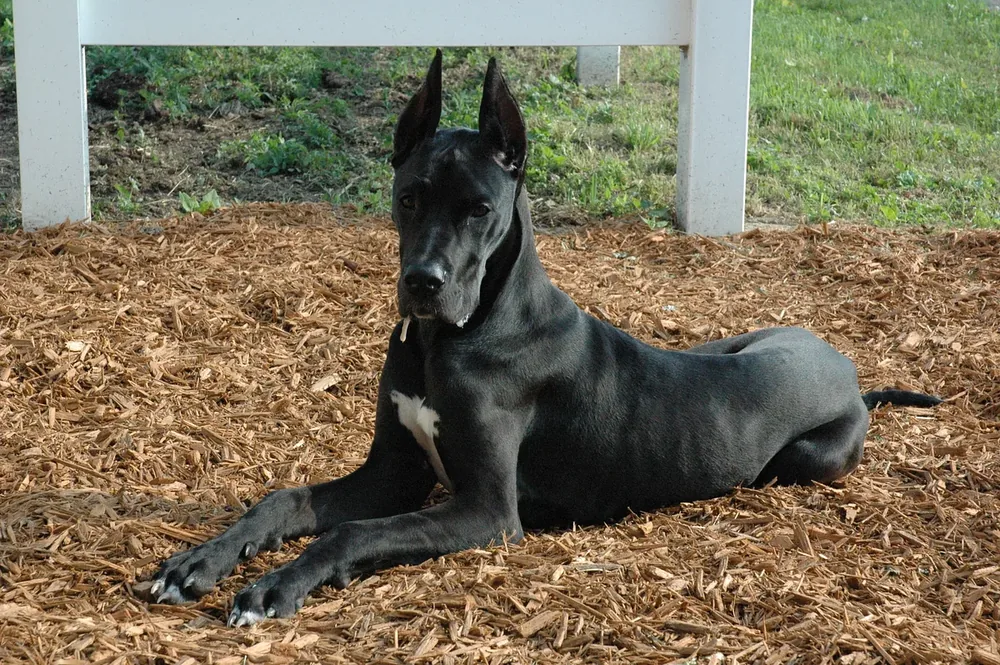 Photo: Melissa / Wikimedia Commons, CC BY 2.0

How long do Great Danes live?
A Great Dane lives 7-10 years, and 8 is the number to plan around. Spot Pet Insurance's Great Dane cost guide says 8-10 years in its body and 7-10 years in its key points. The page is an insurer's consumer guide, so it states a range and not a study.
Large datasets agree that size drives the number. A Banfield Pet Hospitals study in Frontiers in Veterinary Science built life tables from U.S. clinic records between January 2013 and July 2022. It put giant dogs, defined as adults of 45 kg or more, at 9.51 years at birth. Small dogs reached 13.53 years.
The giant group has 26 breeds, and Banfield reports no figure for the Great Dane alone. Females in the giant group lived 9.76 years and males 9.33 years. A Great Dane that reaches 10 is a long-lived one. See dog lifespan by breed for the other giants.
What shortens a Great Dane's life
Bloat, heart disease and bone cancer are the main reasons a Great Dane dies young. PetBudget's breed data rates the breed's health risk 5 out of 5, the top tier, because these conditions stack.
| Condition | What it does | Typical cost |
|---|---|---|
| Bloat (gastric dilatation-volvulus) | Stomach twists and cuts off blood flow within hours | $2,000-$7,000+ per Embrace Pet Insurance |
| Dilated cardiomyopathy | Heart muscle thins and weakens | $1,900-$3,200 per Trupanion claims |
| Osteosarcoma | Aggressive bone cancer | $2,200-$4,900 per Trupanion claims |
| Hip dysplasia | Loose hip joint, arthritis | $7,000-$9,000 per hip for replacement |
Trupanion's commonly claimed conditions sheet for Great Danes lists the claim figures. Gastric torsion averages $2,500-$3,900 and Great Danes file those claims more than 10 times as often as the average dog. Cardiomyopathy averages $1,900-$3,200. Osteosarcoma averages $2,200-$4,900 and appears twice as often as in the average dog. The sheet dates from June 2019, so today's bills run higher.
Iowa State University's total hip replacement page lists $7,000-$9,000 per hip, before the consultation and recheck. OFA's hip dysplasia program explains how breeders screen parents.
Bloat risk and the Great Dane lifespan
Bloat is the one Great Dane killer with a proven prevention. A Purdue epidemiology study that began in 1994 and followed 1,914 dogs found a 42.4% lifetime bloat risk for the Great Dane, the highest of any breed listed. Dr. Jerold Bell of Tufts summarized it in a VIN article on canine bloat risk factors.
42.4%
Lifetime bloat risk for the Great Dane in the Purdue study, the highest of any breed listed. A preventive gastropexy is the proven fix. See the emergency vet cost guide for what an emergency adds.
The same summary lists risk factors an owner can change. A first-degree relative that bloated raised risk 63%. Eating fast raised it 15%. Raised food bowls raised it 110%. Risk climbs 20% per year after age 3 in giant breeds, so the danger grows as the dog ages.
A gastropexy tacks the stomach to the body wall so it cannot twist. In the Purdue data, 76% of dogs that bloated without one bloated again, and only 6% of dogs with one did. Embrace Pet Insurance's gastropexy guide, dated April 10, 2026, lists $800-$3,000 standalone and $300-$400 or more extra when done with a spay or neuter. It puts emergency GDV surgery at $2,000-$7,000+.
Embrace also says about 80% of dogs that reach surgery survive, and about 60% survive overall, including dogs put down before surgery. The ACVS page on gastric dilatation-volvulus describes the warning signs.
How to help a Great Dane live longer
You cannot change a giant breed's genetics, but five choices lower the odds of an early loss. Ask your vet to tailor them to your dog.
- Ask about a gastropexy at spay or neuter. The add-on is the cheapest it will ever be, and it removes the 42.4% risk of a fatal twist.
- Feed two or three smaller meals. Slow the eating with a puzzle bowl and skip raised bowls.
- Screen the heart. Ask your vet about a cardiology exam, because cardiomyopathy is a standard Great Dane claim.
- Keep the dog lean. Extra weight loads the hips and raises arthritis pain.
- Buy from a breeder who tests. Ask for hip and heart results on both parents, and avoid parents with a bloat history.
None of these guarantees a longer life. They shift the odds, and the first one removes the most dangerous event. For the first-year budget and breeder prices, read the Great Dane price guide.
What each year of a Great Dane's life costs
An 8-year Great Dane costs $32,240 in PetBudget's model, and that works out to $4,030 for each year of life. The table adds the first year and seven ongoing years.
| Point in life | Total spent so far |
|---|---|
| Year 1 | $6,522 |
| Year 3 | $13,870 |
| Year 5 | $21,218 |
| Year 8 (typical lifespan) | $32,240 |
Year one costs $6,522 and each later year costs $3,674, or $306 a month. The first year holds a $1,400 puppy, $752 for vet visits and vaccines, $618 of supplies and $260 of training. Insurance at $1,240 and food at $1,139 are the two biggest yearly lines. Over 8 years they add $9,920 and $9,112.
Lifespan changes the total by about $3,674 per year. A Great Dane that lives 7 years costs $28,566 and one that lives 10 costs $39,588, because every extra year adds a full ongoing year.
That is why a longer life is the better outcome even though it costs more. The extra years are the same dog, and the yearly price falls from $4,081 for 7 years to $3,959 for 10. See dog food cost for how a 110-175 pound appetite adds up.
Insurance for a short-lived giant breed
Insurance matters more for a Great Dane than for most breeds, because the biggest bills come in the last third of life. PetBudget's model puts Great Dane insurance at $1,240 a year, and that is the largest yearly line.
Few owners carry a plan. The NAPHIA 2026 State of the Industry highlights put the U.S. dog insurance rate at 5.99% in 2025. Enroll a puppy early, because heart and bloat history becomes a pre-existing condition. Read waiting periods and pre-existing conditions and weigh insurance against an emergency fund.
PetBudget sets a $5,000 emergency reserve for a Great Dane. The AKC's 2025 most popular breeds list, updated August 11, 2026, ranks the breed 22nd. Popular breeds get bought fast, so budget before the puppy arrives. For how insurers treat bone and joint claims, see pet insurance coverage for IVDD, allergies and hip dysplasia.
Great Dane lifespan compared with other giant breeds
The Great Dane has the second-highest cost per year of life among these five giant breeds, and its lifespan sits at the short end. The table uses the same model for every row.
| Breed | Typical lifespan | Lifetime cost | Cost per year of life |
|---|---|---|---|
| Great Dane | 8 years | $32,240 | $4,030 |
| Saint Bernard | 9 years | $34,285 | $3,809 |
| Newfoundland | 9 years | $34,762 | $3,862 |
| Great Pyrenees | 10 years | $34,868 | $3,487 |
| Irish Wolfhound | 7 years | $28,286 | $4,041 |
The Irish Wolfhound edges the Great Dane on cost per year of life, and it lives a year less. The Great Pyrenees lives two years longer for $2,628 more. Read the Saint Bernard price guide and the Irish Wolfhound price guide, or see Great Dane next to Saint Bernard in the comparison tool.
Planning a budget around a Great Dane's life
A Great Dane budget should assume 8 years of bills and one expensive event. Budget $306 a month for routine care, and hold $5,000 aside for a bloat surgery or a cardiology workup. Owners are also trimming costs. The share who said they spent less on pets rose from 22% in 2024 to 32% in 2025, per Global Pet Industry's summary of the APPA 2026 State of the Industry report.
Do not trim the prevention that adds years. A gastropexy at spay, a lean body and a screened heart are cheap next to a $7,000 emergency. To run your own numbers with a different puppy price, open the pet cost calculator. The methodology page explains how the model sets each line.
Frequently asked questions
What is the life expectancy of a Great Dane?
Spot Pet Insurance gives 8-10 years in its text and 7-10 years in its key points. PetBudget's breed data uses 8 years as the typical lifespan.
How long do Great Danes live on average?
A Great Dane typically lives 7-10 years. Banfield records put all giant dogs at 9.51 years at birth, and Great Danes sit at the low end of that group.
What is the most common cause of death in Great Danes?
Bloat and heart disease are the two best-documented killers. A Purdue study found a 42.4% lifetime bloat risk for the breed, and cardiomyopathy is a standard Great Dane claim at Trupanion.
Can a gastropexy help a Great Dane live longer?
It removes the stomach twist that kills in hours. Dogs that bloated without a gastropexy bloated again 76% of the time, against 6% with one.
How much does a Great Dane cost over a lifetime?
PetBudget's model puts an 8-year Great Dane at $32,240, with $6,522 in year one and $3,674 each year after. A 10-year life raises that to $39,588.
See your own pet's real numbers.
Run the calculator with your breed, metro area, and care choices for a first-year, annual, and lifetime cost estimate — not a national average.