
Catahoula Leopard Dog Cost & Ownership Dossier
Catahoula Leopard Dog cost planning starts with a working breed built for stamina, not a low-maintenance couch companion. Expect $5,051 in the first year once purchase, vaccines, and starter gear are covered. After that, annual spend settles closer to $2,606 as food and routine vet visits become the main recurring lines.
Executive cost summary
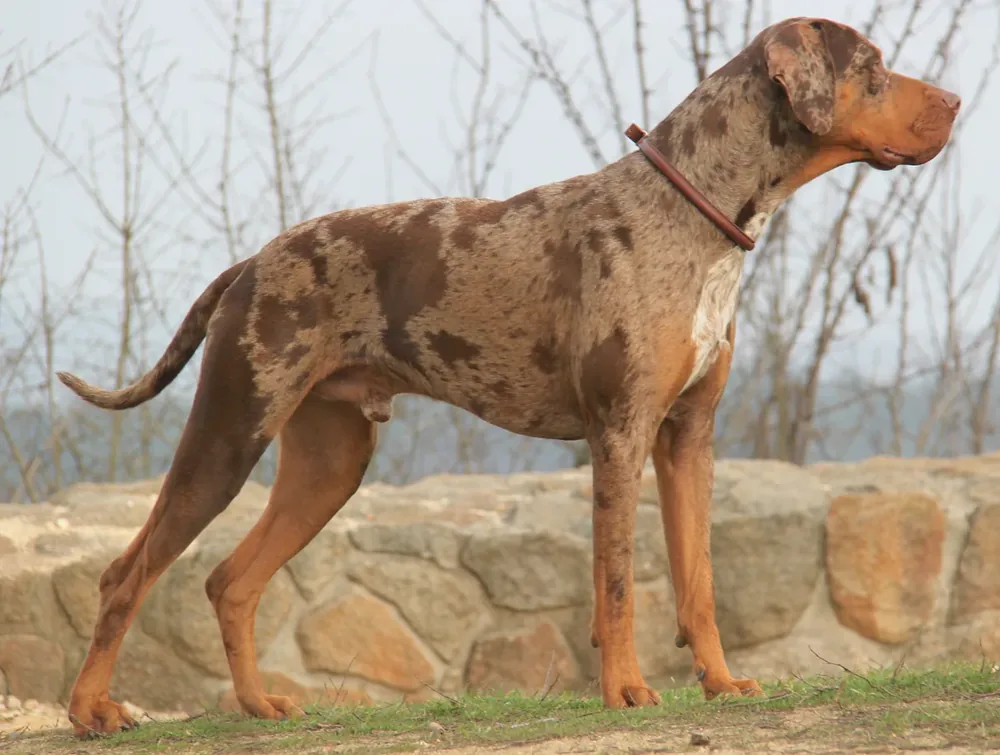
Catahoula Leopard Dog
Catahoula Leopard Dog cost planning starts with a working breed built for stamina, not a low-maintenance couch companion. Expect $5,051 in the first year once purchase, vaccines, and starter gear are covered. After that, annual spend settles closer to $2,606 as food and routine vet visits become the main recurring lines.
Acquisition, surgical desexing, initial vet series, and starter hardware.
Normalized baseline at ~$217/month routine cash burn.
Projected over a 12-year Catahoula Leopard Dog lifespan.
$4,000 Liquid Reserve Mandate
Critical bufferBreed-average vet spend driven by orthopedic wear from a high-energy working lifestyle rather than any single defining syndrome.
Source: MetLife True Cost of Pet Emergencies 2025 (15% of owners hit $3,000+; uninsured surgery $3,000–8,000)
Biometric & phenotypic actuarial spec
Annual Cash Burn Matrix ($2,606/yr)
Continuous operational expenditure distributed across 5 core maintenance categories, indexed to metabolic demand and regional clinical rates.
Food
Vet Care
Grooming
Pet Insurance
Supplies & Toys
Upfront Entry CapEx
Purchase / Adoption Fee ($1,100), Initial Vet Visit & Vaccinations ($700), Starter Supplies ($546), Training Classes ($260), First Year Food ($858), First Year Vet Care ($700), First Year Grooming ($78), First Year Insurance ($809).
Comprehensive Lifecycle Ledger
Audited financial breakdown distinguishing immediate first-year fixed capitalization from ongoing annualized operating liabilities over the full 10–14 yrs canine lifespan.
| Expenditure Category | Year 01 Outlay | Annual Steady-State | Lifetime Total | Actuarial Sizing Methodology |
|---|---|---|---|---|
| Purchase / Adoption Fee | $1,100 | — | $1,100 | Varies by breeder vs rescue |
| Initial Vet Visit & Vaccinations | $700 | — | $700 | Spay/neuter, microchip, health check |
| Starter Supplies | $546 | — | $546 | Bed, crate, collar, bowls, toys |
| Training Classes | $260 | — | $260 | Basic obedience recommended |
| First Year Food | $858 | — | $858 | — |
| First Year Vet Care | $700 | — | $700 | — |
| First Year Grooming | $78 | — | $78 | — |
| First Year Insurance | $809 | — | $809 | — |
| Food | — | $858 | $10,296 | — |
| Vet Care | — | $700 | $8,400 | — |
| Grooming | — | $78 | $936 | — |
| Pet Insurance | — | $809 | $9,708 | — |
| Supplies & Toys | — | $161 | $1,932 | — |
| Gross Actuarial Expenditure | $5,051 | $2,606 / yr | $33,717 | Unadjusted baseline |
Actuarial Health Risk Profile (Tier 3)
Breed-average vet spend driven by orthopedic wear from a high-energy working lifestyle rather than any single defining syndrome.
Hip Dysplasia
A working, large-boned breed that can develop joint laxity leading to arthritis in the hips as it ages.
Hereditary deafness
Merle coat genetics carried by this breed raise the odds of partial or total hearing loss, sometimes needing lifelong management.
Progressive retinal atrophy
An inherited eye condition that gradually reduces vision and can require ongoing ophthalmology visits to monitor.
Exercise-related orthopedic injury
A high-drive herding and hunting temperament pushes this dog into activity levels that raise the chance of soft-tissue and ligament injuries.
What Truly Drives the Catahoula Leopard Dog’s Financial Profile
About the Catahoula Leopard Dog and its cost
The Catahoula Leopard Dog is a Louisiana working breed developed to herd cattle and trail hogs across rough terrain, and that heritage shapes nearly every cost line an owner faces. This is not a breed that thrives on a small budget of attention; it needs acreage, a job, or serious daily exercise, which pushes owners toward higher food volumes and more frequent vet checkups for activity-related wear. Coat care is minimal since the short double coat sheds lightly and rarely needs professional grooming, so grooming costs stay low compared with long-coated herding breeds. The bigger driver is size: a fifty-to-ninety-five-pound dog eats more, needs larger-dose medications, and costs more to board or insure than a small companion breed, so first-year and annual budgets should be built around a large, athletic dog rather than an average mixed breed.
What drives Catahoula Leopard Dog costs
Three forces set this breed's budget: size, activity level, and merle genetics. Its large frame means every recurring line, from food to insurance premiums, runs higher than a small or medium breed baseline. Its five-out-of-five energy rating means under-exercised dogs are more likely to self-injure or develop destructive habits, which shows up later as orthopedic or behavioral vet visits. The merle coat pattern common in the breed also carries a real risk of hereditary deafness and eye issues, so responsible ownership includes baseline hearing and vision screening early on. Because this is a working dog first, owners who keep it mentally and physically busy tend to see fewer stress-related vet visits than owners who confine it to a small yard, making activity investment a cost-control lever as much as a welfare one.
Catahoula Leopard Dog first-year budget
First-year spending covers both one-time setup and the first twelve months of recurring care, totaling $5,051. The one-time side, $2,606, includes $1,100 for the dog itself, $700 for the initial vaccine series and exam, $546 for a crate, leash, and bowls sized for a large breed, and $260 for early obedience work that matters given this breed's independent streak. Recurring costs in year one, $2,445, include $858 for a growing large-breed puppy, $700 for wellness visits, $78 for basic coat upkeep, and $809 enrolled early to cover hereditary risks. Together these make the first year the most expensive of the dog's life.
Catahoula Leopard Dog yearly cost after year one
Once past the first year, ongoing costs settle to $2,606 annually, or roughly $217 a month. The largest recurring line is $858, since a large, active dog eats significantly more than a small breed. $700 covers annual wellness exams plus any orthopedic or eye monitoring tied to the breed's known risks. $78 stays modest thanks to the low-maintenance short coat, while $809 and $161 round out the budget, with toy costs sometimes climbing for owners who invest in durable enrichment to match the breed's working drive.
Emergency fund for a Catahoula Leopard Dog
A reserve of $4,000 is a sensible minimum given this breed's activity-related injury risk and predisposition to eye and hearing conditions. Torn ligaments from hard herding or hunting-style play, along with orthopedic surgery, can consume an emergency fund quickly in a large dog. Across a twelve-to-fourteen-year lifespan, unplanned costs contribute meaningfully to the $33,717 total, so owners without insurance should treat this reserve as non-negotiable rather than optional, replenishing it after any claim.
Cutting Catahoula Leopard Dog costs
The clearest lever is prevention: a well-exercised, mentally engaged Catahoula is less likely to injure itself or develop destructive habits that turn into vet or repair bills. Buying from a breeder who screens for deafness and hip soundness reduces the odds of costly early-onset conditions feeding into the $33,717 figure. Enrolling in insurance while young keeps the $217 premium portion affordable, and buying durable toys and gear built for a large, driven dog avoids repeat purchases. None of this eliminates the $2,606 baseline, but it narrows the gap between routine and worst-case years.
5 Prudent Ways to Cut Catahoula Leopard Dog Costs
Buy from a health-tested breeder
Choosing a breeder who screens for hearing and hip soundness costs more upfront but reduces the odds of expensive early-onset conditions. Ask for BAER hearing test results before committing to a merle puppy.
Give it a job
A bored Catahoula is a destructive one, and replacing chewed furniture or fencing adds unplanned expense. Structured exercise or herding/nose work channels its drive and prevents costly behavioral fallout.
Insure early
Enroll while the puppy is young and healthy to lock in lower premiums before any orthopedic or eye condition can be excluded as pre-existing. This keeps the $809 line predictable for years.
Feed for activity level, not breed average
A working Catahoula burns more calories than a sedentary large breed, so buy food matched to actual exercise output rather than defaulting to a generic large-breed formula, which can waste money either way.
Schedule annual eye and ear checks
Catching progressive retinal atrophy or hearing decline early keeps management costs lower than reacting to an advanced case. Bundle these into the standard wellness visit instead of a separate appointment.
Peer Class Financial Comparisons
How the Catahoula Leopard Dog compares to morphological peers on annualized ownership cost.
Catahoula Leopard Dog
Frequently Asked Financial Questions
How much does a catahoula leopard dog cost per month?
Is a catahoula leopard dog expensive to own?
What are the yearly costs of owning a catahoula leopard dog?
How much are catahoula leopard dog vet bills?
Do catahoula leopard dogs need pet insurance?
How much does a catahoula leopard dog puppy cost?
What is the lifetime cost of owning a catahoula leopard dog?
Are catahoula leopard dogs cheap to feed?
Data sources
- Catahoula Leopard Dog Breed Standard — AKC (akc.org)
- Catahoula Leopard Dog — Wikipedia (en.wikipedia.org)
- Caring for Your Dog's Joint Health — AVMA (avma.org)
Calculate Your Catahoula Leopard Dog Cost Adjusted by Metro ZIP Code
Veterinary surgical tariffs and clinical room rates vary widely between metropolitan regions and rural counties. Recalculate this dossier with your exact state, city, and lifestyle parameters.