

Key takeaways
- Dog pancreatitis treatment cost ranges from about $500 for a mild outpatient case to more than $5,000 for a hospital stay, and a four-night stay at high-end rates can reach roughly $9,500 before lab work and medications.
- The size of the bill depends mostly on the number of hospital nights, and a 2025 Swiss study of dogs with suspected acute pancreatitis found a median stay of 3 days.
- Pet insurance changes the math sharply: on a 90% reimbursement plan with a $250 deductible, a $3,211 three-night bill leaves the owner about $546, so a $1,000 to $1,500 emergency cushion covers the insured case.
Dog pancreatitis treatment cost runs from about $500 for a mild outpatient case to more than $5,000 for a hospital stay, and a severe four-night stay can pass $9,000. The number of nights in the hospital drives almost all of the difference. This guide builds the bill night by night, shows what pet insurance leaves you paying, and turns the result into an emergency fund target.
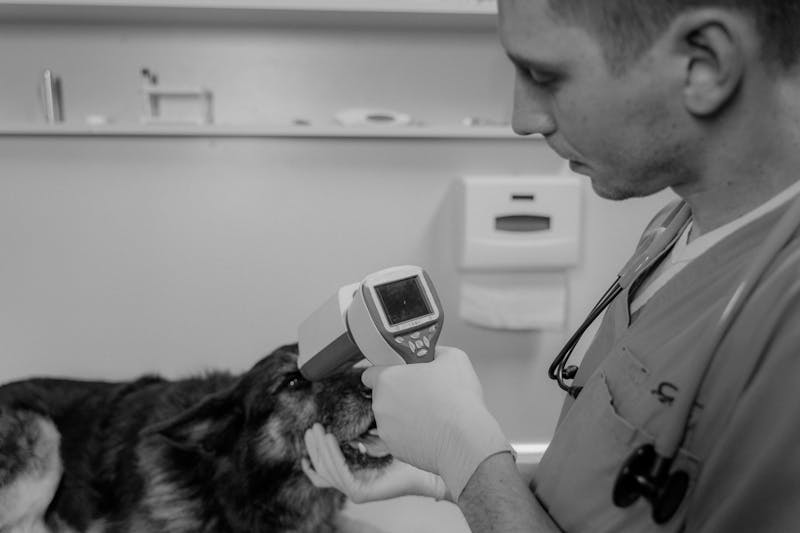 Photo: Tima Miroshnichenko / Pexels
What pancreatitis in dogs costs at each level of care
Pancreatitis in dogs cost depends on whether the dog goes home the same day or needs a bed. ThePricer's dog pancreatitis cost guide puts a whole episode at about $500 to $5,000, citing PetMD and Forbes Advisor for that span. It also notes that a severe case with complications can run higher.
Here is how the care levels line up.
| Care level | What it involves | Typical cost |
|---|---|---|
| Mild, outpatient | Exam, bloodwork, anti-nausea medication, low-fat diet at home | About $500-$1,000 |
| Moderate | 2-3 nights of IV fluids, pain control, monitoring | About $2,300-$7,400 |
| Severe | 4+ nights, possible ICU-level monitoring, feeding support | About $9,500 and up |
The outpatient figure reflects the lower end of ThePricer's range. The moderate and severe rows come from the night-by-night math in the next section. All three exclude the follow-up diet, which is covered later in this guide.
For scale, the Synchrony study behind CareCredit's vet cost page puts an average routine dog vet visit at $89. A pancreatitis hospital stay is therefore a bill of 25 to more than 100 routine visits.
How a hospital stay adds up, night by night
A pancreatitis hospital bill is a stack of three things: an emergency exam, imaging, and a nightly rate. ThePricer reports a published national range of $907 to $2,084 per night from a CareCredit price study. It reports an emergency exam at $107 to $246 and an ultrasound at $383 to $880.
Those inputs let you compute the bill for any length of stay. Take the low rates for a short stay and the high rates for a long one:
| Scenario | Exam | Ultrasound | Nights | Total |
|---|---|---|---|---|
| 2 nights, low rates | $107 | $383 | 2 x $907 | $2,304 |
| 3 nights, low rates | $107 | $383 | 3 x $907 | $3,211 |
| 3 nights, high rates | $246 | $880 | 3 x $2,084 | $7,378 |
| 4 nights, high rates | $246 | $880 | 4 x $2,084 | $9,462 |
These are our calculations from ThePricer's relayed figures, not quotes or averages. They exclude bloodwork, IV catheter placement, medications, food support, and rechecks, all of which add to a real invoice. Treat each total as a floor for that scenario, not a ceiling.
The gap between the 3-night low and high rows is $4,167. Where you live and whether you go to a general practice or an emergency hospital explain that gap. Our emergency vet cost guide shows the same pattern: after-hours hospitals charge roughly double the daytime hospitalization rate.
$907-$2,084 per night
The hospital-night range ThePricer reports from a CareCredit price study. Multiply by the nights your vet expects, then size your reserve with the emergency fund calculator.
How many nights to plan for
Plan for about three nights if your dog is admitted. A 2025 study in the Journal of Veterinary Internal Medicine, run at the University of Zurich, followed dogs with suspected acute pancreatitis. The 26 dogs in that group had a median hospital stay of 3 days, with a range of 1 to 8 days. One of them, 4%, died during hospitalization.
Two cautions apply. The study is small and comes from one Swiss teaching hospital, so it is a guide to typical stay length, not a US price survey. Stays also vary with severity. Merck Veterinary Manual says the prognosis is good for mild cases but guarded for severe ones, and it links poor outcomes to hypothermia, acidosis, low calcium, and organ failure.
For budgeting, use the three-night rows in the table above as your central case. That gives a working range of about $3,200 to $7,400 before extras. A one-night stay sits below it, and a week-long stay sits far above it.
What the bill contains and why it climbs
Every line on a pancreatitis invoice maps to a treatment step that the Merck Veterinary Manual's pancreatitis chapter describes. Supportive care is the mainstay of treatment, and each piece of it is billed separately.
- Diagnosis. Vets combine clinical signs, imaging, and a serum lipase test. Merck notes that no single test is used alone and that ultrasound depends heavily on the operator.
- IV fluids. Merck says fluids replace dehydration over 4 to 8 hours, plus maintenance needs.
- Anti-nausea medication. Maropitant or ondansetron is recommended, even when the dog is only nauseated.
- Pain control. Merck says abdominal pain should be assumed and treated. Severe pain can call for an opioid infusion, which means more monitoring.
- Nutrition. Early feeding is favored over fasting. A dog that refuses food may need a feeding tube, per the American Kennel Club.
- An approved drug, in some cases. Fuzapladib sodium has conditional FDA approval for acute pancreatitis in dogs. Merck lists a three-day course. ThePricer found no reliable national price for it, so we do not quote one.
Antibiotics are the one item you can question. Merck calls their value questionable and says they should not be used routinely. If your estimate lists them, ask what infection the vet is treating.
The cost after discharge: diet, recheck, and relapse
Treatment continues after your dog goes home, and the diet is the cost that lasts. The Merck chapter calls a low-fat diet, under 20 grams of fat per 1,000 kilocalories, crucial for treatment success. Many dogs need that diet for weeks, and some need it for life.
The American Kennel Club's pancreatitis guide adds three practical rules. Feed smaller, more frequent meals. Cut table scraps. Watch treats, because one high-fat treat can trigger another episode. It also says recovery from severe cases can take weeks of ongoing management.
Relapse is the budgeting risk. The AKC says pancreatitis can recur while risk factors remain, and Merck notes that chronic disease can involve acute flare ups. Merck also warns that chronic disease can lead to diabetes. Our guide to diabetes in dogs and cats prices that outcome, and it is a good reason to keep the diet strict.
Ask your vet whether a recheck visit with repeat bloodwork is planned. Merck says a quantitative lipase result gives a baseline for monitoring, and that visit is billed on top of the hospital stay.
Which dogs are most at risk
Miniature Schnauzers are the standout breed. Merck describes them as "dramatically overrepresented" and says the cause may be genetic. It also reports higher rates in Yorkshire Terriers, Cocker Spaniels, Dachshunds, Poodles, and sled dogs.
MetLife Pet Insurance names a similar list: miniature schnauzers, poodles, dachshunds, cocker spaniels, and Yorkshire terriers. Both sources agree on the most common trigger. Merck calls dietary indiscretion a common risk factor, and MetLife points to fatty treats, table scraps, and garbage.
Merck lists other risk factors too:
- Severe high triglycerides, generally 500 mg/dL or more.
- Cushing's syndrome (hyperadrenocorticism).
- Severe blunt trauma, such as being hit by a car.
- Certain drugs, including phenobarbital and potassium bromide.
Most cases have no identified cause. Merck calls them idiopathic, so a careful owner can still end up in the hospital.
If you own one of the higher-risk breeds, see the full cost picture first. Our Miniature Schnauzer price guide covers the purchase and ownership budget. The Miniature Schnauzer breed page gives the modeled annual and lifetime costs. For a Dachshund, check the Dachshund breed page.
What pet insurance leaves you paying
Insurance turns a three-to-four-figure bill into a few hundred dollars, if the plan covers it. MetLife's pancreatitis guide gives an illustrative case. A young mixed-breed dog in North Carolina needed a short hospital stay costing about $3,000, and the policy reimbursed nearly $2,600. MetLife's footnote lists a $250 deductible and 90% reimbursement.
We applied those same terms to our four scenarios. The owner pays the $250 deductible plus 10% of the rest.
| Scenario | Total bill | Insurer pays | You pay |
|---|---|---|---|
| 2 nights, low rates | $2,304 | $1,849 | $455 |
| 3 nights, low rates | $3,211 | $2,665 | $546 |
| 3 nights, high rates | $7,378 | $6,415 | $963 |
| 4 nights, high rates | $9,462 | $8,291 | $1,171 |
This is an illustration using MetLife's example terms. Your plan may use a different reimbursement rate, deductible, or annual cap, and your premium has its own cost. The comparison still shows the pattern: insurance caps your share near $500 to $1,200 even when the bill reaches five figures.
One caveat decides whether any of this applies. A first episode is usually covered. A dog that already had pancreatitis before the policy began, or during the waiting period, may have the condition excluded. Read our guide to waiting periods and pre-existing conditions before you count on coverage, and compare options with the pet insurance vs. emergency fund breakdown.
How big an emergency fund covers a pancreatitis stay
Size the fund to the bill you would face, not to the average. Use the table in this guide to pick the row that matches your dog and your area, then add a margin for the extras that every computed total leaves out.
| If you are... | Fund target | Why |
|---|---|---|
| Insured, 90% plan, $250 deductible | $1,200-$1,500 | Covers the owner share of even the 4-night high-rate case |
| Uninsured, low-cost area | $4,000 | Covers 3 nights at low rates plus labs and medications |
| Uninsured, high-cost area or specialty hospital | $10,000 | Covers 4 nights at high rates plus extras |
The uninsured targets add roughly $500 to $800 of headroom over the computed totals for lab work, drugs, and a recheck. That margin is our estimate, not a sourced figure, so raise it if your vet quotes more.
A full reserve takes time to build, and a bill does not wait. If you cannot cover the uninsured number, the fallback options matter. Our guides to vets that take payment plans and vet credit cards explain what each option costs. You can also ask your vet for a lower-cost treatment plan. That conversation works best before the first estimate is signed.
Warning signs that mean go now
Go to a vet the same day if your dog shows the classic pancreatitis pattern. The American Kennel Club lists a hunched back, repeated vomiting, abdominal pain or swelling, diarrhea, loss of appetite, weakness, and fever. Merck adds that abdominal pain is likely underrecognized and can show up as a "prayer position."
The AKC singles out dehydration as the signal that cannot wait. Get care immediately if your dog has dry gums, refuses water, cannot keep water down, or is getting more lethargic. Every hospital night costs $907 to $2,084, so a dog that deteriorates at home only raises the stakes.
Five ways to lower the bill without cutting care
You cannot negotiate away a hospital night, but you can reduce the extras. None of these replace your vet's judgment, and each is a question to ask, not a demand.
- Ask for a written estimate with a night count. The nightly rate is the largest line, so request a best-case and worst-case number.
- Ask which tests change the plan. Merck says no single test is used alone, so ask which results would alter treatment.
- Question routine antibiotics. Merck says they are of questionable value and should not be used routinely.
- Ask whether a general practice can hospitalize. Emergency hospitals charge a premium over a daytime clinic.
- Ask about discharge criteria. Mild cases may be managed with rest, anti-nausea medication, and a low-fat diet at home, per the AKC.
Keep the dog's diet strict afterward. The cheapest pancreatitis episode is the one a lean diet prevents.
Plan the rest of your pet budget around this risk
A pancreatitis bill is one of several large, random costs a dog can bring. Other emergencies in the same price band include bloat surgery and foreign body surgery. Run your dog's numbers through the PetBudget calculator to see the annual baseline, then add a reserve from the table above.
A dog that eats trash or table scraps is the profile behind many of these bills. Merck names dietary indiscretion as a common risk factor for pancreatitis. Secure the garbage, skip the fatty scraps, and treat holiday leftovers as the hazard they are.
Frequently asked questions
How much does dog pancreatitis treatment cost?
A mild case treated without an overnight stay can cost $500 to $1,000. A hospital stay of two to four nights typically lands between $2,300 and $9,500 before lab work and medications. The number of nights is the biggest factor.
How long is a dog hospitalized for pancreatitis?
A 2025 study at the University of Zurich found a median hospital stay of 3 days, with a range of 1 to 8 days, for dogs with suspected acute pancreatitis. Severe cases with complications can stay longer.
Can a dog with pancreatitis be treated at home?
Mild cases may be managed with rest, anti-nausea medication, and a low-fat diet, according to the American Kennel Club's pancreatitis guide. Dogs that cannot keep water down or are getting more lethargic need immediate veterinary care.
Does pet insurance cover pancreatitis?
Accident-and-illness plans generally cover the diagnostics and hospitalization for a first pancreatitis episode. A repeat episode may be excluded as pre-existing if the condition appeared before the policy started or during a waiting period.
See your own pet's real numbers.
Run the calculator with your breed, metro area, and care choices for a first-year, annual, and lifetime cost estimate — not a national average.
Comments
Comments are moderated before they appear. Constructive questions, corrections and first-hand pet cost experiences are welcome.
Verified Dialogue
Sort by: Chronological (earliest)Loading comments…